
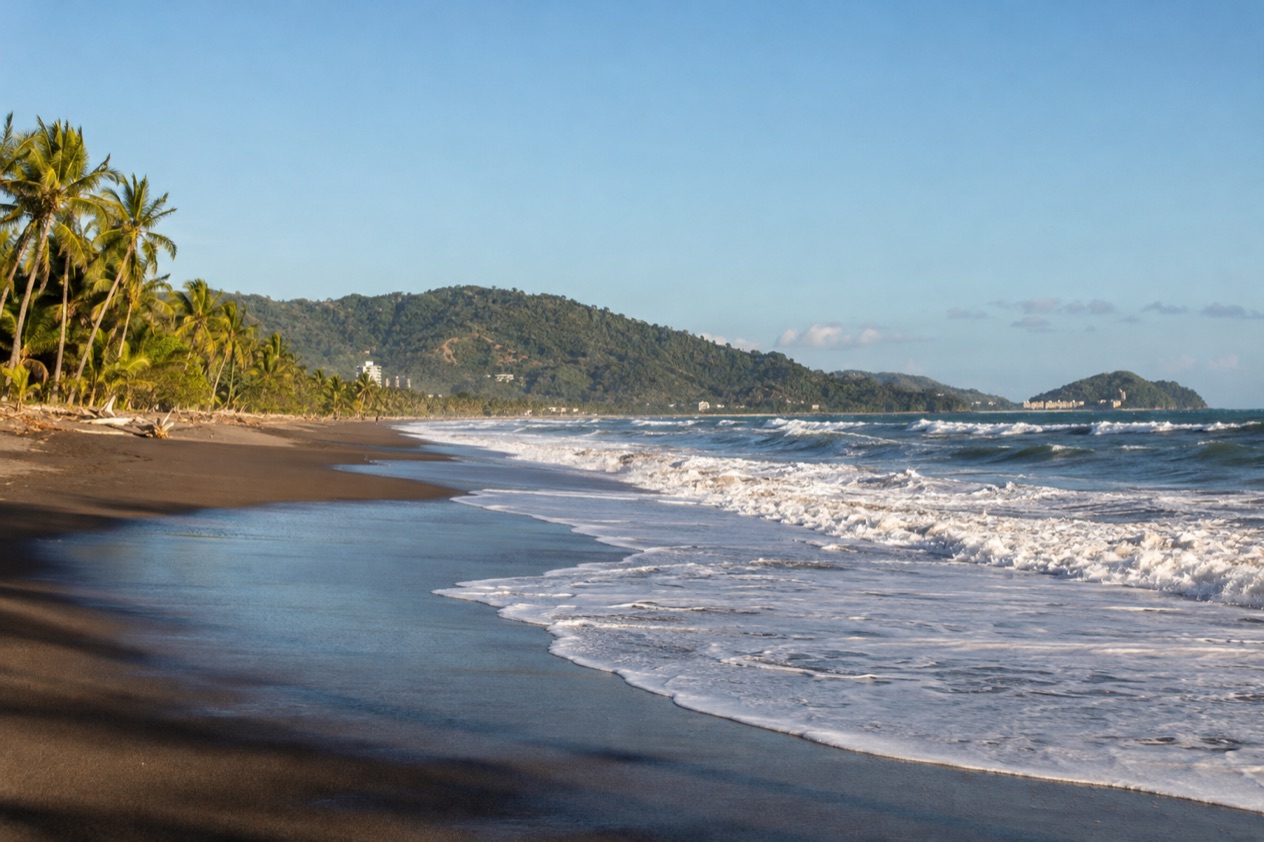
In February, the late afternoon light in Jaco turns the dark sand to bronze, and surfers paddle out for one more set while vendors along the main strip start setting up for the evening. Grilled fish aromas rise from open-air restaurants, pelicans skim just above the break, and a long dry spell gives the town its unhurried pulse. It is a month for beach days, surf lessons and sunset drinks on the central Pacific coast.
What is the weather like in Jaco in February?
February is hot, sunny and mostly dry in Jaco, with only a few short showers sprinkled through the month.
| Month | Average high (°F) | Average low (°F) | Rain days | Sea (°F) |
|---|---|---|---|---|
| January | 82.5 | 75.3 | 14.1 | 86.1 |
| February | 84.0 | 76.1 | 7.8 | 87.4 |
| March | 84.9 | 77.0 | 11.5 | 87.7 |
Mornings start warm and bright, which makes the early hours the best window for a walk on the sand, a surf session or a hike before the sun gets strong. By midday the heat builds and the shade of an almond tree or a restaurant terrace becomes very welcome. Nights stay warm enough that you can eat outside in a T-shirt.
Rain is the exception rather than the rule. Rain is less frequent in February, but a shower can still interrupt outdoor plans. Heavy downpours are very unusual in February, so you can plan most days around the beach without a backup for every hour.
With close to twelve hours of daylight, the sun goes down in the early evening, and the golden hour makes a great time to take photos. Pack light fabrics, a hat and plenty of sunscreen, since the sun is strong even on hazy days. A light layer is enough for air-conditioned restaurants or a breezy evening.
Can you swim in Jaco in February?
Sure, you can take a lengthy dip without getting cold, and a light rash guard mainly guards against the sun rather than keeping you warm.
Jaco’s beach is long, flat and made of dark volcanic sand, and it is known for steady waves that draw surfers and beginners alike. Those waves are the reason many visitors come, but they also mean the water is often lively rather than glassy. Strong swimmers and bodyboarders enjoy it. Young children and nervous swimmers should stay out of the water when the surf or currents look unsafe.
Each year in Costa Rica, several visitors from the United States lose their lives to rip currents, which are a grave danger. On many beaches, there are no lifeguards and no signs warning you about dangerous conditions, so watch how the water is moving before entering, stay close to other swimmers, and never swim by yourself.
If a beach has flags or a lifeguard, follow them. Bring a rash guard, water shoes for rocky patches and a reusable bottle, since a day in the sun and salt dries you out quickly.
What to do in Jaco in February
The big draw is the beach itself, and February’s steady sun makes it the right month to build your days around it. Surf schools line the sand, and a first lesson in the whitewash is a classic Jaco memory. Boards and lessons are easy to find along the main road, and the long beach gives everyone room, from beginners practicing their pop-up to more experienced surfers farther out.
Beyond the water, the town itself is part of the fun. The main strip is lined with casual restaurants, surf shops, craft stands and bars, and it gets livelier as the sun goes down.
Dishes to look for include fresh ceviche, grilled fish with rice and plantains, and the classic casado, a plate of rice, beans, salad and your choice of meat or fish. Gallo pinto, the rice-and-beans mix, shows up at breakfast with eggs and fresh fruit.
Surf lessons and beach days
Jaco is one of the most approachable places in Costa Rica to try surfing, because the waves break along a wide sandy beach rather than over rock. In the morning, when the light stays gentle and the air has not yet warmed up, lessons typically begin, and before anyone enters the whitewash, instructors put in time on the sand. Ask each surf school what its lessons include before booking.
If surfing is not your thing, a beach day here still works well. Find a spot of shade, bring water, and take short dips rather than long swims, keeping the currents in mind. Late in the afternoon, walking the shoreline as the sun lowers is a favorite local habit, and the sunsets are a reason to linger.
Nature and day trips from town
The central Pacific coast is rich in wildlife, and February’s drier weather makes it a comfortable time to be outdoors. Popular nature outings from Jaco include Carara National Park and wildlife boat trips on the Tarcoles River, where sightings are never guaranteed. Animals are chances rather than promises, so go with a guide who knows where to look and keep your expectations open.
Since national park rules and access can change, check the park’s official page before planning a visit. Starting early is a good habit, since the forest is more active in the cooler morning hours and the afternoons get hot. Bring water, insect repellent and shoes with grip.
Envision Festival and the south
The Envision Festival, a music, art and yoga gathering at Uvita, usually takes place in late February, and dates change every year. The Envision Festival is held at Uvita rather than in Jaco, so check its dates and location before planning around it. Check the festival’s own information for dates and tickets before you plan around it.
Even if you skip the festival, February is a good month for evenings out in Jaco. Live music drifts from beach bars, restaurants set tables on terraces, and the warm air makes sunset drinks easy. A cold fresh fruit smoothie or a cold local beer fits the mood perfectly.
A two-day itinerary for Jaco in February
Day 1 is for the beach and the town. Start early with gallo pinto, eggs and fruit at a casual breakfast spot, then head to the sand while the air is still gentle for a surf lesson or a long walk. By midday, retreat to shade for a casado or a plate of ceviche, and take a rest through the hottest hours.
In the late afternoon, return to the beach for short swims and the golden light. With nearly twelve hours of daylight, the sun sets in the early evening, so plan to be on the sand for it. Dinner is a seafood restaurant on the main strip, followed by a stroll past the craft stands and bars.
Day 2 is for nature and a slower pace. Set out in the morning with a guide for a walk in a nearby forest or park, when animals are more active and the heat is lower. Come back for a long lunch, then spend the afternoon at a pool or a café.
If a shower rolls in, which is unusual in February, turn it into an indoor hour: browse the craft shops, linger over a coffee or fresh juice, or book a massage. Finish the evening with live music at a beach bar or a quiet dinner away from the main strip.
Is Jaco busy in February?
Yes, February is a lively month in Jaco, because dry, sunny weather draws visitors from colder places and fills the beach town.
Surf schools, restaurants and the main strip feel busy, especially on weekends, when families and groups from San Jose, about two hours away by road, come for a beach break. If you want to stay near the sand, booking early is a good habit, particularly for weekends. Rental cars and popular restaurant tables are easier to secure when you plan ahead.
Weekdays are calmer, and the far ends of the beach have more room even on busy days. Early mornings are quiet everywhere, which is another reason to start the day early. If you want a table at a favorite dinner spot at sunset, reserve it rather than hoping for a walk-in.
What to pack for Jaco in February
Pack for sun, sand and warm nights, with a bit of protection for the occasional shower.
- A wide-brimmed hat and sunscreen, since the sun stays strong from morning to night.
- A rash guard and swimsuits, for surf lessons and long days on the sand.
- Water shoes, for hot sand and rocky spots.
- Light, breathable clothes, for warm days and evenings.
- A light rain jacket, for the odd brief shower.
- Insect repellent, for forest walks and evenings outdoors.
Good to know before you go
The U.S. State Department rates Costa Rica Level 2, ‘Exercise increased caution,’ due to crime; it says petty crime is common throughout Costa Rica and that violent crime also affects tourists, including armed robbery, homicide and sexual assault.
February is the heart of the drier stretch on this coast, so beach plans usually hold, but rooms and surf lessons fill up early on weekends. The drive from San Jose takes about two hours, so leave early if you want to reach the beach before the heat builds. Rip currents are a real concern on the beaches here, so stay alert in the water.
Jaco in February vs January and March
Moving the trip a month earlier means a bit more rain and slightly cooler air, with the sea a touch less warm. January showers tend to be more frequent, so beach days need a little more flexibility. The reward is a greener landscape.
A month later, March is hotter and the sea is at its warmest, with a few more showers than February but still mostly sunny. The heat is stronger in the middle of the day, so shade and early starts matter more. The Envision Festival in late February is the main event you would miss by shifting.
Choose February if you want the balance of warm sea, sunny skies and fewer showers. Pick January for greener scenery and a slightly cooler feel, and March if you want the warmest water and do not mind the heat.
Is February a good time to visit Jaco?
Sure, February suits beach fans, surfers, and anyone craving sun, warm water, and simple outdoor plans.
Surf beginners, families who like long beach days and travelers who enjoy lively evenings will be happy here. People who prefer quiet, empty beaches or cooler temperatures may like another month better, since the town is busy and the midday sun is strong. On arrival, book a surf lesson and a table for your first sunset dinner, then settle into the rhythm of early mornings and long afternoons.
What sets February apart in Jaco is the mix of steady sun, a sea that stays warm, and the pull of the Envision Festival just down the coast, all under a sky that turns gold every evening over the dark sand.
Sources
- Open-Meteo / ECMWF ERA5, normals 1991-2020 computed for the grid cell at 9.6145N 84.6285W, checked October 8, 2026
- Open-Meteo Marine API, average 2015-2024, checked October 8, 2026
- sunrise-sunset.org, sunrise and sunset calculated for the 15th of the month, checked October 8, 2026
- U.S. Department of State, Costa Rica Travel Information, Safety and security (https://travel.state.gov/content/travel/en/international-travel/International-Travel-Country-Information-Pages/CostaRica.html), checked October 8, 2026
- U.S. Department of State, Costa Rica Travel Advisory, issued April 1, 2026 (https://travel.state.gov/content/travel/en/traveladvisories/traveladvisories/costa-rica-travel-advisory.html), read via the State Department open data API on October 8, 2026