
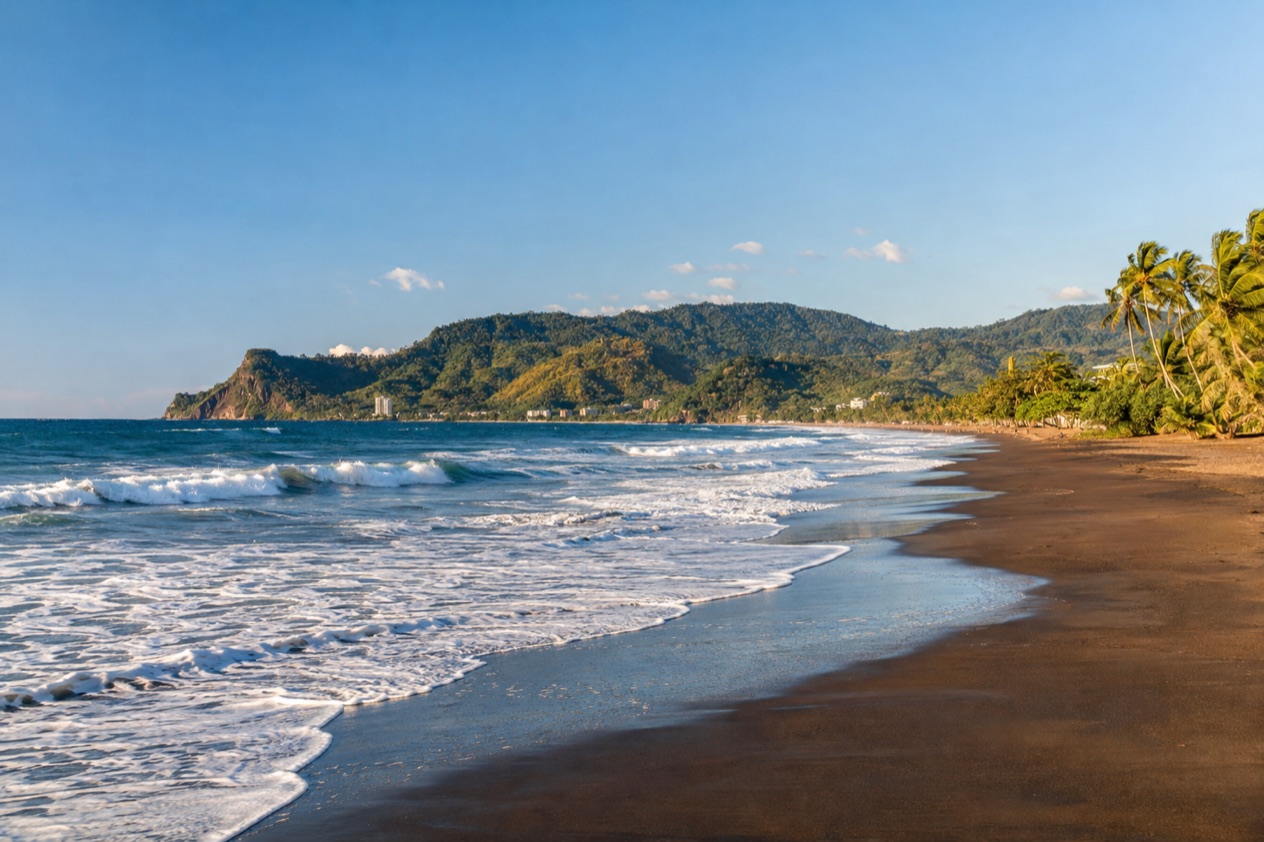
Each January morning in Jaco, with surfboards tucked beneath their arms, surfers make their way across the dark sand as pelicans glide over the earliest waves and the scent of just-brewed coffee floats out from the open-air cafés that line the main strip. By afternoon the town fills with families on school break, vendors cut cold coconuts, and the sunsets turn the whole bay orange. January falls in the dry season on the central Pacific coast, which makes it a good time for surf, beach days and day trips into the green country behind town.
What is the weather like in Jaco in January?
January in Jaco is hot, bright and still a little green, with the rains of the wet months fading but not gone. Mornings are the clearest part of the day, and the showers that do come tend to be short.
| Month | Average high (°F) | Average low (°F) | Rain days | Sea (°F) |
|---|---|---|---|---|
| December | 81.2 | 75.2 | 22.0 | 84.7 |
| January | 82.5 | 75.3 | 14.1 | 86.1 |
| February | 84.0 | 76.1 | 7.8 | 87.4 |
Plan on warm, sticky days and nights that barely cool off, so you can eat dinner outside in a T-shirt. The sun is strongest from late morning through mid-afternoon, and that is when the dark sand gets hot enough that you will want sandals until you reach the wet edge. Mornings are the time for walks, surf lessons and anything that involves effort.
Rain is not absent. About half the days in January bring at least a little, but it usually arrives as a passing shower or a late-afternoon cloudburst rather than a gray, all-day soaking, and it often skips the early hours entirely. Heavy downpours are rare this month. The rain keeps the hills behind town lush, which is a real plus on any trip inland.
Pack light, quick-drying clothes and a thin rain layer you can stuff in a day bag. Daylight lasts a bit under twelve hours, so the sun sets in the early evening and the light turns golden and long over the water well before dinner.
Can you swim in Jaco in January?
Yes, the sea is warm enough for a long swim, with water as comfortable as a lukewarm bath and no need for more than a rash guard against the sun. Warm water is the easy part, though. The waves and the currents are what you have to respect.
Jaco is a surf beach first. The long, dark-sand beach usually has steady waves breaking close to shore, so it suits people who like to bodysurf or play in the shorebreak more than those looking for a quiet, glassy swim. Most beaches do not have lifeguards or warnings about unsafe conditions, so nervous swimmers and small children should not treat the water’s edge as a safe swimming area.
Here, rip currents pose a serious threat and every year they lead to multiple deaths among U.S. tourists. In Costa Rica, lifeguards and alerts about dangerous water are missing at the majority of beaches, so check with people who live there or your hotel about the safest places to swim, and at dusk never enter the water by yourself.
Take your own mask if you want to look at fish, but expect the surf to stir up the water more often than not.
What to do in Jaco in January
January is the month when Costa Rican schools are on their long summer break, so the town has a holiday buzz that is hard to miss. New Year’s Day on January 1 is a national holiday, and the first days of the month feel like an extension of the party, with families on the sand, music from the beach bars and surfers crowding the best peaks at dawn.
Farther north in Guanacaste, the Fiestas Civicas of Santa Cruz fill that town in mid-January with bull-riding, parades and street food. It is a long trip from Jaco and not a casual day outing, but it is the big folk festival of the month if you are building a longer Pacific coast trip and want a taste of cowboy Costa Rica.
In Jaco itself, the season is about the coast and the rainforest. Mornings suit surf lessons, beach walks and the kind of lazy breakfast of gallo pinto (rice and black beans), eggs, sweet plantains and a strong cup of local coffee that sets you up for the heat. Afternoons are for shade, a cold fruit drink or a dip in a hotel pool.
Learning to surf on the beach break
Jaco has long been a go-to first surf town, thanks to in-town board rentals and lessons, plus a beach break that suits both newcomers and seasoned riders. Instructors usually start with a short session on the sand, then take you out where the waves are small and breaking over soft bottom. A warm sea makes the learning curve gentler, since falling in is part of the fun.
Go early. Morning conditions are often cleaner, the sun is easier on the shoulders, and the beach is quieter before school-break crowds arrive. More experienced surfers tend to pick their spot by the tide and the swell, so talk to a local shop. Rent a rash guard along with the board, and use sunscreen on every exposed patch of skin.
Tarcoles and Carara: crocodiles and macaws
A short drive up the coast takes you to the Tarcoles River, famous for the large crocodiles that bask on its muddy banks, and to Carara National Park, a patch of transitional forest where scarlet macaws, trogons and many other birds live. January is a pleasant time to go because the forest is still green and the rain arrives in short showers that leave trails easier underfoot.
The river is best seen from a boat trip, where guides point out crocodiles, herons, kingfishers and sometimes monkeys along the mangroves. In the park, a guided walk is the way most visitors spot animals, because guides know where sloths and birds rest. Go in the morning, when the forest is active and the heat is lighter, and bring binoculars if you have them.
Check the park’s official page before you plan a day there, since rules and access can change. Wear closed shoes and long, light sleeves for the bugs, and keep your phone in a water-resistant bag for the boat.
Sunsets, ceviche and the town at night
As the sun drops, the beach becomes the town’s living room. Locals jog, kids kick a soccer ball, couples walk the waterline, and the sky goes through a long run of pinks and oranges. A cold pipa fria (green coconut with a straw) is the classic way to watch it.
Dinner is the time for casados (a plate of rice, beans, salad, plantains and your choice of fish, chicken or beef), fresh ceviche, grilled fish and patacones (fried green plantain disks). Many restaurants have open sides and fans, so you eat in the warm night air. The main strip stays lively late with live music and bar crowds, so pick a quieter side street if you want an early night.
Beyond the beach, a canopy zip-line or a short horseback ride in the hills behind town makes a good half-day when you need a break from salt and sun. A drive down to nearby Playa Hermosa, known for strong surf, or north toward the quieter sands near Herradura is an easy way to see a different stretch of coast.
A two-day itinerary for Jaco in January
Day 1 is for the beach and the town. Start at first light, when the sand is cool and the surfers are already out, and take a lesson or rent a board before the sun climbs. Follow with a long breakfast of eggs, gallo pinto and fruit at a café near the beach, then retreat to a pool or an air-conditioned room through the hottest hours.
By late afternoon, walk back to the water to wade, float or play, asking the hotel or a surf school about the day’s conditions, following flags where there are any, never swimming alone, and keeping children within arm’s reach. Stay on the sand for the sunset, then eat ceviche or grilled fish at a casual place on a side street. With a little under twelve hours of daylight, the evening arrives quickly, so keep dinner flexible.
Day 2 is for the wild side. Head up the coast early for a boat trip on the Tarcoles River and a guided walk in Carara National Park, when birds are most active and the air is lighter. Have lunch at a roadside soda (a small family restaurant) with a casado and fresh juice, then return to town for a zip-line or a quiet afternoon.
If rain turns the afternoon gray, shift to indoor plans: a long lunch, a coffee tasting, a craft shop browse or a massage. Showers often pass within an hour, so wait it out and walk the beach at dusk, when the air is fresh and the sand is nearly empty.
Is Jaco busy in January?
Yes, January is one of the busier months in Jaco, because school is on its long summer break and families fill the beach towns from the Central Valley. The holiday spirit is strongest around New Year’s Day, and the town stays lively into early February.
Expect crowded sand on weekends, full restaurants at dinner and surf breaks with more people in the water than in quieter months. The beach is large enough to find a spot, but the best tables, rental boards and lessons go first. Weekdays and early mornings are noticeably calmer, and the beach feels much more local before ten.
Book rooms early for the holiday weeks, since good places near the beach fill up well ahead.
For dinner, walk-ins work on weekdays, but a reservation helps on weekends at the better-known spots. Day trips to Carara and the river are popular with visitors staying across the coast, so go early to avoid the busiest tour groups.
What to pack for Jaco in January
Pack for a hot, humid beach town with a chance of a short shower and plenty of sun. Light fabrics and sun protection matter more than anything else.
- Sunscreen and a wide-brimmed hat, because the tropical sun is strong even on cloudy mornings.
- A rash guard and quick-dry swimwear for surf lessons and long days in the water.
- A light rain jacket or packable poncho for afternoon showers.
- Sandals plus closed shoes for the hot sand and the forest trails at Carara.
- Insect repellent for the evenings and the mangrove boat trip.
- A reusable water bottle and a small dry bag for the beach and the boat.
Good to know before you go
The U.S. State Department rates Costa Rica Level 2, ‘Exercise increased caution,’ due to crime; it says petty crime is common throughout Costa Rica and that violent crime also affects tourists, including armed robbery, homicide and sexual assault.
Since Jaco sits about two hours from San Jose by road, most travelers get there by car or shuttle, and weekends plus the holiday weeks bring the coastal highway its busiest traffic. New Year’s Day is a national holiday.
School break keeps the town lively, which means rooms and tours fill earlier than in a quieter month. Most beaches here have no lifeguards, so treat every swim as your own responsibility and follow local advice about the surf.
Jaco in January vs December and February
Move the trip a month earlier and you land in December, when the rainy season is just ending. The sea is a touch cooler, showers come more often and the hills are at their greenest, but the holiday crowds and Christmas lights make the town festive. It suits travelers who like lush landscapes and a seasonal mood and do not mind more gray afternoons.
Move it a month later and February is noticeably drier and a little hotter, with the warmest sea of the three months and the clearest skies for sunsets and boat trips. School break winds down in early February, so the beach gets a bit more room, though weekends still fill. It suits sun seekers and people who want the most reliable beach weather.
January sits comfortably between the two. Choose it if you want warm water, mostly sunny mornings and the lively holiday feel of the beach town, with enough green left in the hills for good wildlife walks. Shift to February if rain worries you most, and to December if you want the greenest scenery and the Christmas atmosphere.
Is January a good time to visit Jaco?
Yes, January is a very good time for beach lovers, first-time surfers and families who want warm water and a lively atmosphere. It is less ideal for travelers who want empty sand and quiet nights, or for anyone who needs a guaranteed dry afternoon.
You will love it if you like early mornings on the water, long lunches in the shade and sunsets with a cold coconut in hand. Surfers can pick a lesson or a session at the beach break, while nature lovers can pair the sand with a river boat and a guided forest walk. Light sleepers should ask for a room away from the main strip, since the bars stay lively.
On arrival, go straight to the beach for a short walk at the water’s edge. Look at how the waves break, watch where the surfers paddle out and ask your hotel which stretch is best for swimming that day.
Before visiting Carara National Park, check its official page for current access and reservation rules. January in Jaco is the warm sea, the school-break buzz and a coast that is still green from the rains.
Sources
- Open-Meteo / ECMWF ERA5, normals 1991-2020 computed for the grid cell at 9.6145N 84.6285W, checked October 8, 2026
- Open-Meteo Marine API, average 2015-2024, checked October 8, 2026
- sunrise-sunset.org, sunrise and sunset calculated for the 15th of the month, checked October 8, 2026
- U.S. Department of State, Costa Rica Travel Information, Safety and security (https://travel.state.gov/content/travel/en/international-travel/International-Travel-Country-Information-Pages/CostaRica.html), checked October 8, 2026
- U.S. Department of State, Costa Rica Travel Advisory, issued April 1, 2026 (https://travel.state.gov/content/travel/en/traveladvisories/traveladvisories/costa-rica-travel-advisory.html), read via the State Department open data API on October 8, 2026
- U.S. Department of State, Costa Rica Travel Information, Entry and exit requirements (https://travel.state.gov/content/travel/en/international-travel/International-Travel-Country-Information-Pages/CostaRica.html), checked October 8, 2026