
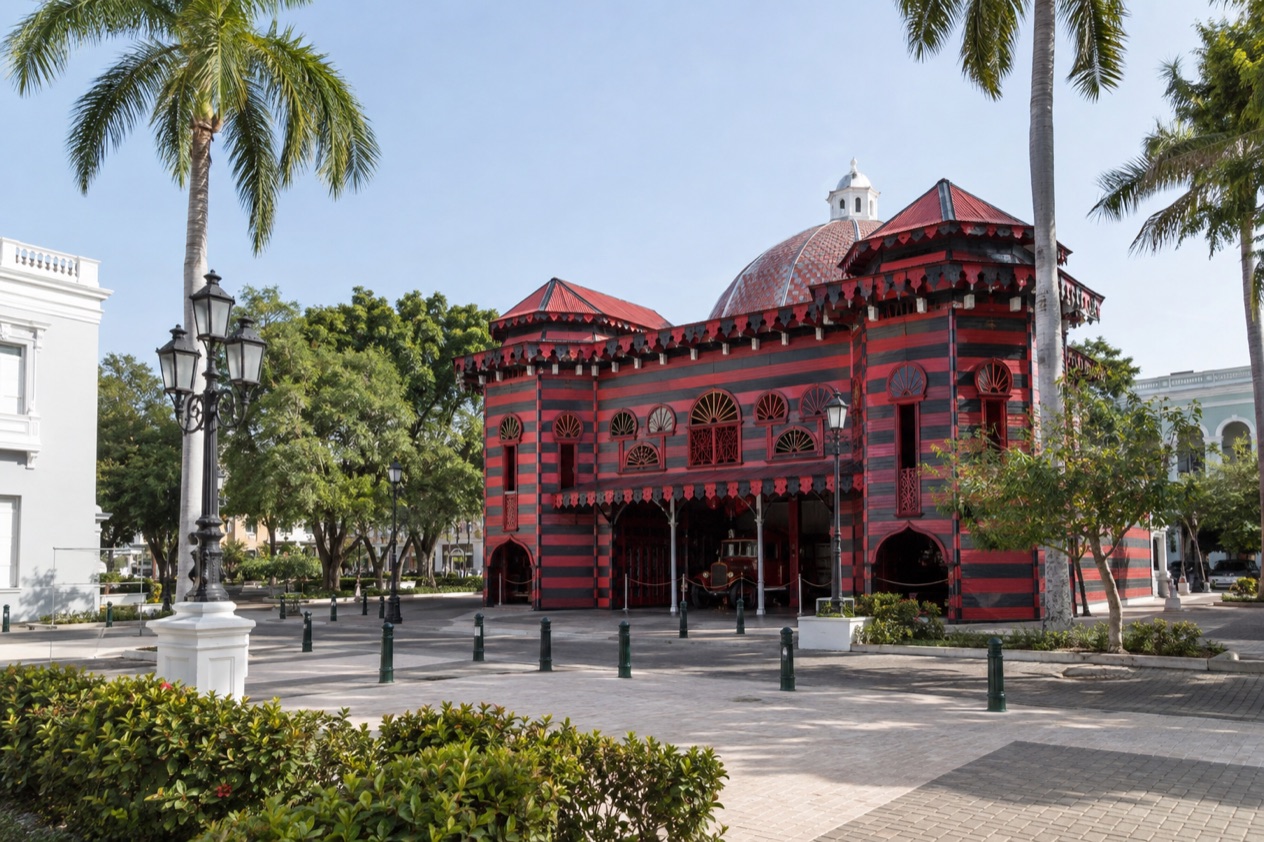
Mornings in Ponce start early around Plaza Las Delicias, where the red-and-black striped firehouse catches the sun and older men claim the benches under the laurel trees. By midday the heat sends everyone toward shaded arcades, cold piraguas and the air-conditioned galleries of the art museum. Visitors who come to this southern city for its architecture, its beaches and its coffee hills want one honest answer first: how careful do you need to be here?
Is Ponce safe to visit?
No trip is guaranteed to go smoothly, so pay attention, keep your belongings close and plan your evenings. U.S. citizens are traveling within their own country, so they need no passport or visa and have no currency to change. That removes a whole category of small headaches that travelers abroad run into.
The practical question is less about the city as a whole and more about how you spend your time in it. A day spent in the historic center, at the museum, on the boardwalk and on a ferry to a nature reserve is a very different outing from a late-night wander through streets you do not know. Daytime Ponce is busy with families, school groups, office workers on lunch breaks and tour visitors, and that steady foot traffic is part of what makes the center pleasant.
Ponce is also spread out. A few miles in from the coast lies the historic district, the museum occupies a wide avenue set apart from the plaza, and to the north, a drive away, rise the hills with their old coffee estates. Moving between these places is where most of your planning goes, so think about how you will get from one to the next, especially after dark, before you arrive.
Two other things shape the answer. Nature is the first: the sun is strong all year, the sea can be lively, and the Atlantic hurricane season reaches this coast. The second is simple common sense around valuables, phones and cameras. Both are covered in the sections that follow, along with what each part of town is like.
Safety by area in Ponce
The historic center around Plaza Las Delicias
This is where most visitors begin, and it is built for walking. The plaza is framed by the cathedral, the Parque de Bombas firehouse and a ring of pastel colonial buildings with iron balconies. During the day, vendors, musicians and people on their way to work give it a lively, sociable feel, and there is always somewhere to sit in the shade.
It is the part of Ponce where you are most likely to stay and eat, so it is also where ordinary city habits matter most. While you take pictures of the firehouse, carry a phone or camera in a bag instead of a back pocket, and remain watchful when the plaza gets crowded, as happens during Carnaval de Ponce in the weeks before Lent, when vejigantes in horned masks parade through the streets. In the evening, choose your route back to your lodging before you leave the restaurant.
La Guancha and the waterfront
Along the coast, La Guancha is a boardwalk by the sea. It is where Ponce comes out on weekends, and families, joggers and couples share the walkway. It is also the point from which the ferry to Caja de Muertos leaves, so mornings here can start busy.
The same everyday rules apply as anywhere on a waterfront: keep bags zipped on the sand and boardwalk, do not leave anything visible in a parked car, and treat the sun and the sea with respect. Beaches nearby, such as Playa de Ponce, El Malecón and Las Salinas, vary in how rough the water gets from one day to the next, so look at the conditions where you plan to swim rather than assuming.
The museum district on Avenida Las Américas
The Museo de Arte de Ponce sits on a wide avenue rather than a pedestrian street, with a tall aluminum Roy Lichtenstein sculpture in the front yard and a building designed by Edward Durell Stone. The collection includes Pre-Raphaelite paintings, among them Flaming June.
Because it is on a main avenue, you reach it differently from the plaza. Three SITRAS Orange Line routes serve the Museo, E, F and G, and plenty of visitors come by car or taxi too. Plan your return before you leave the museum, particularly late in the day, and do not leave belongings in a parked car outside.
The hills and Hacienda Buena Vista
North of the city, the landscape climbs into coffee country. Hacienda Buena Vista, along Route PR-123 and some seven miles from Ponce, is a farm museum run by the Puerto Rico Conservation Trust, with an old country house, plantation buildings and a rare Barker hydraulic turbine. Guided tours can reach parts of the protected natural area around it.
This is a daytime excursion into green, quiet hills, and the main considerations are practical. Wear shoes that suit uneven ground, bring water, and expect the weather to change faster than on the coast. The highest peak on the island, Cerro de Punta, also lies within the municipality of Ponce, so mountain weather is part of the picture if you head further up.
Common scams and how to avoid them
The old story about getting ripped off at an airport money counter when you travel overseas does not apply here at all, since Puerto Rico runs on the U.S. dollar, which means no currency swapping is needed at Mercedita Airport or any other spot. What remains are the small, familiar annoyances of any popular destination, and they are easy to sidestep with a little attention.
A friendly no and a smile work fine, and nobody expects more. If you want to buy something, ask the price before you accept it, and compare a stall with a shop before you pay for anything that seems unusually costly.
For rides, agree on how you will pay before you get in. If you are not sure how a fare works, ask your hotel or a restaurant how people usually get around the city. A person at the front desk of your lodging knows the habits of the town far better than any guide.
When you use a cash machine, choose one inside a bank, a store or a hotel lobby rather than one on a quiet street, and shield the keypad as you would at home. Keep a phone out of sight when you walk, especially in crowds such as those during Carnaval. Take photographs, then put the device away, and watch bags in cafés and on beach sand.
Finally, be cautious about anyone who pushes you to a decision quickly, whether it is a tour, a meal or a ride. If a deal needs an answer now, you can simply walk on.
Getting around safely
In the historic district, the plaza, the cathedral, the firehouse and plenty of cafés all lie just a brief stroll apart, which makes it the simple part, and nothing beats a daytime walk for taking in the city’s spirit. Wear a hat, carry water and stop in the shade, because the heat is the main thing that tires people out here, long before distance does.
Reaching the Museo de Arte de Ponce by public transport is simple, since the museum lies beyond the city center and routes E, F and G of the SITRAS Orange Line cover that stretch. Beyond that, the city is spread out, so many visitors rely on a rental car, a taxi or a ride arranged by their lodging. Ask the front desk what works best for the place you are staying in.
If you arrive by air, Mercedita Airport lies a short way east of the center, and it takes you into the city without a long transfer. Flights from the mainland are domestic, which keeps arrival simple. Decide before you land how you will reach your lodging, particularly if you arrive after dark.
Driving up to Hacienda Buena Vista along PR-123 takes you into hills, where roads bend and weather shifts. Go in daylight, allow extra time and keep your phone charged. Park in clear, open spots and take valuables with you rather than leaving them on the seat, whether at the museum, the plaza or the boardwalk.
That applies to the plaza, the waterfront and the museum area alike.
Beach, water and weather safety
Ponce faces the Caribbean, but that does not make every beach gentle. Day to day and beach to beach, the water can shift, so check it before swimming and obey any flag, sign or lifeguard you see.
Do not assume that a beach is watched. The places near Ponce include Playa de Ponce, El Malecón, La Guancha, Las Salinas, Punta Salinera and El Tuque, and each has its own character.
Caja de Muertos, a nature reserve and uninhabited island with five beaches, is reached by a short ferry ride from La Guancha. Playa Pelícano holds a Blue Flag beach designation, and a working lighthouse also stands on the island’s highest hill. There are Department of Natural Resources staff and security personnel on the island, but there is no town, so bring what you need for the day, including water and sun protection.
The sun is strong all year, and the air is hot and humid. Put on sunscreen, wear a hat, drink water often and take breaks in the shade. Midday is the time for a museum, a long lunch or a siesta.
If sargassum shows up in certain springs and summers along the south and east coasts, then a beach you had your heart set on might call for another patch of sand. It comes and goes, and it is a matter of luck rather than a rule.
The Atlantic hurricane season, which includes the Caribbean Sea, runs from the first of June to the end of November. It peaks around the middle of September, with most activity between mid-August and mid-October. Should your trip fall during that window, stay tuned to the National Hurricane Center and updates from local officials, because conditions can shift fast, and build some flexibility into your schedule.
Good to know before you go
Bring U.S. dollars and a card, keep valuables out of sight, and plan your evening return before you head out. Spanish and English are both spoken, and a few words of Spanish will be welcomed at the market, the ferry and the plaza.
A small admission fee is charged by the museum, and you would do well to pack a wide-brimmed hat, which beats nearly everything else you could bring. Outside the Atlantic hurricane season, from December through May, the weather is easier to plan around, but sun and heat remain the constants.
Sources
- Wikipedia, Ponce (https://en.wikipedia.org/wiki/Ponce,_Puerto_Rico), checked October 8, 2026
- Wikipedia, Museo de Arte de Ponce (https://en.wikipedia.org/wiki/Museo_de_Arte_de_Ponce), checked October 8, 2026
- Wikipedia, Hacienda Buena Vista (Ponce) (https://en.wikipedia.org/wiki/Hacienda_Buena_Vista), checked October 8, 2026
- Wikipedia, Mercedita Airport (Ponce) (https://en.wikipedia.org/wiki/Mercedita_Airport), checked October 8, 2026
- Wikipedia, Caja de Muertos Island (https://en.wikipedia.org/wiki/Caja_de_Muertos_Island), checked October 8, 2026
- NOAA National Hurricane Center, Climatology (https://www.nhc.noaa.gov/climo/), checked October 8, 2026
To plan your stay
- Best Time to Visit Ponce: Weather by Month, Beaches, Carnaval and Hurricane Season
- Things to Do in Ponce: Plaza Las Delicias, Art Museum, Caja de Muertos and Local Food
- Where to Stay in Ponce: Plaza Las Delicias, La Guancha, the Museum District and the Hills
- Ponce Airport to City: Getting to Plaza Las Delicias, Carros Públicos and Driving