
On Culebra, the morning begins with roosters wandering the streets of Dewey and golf carts rolling down to Flamenco Beach, where two rusted tanks sit in the sand beside water the color of sea glass. On Vieques, it can start with wild horses grazing along a dirt road and end in the dark on a bay where the water sometimes glows blue around your paddle. Both are small, laid-back islands off the east coast of Puerto Rico, reached from Ceiba, and choosing between them comes down to what kind of vacation you want.
Which is better, Culebra or Vieques?
Culebra suits travelers who want one great beach day after another in a tiny, quiet place, while and sleep, and a night on a bioluminescent bay. Neither island has big resorts or chain hotels, and both reward people who are happy to slow down.
Culebra feels more like a village. Vieques feels like a small, spread-out country with two towns and a lot of empty road.
If your idea of a perfect day is a short ride to a beach, snorkel gear, a cold drink and nothing else on the schedule, Culebra delivers it with very little planning. If you like a mix of beach time, a good dinner, a night outing and a bit of exploring by road, Vieques gives you more to choose from. The two are close enough to be neighbors, but they feel quite different once you step off the boat.
| Category | Culebra | Vieques |
|---|---|---|
| Beaches | Flamenco, Tamarindo, Zoni, Carlos Rosario and the far-off cay of Culebrita | Long stretches of beach on former Navy land, with quiet bays and a few popular spots near the towns |
| Vibe | Small, sleepy, one town (Dewey), chickens in the street | Larger, more spread out, with two towns and open country |
| Things to do | Snorkeling, beach hopping, boat trips to the cays, bird watching | Beach days, wild horses, a bioluminescent bay at night, wandering the island |
| Nightlife | A few easygoing bars by the harbor | A bit more going on, especially on the Esperanza waterfront |
| Weather | Hot and humid, drier from about December to April | Hot and humid, drier from about December to April |
| Getting there | Public ferry from Ceiba or a short flight | Public ferry from Ceiba or a short flight |
| Getting around | Rented golf carts and bikes | Plan on a ride or a vehicle, since sights are far apart |
| Best for | Snorkelers, beach lovers, anyone who wants a very small island | Night-sky and bay lovers, couples, travelers who like variety |
Beaches and the sea
Culebra’s beaches are the reason most people come. Flamenco Beach, within the national wildlife refuge, forms a wide curve of pale sand and clear, knee-high water, known for the two old Sherman tanks left behind on its shore.
It draws crowds on weekends and holidays, so the best time is early, when the sand is empty and the light is soft. Behind it, the refuge’s dry forest and mangroves give the place a wilder edge than a typical resort beach.
Around the island the choices multiply. Snorkelers love Carlos Rosario Beach because a coral reef lies close to the shore there, just a short walk from Flamenco. Tamarindo, on the west side, is where green sea turtles are often seen grazing over the seagrass.
Zoni, at the eastern end, is long and quiet and gets far fewer visitors. A boat ride away, Culebrita and its Tortuga Beach are protected by the refuge and feel like a postcard of an uninhabited island.
Vieques counts its beaches among its best assets too, and many sit on land once held by the Navy, which is why large parts of the coast are undeveloped. You find long, open bays with views of nothing but sea and sky, plus smaller coves reached by sandy tracks. Some are lined with shade trees and picnic spots, others have no facilities at all, so bring water, snacks and sun protection.
Both islands sit in the Caribbean, on the calmer side of the sea, yet from day to day and beach to beach, conditions shift. Where a flag, sign or lifeguard is on hand, take note of it and do as it says.
Some years, during spring and summer, sargassum seaweed can show up on shores to the east and south, so think of it as a maybe rather than a guarantee, since a beach free of it this week might have plenty the next. The beaches facing open water can have more movement than the sheltered coves.
For sheer concentration of beautiful places within a few minutes of each other, Culebra wins. Its beaches are close together, the snorkeling is easy to reach from the sand, and the turtles at Tamarindo give a day a highlight.
Vieques wins for solitude and for long walks on empty sand, since there is simply more coastline to share between fewer visitors. If you want to hop between beaches without planning, pick Culebra. If you prefer to find your own spot, pick Vieques.
Things to do
Culebra: snorkeling, birds and boats
A day on Culebra usually means a beach, a snorkel mask and a long lunch. Carlos Rosario and Tamarindo are the two classic snorkeling stops, with reef fish at one and turtles at the other, and both are best early, before the wind and the crowds pick up. In between, the island has a refuge with trails through dry forest, mangroves, lagoons and rocky canyons.
Culebra is one of the oldest bird sanctuaries in U.S. territory, and the Flamenco Peninsula is home to a huge colony of sooty terns that nest there. Sea turtles also use the island’s beaches for nesting, so you may see tracks or signs marking a nest.
Boat trips head out to the cays and to Culebrita, where the lighthouse ruin and the quiet beaches make a good half day. Every mid-July, boats fill Dewey’s harbor for a procession that honors the fishermen’s patron saint, the Virgen del Carmen.
| Site | Open |
|---|---|
| Culebra National Wildlife Refuge, public areas and trails | Every day, 6:00 AM to 6:00 PM |
Vieques: a bay that glows and horses on the road
Vieques is known for Mosquito Bay, one of the bioluminescent bays of Puerto Rico. The water glows when it is stirred by a paddle, a hand or a passing fish, and the show is best on moonless nights. It is a chance rather than a promise, as clouds, moon phase and conditions all matter, so plan the outing for a dark night and keep the evening flexible.
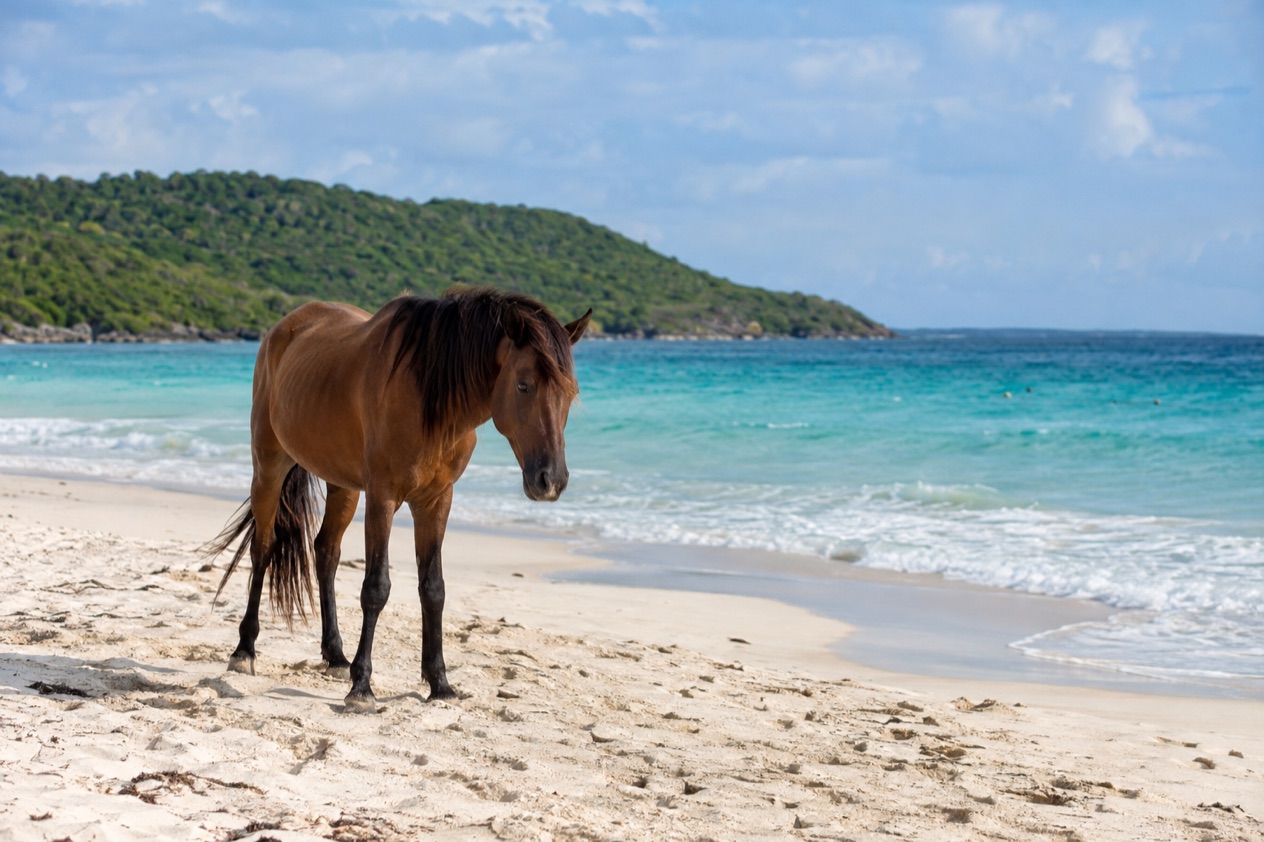
By day, Vieques is about drifting. Wild horses wander the roads and beaches, and you will see them near the shore at the edge of the island’s open land.
Esperanza, on the south coast, has a waterfront strip of casual restaurants and bars where people gather at sunset, while Isabel Segunda, the main town to the north, has a small fort and the ferry dock. Much of the island belongs to a wildlife refuge, so the coast stays open and green, with trails and empty beaches to explore.
Food and nights out
Both islands eat simply and well. On the menu you will find fresh fish, mofongo (fried plantain mashed with garlic), alcapurrias (green banana and taro fritters, often stuffed with meat) plus a cold beer or a piña colada at a bar on the harbor.
Culebra’s dining scene is concentrated around Dewey and its waterfront, so you can walk between places at night. Vieques spreads out more, with Esperanza the most lively evening spot and Isabel Segunda offering local counters and simple restaurants.
Neither island has a club scene. A big night is a table outdoors, live music at a bar and an early bedtime before a morning beach run. Of the two, Vieques has a little more variety after dark, but Culebra’s small harbor has a charm of its own, with boats rocking at anchor and the chickens finally quiet.
Weather and the best time to go
The two islands share the same climate, so the choice between them does not hinge on the weather. Both are hot and humid all year, with trade winds that make the shade comfortable and the sea warm in every month.
About December through April is the drier season, with skies that are frequently sunny and brief showers. From about May to November comes the wetter stretch, bringing stickier days and late-day rains that may sweep through fast or linger.
Culebra has a dry climate and lacks any rivers or streams, while the entire archipelago sits on the region’s drier side. That means the scenery turns brown during dry spells and green after rain, and the island’s fresh water has to be brought from the main island by undersea pipeline via Vieques.
It also means the beaches are not washed with river runoff, which helps the clear water that snorkelers love. Vieques has a similar dry, sunny feel in the same months.
The Atlantic hurricane season runs from June 1 to November 30, with the peak around the second week of September and most activity from mid-August to mid-October. Those months can be a lovely time to travel, yet keep an eye on local official alerts and the National Hurricane Center, since conditions can change quickly and flight and ferry times may shift. Culebra’s Ensenada Honda is regarded as one of the most protected harbors in the Caribbean, which says something about the island’s maritime history, but it is not a guarantee for visitors.
For beaches and snorkeling, the drier months are the easiest, and winter swells that hit the north coast of the main island matter less on these sheltered islands. Spring and early summer bring sea turtles to the nesting beaches and the chance of sargassum on some shores.
Late spring can also be a nice time, with long days and fewer visitors. Mid-July brings Culebra’s boat procession for the Virgen del Carmen, a good reason to time a visit around it if you like local festivals.
For the bioluminescent bay on Vieques, the moon matters more than the season. Plan around the darkest nights of the month, and keep the evening flexible in case clouds or conditions are not right. A trip that falls near a full moon can still be great for beaches, but the bay glow is usually stronger in the dark.
Getting there and getting around
Both islands are reached from Ceiba, on the northeast coast of the main island and about an hour’s drive from San Juan. From Fajardo, public ferries make the trip to Culebra and Vieques, while flights depart from the airport in Ceiba. José Aponte de la Torre Airport in Ceiba, the former naval station area, has commercial flights, mostly domestic, and short hops by air to the islands are also possible.
Roughly 9 miles to the northeast of the main island lies Vieques, while Culebra sits about 17 miles to the east, placing the pair in a short line just off the coast. The crossing by ferry is a simple, scenic ride with sea views and the occasional flying fish, and flights offer a quick alternative for those who prefer the air. Ferry and flight schedules can change with weather and demand, so confirm your plans before you travel and allow a margin on the day you need to catch a flight home.
After you reach Culebra, golf carts and bikes are available to rent for getting from place to place. Measuring about seven miles by five, Culebra holds a single town, Dewey, plus a calm harbor, and since big resorts are absent, nearly everything sits within easy reach. The ride to Flamenco is short, and the quieter beaches are only a little farther. Golf carts add to the fun and let you carry a cooler and snorkel gear without effort.
Vieques is larger and its sights are more spread out, so you will want a ride or a vehicle to reach the beaches, the town of Esperanza and the bay. Arrange transportation ahead of time if you can, because options are limited and the island is not set up for last-minute improvisation. Between the two, Culebra is easier for travelers who prefer to leave the car behind, and Vieques gives more freedom to people who like to explore by road.
Build in time for the crossing, and avoid scheduling a tight connection to a flight home on the same day.
Who should choose which
Choose Culebra if you want a compact island where the main plan is the beach. It suits snorkelers, families who like short drives and easy days, couples who want a quiet harbor town and travelers who enjoy a small place where everyone knows the rhythm of the day.
The turtles at Tamarindo, the reef at Carlos Rosario and the wide sand of Flamenco give you plenty to do without much planning. It is also a good pick for bird lovers, given the refuge and its colonies of nesting seabirds.
Choose Vieques if you want a night on the bioluminescent bay, more room to roam and a little more variety in food and lodging. It suits couples, small groups and anyone who likes to explore, drive down a sandy track to an empty beach and watch wild horses along the roadside.
It is a good fit for travelers who find Culebra too small or who want to spend a few days without repeating the same stretch of sand. People who prefer a bit more infrastructure often settle in more comfortably here.
If you have time, combining the two works well. A few nights on each lets you enjoy Culebra’s beaches and snorkeling and Vieques’s night bay and open country, with the crossing back through Ceiba tying it together.
If you only have a few days, pick one and do it properly rather than rushing between them. Culebra rewards a short trip because it is so compact, while Vieques rewards a longer one because there is more to find.
Good to know before you go
The U.S. dollar is the currency on both islands, and U.S. citizens can travel without a passport or a visa. Keep a little cash handy for small purchases, bring sunscreen, water and a hat, and use the same everyday habits you would anywhere, such as locking your belongings and not leaving valuables on the sand.
The hurricane season runs from June 1 to November 30, so keep an eye on the forecast and local official alerts if you travel in that window. Remember that the islands are small and remote, so bring what you need for the day, since shops and services are limited.
Sources
- U.S. Fish and Wildlife Service, Culebra National Wildlife Refuge (https://www.fws.gov/refuge/culebra), checked October 8, 2026
- Wikipedia, Culebra (https://en.wikipedia.org/wiki/Culebra,_Puerto_Rico), checked October 8, 2026
- Wikipedia, Ceiba (https://en.wikipedia.org/wiki/Ceiba,_Puerto_Rico), checked October 8, 2026
- Wikipedia, Cayo Icacos (https://en.wikipedia.org/wiki/Cayo_Icacos), checked October 8, 2026
- NOAA National Hurricane Center, Climatology (https://www.nhc.noaa.gov/climo/), checked October 8, 2026
To plan your stay
- Best Time to Visit Culebra: Weather by Month, Beaches, Crowds and Festivals
- Things to Do in Culebra: Flamenco Beach, Snorkeling with Sea Turtles, Wildlife Refuge and Island Life
- Culebra from San Juan: Road to Ceiba, Ferry or Flight, and a Day on the Island
- Culebra in January: Weather, Flamenco Beach, Snorkeling and a Two-Day Plan