
Late on a January night in Old San Juan, the plazas fill with the sound of cuatros and maracas, pasteles steam in open kitchens, and the sea breeze keeps the heat gentle. By July the same streets are quiet at midday, the rain comes in loud afternoon bursts, and the water off every beach feels like a warm bath. Puerto Rico stays warm all year, so its seasons are measured in rain, crowds and ocean swell rather than cold, and each one has its own pleasures.
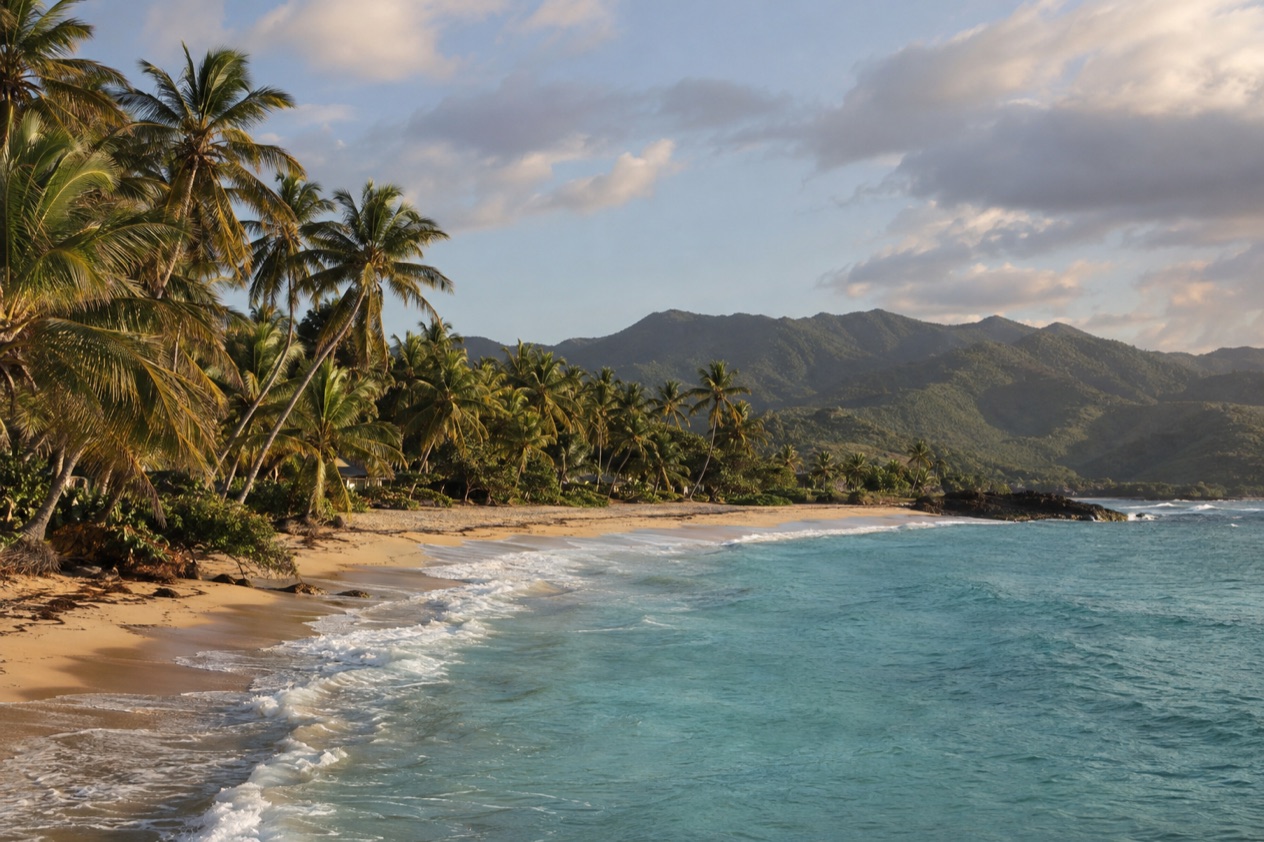
When is the best time to visit Puerto Rico?
The best time to visit Puerto Rico is from mid-December through April, when the drier season brings bright skies and a steady trade wind, with May, early June and November working well for travelers who accept a few showers in exchange for quieter beaches. The island has no true winter, so a swimsuit belongs in the bag in every month.
For beach and sea trips, the dry months are the surest bet. The south coast and the sheltered bays of Culebra and Vieques are usually gentler then. Surfers read the calendar the opposite way: Rincon and the Atlantic-facing north and west coasts get their big swells in winter, while the northwest tends to calm down in summer.
For sightseeing, winter and early spring are the comfortable choice. Walking the cobbled blocks of Old San Juan, climbing the old forts, wandering the pastel facades of Ponce or driving up to the coffee towns of the central mountains all feel lighter when the midday heat is not at its peak. Rain in the mountains and around El Yunque is a fact of life in any month, so a thin rain jacket earns its place in the suitcase.
Travelers who want quiet and easier bookings tend to do well in the weeks after Easter, in May and in early June, before the summer rush. Families should know that March is spring break season, and the popular beaches, ferries and restaurants can be loud, full and festive. Summer suits families tied to school calendars, as long as everyone is happy with hot afternoons, a short daily shower and plenty of time in the water.
Puerto Rico weather by region and season
Puerto Rico is a set of coasts and altitudes rather than one climate, and the same month can feel dry and breezy in the southwest and soggy in the northeast.
| Place | Region | January | April | July | October |
|---|---|---|---|---|---|
| San Juan | North coast | 83.2°F, 9.9 rain days | 86.2°F, 7.5 rain days | 88.7°F, 10.7 rain days | 88.6°F, 10.6 rain days |
| Fajardo | Northeast coast | 82.9°F, 6.5 rain days | 85.9°F, 6.3 rain days | 88.8°F, 10.2 rain days | 88.3°F, 10.1 rain days |
| Ponce | South coast | 82.3°F, 1.7 rain days | 83.6°F, 5.3 rain days | 86.9°F, 5.6 rain days | 84.1°F, 12.0 rain days |
| Rincon | West coast | 81.7°F, 1.3 rain days | 83.3°F, 4.2 rain days | 86.7°F, 5.6 rain days | 84.9°F, 8.4 rain days |
| Culebra | Eastern islands | 78.3°F, 3.2 rain days | 78.9°F, 3.9 rain days | 82.3°F, 8.9 rain days | 82.4°F, 12.8 rain days |
The north coast and the northeast catch the moisture carried in by the trade winds, so San Juan and Fajardo see showers in every season, even in the drier months. They also run the hottest in summer and early fall, when afternoons are sticky and a late-day downpour is the normal way to cool things off.
Ponce on the south coast and Rincon in the west are the drier pair. In winter they go days without a drop, and the sun lasts well into the evening. Both turn wetter in October, when Ponce in particular has one of the rainiest months of the table, so the south is not dry all year.
Culebra is the odd one out. Its days are a few degrees cooler than the main island, and its nights stay warm. It is a place of short, passing showers that turn more frequent in the fall. The central mountains, which the table does not cover, are cooler than any coast and wetter than the south, so a jacket for evenings in the coffee towns is sensible.
What is there to do in Puerto Rico in each season?
Every season has a clear best use. The dry months favor beaches, towns and long drives, the wet months favor water and green scenery, and the long Christmas season gives the island its warmest social mood.
December to April: the dry season
This is the season for doing a little of everything. Mornings in Old San Juan start with coffee and a pastry in a plaza, afternoons belong to a beach such as Luquillo or the coves of Culebra, and evenings suit mofongo (mashed fried plantain, often filled with shrimp or pork) at a table outside. Day trips to El Yunque, Ponce, the coffee towns and the cave country in the interior are most pleasant.
In the west, humpback whales pass offshore from about January to March, and you may sometimes spot them from the lighthouse area at Punta Higuero in Rincon. Winter is also the surf season, so beginners are better off in the calm coves of the south or the east, while experienced surfers head to the north and west coasts. Leave sailing across open water on big-swell days for another visit.
May to November: hot, green and wet
The wetter months bring a lusher island and a very warm sea. Waterfalls fill, the rainforest drips, and the mornings are often the best part of the day, with showers building later. Snorkeling on the west coast tends to shine when the winter surf calms down, and sea turtles come ashore to nest on some beaches in spring and summer.
Plan mornings outdoors and keep afternoons for museums, a long lunch of alcapurrias and lechon asado, or a swim between showers. The bioluminescent bays at Vieques, Fajardo and La Parguera glow all year and are best on moonless nights, so a chance of a glowing paddle exists in any month. This stretch of the calendar is also hurricane season, so keep plans flexible.
The shoulder months and the winter holidays
May, early June and November sit between the seasons: the beaches are less crowded, the sky is mixed, and the island is warm and green. They are a good fit for travelers who like a slower rhythm and do not mind a gray afternoon.
The Christmas season starts in late November and runs into mid-January, with parrandas (groups that surprise friends with songs at the door), lights on the plazas and tables heavy with pasteles and tembleque, a coconut pudding. It is the most social stretch of the year, and a great one to share with locals, though rooms and flights fill early.
When is Puerto Rico cheapest and least crowded?
Puerto Rico is quietest in the weeks after Easter through early June, and again in the fall, when most U.S. school calendars keep families at home. The busiest weeks follow the mainland holiday calendar: Christmas and New Year, the long Presidents Day weekend, spring break in March, Easter week and the middle of summer.
At peak times, Old San Juan fills with cruise passengers and weekend visitors, the ferries from Ceiba to Culebra and Vieques run full, and the best beach spots are claimed by mid-morning. Rooms near the water carry peak-season rates, and the popular restaurants are packed on weekend nights. Local families also head to the coast on long weekends, so even small beach towns can feel busy.
In the quiet months, rooms are easier to find, the beaches have room to spread out, and a table without a wait is the norm. The trade-off is weather: showers are more frequent, and the fall quiet overlaps with hurricane season. Quiet travelers who follow the forecast and keep a flexible plan often get the best of the island, with warm water and wide stretches of sand.
A good trick for any season is to go midweek. Beaches such as Flamenco on Culebra or the strands near Rincon are far calmer on a Tuesday than on a Sunday, when families arrive with coolers, music and folding chairs. Mornings are quieter almost everywhere, and the island’s long evenings leave time to eat late.
Which months should you avoid in Puerto Rico?
No month is off limits, but late summer and early fall ask for the most flexibility, because the Atlantic hurricane season runs from June 1 to November 30 and most activity comes between mid-August and mid-October. The peak falls on September 10, so storms are a real part of planning rather than a distant footnote.
A trip in these months does not mean a storm, and many travelers see only showers. Still, conditions can shift quickly, so before you go and during your stay, monitor the National Hurricane Center along with local official alerts, and keep enough wiggle room to shift plans by a day or two. A flexible schedule, and a room with a cancellation window, matter more than the exact week.
Heat is the other factor. From July to October the north and northeast coasts are sticky, afternoons are slow, and midday is a time for shade and a cold piragua, the shaved-ice treat sold from street carts. Rain falls in short bursts, often late in the day. The wettest stretch for the south and the eastern islands arrives in October.
Some springs and summers bring sargassum seaweed to the east and south coasts, where it may ruin a patch of beach for a few days. It is a chance, not a rule, and the west and north coasts are often clear of it. Winter brings another kind of limit: big swells on the north and west coasts that make some beaches unsuited to casual swimming, though the same swells delight surfers.
When can you swim in Puerto Rico?
The sea stays warm all year, but whether you can swim depends on local surf and current conditions. Even in January the water sits in the low 80s off San Juan, Ponce, Rincon and Fajardo, which feels refreshing rather than cold after a hot walk.
Through spring the sea warms by a degree or two, and by July it is in the mid-80s on every coast. October is the warmest month on the table, with the water in the upper 80s around Ponce, Rincon and Fajardo, which makes for long swims and snorkeling but little relief on a hot day.
What changes through the year is the surf, not the temperature. In winter the Atlantic coasts can have heavy swells, strong currents and rough shore breaks, while the Caribbean side and the sheltered bays of Culebra and Vieques usually stay gentler. In summer the northwest tends to calm down. Conditions change from one beach to the next and one day to the next, so follow whatever a flag, a sign or a lifeguard tells you if one is present.
Festivals and events in Puerto Rico through the year
The long Christmas season and Calle San Sebastian
Puerto Rico’s Christmas starts in late November and does not really end until mid-January. Parrandas roam neighborhoods with guitars, cuatros and güiros, plazas are strung with lights, and homes serve pasteles, lechon asado and tembleque. Three Kings Day on January 6 is a children’s holiday, with grass left for the kings’ camels, and the celebrations spill over into the weeks of the octavitas that follow.
Old San Juan’s Calle San Sebastian Street Festival, normally in mid to late January, brings the season to a close. Music, crafts, giant puppets and crowds fill the narrow blocks around the plaza. Wear comfortable shoes, arrive early in the day for room to move, and expect a party that goes on late into the night. On December 28 the town of Hatillo holds its Mask Festival, with costumed groups in the streets.
Carnival, Holy Week and the spring beaches
Carnaval de Ponce takes over the city in the weeks before Lent, with parades, costumes and the masked vejigante figures that appear at festivals across the island. It is a good reason to see the south in late winter, when the climate there is dry. Holy Week moves every year, and when it falls in March or April it brings processions in many towns and a surge of locals heading to the beaches.
Spring is also the season of sea turtles nesting on beaches in some places, and a chance of a quiet night walk on a dark shore if you follow local guidance and keep your distance. Humpback whales are present off the west coast from about January to March, a good reason for a Rincon stay in the first part of the year.
Summer fiestas and nature
The Noche de San Juan Bautista on June 23 is celebrated at the water’s edge, when many islanders walk into the sea at midnight and, according to tradition, go backward into the waves for luck. It is a lively night on beaches around the island, so go early if you want a spot with room to spread out.
In late July, Loiza hosts the Santiago Apostol festival, rooted in Afro-Puerto Rican tradition, with drums, bomba rhythms and elaborate coconut-shell masks in the streets. Beyond the calendar, the bioluminescent bays at Vieques, Fajardo and La Parguera glow all year and are best on moonless nights, so a good moon schedule matters more than the month you choose.
Sources
- NOAA NCEI, monthly normals 1991-2020, station RQW00011641 (San Juan L M Marin International Airport), checked October 8, 2026
- Open-Meteo Marine API, average 2015-2024, checked October 8, 2026
- sunrise-sunset.org, sunrise and sunset calculated for the 15th of the month, checked October 8, 2026
- Open-Meteo / ECMWF ERA5, 1991-2020 normals calculated on the grid cell 18.0111N 66.6141W, checked October 8, 2026
- Open-Meteo / ECMWF ERA5, 1991-2020 normals calculated on the grid cell 18.3403N 67.2499W, checked October 8, 2026
- NOAA NCEI, monthly normals 1991-2020, station RQW00011630 (Roosevelt Roads (Ceiba)), checked October 8, 2026
- Open-Meteo / ECMWF ERA5, 1991-2020 normals calculated on the grid cell 18.3N 65.28W, checked October 8, 2026
- NOAA National Hurricane Center, Climatology (https://www.nhc.noaa.gov/climo/), checked October 8, 2026
To plan your stay
- Things to Do in Puerto Rico: Old San Juan, Beaches, Bioluminescent Bays and Island Food
- Where to Stay in Puerto Rico: San Juan, Rincon, Vieques and the Best Areas for Your Trip
- Getting Around Puerto Rico: Rental Cars, Tolls, Carros Publicos and Ferries to Culebra and Vieques
- Know Before You Go to Puerto Rico: ID, Money, Getting Around and Local Customs