
On a March morning in Esperanza, the first sound is often a rooster, then the soft slap of a screen door as someone heads to the malecon with a coffee. Out on the water, small boats sit still and the light is already bright and clean. Vieques in March is warm, sunny and unhurried, a good month for long beach days, kayaking in the dark and wandering roads where wild horses stand in the shade.
What is the weather like in Vieques in March?
March in Vieques is warm, sunny and mostly dry, with a steady trade wind that keeps the heat comfortable.
| Month | Average high (°F) | Average low (°F) | Rain days | Sea (°F) |
|---|---|---|---|---|
| February | 76.8 | 74.5 | 4.0 | 80.2 |
| March | 76.9 | 74.6 | 4.2 | 80.6 |
| April | 77.9 | 75.5 | 5.9 | 81.6 |
The day opens gently and full of light, then around noon the sun beats down hard enough that you need a hat and some shade, breeze or not. Evenings stay warm, which means dining al fresco in a T-shirt works fine, and you can sleep with a fan running or the windows open. Pack for warmth and forget about heavy layers.
Rain, when it comes, is usually a short passing shower that darkens the sky for a few minutes and then moves on. Most days stay dry, and a wet afternoon rarely cancels more than a beach hour. The island is flatter and drier than the mountains of the main island, so the showers feel lighter here.
The light is the real reward. Days run a little over twelve hours, which leaves time for a late breakfast, a long swim and still enough daylight to reach a viewpoint before dusk. The sea stays warm, which makes the water part of nearly every plan.
Can you swim in Vieques in March?
You can count on the ocean being warm enough for a swim that is long and comfortable, and after taking that first dip, most people stay in for quite a while.
Sun Bay, Red Beach and Blue Beach are among Vieques’s most visited beaches. Often is not always: waves, wind and currents change from day to day and from beach to beach, and the open stretches on the north coast can be rougher. If a flag, a sign or a lifeguard offers guidance, do what it says.
Snorkelers do well on clear mornings, when the water is stillest and the light reaches the bottom. Bring a mask, sunscreen, and plenty of water, since many of the wilder beaches have little or no shade or services.
What to do in Vieques in March
March has no single headline festival here. It is simply a month when everything works: the beaches are at their friendliest, the nights are clear, and the island moves at its own pace. The long Christmas season is far behind, and the island feels like itself again, with locals at the plaza, fishermen heading out early, and open-air kitchens turning out fried snacks and fresh fish.
Food is simple and good. Look for fried alcapurrias (fritters of green banana and meat), whole fried fish with tostones, and pinchos (grilled skewers) at roadside stands. A cold coconut or a glass of fresh juice fits the weather perfectly. In Esperanza, the open-air restaurants along the waterfront are the natural place to sit through a long lunch.
Mosquito Bay at night
Mosquito Bay is the island’s big night draw, and one of the most remarkable places in the Caribbean to see bioluminescence. When the water is stirred, minuscule life forms there begin to glow, meaning that every stroke of an oar creates a luminous path and fish flash past resembling embers. A guide takes you out on an electric boat or in a kayak.
Moonless nights bring out the brightest glow, which makes the weeks surrounding the new moon your best bet, but even then it is a chance rather than a promise. Expect a short ride in the dark from town, a quiet paddle, and a lot of silence. Bring a change of dry clothes and something to keep bugs away, since the bay sits in a mangrove area.
The beaches and the wild horses
A lot of the ground that used to belong to a U.S. Navy range is now a wildlife refuge, which left long undeveloped beaches with no hotel towers behind them. Sun Bay is the easy, social one, with a long curve of sand and a calm feel. Red Beach and Blue Beach are quieter and more wild, with a sense of space that feels rare in the Caribbean.
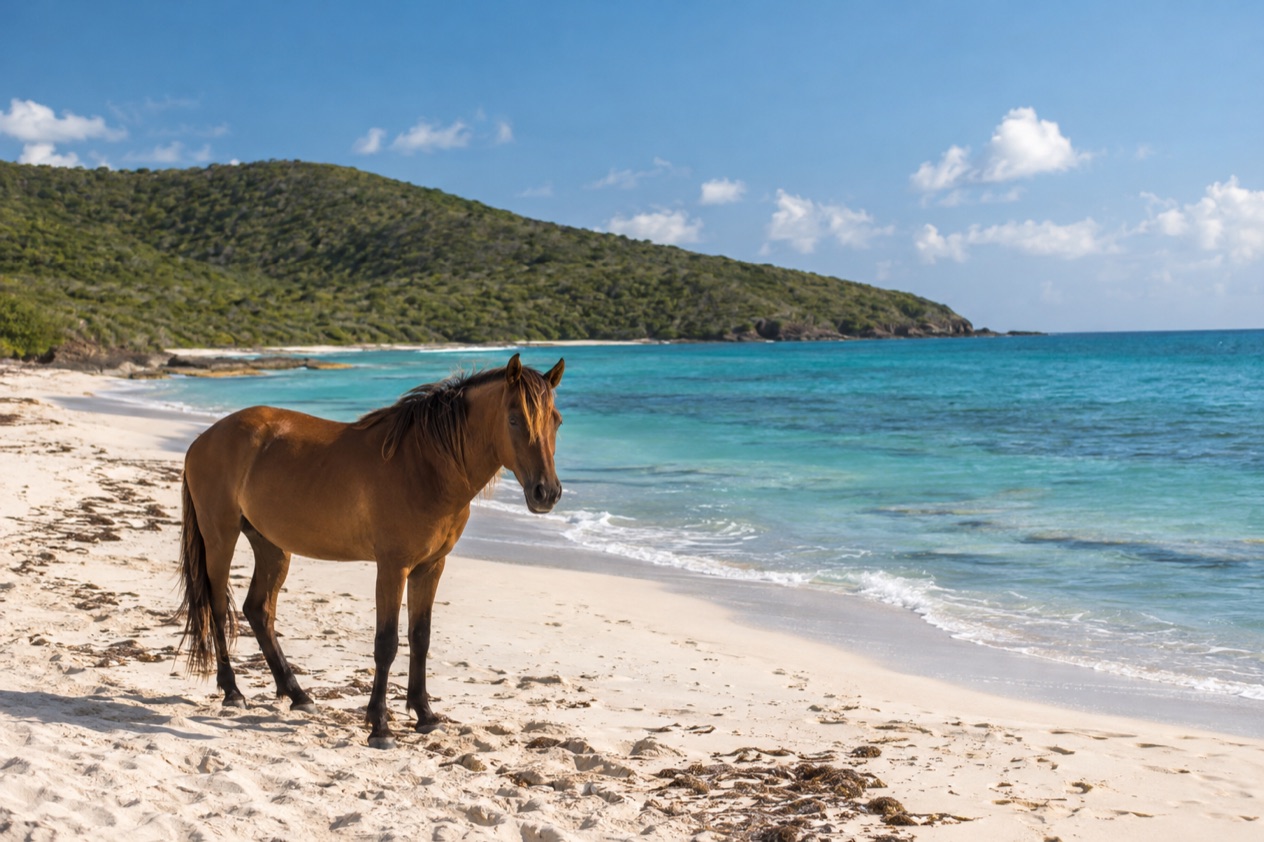
Wild horses roam the roads and beaches, sometimes grazing right at the edge of the sand. Watch them from a respectful distance and never feed them. They are most often seen in the early morning and late afternoon, when the heat eases and they come out of the brush.
A good March rhythm is a beach in the morning, a long lunch in the shade, then another swim or a quiet drive in the late light. With light showers rare and the sea warm, there is little reason to rush.
Isabel Segunda and Esperanza
Isabel Segunda sits on the north coast as the ferry town, where you will find a small plaza, a lighthouse, and a handful of shops and bakeries. It is a practical stop on arrival, and a pleasant place to grab a coffee and a pastry before heading out. The pace is slow, and the plaza fills with locals in the evening.
On the island’s south coast, Esperanza serves as the easygoing town by the sea, a place where open-air restaurants and guesthouses settle in. Most visitors base themselves here. The evening ritual is to walk the waterfront at sunset, stop for a drink, and look up: on clear March nights, the stars are astonishing with so little light around.
A two-day itinerary for Vieques in March
Day 1 starts early, when the horses are out and the beaches are empty. Take a drive to Sun Bay for a first swim before the sun is high, then bring a snack and stay as long as the shade holds. By midday, retreat to Esperanza for a long lunch at one of the open-air spots, ideally fried fish and a cold drink.
In the afternoon, rest or snorkel off a sheltered beach, then watch the sunset from the waterfront. After dinner, join a guided kayak or electric boat tour of Mosquito Bay, ideally on a moonless night.
Day 2 heads for the quieter beaches. Start with Red Beach and then Blue Beach, both best before the midday sun. Pack water and a picnic, because services are scarce. Stop for a late lunch in Isabel Segunda, wander the plaza and the lighthouse, and pick up pastries for the evening.
If a shower rolls in, shelter in a bakery or café in town, then wait it out with a slow lunch.
Is Vieques busy in March?
Vieques is moderately busy in March, with lively weekends and calmer weekdays, and a noticeable bump when spring break and holiday weeks bring families and groups.
The island is small, so a few extra visitors show up quickly in guesthouse availability, rental vehicles and restaurant tables. Rooms and rentals are best booked early for the holiday weeks and spring break, while quieter stretches are easier to arrange closer to the date. A guided night tour of Mosquito Bay is one of the island’s big night-time draws, especially around moonless nights.
The beaches rarely feel crowded, thanks to their size and the wild refuge land around them. Sun Bay is the busiest on weekends, while Red Beach and Blue Beach feel more private.
What to pack for Vieques in March
Think light, sun-ready and ready for water.
- Sunscreen and a hat, because the midday sun is strong even with the breeze.
- A mask and snorkel for the clear mornings in sheltered water.
- Water shoes or sandals, for rocky entries and hot sand.
- Insect repellent, especially for the mangrove area around the bay at night.
- A light rain jacket or a compact umbrella for passing showers.
- A dry bag, to keep phones and cameras safe on the kayak or boat.
Good to know before you go
March falls outside the official hurricane season, which runs from June 1 to November 30. Reaching Vieques means choosing either a small plane or the public ferry from Ceiba.
Wild horses share the roads, so drive slowly. Plan for limited services at the wilder beaches, and carry water.
Vieques in March vs February and April
Moving the trip to February keeps nearly the same weather and a slightly cooler sea, with a feel that is a little more winter than spring. The island is similar in character, and the nights are just as clear. It suits travelers who want the driest feel and do not mind a touch less warmth in the water.
April is a little warmer, with a warmer sea and more showers. The island starts to shift toward its wetter season, though rain stays brief for most visitors. Easter travel can bring a bump in crowds in some years, when Holy Week falls in April.
Choose March if you want the balance: dry, warm and bright, with the sea comfortable and the island not yet in the heavier heat. Pick February for a cooler edge, and April for the warmest water and a quieter feel after the spring break rush.
Is March a good time to visit Vieques?
Yes, March is a very good time to visit Vieques, especially for beach lovers, snorkelers, stargazers and anyone who wants warm days without heavy rain.
It will suit travelers who like a slow rhythm, long swims and dinners outdoors. Those who want nightlife, big festivals or cool weather should look elsewhere. On arrival, book your Mosquito Bay tour first, then settle in and let the beaches set the pace. What is special about March here is the combination: the sea is warm, the air is soft, the nights are clear, and the horses still wander out onto empty sand at first light.
Sources
- Open-Meteo / ECMWF ERA5, normals 1991-2020 calculated on the grid cell 18.1255N 65.44W, checked October 8, 2026
- Open-Meteo Marine API, average 2015-2024, checked October 8, 2026
- sunrise-sunset.org, sunrise and sunset calculated for the 15th of the month, checked October 8, 2026
- NOAA National Hurricane Center, Climatology (https://www.nhc.noaa.gov/climo/), checked October 8, 2026
To plan your stay
- Things to Do in Vieques: Mosquito Bay, Wild Beaches and Esperanza Evenings
- Where to Stay in Vieques: Esperanza, Isabel Segunda, Sun Bay Rentals and the Refuge Coast
- Vieques from San Juan: Ceiba Ferry, Small Planes and a Day on the Island
- Know Before You Go to Vieques: Ferry and Flights, Refuge Rules, the Bioluminescent Bay and Sun