
The little ferry pulls into Isabel Segunda, the gangway drops, and the first thing you notice is how quiet the road feels. A horse may be grazing at the edge of the pavement, and the air smells of salt and warm grass. Vieques rewards a little preparation: how you cross from the main island, which parts of the old Navy lands you can visit, and how to handle the sun and the sea.
What should you know before visiting Vieques?
Hold these four facts close: you get to the island by public ferry out of Ceiba or on a small plane, unexploded ordnance keeps much of the east off limits, the beaches remain wild and undeveloped, and the renowned bioluminescent bay puts on its best show on nights without a moon. Plan around those and the rest falls into place easily.
What surprises first-time visitors is how little is built. Much of the island was a U.S. Navy range until the Navy left, and that history left long beaches with no hotels behind them, a sleepy feel and a landscape of scrub, mangrove and open pasture.
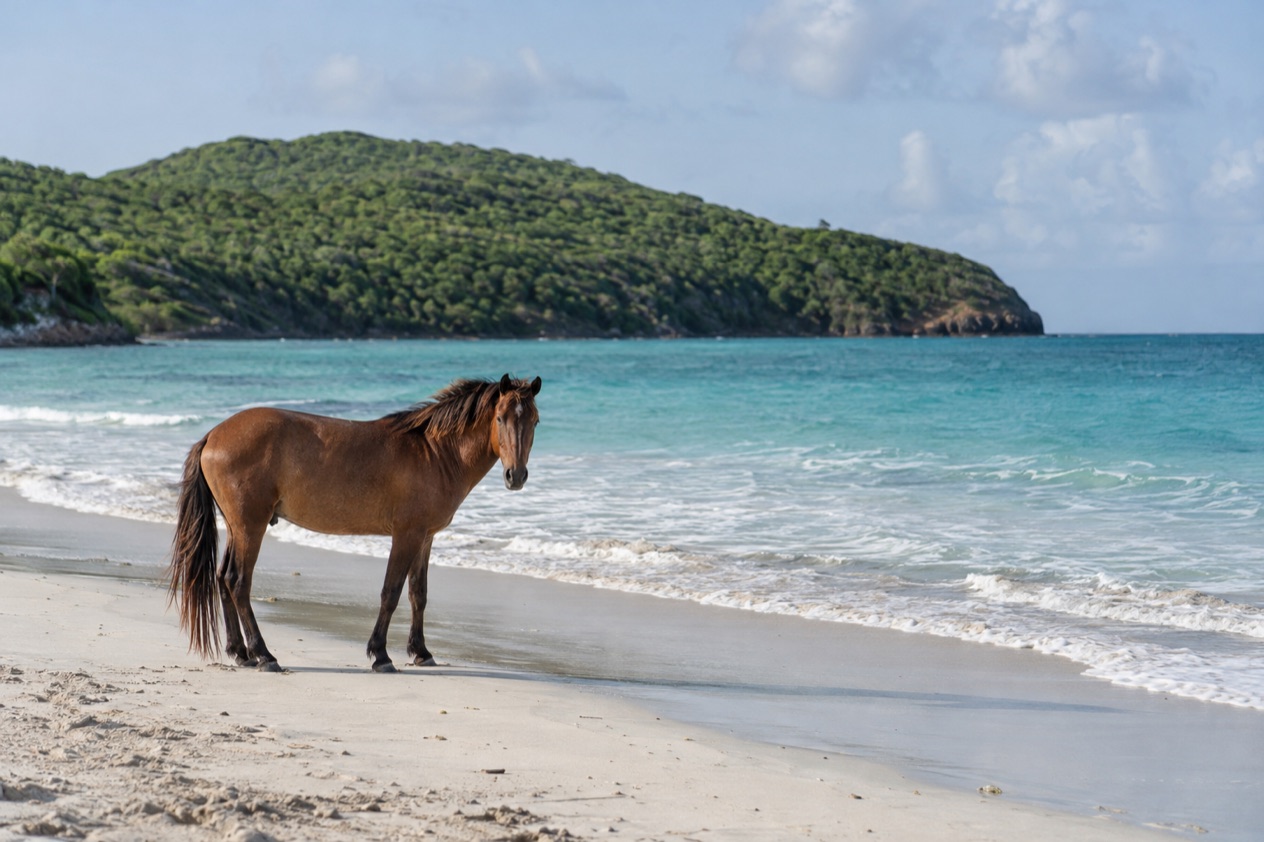
Wild horses wander the roads and beaches, so slow down and give them room. They are not pets, and watching them from a polite distance is the better way to enjoy them.
The second surprise is that the island has two personalities. Isabel Segunda, on the north coast, is the ferry town, a practical little place of a plaza, a fort on the hill and everyday errands. On the south coast, Esperanza is the easygoing village by the water, home to guesthouses and open-air restaurants, where nights slip by beside the sea. Many visitors split their time between the two moods.
Finally, the wild refuge shapes everything. The public can visit throughout the year at no cost, but a large section of its eastern half remains off limits to guests. Sun Bay, Red Beach and Blue Beach rank among the sand stretches that draw the most visitors, and the signs tell you which areas are open to you.
Entry, fees and paperwork
Because Puerto Rico is a U.S. territory and Vieques is part of it, U.S. citizens need neither a passport nor a visa. Flights from the mainland are domestic, and the last leg to the island is just a short hop or a boat ride within the same territory.
The Vieques National Wildlife Refuge takes up a very large share of the island and welcomes visitors all year, with no entrance fees. Many people rank it as the Caribbean’s largest national wildlife refuge and one of the most ecologically diverse. On the refuge and in the waters around it, sixteen plant and animal species on the federal list make their home, including the endangered Puerto Rican boa, while the peregrine falcon visits in winter during its migration.
The refuge has rules worth knowing before you pack. Drones are prohibited on its lands, so leave yours at home or in the bag. Because of the threat from unexploded ordnance and the related cleanup work, a large section of the refuge on the east side is off limits. That is a real hazard and not a formality, so stay in the open areas and obey every sign and gate.
The refuge headquarters sits on Carr. 997, and its phone number is (787) 851-7258 for questions about drone policy. The refuge does not manage marine mammals such as manatees or whales.
Money, cards and tipping
The currency is the U.S. dollar, the same bills and coins you use at home, so there is nothing to exchange and no conversion to do in your head. Prices on menus and signs are written in dollars.
On a small island, it is wise to treat money the way you would in any quiet corner of the country. Carry a little cash for small purchases, such as a roadside snack or a drink at a beach kiosk, and keep a card for larger bills.
Small businesses in places like Esperanza and Isabel Segunda run on different habits from big mainland chains, and it never hurts to ask at the register how a place prefers to be paid. Do this before you order a round of drinks, not after.
Tipping follows mainland habits. In a sit-down restaurant, most visitors leave a tip as they would at home, and it is a kind gesture for a server who has worked a busy open-air terrace. Guides, kayak leaders and drivers also appreciate a tip when the service has been good. Check the bill first, since some places add a service charge.
Because Vieques is small, you spend less time thinking about money than about planning. The ferry, the lunches, a guided night on the bay and a few beach days make up most of a trip, and it helps to budget for those first. The best souvenirs are usually modest: a local craft, a bottle of hot sauce, or a postcard from the post office in town.
Getting around and staying connected
You get to Vieques by ferry from Ceiba or by air from San Juan or Ceiba. Several times a day, the Autoridad de Transporte Marítimo (ATM) operates the public ferry that departs from Ceiba. Perched on Puerto Rico’s northeast coast roughly an hour by car from San Juan, Ceiba becomes the launching pad of choice for plenty of travelers, who spend the prior night sleeping on the mainland.
The other way is by small plane. Antonio Rivera Rodríguez Airport takes only small propeller-driven aircraft. When you depart from San Juan, you can choose between two airports, Luis Muñoz Marín International Airport or Isla Grande Airport, and every one of those flights stays in the air for roughly twenty to thirty minutes, though the brief trip from Ceiba requires just a few. From the window you see the island’s reefs and the pale line of beaches, a pleasant welcome after the ferry crowd.
Once you arrive, the scale of the island helps. Vieques is about twenty miles long and a little over four miles wide, so Isabel Segunda and Esperanza are never far from each other on the map. Wild horses on the road are a common sight, so drive and walk with care, especially at dusk and after dark when they are hard to see.
For getting around the island, plan your days around the places you want most: a beach morning, a village lunch, and an evening activity such as the bioluminescent bay.
Health, water and the sun
The sun is the first thing to respect. Vieques is hot and humid, the beaches have little shade, and the trade winds can make a strong day feel mild until the burn shows that evening. Wear a hat, use sunscreen, reapply after every swim and drink water steadily. Light, long-sleeved cotton is a good layer for midday walks and boat rides.
Mosquitoes and other biting insects gather near mangroves and at dusk, so bring insect repellent, especially for evenings out. Bring a refillable bottle too.
The sea changes from beach to beach and from day to day. Some shores face open water and can be rough, while sheltered coves are often gentler, but conditions are never guaranteed.
Should a flag, a sign, or a lifeguard be present, follow the guidance given, and if you find none of them, take a few minutes to observe the water prior to entering. In some springs and summers, sargassum seaweed may drift ashore on east and south coasts, which can change how a beach looks and smells for a few days.
Guinness World Records gave Mosquito Bay, also called Puerto Mosquito, the title of brightest bioluminescent bay on Earth in 2006. Guided tours take you out on a kayak or an electric boat, and moonless nights bring the most intense glow.
Treat it as a chance and not a promise, since a bright moon can dim the show. Wear dark, simple clothes and follow your guide’s instructions on how to behave in the water.
Local customs and etiquette
A greeting goes a long way. Say buenos días in the morning, buenas tardes after noon and buenas noches after dark when you walk into a shop, a small restaurant or a guesthouse. Both Spanish and English hold official status, and plenty of islanders speak the two, yet even a small bit of Spanish earns a warm welcome and usually comes back to you with a smile.
Dress is relaxed. Swimsuits belong at the beach, so throw a shirt or a cover-up over them before you walk into a bakery, a shop or a restaurant in town. If you step into a church in Isabel Segunda, cover your shoulders and dress modestly. On Vieques, locals have strong feelings about their island, and a quiet, respectful manner is appreciated.
The island has a long, difficult history with the Navy, and Vieques is best known internationally for the protests against the bombing range that led to the Navy’s departure in 2003. Many residents lived that story, so treat it as part of the community’s real history and not as a curiosity. Listen more than you comment, and ask before you take photographs of people.
Meals are unhurried. Take your time over lunch or dinner at an open-air place in Esperanza. Order something local, such as fried fish, mofongo (mashed plantain with garlic) or alcapurrias (fritters of green banana), and take your time. The island is small, and nobody is in a hurry to take your table.
Treat the land as gently as the people. Do not feed or chase the wild horses, take your trash with you from the beach, and never step past a closure sign in the refuge. The long undeveloped beaches exist because so much was left alone, and leaving them clean is the polite way to enjoy them.
Good to know before you go
The Atlantic hurricane season, which covers the Caribbean Sea, runs from June 1 to November 30, with the peak on September 10 and most activity between mid-August and mid-October. You can still travel in that period, but keep a close eye on the National Hurricane Center and alerts from local officials, because conditions can shift fast and ferries and flights could be disrupted.
Keep your ferry or flight confirmation and your lodging details handy. One last habit that pays off on Vieques: carry a bottle of water and a hat in your day bag, wherever you are headed, and finish your beach days before the light fades.
Sources
- U.S. Fish and Wildlife Service, Vieques National Wildlife Refuge (https://www.fws.gov/refuge/vieques), checked October 8, 2026
- Wikipedia, Vieques (https://en.wikipedia.org/wiki/Vieques,_Puerto_Rico), checked October 8, 2026
- Wikipedia, Ceiba (https://en.wikipedia.org/wiki/Ceiba,_Puerto_Rico), checked October 8, 2026
- Wikipedia, Caja de Muertos Island (https://en.wikipedia.org/wiki/Caja_de_Muertos_Island), checked October 8, 2026
- NOAA National Hurricane Center, Climatology (https://www.nhc.noaa.gov/climo/), checked October 8, 2026
To plan your stay
- Best Time to Visit Vieques: Weather by Month, Beaches, Crowds and Festivals
- Things to Do in Vieques: Mosquito Bay, Wild Beaches and Esperanza Evenings
- Where to Stay in Vieques: Esperanza, Isabel Segunda, Sun Bay Rentals and the Refuge Coast
- Vieques from San Juan: Ceiba Ferry, Small Planes and a Day on the Island