
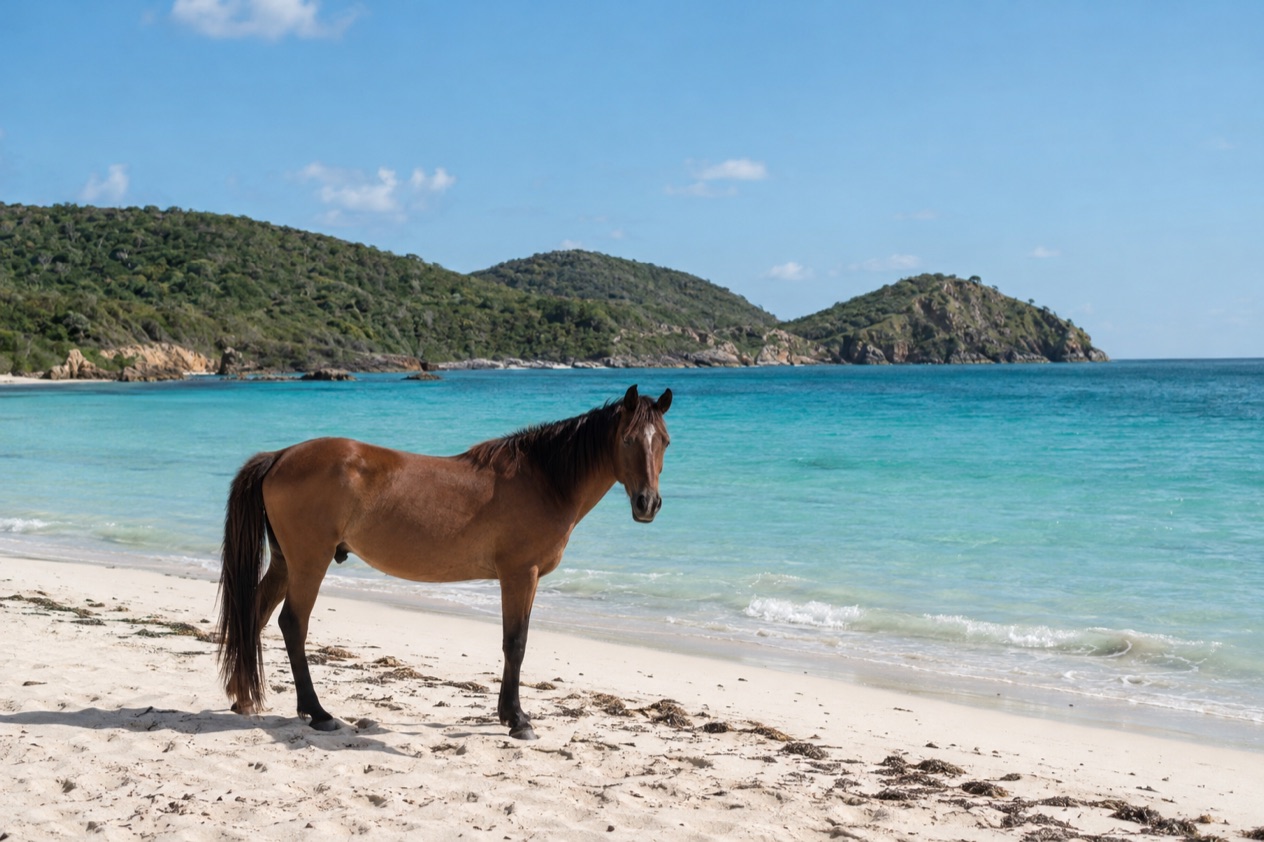
Early on a February morning in Vieques, a wild horse stands at the edge of a sandy road, chewing slowly while the trade wind moves the sea grape leaves. Esperanza is just waking up, with fishing boats at the dock and the first coffee poured on an open-air terrace. February is a dry, bright, easygoing month on this island, made for beaches, kayaks and long evenings by the water.
What is the weather like in Vieques in February?
February in Vieques is warm, breezy and mostly sunny, with only a few short showers to interrupt the beach days.
| Month | Average high (°F) | Average low (°F) | Rain days | Sea (°F) |
|---|---|---|---|---|
| January | 77.2 | 74.9 | 5.8 | 80.8 |
| February | 76.8 | 74.5 | 4.0 | 80.2 |
| March | 76.9 | 74.6 | 4.2 | 80.6 |
Mornings start soft and already warm, and by midday the sun is strong enough that shade, a hat and a cold drink become part of the plan. The trade winds keep things comfortable on the beaches, and the air never feels heavy the way it can in summer. Nights stay mild, so you can eat outside in a T-shirt and, at most, throw on a light layer if the breeze picks up on the water.
Rain, when it comes, is a brief shower that passes over in minutes, often in the afternoon or overnight. A day with a real downpour is uncommon, and the total for the month is small. Skies are usually clear enough for a fine sunset over the Caribbean side, and the light is golden and low in the late afternoon.
Dress for the sun more than for the weather: light cotton, swimwear under your clothes, sandals and a wide-brimmed hat. The sea stays warm enough to swim in all day, which makes the whole month feel like a long beach vacation.
Can you swim in Vieques in February?
Sure, you can swim for a long, comfortable stretch in that warm sea, the kind where you stay in the water until your fingers wrinkle.
On Puerto Rico’s Caribbean flank, where the water tends to be calmer, Vieques has plenty of southern and protected beaches that stay mild through winter, yet those conditions shift daily and vary from one stretch of sand to the next. Sun Bay, with its long curve of sand and shade from coconut palms, is a favorite for families and for anyone who likes a wide, open beach. Red Beach and Blue Beach, in the former Navy lands, are quieter and wilder, with clear water that often suits snorkeling.
In winter, the water along north-side beaches may get bigger, so check conditions before entering. Should you spot a flag, sign or lifeguard, follow that guidance, and never assume one will be present. Bring a mask and snorkel, water shoes for rocky entries, sunscreen and plenty of drinking water, since some of the wilder beaches have little shade and few services.
What to do in Vieques in February
February is the heart of the dry season, which makes it a month for being outdoors from breakfast to the last light. The island has no big festival that defines the month, so the pleasure is in the rhythm: beach in the morning, a long lunch, a swim, then the glow of the bay at night. Humpback whales pass through Puerto Rican waters in the winter months, and sometimes sailors and ferry riders spot a spout, though it is a chance, never a promise.
Much of Vieques was once a U.S. Navy range and is now a wildlife refuge, which is why the beaches are long, undeveloped and framed by dry forest rather than hotels. Wild horses wander the roads and shorelines, so drive slowly, especially at dusk, and enjoy them from a respectful distance.
Mosquito Bay at night
On Vieques, the main attraction after dark is Mosquito Bay, which locals call Puerto Mosquito. Its water glows blue-green when disturbed, and a paddle through it in a kayak, with a guide, leaves glittering trails off your blades and your fingers. Visits are by kayak or electric boat with a guide.
Aim for nights near the new moon, when no moon lights the sky and the glow peaks, while a full bright moon dims it. Depending on the sky and the water, it might show up brightly or just barely, so look at it as a possibility. Evenings are warm, so a swimsuit under a quick-dry shirt is plenty, and insect repellent helps near the mangroves.
It suits almost everyone, from couples to families with older children who can sit still in a boat.
Sun Bay, Red Beach and Blue Beach
Each of these three ranks among the island’s most popular beaches, and every one has a character all its own. Sun Bay is the easy one, a long crescent where you can walk for a long time and find a shady spot under the trees. The water is usually friendly in February, and the horses sometimes graze at the back of the beach.
Caracas Beach (Red Beach) and La Chiva Beach (Blue Beach) lie inside the refuge and feel more remote. Bring your own water and snacks, a mask for the clear shallows and something to sit on. They are lovely in the morning when the light is soft and the sand is still cool.
Go early to claim shade, then move on by early afternoon when the sun is high. Families, snorkelers and anyone who likes a quiet corner will do well here.
Isabel Segunda and Esperanza
On the north coast, Isabel Segunda serves as the ferry town, a no-nonsense spot where a plaza, bakeries and a hilltop fort reward a visit with views across the water. Along the southern shore, Esperanza is the relaxed village by the water, with guesthouses, little bars and open-air eateries dotting its edges, where fried plantains, the day’s fresh catch and chilled local beer add up to a simple lunch.
The Esperanza malecon is the place to be at sunset, when people drift out with a drink and watch the boats rock at anchor. You should seek out fresh fish, mofongo (garlic mashed fried plantain) and alcapurrias, fritters made from green banana and taro with meat inside.
A two-day itinerary for Vieques in February
Day 1 begins with the ferry or a small plane, so arrive in the morning if you can and head straight to your guesthouse to drop your bags. Spend the late morning in Esperanza with a coffee and a wander along the waterfront, then eat lunch at an open-air place by the water. Daylight lasts nearly twelve hours in mid-February, which leaves room for everything.
In the afternoon, head to Sun Bay for a long swim and a walk along the sand, when the sun starts to soften. Come back to Esperanza for sunset on the malecon, then have dinner at a simple seafood spot. Finish with a night paddle in Mosquito Bay, ideally on a dark, moonless evening.
Day 2 is for the wild side of the island. Start early with a drive to Red Beach and Blue Beach, snorkeling in the clear shallows before the sun gets high, and bring your own water and lunch. Leave the refuge around midday when the heat is at its strongest.
Spend the afternoon in Isabel Segunda, strolling the plaza, visiting the fort and picking up a snack at a bakery before the ferry or flight home. If a rare shower or a sea too rough for swimming interrupts the plan, switch to a long lunch, a slow walk through town and a look at the craft shops. Keep an eye out for the horses on the roads on the way back.
Is Vieques busy in February?
Moderately, because February is a favorite winter escape from the mainland, so the island has a steady flow of visitors without feeling crowded.
Weekends and any long holiday weekend bring more people on the ferry and more day-trippers to Sun Bay, while midweek is quieter and easier for rooms and tables. Esperanza fills first, since it has the most guesthouses and restaurants, and the popular spots can be full in the evenings.
When you have room for only one outing, choose the Mosquito Bay tour, with a guide leading from a kayak or an electric boat. Book it as soon as your dates are fixed, and for quieter weeks book a little later. Lunch and dinner tables are easier midweek, and the beaches in the refuge are never as packed as the main strips on the main island.
What to pack for Vieques in February
Pack light and think sun, salt and sand, with one layer for breezy evenings on the water.
- Swimsuits and a quick-dry shirt, because you will be in and out of the water all day.
- Mask and snorkel, for the clear shallows of Red Beach and Blue Beach.
- Sunscreen and a wide-brimmed hat, since shade is limited on the refuge beaches.
- Water shoes, for rocky entries and the walk to the kayak launch.
- Insect repellent, for evenings near the mangroves and the bay.
- A refillable water bottle, as some of the wilder beaches have no services.
Good to know before you go
February falls well outside the official hurricane season, which runs from June 1 to November 30, so the weather is rarely the main worry for planning. The first thing to sort out is how you will reach the island: the public ferry departs from Ceiba, and small planes fly in too. A car or a similar vehicle makes the beaches in the refuge much easier to reach, and the road surface is bumpy in places, so go slowly and watch for horses.
Vieques in February vs January and March
Moving the trip to January brings slightly more rain and a sea a touch warmer, with the island feeling a little busier around the holiday season and the weeks that follow. The mood is festive on the main island, but the beaches are still excellent and the glow in the bay is just as likely.
March is very close to February in weather, with similar warmth, a handful of showers and a sea that stays inviting. Spring-break visitors can add energy to the ferry and the beaches, and rooms tighten up around school vacations. Humpback whale season is winding down by then, so the chance of a sighting is a bit smaller.
If you want the driest feel with fewer holiday crowds, February is a sweet spot. Choose January if you like the festive atmosphere and do not mind a few more showers, and choose March if you are traveling with a school-age group tied to spring break and want the same easy weather.
Is February a good time to visit Vieques?
Yes, especially for beach lovers, snorkelers and anyone who wants warm days without the heaviness of summer.
Couples, families and travelers who like slow days will be happy here, and so will anyone who wants a night on the bioluminescent bay. It is less suited to people who want a big festival or nightlife, since the island is quiet by design and the evenings end early. If rough water is a worry, stay on the sheltered southern beaches and check conditions each morning.
On arrival, book your Mosquito Bay night first, then plan the rest of the days around the sea and the sun. What makes February special here is the balance: dry skies, warm water, wild horses on empty beaches and a bay that glows in the dark.
Sources
- Open-Meteo / ECMWF ERA5, normals 1991-2020 calculated on the grid cell 18.1255N 65.44W, checked October 8, 2026
- Open-Meteo Marine API, average 2015-2024, checked October 8, 2026
- sunrise-sunset.org, sunrise and sunset calculated for the 15th of the month, checked October 8, 2026
- NOAA National Hurricane Center, Climatology (https://www.nhc.noaa.gov/climo/), checked October 8, 2026
To plan your stay
- Things to Do in Vieques: Mosquito Bay, Wild Beaches and Esperanza Evenings
- Where to Stay in Vieques: Esperanza, Isabel Segunda, Sun Bay Rentals and the Refuge Coast
- Vieques from San Juan: Ceiba Ferry, Small Planes and a Day on the Island
- Know Before You Go to Vieques: Ferry and Flights, Refuge Rules, the Bioluminescent Bay and Sun