
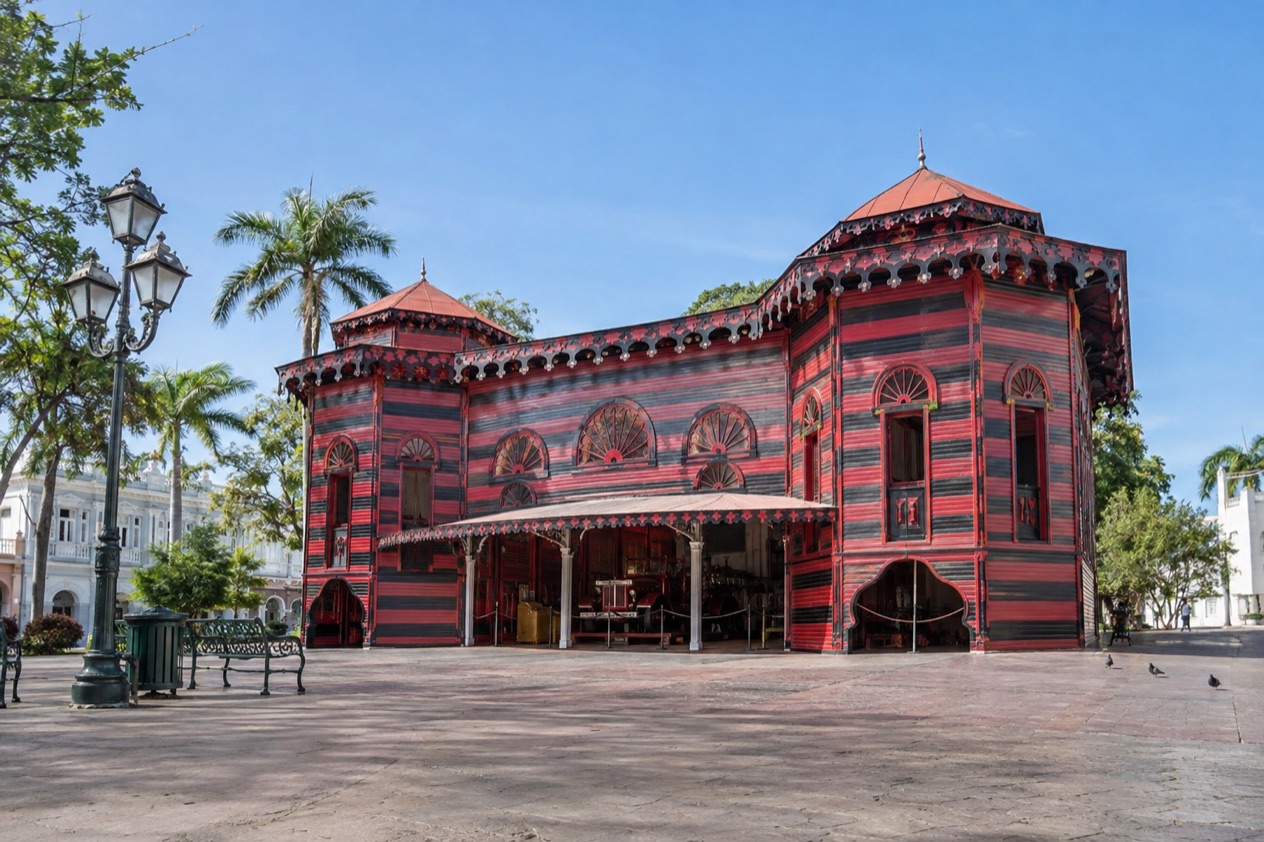
When evening comes to Ponce, church bells ring out over Plaza Las Delicias, store owners spray the walkways clean, and morning’s first rays strike the red-and-black bands of the Parque de Bombas firehouse. By evening the action has drifted toward the sea, where families stroll the boardwalk at La Guancha and the breeze finally cools the day. Where you sleep decides which of those Ponces you wake up in: the old center, the waterfront, the museum district or the cool hills above town.
What is the best area to stay in Ponce?
If you are coming to Ponce for the first time, the top choice is the historic center near Plaza Las Delicias, since the plaza, the firehouse, the cathedral and most of the old streets sit just steps from where you are staying. Beach lovers lean toward the waterfront near La Guancha and Playa de Ponce, travelers who want a quiet base with views look to the hills north of town, and anyone chasing the art museum may prefer the district along Avenida Las Américas.
Ponce is not a resort strip like the ones you find in other parts of the Caribbean. It is a working southern city with a grand colonial heart, and the places to sleep reflect that.
In the center you find restored townhouses turned into small hotels and guesthouses, while the seafront and the outskirts offer larger, more conventional hotels and a scattering of apartments. All-inclusive resorts in the classic sense are not what this city is about, and that is part of its charm.
If it is your first time and you have only a long weekend, stay in the center. You can walk to breakfast in a café on the plaza, spend the morning among the museums and old mansions, and return to your room in the heat of the afternoon without needing any plan for getting around. The historic streets are prettiest in the early morning and again after dark, when the facades are lit and the plaza fills with people sitting on benches, eating ice cream and listening to whatever music is playing.
If you came mainly for the sea, the waterfront makes more sense. La Guancha is the local seaside promenade, with food kiosks, a long boardwalk and the departure point for the ferry to Caja de Muertos, the uninhabited island with its lighthouse and protected beaches. Staying nearby means you can walk out for a sunrise stroll or an evening drink with the water in view, though you will head back toward the center for the city sights.
Families often do well near the waterfront or in the museum district, where there is more room, parking and open space, and where a long day of sightseeing can end with a swim rather than a trek through hot cobbled streets. Couples and travelers who like atmosphere tend to prefer a boutique stay in the center. Anyone watching their spending should look at guesthouses and apartments rather than the larger hotels, and should compare a few options in each area before settling on one.
Nightlife in Ponce is low-key and sociable rather than clubby. The plaza and the streets around it come alive in the evening, especially on weekends and during festivals, with open-air gatherings, live music and late dinners.
If you want to be able to walk home after dinner and a drink, the center is the natural choice. If you prefer to be in bed by ten with the windows open, the hills or the quieter edges of town are better.
The areas differ less in distance than in mood. The center is dense, historic and animated, the waterfront is breezy and casual, the museum district is spacious and practical, and the hills are green, quiet and cooler. Because the city is compact, you can sleep in one and still visit the others in a morning, so the real question is what you want to see when you step out the door and what you want to hear when you go to sleep.
The best areas to stay in Ponce
Four areas cover almost every kind of trip to the Pearl of the South. Each has its own rhythm, its own kind of lodging and its own way of getting around, and none of them is far from the others.
Historic center around Plaza Las Delicias
This is the Ponce of the postcards. The plaza is shaded by old trees and ringed by the cathedral, the striped Parque de Bombas firehouse and a string of pastel buildings with iron balconies. The historic district sits about three miles inland from the Caribbean coast, so you feel the heat of the day more here than at the sea, but you also have fountains, arcades and cafés to duck into.
Rooms often have high ceilings, tiled floors and shutters, which is lovely, though older buildings can mean thin walls and street sound on weekend nights. Ask for a room at the back if you are a light sleeper.
The plaza is a natural starting point for the museums, the old mansions and the dinner spots in the historic center. For the beach or the hills you will need a ride of some kind. Tip: walk the plaza at dawn, when the light is soft and the only people out are the ones sweeping the steps.
Waterfront near La Guancha and Playa de Ponce
The waterfront is where Ponce goes to breathe. La Guancha is a boardwalk by the sea with a lookout tower, seaside kiosks and a breezy, relaxed mood, especially toward the end of the afternoon. The ferry to Caja de Muertos departs from here as well, which means this spot works well as a starting point if you plan to visit the island.
Expect larger hotels, simple seaside lodgings and apartments rather than historic boutique stays. The attraction is the open horizon, the sunsets and the ease of stepping out for a walk.
Because the water can be different every day and at every beach, do what any flag, sign or lifeguard on the sand tells you. Sargassum seaweed can reach south-coast beaches in some springs and summers, so look at recent photos of the shore before you book.
This area suits beach lovers, families and anyone who likes to eat fresh fried fish with their toes near the sand. You will want a ride into the center in the evening, and it is worth making the trip, because the plaza is far more atmospheric after dark than the waterfront is lively. Tip: go out to the boardwalk at sunset, then return to the plaza for a late dinner.
Avenida Las Américas and the museum district
A short way from the old center, Avenida Las Américas holds the Ponce Museum of Art, home to one of the most important Pre-Raphaelite collections in the Western Hemisphere, with paintings such as Flaming June among its stars. In the front yard, a soaring aluminum work by Roy Lichtenstein gives drivers on the road an easy landmark for finding the building.
It is a sensible choice for families, for travelers with luggage and for anyone who likes to return to a quieter room after a day among the crowds. You lose the charm of waking up on a cobbled street, but you gain breathing room.
If you would rather not drive, you can take a SITRAS Orange Line bus on route E, F or G, which stops at the Museo. Tip: confirm the museum’s current visitor arrangements before planning your day.
The hills north of town near Hacienda Buena Vista
North of Ponce the land rises into green hills and old coffee country. In Barrio Magueyes, roughly 7 miles north of the city along PR-123, Hacienda Buena Vista is Puerto Rico’s only farm museum, with a historic hydraulic turbine, plantation buildings, and guided tours that can include portions of the protected natural area. Farther on, the municipality reaches all the way up to Cerro de Punta, the highest peak on the island.
Lodging in the hills is quiet and small: country guesthouses, rural apartments and the occasional boutique stay among the trees. Mornings are cool and full of birdsong, and evenings are dark and still, a welcome contrast with the heat of the plains. It suits couples, nature lovers and anyone who wants a retreat rather than a city base.
The tradeoff is distance. You reach the city along the road, and most evenings out in the plaza will mean a drive back through the dark, so this area works best as a second stop after a few nights in town. Tip: pair a hill stay with a morning at the hacienda, then head down for lunch by the sea.
Ponce areas compared
| Area | Best for | Feel | Getting around |
|---|---|---|---|
| Historic center (Plaza Las Delicias) | First visit, couples, nightlife | Historic, animated, walkable | On foot for the main sights |
| Waterfront (La Guancha, Playa de Ponce) | Beach, families, Caja de Muertos ferry | Breezy, casual, open to the sea | Walk the boardwalk, ride into the center |
| Avenida Las Américas (museum district) | Art, families, longer stays | Spacious, practical, calmer | SITRAS Orange Line buses E, F, G (Museo stop) |
| Hills near Hacienda Buena Vista | Quiet, nature, a second stop | Green, cool, rural | By road along PR-123 |
The great trade-off in Ponce is beach against local life. Sleep by the water and your days are easy and breezy, with the sea a few steps away and a boardwalk for the evening walk. Sleep in the center and you wake up in the middle of the city, with coffee, church bells and neighbors on the plaza, but you will go to the sea by ride rather than by foot.
Quiet against nightlife is the second choice. The plaza hums on weekend evenings and during festivals, and the streets around it can stay lively late. The museum district and the hills are calmer, which suits light sleepers and families with small children, but they ask you to plan your evenings a little more.
Many travelers split their stay. Two nights in the center for the plaza, the museums and the dinners, then a night or two by the water or in the hills to unwind, is a comfortable rhythm. Because the city is compact, switching is easy, and nothing in town is far from anything else.
How to choose your hotel in Ponce
Start with the kind of vacation you want, because Ponce rewards curiosity more than lounging by a pool. An all-inclusive package is not the natural way to see this city, since the pleasures are outside the hotel: a plaza breakfast, a museum afternoon, a plate of fried fish at the boardwalk, a ferry day to Caja de Muertos. A hotel that gives you a good bed, a cool room and an easy start to the day usually serves you better than one built to keep you inside.
Beachfront or town is the next question. A place near the sea gives you breezes and sunsets and makes the Caja de Muertos departures easy, but the center is where the architecture and the evening atmosphere are. If you can only choose one, choose by what you will do most. Stay near the water if you plan to spend your days on the sand, and in the center if you plan to wander.
Timing matters. During the weeks before Lent, Carnaval de Ponce draws crowds of vejigantes parading in horned masks, and the center fills with visitors and families from across the island, so the most convenient rooms go fast. Holy Week, which moves every year, and the long Christmas season are also popular, so book early if your dates overlap with any of them.
The Atlantic hurricane season runs from June 1 to November 30, with most activity between mid-August and mid-October. When you book inside that period, choose a refundable or changeable rate and keep up with the National Hurricane Center plus local official alerts as your trip gets closer. Forecasts can change fast, so avoid locking in anything you cannot change.
Families should think about space and ease: a room with a little extra floor, a spot near the sea or near parking, and a short walk to breakfast. Travelers with limited mobility should ask directly about steps, elevators and the surface of the street outside, since the historic center has uneven sidewalks and old buildings that were not designed with accessibility in mind. A well-described room, with photos of the bathroom and the entrance, is worth asking for.
Before you book, check a few practical things:
- Noise: ask which side of the building faces the street or the plaza, especially in the historic center on weekends.
- Air conditioning: Ponce is hot, so a room that cools properly makes a real difference to your sleep.
- Sea conditions: look at recent photos of the beach, since sargassum can reach the south coast in some springs and summers.
- Getting around: check how far the property is from the plaza, the boardwalk and the bus stops, and whether it has parking.
- Transfers: confirm how you will get from Mercedita Airport or from a rental car return, so you arrive without a scramble.
Finally, read recent reviews with an eye for the small things that matter: how the staff handled a problem, whether the water pressure held up, whether the breakfast was worth waiting for. Ponce rewards places run by people who love the city, and you can usually tell from a few honest comments.
Good to know before you go
Mercedita International Airport sits three nautical miles east of downtown Ponce. If you are flying in from the mainland, you are on a domestic route, so U.S. citizens can leave the passport and the visa at home. You will use U.S. dollars here, and a little Spanish goes a long way at the front desk and in the plaza cafés.
Sources
- Wikipedia, Ponce (https://en.wikipedia.org/wiki/Ponce,_Puerto_Rico), checked October 8, 2026
- Wikipedia, Museo de Arte de Ponce (https://en.wikipedia.org/wiki/Museo_de_Arte_de_Ponce), checked October 8, 2026
- Wikipedia, Hacienda Buena Vista (Ponce) (https://en.wikipedia.org/wiki/Hacienda_Buena_Vista), checked October 8, 2026
- Wikipedia, Mercedita Airport (Ponce) (https://en.wikipedia.org/wiki/Mercedita_Airport), checked October 8, 2026
- Wikipedia, Caja de Muertos Island (https://en.wikipedia.org/wiki/Caja_de_Muertos_Island), checked October 8, 2026
- NOAA National Hurricane Center, Climatology (https://www.nhc.noaa.gov/climo/), checked October 8, 2026
To plan your stay
- Best Time to Visit Ponce: Weather by Month, Beaches, Carnaval and Hurricane Season
- Things to Do in Ponce: Plaza Las Delicias, Art Museum, Caja de Muertos and Local Food
- Ponce Airport to City: Getting to Plaza Las Delicias, Carros Públicos and Driving
- Know Before You Go to Ponce: Entry, Getting Around, Heat and Local Customs