
Just after sunset in November, the wild horses drift down to the roadside grass near Esperanza while the first guesthouse lights come on and someone grills pinchos behind an open-air bar. The island feels unhurried, with warm water, afternoon showers that pass quickly and long beaches that were once Navy land and are now mostly empty. This is Vieques in the last month of the hurricane season, a good moment for beach days, a night on the glowing bay and slow dinners by the water.
What is the weather like in Vieques in November?
November in Vieques is warm, humid and a little showery, with the sea still as warm as a bath and the air just starting to ease from the summer heat.
| Month | Average high (°F) | Average low (°F) | Rain days | Sea (°F) |
|---|---|---|---|---|
| October | 81.4 | 78.2 | 15.2 | 86.6 |
| November | 80.0 | 77.1 | 13.4 | 84.4 |
| December | 78.5 | 76.0 | 8.1 | 81.9 |
Mornings are the best hours for walking, driving and snorkeling. The sun is already strong by mid-morning, but the trade winds keep the shade comfortable, and the light turns soft and gold in the late afternoon. You can eat outdoors in a T-shirt because nights remain warm, and air-conditioned rooms are the only place you need a light layer.
Rain comes in many days of the month, usually as a short, heavy shower that blows through in the afternoon or overnight and then gives way to sun. A full gray day is less common, though a passing tropical system can bring several wet days in a row. Puddles on the dirt roads to the beaches dry quickly, and the humidity is the thing you notice most.
The days are shorter than in summer, with about eleven hours of daylight in the middle of the month, so plan beach time before late afternoon and leave dinner for after dark. Dress in cotton, linen and swimsuits, and keep a thin rain jacket in your bag.
Can you swim in Vieques in November?
Yes, the Caribbean water around Vieques is warm enough in November for a long swim, and most people stay in until their fingers wrinkle.
Sun Bay is a long, curved beach with shade from palms and sea grapes, and Red Beach and Blue Beach are quieter strands in the former Navy lands.
Conditions change from day to day and from beach to beach, and a windy afternoon can bring chop and a stronger pull. When a lifeguard is present, or when a sign or flag has been put up, follow its instructions.
Snorkeling is clearest, as a rule, early in the day, ahead of the breeze, and once several dry days have passed. Heavy rain can cloud the water near the shore for a while. Sargassum seaweed can reach some shores in some seasons, so it is a chance, not a rule. Bring your own mask and fins if you are particular about fit, and a rash guard if you burn easily.
What to do in Vieques in November
November is a transition month. The summer crowds are gone, the Christmas season is starting to creep into the plazas and radios, and the island sits in a calm space between the two. By the end of the month, parrandas (neighborhood groups that go from house to house singing and playing guitars, cuatros and maracas) begin to appear on the island, and the sound of aguinaldos, the Puerto Rican Christmas songs, drifts out of open doors and car windows.
Food is a big part of the day here. Roadside stands offer fresh fish along with mofongo (fried plantain mashed with garlic and broth), alcapurrias (meat-filled fritters made from green banana and taro) and pinchos (skewers cooked on a grill). In the evening, open-air restaurants serve rum drinks, and a cold coconut from a cart is the best refreshment between beaches.
Mosquito Bay after dark
At Mosquito Bay (Puerto Mosquito), the island’s top nighttime adventure, small creatures in the water glow whenever they are stirred, thanks to bioluminescence. Your paddle leaves a blue-green trail, and fish darting beneath a kayak can look like streaks of light. You go in with a guide, either by kayak or on an electric boat.
Your best view of the glow comes on nights without a moon, so look at the moon calendar before you pick which evening to go. It is a chance, not a promise, and cloud or a bright moon can dim it. Tours take place after dark, with the sound of water and the frogs in the mangroves.
It suits adults, teenagers and curious children who are comfortable in a boat in the dark. Bring a dry change of clothes, since you can come back damp, and put insect repellent on before you leave your room, since the bay is ringed by mangroves.
The beaches of the wildlife refuge
Much of that former U.S. Navy bombing ground today serves as a wildlife sanctuary, and that is the reason the island’s shores still come across as so wild and unbuilt. Sun Bay, also called Sun Bay Beach Park, is among the island’s most visited beaches. Blue Beach and Red Beach also rank among the most popular, and you get to both by way of bumpy roads that pass through scrub and dry forest, and every one of them carries its own character, since Blue Beach tends to catch a bit more breeze.
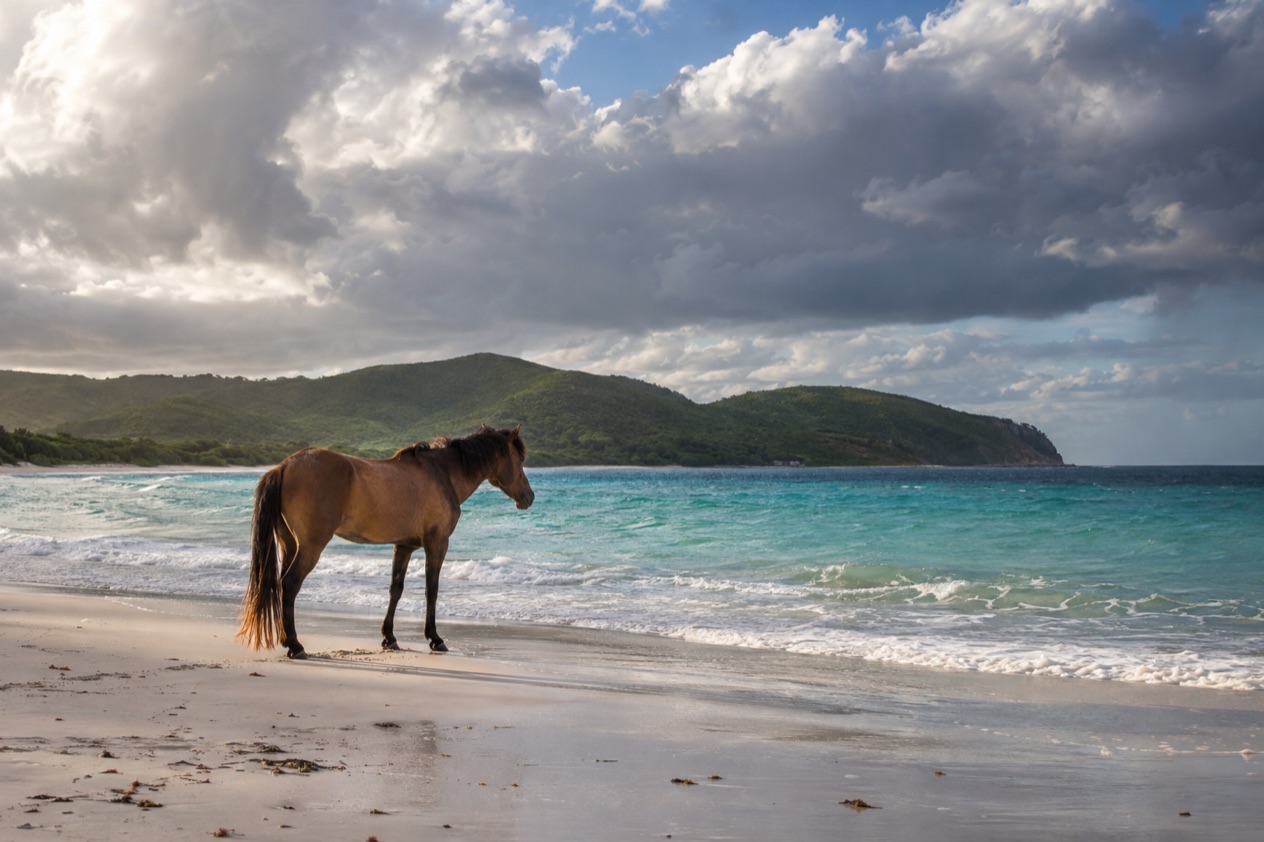
Wild horses roam the roads and beaches, and you may see them grazing in the shade of the sea grapes or ambling along the sand. Give them space and do not feed them. Morning is the best time for photographs, when the light is low and the horses are most active, and the late afternoon, when the sky turns pink over the water, is a close second.
Bring water, snacks and a hat, because shade is limited and services are few away from the main beaches. When a rain shower passes through, take cover in a solid shelter until it ends.
Isabel Segunda and Esperanza
Up on the north coast, pastel facades, little shops and bakeries, and a fort overlooking the harbor all meet in Isabel Segunda, the town where the ferry comes in. It is where you stock up on groceries, grab a coffee and a pastry, and see everyday island life. It is practical rather than showy, and an hour or two is enough.
On the island’s southern shore, Esperanza is the easygoing village on the water, with guesthouses and open-air restaurants lining its edge and looking out at the bay. In the evening, people stroll the seafront, stop for a drink and watch the lights of the boats. It is the better base if you want to walk to dinner, and in November it is quiet enough that you can still get a seat at the water’s edge.
A two-day itinerary for Vieques in November
Day 1. Get to your lodging in Esperanza with your bags before it gets hot, coming by small plane or on the early ferry from Ceiba. Spend the morning at the malecón with a coffee and a breakfast of eggs, plantains and fresh bread, then walk the seafront and the small piers. Midday is for a long lunch at an open-air restaurant, with fish or a pincho, while the sun is at its hardest.
In the afternoon, drive to Sun Bay for a swim and a lazy hour in the shade, and watch for horses on the road. Come back to shower before sunset, with the daylight ending early in the evening. After dinner, join a night paddle at Mosquito Bay if the moon is low or absent, and book it as soon as you know your dates.
Day 2. Start early with a snorkel or a swim at Blue Beach or Red Beach, when the water is clearest and the wind is lightest. Take water and snacks, and plan to leave by late morning as the sun climbs. Stop in Isabel Segunda for lunch at a bakery or a simple local restaurant, and wander the streets and the fort above the harbor.
If the weather turns, make it an indoor afternoon with a long lunch, a coffee in a village café, a browse through the craft and souvenir shops and a nap. When the shower passes, return to the water for an hour before sunset, and finish with a simple dinner and a drink on the waterfront before your ferry or flight the next day.
Is Vieques busy in November?
Vieques is fairly quiet in November, apart from the week around Thanksgiving, when mainland visitors arrive and the island fills a bit.
Most of the month is a lull. Beaches have room, restaurants have tables and guesthouses have availability, especially in the first half. The Thanksgiving week is the exception, with families, couples and small groups coming for the long weekend, and rooms and cars go first then. Book early for that week, and a bit later for the rest of the month.
The island is small, with limited lodging and a small fleet of rental vehicles, so even a quiet month can sell out on a particular weekend. Once your dates are firm, check availability for your Mosquito Bay outing, your ferry or flight and your car. Check each restaurant’s opening hours and reservation policy before you go.
As the month ends, the Christmas season starts to build, and December brings its own wave of visitors. If you want the island at its calmest, go in the first two weeks.
What to pack for Vieques in November
Pack for heat, humidity and the occasional shower, with a few items for the beach and the night paddle.
- Light cotton or linen clothes, since the air stays warm and sticky even at night.
- A thin rain jacket, for the short afternoon showers.
- Sunscreen and a wide-brimmed hat, because shade is scarce on the refuge beaches.
- Water shoes or sturdy sandals, for rocky entries and rough roads.
- Insect repellent, especially for the mangroves around Mosquito Bay.
- A dry bag and a change of clothes, for the kayak or boat night.
Good to know before you go
The official Atlantic hurricane season wraps up in November, so keep an eye on local official alerts and the National Hurricane Center while planning and during your entire visit. Getting to Vieques is possible on a small plane or by public ferry from Ceiba.
Book your bay outing and your transport first, then fill in the rest around them. Around Thanksgiving, expect a busier ferry and fuller guesthouses, and during the Christmas season some small businesses keep shorter hours.
Vieques in November vs October and December
Going four weeks earlier, in October, gets you the warmest sea of the three and the most rain, with showers on more days and the peak of the hurricane season just past. The island is also at its quietest then, and some small places take a break. It suits travelers who want empty beaches and do not mind a damp afternoon.
Going four weeks later, in December, brings drier days, a slightly cooler sea and the full Christmas mood, with parrandas, lights and more visitors. Rooms and cars are harder to find, particularly in the second half of the month. It suits those who want the best weather and the festive atmosphere and are willing to book ahead.
November sits in the middle, with sea warmth close to October and crowds that stay light until Thanksgiving. Choose it if you want a balance, and shift to December only if dry days matter more than quiet beaches.
Is November a good time to visit Vieques?
Yes, November is a good time for travelers who want warm water, uncrowded beaches and an easy pace, and who can accept a few passing showers.
It suits couples, families with older children, snorkelers and anyone who likes to wander empty sand at sunrise. It is less ideal for those who need guaranteed dry weather every day, or who want the full festive buzz of December. On arrival, book your night on Mosquito Bay first, then set aside a morning for the beaches and an evening for the waterfront in Esperanza.
What is special about November here is the quiet turn of the year, with horses on the beaches in the early light, a bay that glows on its darkest nights and the first Christmas songs drifting out of a village doorway.
Sources
- Open-Meteo / ECMWF ERA5, normals 1991-2020 calculated on the grid cell 18.1255N 65.44W, checked October 8, 2026
- Open-Meteo Marine API, average 2015-2024, checked October 8, 2026
- sunrise-sunset.org, sunrise and sunset calculated for the 15th of the month, checked October 8, 2026
- NOAA National Hurricane Center, Climatology (https://www.nhc.noaa.gov/climo/), checked October 8, 2026
To plan your stay
- Things to Do in Vieques: Mosquito Bay, Wild Beaches and Esperanza Evenings
- Where to Stay in Vieques: Esperanza, Isabel Segunda, Sun Bay Rentals and the Refuge Coast
- Vieques from San Juan: Ceiba Ferry, Small Planes and a Day on the Island
- Know Before You Go to Vieques: Ferry and Flights, Refuge Rules, the Bioluminescent Bay and Sun