
FARO · JANUARY · 37.0° N
January hands Faro a thermometer most of the United States would take without arguing: an average high of 61.3°F, an average low of 46.9°F, and 1.94 inches of rain spread over about six days. The Algarve capital spends the month in sweater weather rather than swimsuit weather, with the walled old town quiet inside its gates and the Ria Formosa lagoon at its wintering-bird season.
What the date takes away is water and light. The sea off Faro averages 62.0°F, and mid-month the sun is gone by 5:39 pm. If the trip is built on swimming, our Portugal best-time verdict points at other months. If it is built on walking, eating and two unhurried days, the month holds up, though we could not verify winter ferry or museum hours, so call before you plan a crossing.
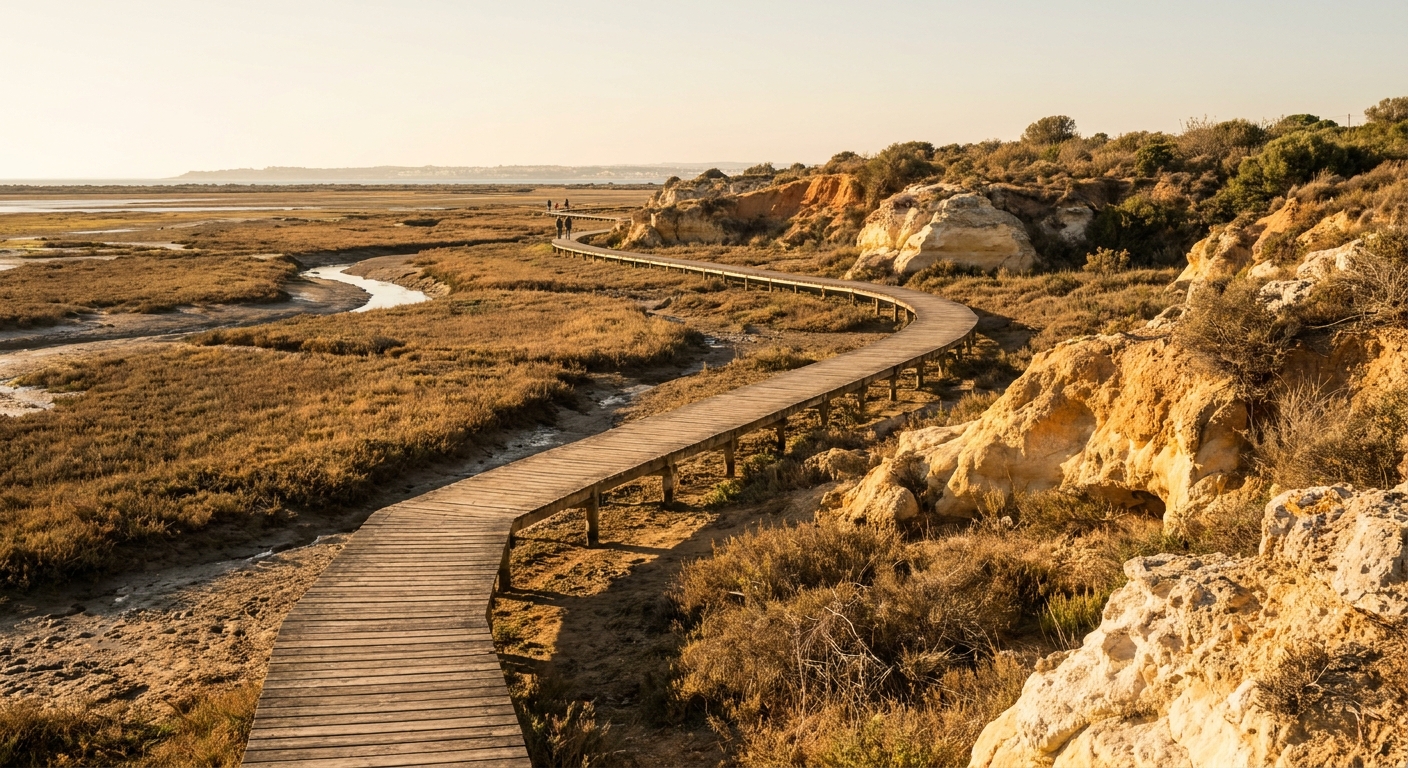
FARO AT A GLANCE · JANUARY
January gives Faro 61.3°F afternoons, six wet days and a 62.0°F sea: a walking and eating month, not a swimming one.
AVERAGE HIGH 61.3°F · 6 RAIN DAYS · SEA 62.0°F · 9H 57M OF DAYLIGHT
Go for: old-town mornings at 61.3°F, lagoon boardwalks under winter light, and a month carrying 1.94 inches of rain against December’s 3.54.
Think twice before: building a beach weekend around a 62.0°F sea and a 5:39 pm sunset, or assuming island boats and museums keep summer hours.
Normals: IPMA station 554, 1991–2020 · Sea: Open-Meteo Marine, 2015–2024 · full sources at the end
On this page
- Faro weather in January61.3°F highs, 46.9°F lows, six wet days
- Sea temperature in January62.0°F, and what a dip feels like
- How busy Faro is in JanuaryLow season, booking and the lodging tax
- Things to do in Faro in JanuaryVila Adentro, Ria Formosa, Ilha Deserta
- A two-day January itineraryTwo days cut to 9h 57m of daylight
- January vs December and FebruaryHow the three months compare, IPMA figures
- Is January a good time to visit Faro?Yes for walkers, no for swimmers
Every figure here comes from one thermometer: IPMA’s station 554 at Faro, 5.0 m above the sea, averaged over 1991–2020. That reading describes the eastern Algarve shoreline and nothing wider. Inland hills run colder and far wetter, and the western end of the coast keeps its own weather, so a Monchique walk or a Sagres headland day needs its own forecast rather than these numbers. The regional spread is laid out in our Algarve guide.
Faro weather in January: average highs, lows and rain days
| January at Faro | Figure | Where it comes from |
|---|---|---|
| Average high | 61.3°F (16.3°C) | IPMA station 554, 1991–2020 |
| Average low | 46.9°F (8.3°C) | Same station, 5.0 m altitude |
| Rainfall | 1.94 in | Same station and period |
| Days at 0.04 in or more | 6.0 | IPMA’s 1 mm threshold |
| Days at 0.39 in or more | 1.8 | IPMA’s 10 mm threshold |
| Daylight, January 15 | 9h 57m | Sunrise 7:42 am, sunset 5:39 pm |
| Sea surface | 62.0°F (16.7°C) | Open-Meteo Marine, mean of daily maxima, 2015–2024 |
IPMA, Portugal’s national weather service, puts Faro’s January average high at 61.3°F (16.3°C) and its average low at 46.9°F (8.3°C), with 1.94 inches of rain across the month. Those come off a real instrument standing at 5.0 m on the coast, not out of a model grid cell averaged over a square of land and water. The distinction is worth a sentence, because station records and grid reanalyses routinely disagree by a couple of degrees on the overnight minimum.
Six days in an average January record at least 0.04 inch of rain, leaving roughly 25 days under that threshold and putting measurable rain at about one day in five. Read the count carefully. IPMA starts counting at one millimeter, or 0.04 inch, while American tables usually start at 0.10 inch, so the two are not interchangeable and Faro reads wetter on the Portuguese scale than it would on ours.
Between dawn and mid-afternoon the thermometer travels 14.4°F, and that gap decides the suitcase. A fleece or light down layer over a shirt carries you from about 10 am, and the shirt alone is optimism by 6 pm on a marina terrace. A hooded shell beats an umbrella when the Atlantic wind is up, and the lagoon boardwalks stay slick long after a shower has moved through. Full list in our Portugal packing guide.
On January 15 the sun rises at 7:42 am and sets at 5:39 pm local, giving 9 hours 57 minutes of daylight. Portugal runs on UTC in winter, so those clock times sit exactly where the solar calculation puts them. The practical effect is a compressed afternoon: a lagoon walk begun at 3 pm finishes in dusk, and dinner in Faro happens after dark whatever time you sit down.
Can you swim in Faro in January? Sea temperature and what it feels like
The sea surface off Faro averages 62.0°F (16.7°C) in January, from Open-Meteo’s marine series over 2015–2024. One qualification travels with the number. It is the mean of daily maxima, not a 24-hour mean, so it sits a shade above the true round-the-clock average, and the water you walk into at 9 am is colder than 62.0°F suggests.
62°F is cold-water swimming by any American measure, nearer a Northern California summer than a Florida winter. Wetsuits are standard among the surfers. Without one, expect a gasp, a hard three minutes and a long session with the towel, and that is how most January dips at Praia de Faro end. Children rarely last. Shallow sun-warmed channels inside the lagoon can feel kinder than the open Atlantic, though we have no measurements for them and quote none.
We found no January wind or wave series for the Faro coast, so we give no figures for either. The geography is plain enough: the city’s own beach sits on a barrier island across the lagoon, and the inner water is sheltered in a way the ocean side never is. A crossing to Ilha Deserta on a blowing January morning is a cold boat ride, and the winter timetable deserves a phone call rather than an assumption.
How busy is Faro in January? Crowds, booking and the lodging tax
January is low season on the Algarve, a fact of the calendar rather than a rate we can quote. We found no monthly occupancy series and no hotel-rate series for Faro, so we crown no month cheapest and no month dearest. Without any data at all, one thing is visible from the airport board: the dense summer schedule into Faro is not January’s, and the city spends the month as a working Portuguese town with its university in session.
That shifts the booking more than the budget. With fewer flights on the board, the lead time matters on the air ticket rather than the room, and an American itinerary usually reaches Faro through Lisbon. Routings are worked through in our guide to flights from the US, and the bases are compared in where to stay in Portugal. We have no lead-time data for January, so we name no number of weeks.
Several Portuguese municipalities charge a per-night tourist tax, at rates set town by town. We could not verify whether Faro levies one, or at what amount, so no percentage and no per-night figure appear. Ask at check-in and read the last line of the booking confirmation, the usual place for it to surface, rather than assuming the nightly rate already includes it.
The one upgrade that changes the month is a rental car. Short daylight punishes any plan that hangs on connections, and the best January hours in the eastern Algarve are strung along the lagoon between Faro and Tavira. Money spent on the car buys back an hour of a 9h 57m day. Money spent on a larger room buys nothing this month rewards. Tolls, fuel and the paperwork are covered in our car guide.
Things to do in Faro in January: the old town, Ria Formosa and the island boats
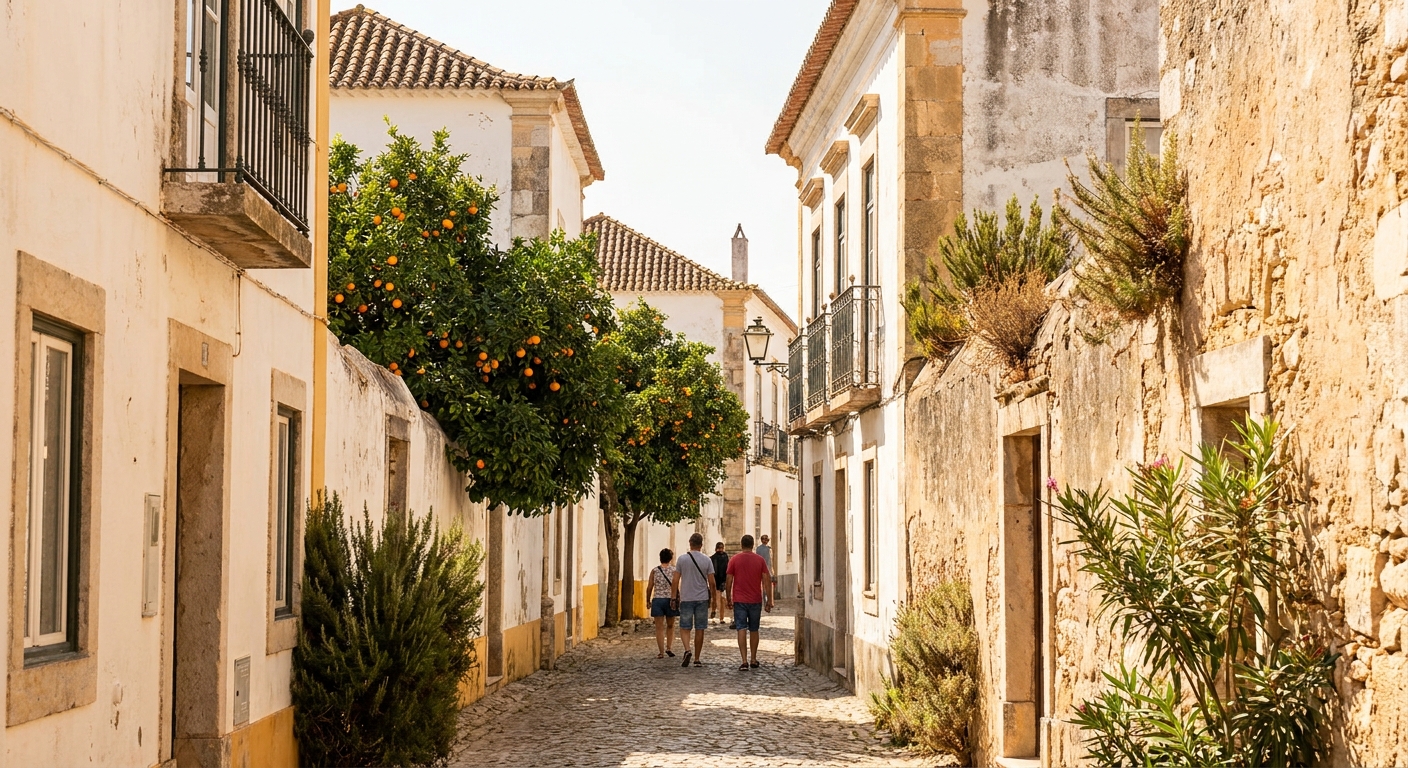
Roughly 25 days of an average January stay under the 0.04-inch threshold, and that dry, cool pairing is what July cannot offer here. The old town is walkable at noon without hunting for shade. The salt marsh is at its wintering-bird season, waders working the mudflats within sight of the runway. A full day outdoors in January costs nothing more than a jacket, which is not the arithmetic of an Algarve August.
Start inside the walls. Vila Adentro, entered through the Arco da Vila, holds the cathedral and the Museu Municipal in its former convent cloister. The Igreja do Carmo and its bone chapel stand a short walk north of the marina. Boats for Ilha Deserta and for Farol on Ilha da Culatra leave from the waterfront quay, and Praia de Faro lies out on the Ancão peninsula at the end of its causeway. We verified no January fares or hours for any of them, so none are quoted.
In January the air and the water almost meet: a 62.0°F sea against a 61.3°F average afternoon, within a degree of each other, which no summer week here manages. The lagoon itself looks much as it does in August. The light does not, the boardwalks are quiet, and the wind across an open boat at 9 am makes that single degree feel like a great deal more.
Nothing charges for the lanes inside the walls, the marina front, the long sandbar walk at Praia de Faro or the boardwalk stretches over the salt marsh, in January or any other month. Anything with a ticket or a timetable needs a check with the operator first. We read no winter hours for the museums, the churches or the island boats, and we are not going to guess at them.
Faro in January: a two-day itinerary
Day one runs on the light. Coffee before the 7:42 am sunrise if jet lag has already woken you, then the old town from 9 while the lanes are still cold, the cathedral and the museum cloister through late morning. Lunch outside around 1 pm, when the day reaches its 61.3°F high. The lagoon boardwalks from 2:30, back under a roof by the 5:39 pm sunset, dinner at eight on Portuguese time.
Day two goes to the water if the weather allows. Take a morning boat to Ilha Deserta or Farol, walk the sand in a windproof layer, and be back on the quay with daylight left. If one of January’s six wet days lands instead, trade the crossing for the train east to Tavira, or stay put for the covered market, the museum and a long lunch. Confirm the winter boat schedule the evening before, either way.
Faro in January vs December and February
| Measure | December | January | February |
|---|---|---|---|
| Average high | 62.8°F | 61.3°F | 62.6°F |
| Average low | 49.5°F | 46.9°F | 47.8°F |
| Rainfall | 3.54 in | 1.94 in | 1.65 in |
| Days at 0.04 in or more | 7.0 | 6.0 | 5.4 |
| Sea surface | 63.4°F | 62.0°F | 61.3°F |
Across the three months the afternoons barely shift: 62.8°F in December, 61.3°F in January, 62.6°F in February, a spread of 1.5°F. Nights move more, with January’s 46.9°F average low running 2.6°F under December’s 49.5°F. Rain does the real separating. December’s 3.54 inches over 7.0 wet days is close to double January’s 1.94 over 6.0, and February is drier again at 1.65 over 5.4. The sea cools straight through the sequence, 63.4°F to 62.0°F to 61.3°F. All five rows come from the same IPMA station and the same marine series.
Push the trip four weeks forward and February gives you 0.29 inch less rain, half a wet day fewer, 1.3°F more on the afternoon and a daylight window that lengthens every week, at a cost of 0.7°F of sea. Pull it four weeks back and December hands over the mildest nights and the warmest water of the three, against nearly twice the rain and the holiday calendar. On paper February takes the walking trip. January takes the quiet one.
Is January a good time to visit Faro?
Yes, if your Faro is a city and a lagoon. An average high of 61.3°F over six wet days is comfortable walking weather, and the old town, the cloister museum and the boardwalks all work in it. No, if the trip is built around swimming or sunbathing. Water at 62.0°F and a 5:39 pm sunset will not carry a beach holiday, and no amount of spending moves either number by a tenth of a degree.
If the answer is no, February is the nearest adjustment rather than a cure: 1.65 inches of rain over 5.4 days and a 62.6°F average high, with a sea colder still at 61.3°F. Swimming weather belongs to a different season altogether, and where it begins is set out in our Portugal best-time verdict. For a February weekend, see the month’s own page below.
Of the three winter months, January alone has December’s rain behind it, 1.94 inches against 3.54, while the sea still holds 62.0°F, above where February takes it.
The last word
Book the car rather than the room upgrade, and hang both days on a 5:39 pm sunset. One figure has been sitting in the record untouched: an average January logs 1.8 days at 0.39 inch or more, so a week here carries a fair chance of one genuine soaking. Pick a hotel with a breakfast room worth sitting in, keep the museum cloister and the covered market in reserve for that afternoon, and confirm the island boat the evening before.
Sources & data for this guide
- January normals: high 61.3°F, low 46.9°F, 1.94 in · IPMA (Instituto Português do Mar e da Atmosfera), climate normals 1991–2020, station 554 Faro, 5.0 m · checked Sep 23, 2026
- Rain-day counts: 6.0 days at 1 mm (0.04 in) or more, 1.8 days at 10 mm (0.39 in) or more · IPMA, same station and period · thresholds differ from the 0.10-inch counts used in US tables · checked Sep 23, 2026
- December and February figures in the comparison table · IPMA, same station and period, not estimates · checked Sep 23, 2026
- Sea surface 62.0°F, mean of daily maxima 2015–2024 · Open-Meteo Marine API · checked Sep 23, 2026
- Daylight 9h 57m on January 15, sunrise 7:42 am, sunset 5:39 pm local · sunrise-sunset.org · checked Sep 23, 2026
- Editorial admission: we could not verify January ferry timetables, museum or church hours, any Faro lodging tax, or occupancy and room-rate series, so no fares, hours, tax rates or price rankings appear. Winter hours change · check operators when you book.
To plan your stay
- Best Time to Visit Faro: Weather, Sea Temperature and the Quiet Months
- Faro in February: Weather, Sea Temperature, Crowds and a Two-Day Plan
- Faro in December: Weather, Sea Temperature, Crowds and How It Compares to November and January
- Faro in March: Weather, Sea Temperature and How It Compares to April