
CASCAIS · NOVEMBER · 38.7° N
Two figures set the month in Cascais: an average high of 63.7°F and rain on about 9.3 days out of thirty. That is a coast you walk rather than swim, with afternoons warm enough for a terrace lunch and a sun that drops at 5:24 p.m.
If the town itself is still in question, our Cascais guide and the countrywide 12-month verdict answer that. The question below is narrower: what four weeks in November give you, what they take away, and whether a shift to October or December buys you a better trip.
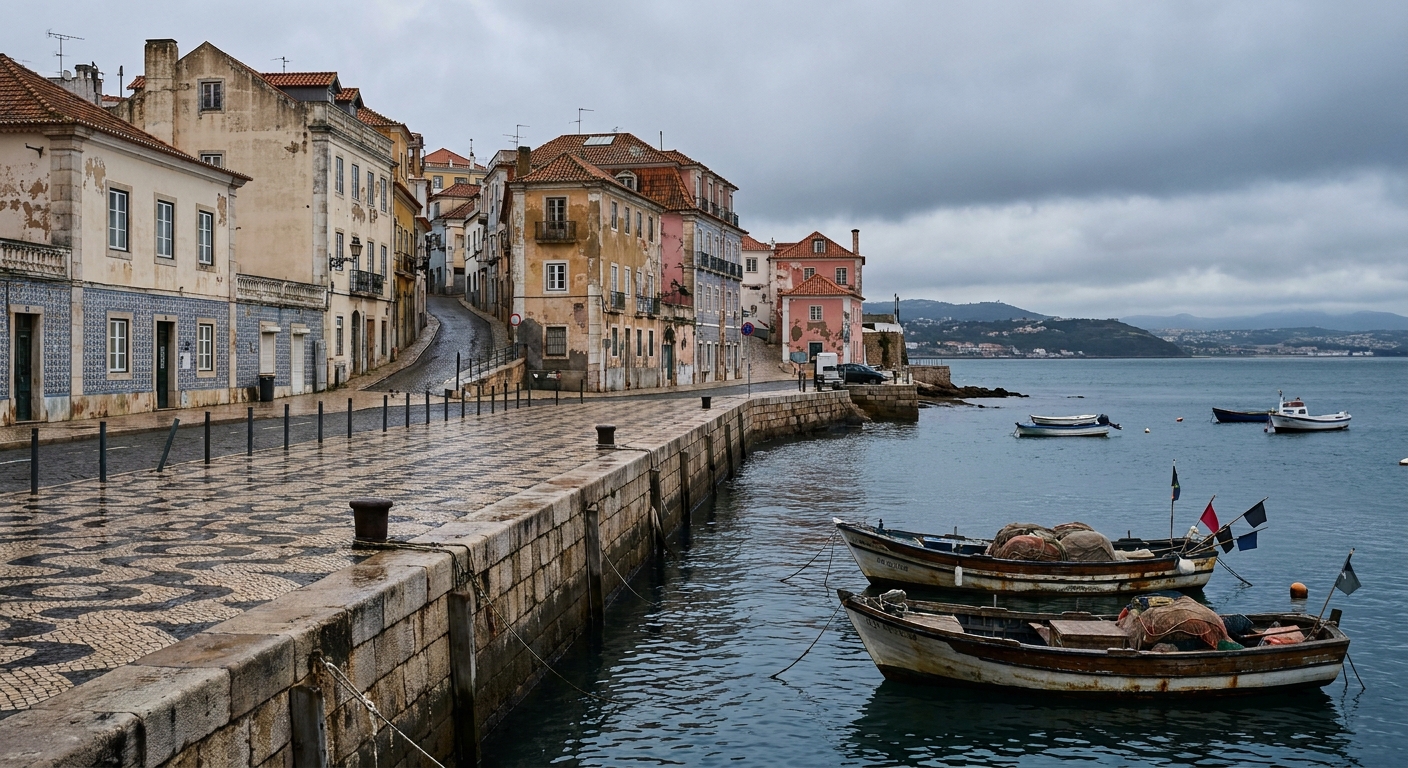
THE MONTH AT A GLANCE · CASCAIS · NOVEMBER
November is the walking month in Cascais: highs near 63.7°F, measurable rain about one day in three, and ten hours of light to spend on the coast paths.
IPMA NORMALS 1991-2020 · 10 H 06 OF DAYLIGHT ON NOV 15 · SUNSET AT 5:24 P.M. · LAYERS AND A WINDPROOF SHELL
Go for: the coast and serra paths of the 36,035-acre Sintra-Cascais Natural Park, Atlantic swell at Guincho, and lunch outdoors at 63.7°F.
Think twice before: planning a swimming trip.
Climate: IPMA station 579, 1991-2020 · Daylight: sunrise-sunset.org · Park: ICNF · full sources at the end
On this page
- Average highs, lows and rain days63.7°F, 4.51 inches, 9.3 wet days
- How warm it feels morning and afternoonAn 11.5°F day-to-night swing
- Crowds, booking and prices in NovemberLow season, and what we could not price
- Things to do in Cascais in NovemberGuincho, Cabo Raso and Pedra Amarela
- A two-day plan around ten hours of lightHour by hour, from 7:18 a.m. to sunset
- November vs October and DecemberNine degrees below October
- Is November a good time to visit Cascais?Who should go, who should shift
One caveat before the numbers. Every figure here comes from a station at Lisbon’s airport, inland and 341 feet up (103.9 meters), while Cascais faces the open Atlantic and runs cooler and windier. The same figures say nothing about the high ground of the serra behind town, which is colder and far wetter.
Cascais weather in November: average highs, lows and rain days
| Cascais in November | 1991-2020 normal |
|---|---|
| Average high | 63.7°F (17.6°C) |
| Average low | 52.2°F (11.2°C) |
| Precipitation | 4.51 in |
| Days with 0.04 in (1 mm) or more | 9.3 |
| Days with 0.39 in (10 mm) or more | 3.9 |
| Daylight on November 15 | 10 h 06 min |
| Sunrise / sunset on November 15 | 7:18 a.m. / 5:24 p.m. |
The normals above are published by IPMA, the Portuguese institute for the sea and the atmosphere, from station 579 at Lisboa Gago Coutinho over 1991-2020: an average high of 63.7°F (17.6°C), an average low of 52.2°F (11.2°C) and 4.51 inches of precipitation. That is a real thermometer, not a reanalysis grid cell averaging land and ocean together, and the difference is worth knowing when a coastal reading and a model output disagree by a couple of degrees.
Rain arrives on 9.3 days in an average November at the 0.04-inch mark (1 mm), roughly one day in three. Of those, 3.9 reach 0.39 inch (10 mm) or more, which is the kind of band that ends a cliff walk rather than interrupts it. IPMA counts to its own thresholds, not the 0.10-inch line American tables use, so these figures are not interchangeable with a US city’s rain-day column. Plan in half days, not days.
Wind is the variable an inland station understates. On the headlands the Atlantic pushes straight in, and a windproof shell does more for you in November than a heavy coat: it keeps a 63.7°F afternoon comfortable at Cabo Raso and turns a shower into a nuisance instead of a retreat. Our packing guide has the full layer list, including the shoes the cobbles demand.
Light is the real constraint. On November 15 the sun rises at 7:18 a.m. and sets at 5:24 p.m., giving 10 hours 6 minutes of daylight, with Portugal running on UTC through the month. Sightseeing ends before dinner, so a coast walk started after 2 p.m. finishes in dusk, and photographs of the water want the hour before five.
How warm is Cascais in November?
Mid-afternoon peaks near 63.7°F and the hours before dawn bottom out near 52.2°F, a spread of 11.5°F inside a single day. By continental standards that swing is modest, and it is the reason a single fleece covers most of the month: you are not dressing for two seasons, you are dressing for a morning and an afternoon.
In practice, a long-sleeve layer plus the shell gets you out the door at 8 a.m., and the shell comes off by eleven on a clear day. Sheltered terraces out of the wind feel warmer than the reading suggests, exposed promenades feel colder. After 5:24 p.m. the temperature slides back toward that 52.2°F low, and dinner outdoors stops being an idea worth having.
We could not read a frost-day count for the station, and with an average low of 52.2°F freezing is not a coastal concern in November; the serra behind town runs colder. We also found no sea-surface temperature series for Cascais. Where such series exist they are usually averages of daily maxima, a shade warmer than a 24-hour mean, so we give no water figure rather than borrow a flattering one.
How busy is Cascais in November? Crowds, booking windows and prices
November falls between the summer peak and the Christmas weeks, which is a fact of the calendar rather than a price list. We found no occupancy series and no monthly room-rate series for Cascais, so we crown no month the cheapest and none the most expensive. What the calendar does support: the beach-season machinery is past, and the town belongs more to its residents than to its visitors.
That changes how you book more than what you pay. Cascais is a small town with a limited stock of sea-facing rooms, and a clear-weather weekend pulls day-trippers out from the capital, so three to four weeks ahead (est.) is a sensible lead time for a November Saturday. Flights matter more than beds here: the US routes thin out after the summer, and our trip-cost guide sets the daily budget.
On the lodging tax, we have nothing to give you. We could not verify a rate for the municipality of Cascais, so no percentage comes from us. Ask the property what it adds per person per night at check-in, and read the know-before-you-go notes for the rest of the small print.
One upgrade genuinely changes November: mobility. With 10 hours of light and rain on nine days, the ability to move when the sky clears is worth more than a better room. A rental car puts Guincho, Cabo Raso and the serra inside the same morning, and our rental guide covers the tolls and insurance before you sign anything.
Things to do in Cascais in November: the Sintra-Cascais Natural Park, Cabo Raso and Guincho
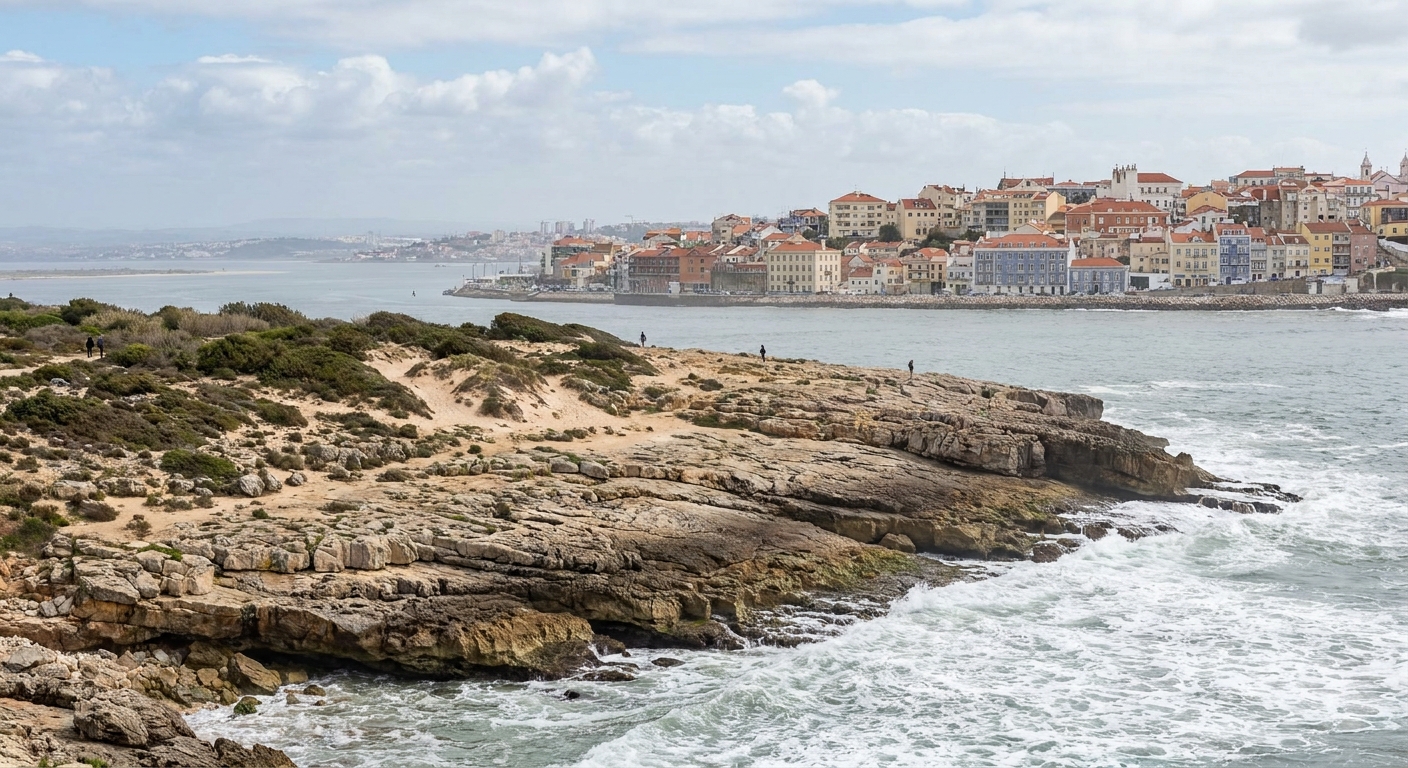
Walking is what this month unlocks. At 63.7°F you can climb the serra or follow the coast for hours without the heat that governs a July afternoon, and the ridge behind town is where most of the park’s endemic and threatened plants live. Two raptors nest inside the protected area, the peregrine falcon and Bonelli’s eagle, so the binoculars are not decoration.
The Sintra-Cascais Natural Park covers 14,583 hectares, about 36,035 acres or 56 square miles, across the municipalities of Sintra and Cascais, a sensitive area under heavy human pressure. It was first protected as a Protected Landscape by Decree-Law 292/81 of October 15, 1981, and reclassified as a Natural Park by Regulatory Decree 8/94 of March 11, 1994. Inside it: the coastal lapies, a karst relief north of Cabo Raso, and the Guincho-Oitavos dune system with the habitats it carries.
The rock does not change with the calendar, the air does. Guincho’s dunes look the same in August and in November; the difference is a high 9.0°F below October’s and an Atlantic in full winter form, which is why the surf crowd stays and the sunbathing crowd goes. Up on the ridge, Pedra Amarela reaches 406 meters (1,332 feet), high enough that the remnant oak woodland up there is wetter and colder than anything the airport thermometer records.
The free half of the month is the good half: coast paths, headland viewpoints, the dune system and the lapies cost nothing that we could find published. Inland toward Colares, the wine keeps its international name and the area grows its own fruit, the Colares reinette apple, the rose peach, the thick-skinned lemon and the pearl pear, which makes a rainy afternoon a case for a long table and a Portuguese wine list.
Cascais in November: a two-day itinerary
Day one, the coast. Sunrise is at 7:18 a.m., so there is no reason to be out before eight. Coffee at 8:30, on the shore road by 9:30 while the air climbs toward 63.7°F, and walk northwest toward Cabo Raso and the lapies. Lunch at 12:30 out of the wind. Give the Guincho-Oitavos dunes the early afternoon, and be back on the promenade by 4:30, because the light goes at 5:24 p.m.
Day two, the high ground. Take the serra while the morning is dry: the climb toward Pedra Amarela’s 1,332 feet runs through the least accessible oak remnants, and the ridge is colder and wetter than the coast, so the shell goes in the pack. If one of the month’s 3.9 heavy days lands on you, drop the ridge, spend it on lunch and the Colares vineyards, and keep Sintra’s palaces as the indoor card.
Cascais in November vs October and December
| October | November | December | |
|---|---|---|---|
| Average high | 72.7°F (22.6°C) | 63.7°F (17.6°C) | 58.8°F (14.9°C) |
| Average low | 58.8°F (14.9°C) | 52.2°F (11.2°C) | 47.7°F (8.7°C) |
| Precipitation | 4.05 in | 4.51 in | 3.94 in |
| Days with 0.04 in (1 mm) or more | 8.3 | 9.3 | 9.7 |
November’s high sits 9.0°F below October’s and 4.9°F above December’s, and the lows step down the same staircase: 58.8, 52.2, 47.7. Rain does not follow that line. November is the wettest of the three at 4.51 inches against October’s 4.05 and December’s 3.94, while wet days climb steadily from 8.3 to 9.3 to 9.7. Per wet day that works out at about 0.49 inch in November, level with October and heavier than December’s 0.41. None of the three months has a sea-temperature series we could verify.
Shift four weeks earlier and you buy nine degrees of afternoon and one fewer wet day, at the price of an October coast that still has holiday traffic on it. Shift four weeks later and you keep most of the walking, lose five degrees, and gain the shortest days of the year. The October page and the December one run the same numbers in full.
Is November a good time to visit Cascais?
Yes, if you came to walk, eat and look at the Atlantic. A 63.7°F afternoon on 36,035 acres of protected coast and serra, with the summer traffic gone, is a strong trade for one day in three of rain. No, if the trip depends on beach time: we have no water temperature to offer, the wind at Guincho is real, and 10 hours of daylight is a short canvas for a sun-seeking week.
If that second description is yours, move to October rather than December. The 72.7°F high and 8.3 wet days give you the warmest edge of the shoulder season, the light is longer, and the same coast paths are all still open. December takes 4.9°F off November and adds wet days without adding anything back.
What November alone offers: walking weather and Atlantic weather at the same time, a ridge you can climb without heat and a shore where the swell has already turned to winter.
The last word
Book the room for a Saturday, keep the Sunday loose, and let the sky choose between the ridge and the dunes. The one thing worth going out of your way for is the oak remnant in the least accessible folds of the serra, where threatened species such as holly, Ilex aquifolium, still hold on under a management plan approved by Regulatory Decree 9/94 in March 1994. Take the shell, and start walking by 9:30.
Sources & data for this guide
- November normals, rain days and IPMA thresholds · IPMA, normais climatológicas 1991-2020, station 579 Lisboa Gago Coutinho, altitude 103.9 m · checked Sep 23, 2026
- October and December normals used in the comparison · same IPMA station and same 1991-2020 period · checked Sep 23, 2026
- Sunrise 07:18, sunset 17:24 and 10 h 06 of daylight on November 15, Portugal on UTC · sunrise-sunset.org · checked Sep 23, 2026
- Park area, 1981 and 1994 decrees, coastal lapies, Guincho-Oitavos dunes, Pedra Amarela, raptors, flora and Colares produce · ICNF brochure « Conheça o Parque Natural de Sintra-Cascais », icnf.pt · checked Sep 23, 2026
- We found no sea-surface temperature series, no beach or trail measurement and no published opening hour or entry price for Cascais sites: the municipal site publishes an events agenda, not figures we could read · checked Sep 23, 2026
- The conversion of 14,583 hectares to 36,035 acres is ours; IPMA and ICNF publish in metric units · checked Sep 23, 2026