
AZORES · THE THREE-DAY ITINERARY · SÃO MIGUEL
Three days is what most people get in the Azores, because that is what the flight schedule and the vacation calendar allow. São Miguel absorbs it well. The island runs 744.7 square kilometers, 62.1 km end to end and 15.8 km at its widest, and more than half of all Azoreans live on it: 137,856 at the 2011 census. Crater lakes, a thermal valley and a whale-watching harbor all sit inside that rectangle.
Order matters more than ambition. Day one takes the capital and the caldera rim above Sete Cidades, day two goes to sea in the morning and soaks at Furnas after lunch, day three pairs Lagoa do Fogo with the tea plantations on the north coast. Every stop is named. Where our sources carry a price or a rule, we quote it, and where they do not, we say so rather than guess.
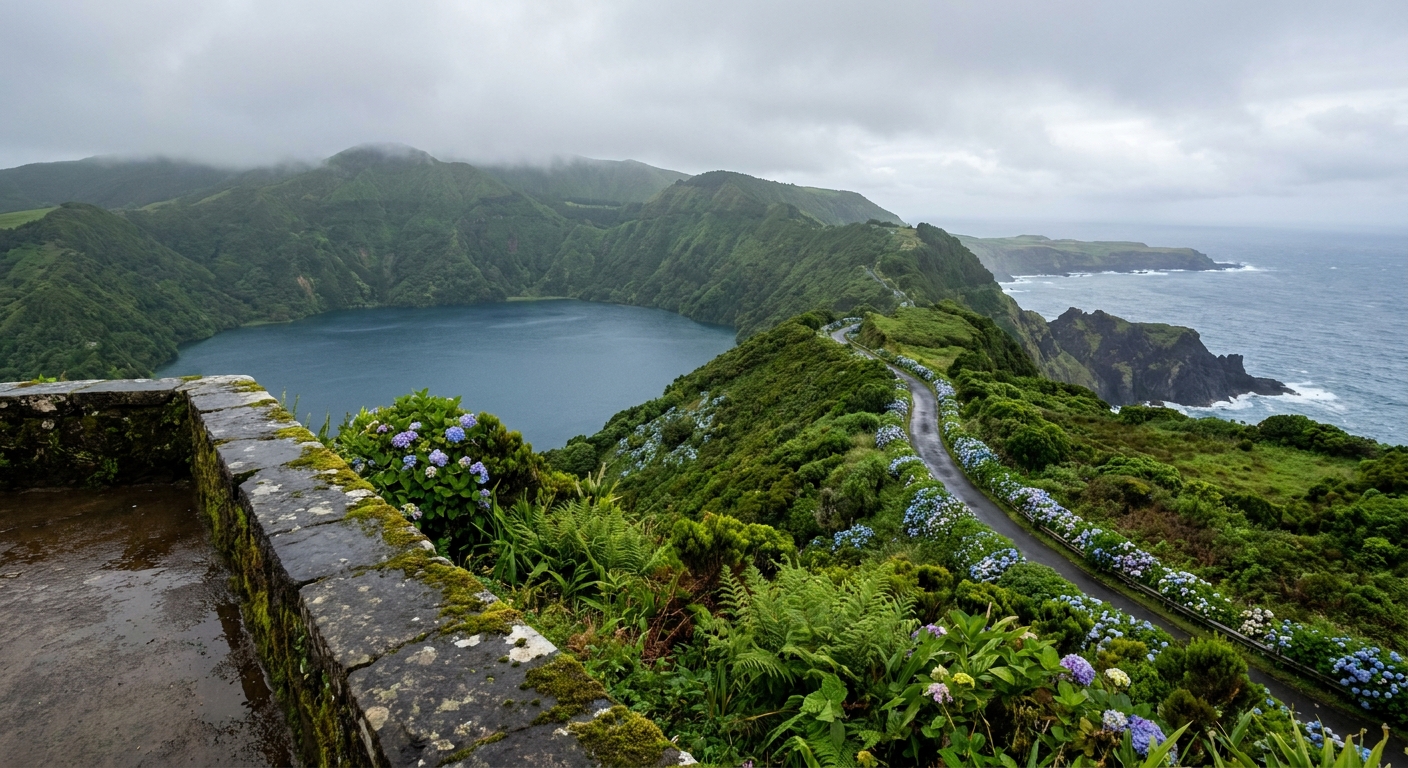
THE THREE DAYS AT A GLANCE · SÃO MIGUEL
Three days works if you stay on one island: Sete Cidades on day one, a whale trip and Furnas on day two, Lagoa do Fogo and Gorreana on day three, with a single bed in Ponta Delgada.
SÃO MIGUEL ONLY · WHALE TRIPS RUN ALL YEAR · DAYLIGHT 9H53 IN JANUARY, 14H34 IN JULY
Go for: two named crater lookouts, a valley with dozens of thermal springs, and cetaceans in any month of the year.
Think twice before: adding a second island. A three-day window spent on ferries and inter-island flights leaves you short on both.
Sights and seasons: Visit Azores · Normals: IPMA station 513, Ponta Delgada · full sources at the end
On this page
- Is three days enough for the Azores?What three days hold, and what they exclude
- Day 1 route out of Ponta DelgadaThe capital, then Vista do Rei above Sete Cidades
- Whale watching trip length and minimum ageAbout three hours at sea, age five and up
- Lagoa do Fogo and the Gorreana tea plantationDay 3 on the north coast, tea grown since 1883
- Ticket prices and the Ponta Delgada tourist taxTerra Nostra, plus EUR 2 a night capped at three
- Best time to visit the AzoresDaylight from 9h53 to 14h34, and what moves
- What to leave out of a three-day tripSecond islands, Pico da Vara, the eastern tip
One caveat before the hours: every figure here for temperature, rain and sea comes from the south coast of São Miguel, the IPMA station 513 at Ponta Delgada Observatório, 35.0 m above the water. High ground is colder and far wetter, so a coastal reading is a poor guide to what the rim of Lagoa do Fogo will do to you.
Is three days enough in the Azores?
Three days buys one island at a workable pace. On São Miguel that means Sete Cidades from Vista do Rei, the thermal valley at Furnas, Lagoa do Fogo, one morning at sea and one tea plantation, without ever changing beds. It excludes the rest of the archipelago. Pico, Faial, Terceira and Flores are separate flights or ferries, each with airport hours at both ends.
The format suits a stopover on a transatlantic ticket, a first look at the region, and anyone content with short drives from a single base. Divers and peak-baggers get less out of it: three days leave no slack for a weather day, and the island’s high ground writes its own forecast. Families should register the boat trip’s recommended minimum age of five before booking anything.
What settles the question is that day two never depends on the calendar. Common dolphins and common bottlenose dolphins are resident in these waters, present in any month, and swimming with them is allowed. The Azores form one of the largest whale sanctuaries in the world, with more than 20 cetacean species recorded, roughly a third of all species that exist. February and August share the same core plan.
Ponta Delgada and Sete Cidades: day 1 of an Azores itinerary
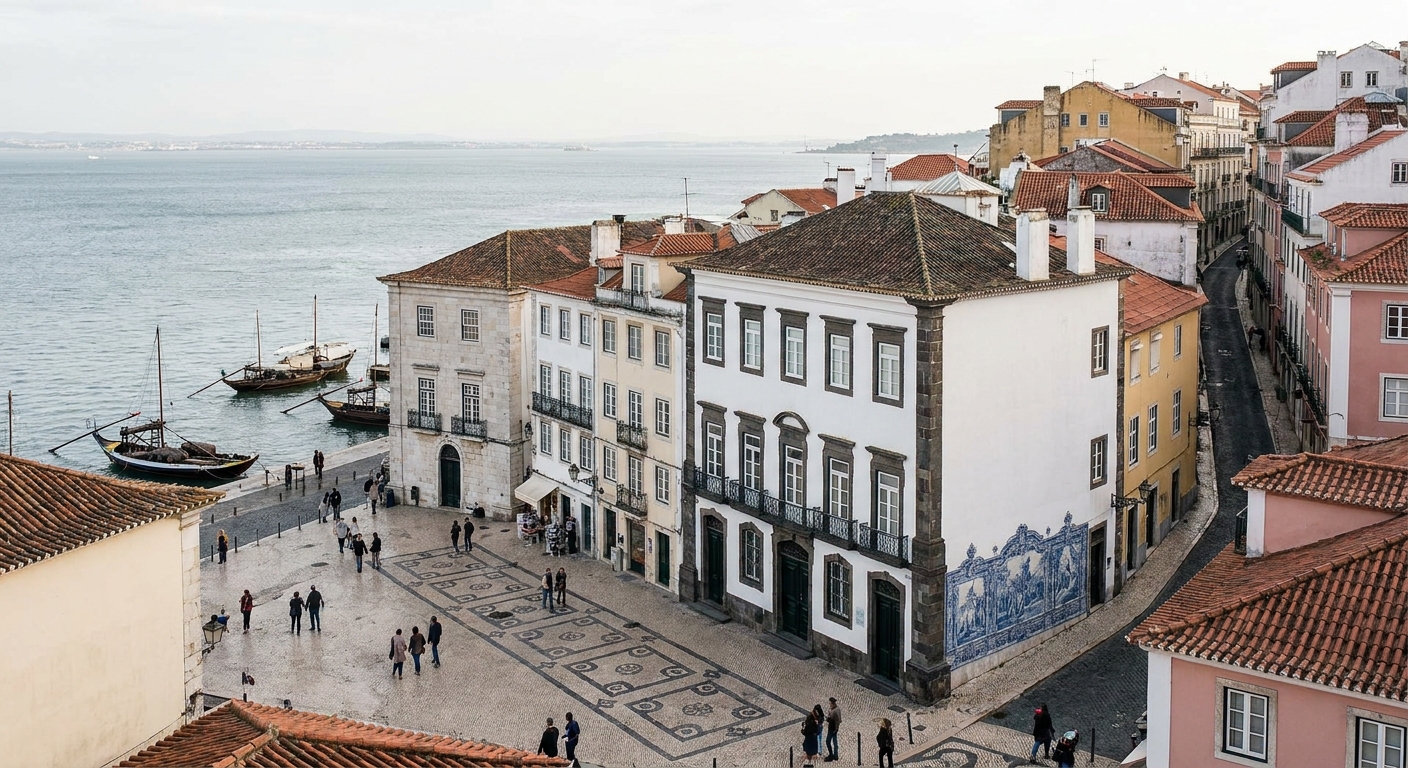
Start in the capital, and start early. Ponta Delgada has held the role since 1546, when it took over from Vila Franca do Campo after the earthquake of 1522 destroyed the older town. Two hours cover the harbor front, the basalt-trimmed façades and the market. Then take the car, because the lookouts are the part of the day the weather can cancel.
The road climbs west to Vista do Rei, the named lookout over the Sete Cidades caldera. From the rim you get the pair of lakes that sell this island, the Green and the Blue, sitting in the same crater with a bridge between them. No drive time appears in the sources we read, and we are not inventing one. Give the morning to it rather than a slot.
The rim makes its own weather, and nothing we read fixes an hour at which the cloud lifts. Rain frequency at sea level is documented: 13.0 days in an average January record at least 1 mm (0.04 inch) at the Ponta Delgada thermometer, against 4.8 days in July. Those are the national service’s thresholds, not the 0.10-inch threshold on US tables. Keep a second crater in hand for day three.
Back in town, the bed carries a line many visitors first meet at checkout. Ponta Delgada has charged a municipal tourist tax since January 2025. Press and host guides put it at EUR 2 per person per night for guests aged 13 and over, capped at three consecutive nights, so about EUR 6 a head. Under-13s, medical stays, disability of 60 percent or more and Azores residents are exempt. The city’s rate leaflet sits behind a login, so ask the property to quote the tax in writing.
Dinner answers to the sun. On January 15 it rises at 7:55 a.m. and sets at 5:48 p.m. local time, which brings you back into Ponta Delgada in the dark. On July 15 it rises at 6:31 a.m. and sets at 9:05 p.m., long enough to add the coast road before eating. We have no restaurant prices to print here; the general picture sits in our guide to Portuguese food and drink.
Whale watching and Furnas: day 2 of an Azores itinerary
Book the boat for the morning and the rest of the day falls into place. A trip out lasts about three hours, and the official recommendation is a minimum age of five, on the reasoning that a sea an adult calls calm can be hard on a small child. What surfaces shifts with the month: blue whales are easily spotted at the end of winter, while sperm whales, sei whales, baleen whales and spotted dolphins are frequent in summer.
The fare is the gap in our reading. Visit Azores documents the length of the trip and the age recommendation, not what operators charge, so no boat price appears here. Two questions to ask when you book: what happens to your money if the sea cancels the sailing, and whether the outing includes the swim with resident dolphins, which is permitted in these waters.
Afternoon runs east to the Furnas Valley and its dozens of thermal springs, fumaroles and carbonated water. Two bathing spots are named in the tourism board’s own description: Poça da Beija, a pool of clear water and ferrous mud, and the Caldeiras of Ribeira Grande, whose thermal building dates from 1811 and stands among trees and fumaroles. They are separate stops rather than one complex, so pick one if the boat came in late.
Terra Nostra Park is the option with a number attached: a thermal pool inside a botanical garden, priced at around EUR 16 for a visiting adult against about EUR 12.80 for a resident, with under-6s free. Carry that as an order of magnitude. The park’s own visit pages returned a 404 when we checked and the regional tourism portal returned a 403, so those figures come from secondary reading. Confirm at the gate before you join the line.
Lagoa do Fogo and the tea plantations: day 3 of an Azores itinerary
Lagoa do Fogo is the wilder lake and the higher one, with no village on its shore to soften the view. Our sources name no gate and no entry fee, so the price of it is the drive and the willingness to turn back. Take it in the morning if day one’s rim was inside a cloud: two attempts at two different craters is the closest a three-day trip gets to insurance.
The north coast holds something no other part of Europe does: two working tea plantations, Gorreana and Porto Formoso, both running museum-factories open to visitors. Gorreana has grown tea since 1883 and calls itself the oldest plantation in Europe. We found no admission figure for either visit, so ask at the door instead of planning around a number.
São Miguel measures 62.1 km long and 15.8 km at its widest, 744.7 square kilometers in all, and Pico da Vara reaches 1,105 m at the eastern end. A day three built from Lagoa do Fogo, Gorreana and the road home stays inside the western two thirds of that. Drive times are absent here because our sources carry none: the mechanics live in our car rental guide and in getting around Portugal.
The last evening bends to the flight. If a swim is on the list, the sea surface averages 63.3°F in January and 73.1°F in July, taken as the mean of daily maxima over 2015 to 2024. Night three is also the last one the municipal tax touches, since the cap stops at three consecutive nights.
What three days in the Azores costs in tickets and fees
| What you pay for | The figure we have | Status |
|---|---|---|
| Terra Nostra Park | About EUR 16 adult visitor · about EUR 12.80 resident · under-6s free | Order of magnitude · confirm at the gate |
| Ponta Delgada tourist tax | EUR 2 per person per night, age 13 and over, capped at 3 nights | Reported by press and hosts · city leaflet behind a login |
| Whale watching trip | About 3 hours, minimum age 5 · no fare in our sources | Length and age verified, price not |
| Gorreana & Porto Formoso | Museum-factories open to visitors · no admission figure found | Visits confirmed, price not |
| Vista do Rei & Lagoa do Fogo | No fee named in our sources | Unpriced here |
| Car, fuel, meals, hotel | Nothing we can quote | Ask the operator or the property |
Two named stops in this itinerary carry a figure we can print, and both arrive with a caveat. Terra Nostra’s adult rate reads at around EUR 16 from secondary sources, with residents near EUR 12.80 and children under six free. The Ponta Delgada tax reads at EUR 2 a night per person aged 13 and over, with the meter stopping after the third consecutive night.
Added up for two adults over three nights, the ticket side of this plan lands near EUR 44: roughly EUR 32 for two entries at Terra Nostra plus about EUR 12 in municipal tax once the cap applies. Both halves of that sum are unconfirmed, so treat the EUR 44 as an order of magnitude rather than a budget line.
The rest stays unpriced for one reason: we could not read it at a primary source. That covers the whale-watching fare, car rental and fuel, admission at Gorreana and Porto Formoso, every meal and every hotel rate. No monthly price series exists for the Azores either, so nobody can rank the twelve months by cost, ourselves included.
Best time to visit the Azores: month by month
Daylight decides how many stops fit. On January 15 the island gets about 9 hours 53 minutes of it, sunrise at 7:55 a.m. and sunset at 5:48 p.m., which is one lookout, one soak and a drive home in the dark. On July 15 it gets 14 hours 34 minutes, 6:31 a.m. to 9:05 p.m., enough to put both tea plantations into day three and still get in the water.
The month also changes what the boat finds and what the thermometer reads. The end of winter is the blue whale window, while summer brings sperm, sei and baleen whales along with spotted dolphins. At sea level the contrast runs 63.5°F highs with 4.02 inches of rain in January against 76.5°F and 1.02 inches in July, measured at Ponta Delgada. Seasonal hours for Terra Nostra and the plantations are not published in our sources, so verify them the week you travel: see February, July and the twelve-month view.
What to skip in the Azores in three days
A second island does not fit. Pico, Faial, Terceira and Flores each mean a flight or a ferry plus the waiting at both ends, and a three-day trip that spends one day in transit is a two-day trip. Pico da Vara at 1,105 m sits at the far eastern end of São Miguel and belongs to a longer stay, as does the coast beyond Nordeste. The full menu, island by island, is in things to do in the Azores.
What the greedy version costs is the sea. The boat is about three hours plus harbor time, and it delivers the one thing no mainland itinerary can match: more than 20 cetacean species recorded in a sanctuary among the largest anywhere. Trade it for a ferry and you have flown a long way to look at lakes.
The last word
Book the boat first, hang the lakes around it, and keep one crater in reserve for the morning the other one is buried in cloud. The tax hands you a small parting gift on the way out: at EUR 2 a night with the meter stopping after three, Ponta Delgada asks about EUR 6 a head, where Porto’s ceiling is EUR 21 and Funchal’s EUR 14. Three nights is the exact length the Azores charges least for.
Sources & data for this guide
- Whale watching season by species, trip length, minimum age 5, sanctuary and 20+ species · Visit Azores (official regional tourism board) · checked Sep 14, 2026
- São Miguel geography (62.1 km, 15.8 km, 744.7 km², Pico da Vara 1,105 m, 137,856 residents at the 2011 census) and Ponta Delgada capital since 1546 · Visit Azores · checked Sep 14, 2026
- Furnas Valley springs, Poça da Beija, Caldeiras of Ribeira Grande and its 1811 thermal building · Visit Azores · checked Sep 14, 2026
- Gorreana (tea since 1883) and Porto Formoso museum-factories · Visit Azores and Plantações de Chá Gorreana · checked Sep 14, 2026
- January and July normals, plus rain-day counts at the 1 mm and 10 mm thresholds · IPMA, 1991-2020 normals, station 513 Ponta Delgada Observatório, 35.0 m · checked Sep 14, 2026
- Sunrise, sunset and daylight length on the 15th of the month · sunrise-sunset.org · checked Sep 14, 2026
- Sea surface temperature, mean of daily maxima 2015-2024 · Open-Meteo Marine API · checked Sep 14, 2026
- Terra Nostra Park rates · could not be read at source: parqueterranostra.com returned 404 on its visit pages, turismo.azores.gov.pt returned 403 · attempted Sep 8, 2026
- Ponta Delgada municipal tourist tax · taxaturistica.cm-pontadelgada.pt read Sep 9, 2026 (platform confirmed, rate leaflet behind authentication); rate relayed by Jornal de Notícias and Correio dos Açores; Porto and Funchal caps from their own municipal sources
- Editorial admission: no drive times, boat fares, meal or hotel prices appear here because our sources do not carry them · hours and rates change, so confirm with the operator when you book.