
THE ALGARVE · JANUARY · 37.0° N
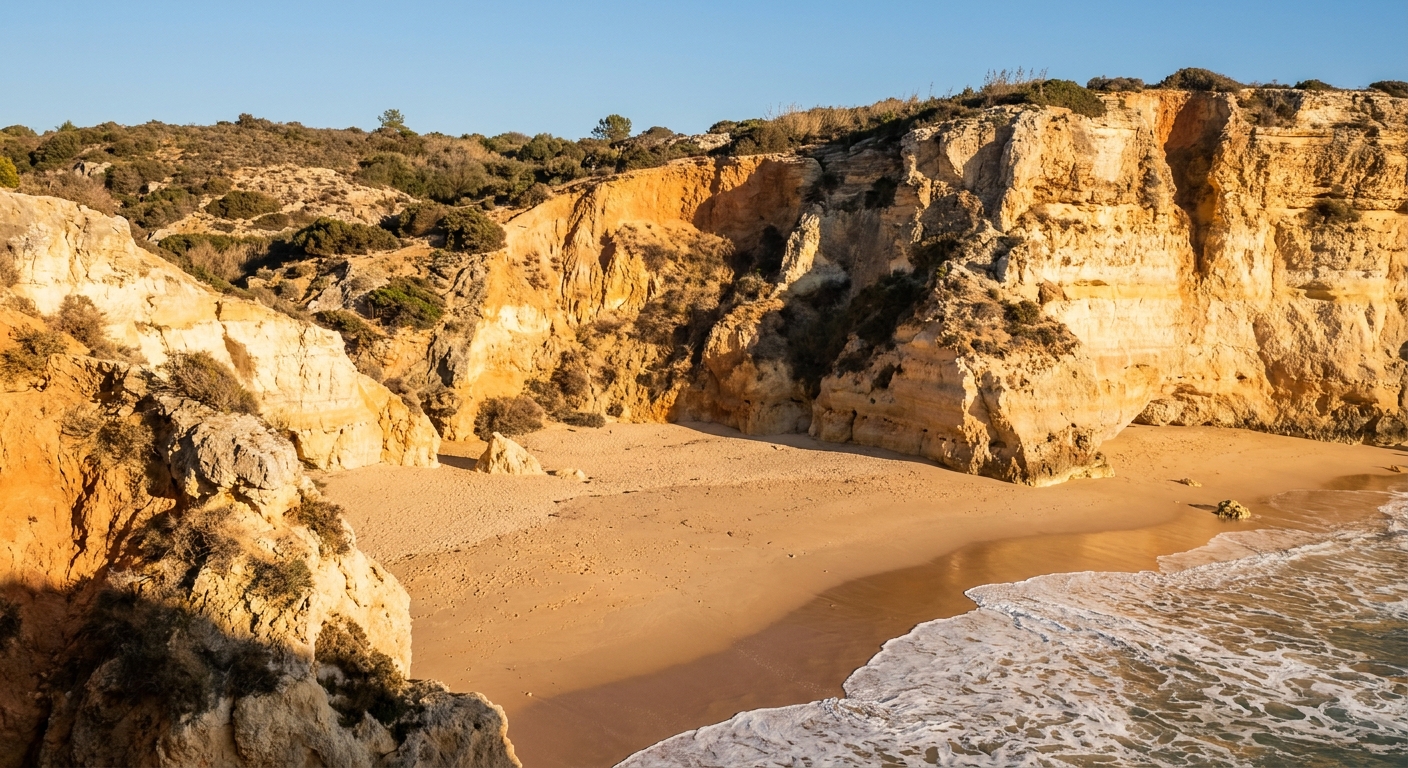
January is the month the Algarve stops performing. The beach clubs are shuttered, the cliff paths above Carvoeiro belong to walkers again, and Faro records an average high of 61.3°F. That is jacket weather in the shade and shirtsleeves in the sun. Parking exists. Restaurants answer the phone.
What the month withholds is the water and the light. The sea averages 62.0°F, no beach on the coast has a lifeguard before May 15 at the very earliest, and January 15 gives you 9 hours 57 minutes of daylight with the sun down at 5:39 p.m. Build a trip around those three numbers and this is one of the best-value warm winters in Europe. Ignore them and you have booked a beach holiday without a beach season.
THE MONTH AT A GLANCE · THE ALGARVE IN JANUARY
January is the Algarve’s walking and driving month: mild 61.3°F afternoons, six rain days, an empty coastline, and a 62.0°F sea that nobody is guarding.
AVG HIGH 61.3°F · 1.94 IN OF RAIN · SEA 62.0°F · 9 H 57 MIN OF DAYLIGHT · NO LIFEGUARDS
Go for: cliff walking at a comfortable temperature, viewpoints with nobody on them, low-season room rates, and the Sagres promontory without a tour bus in the lot.
Think twice before: planning a swimming or sunbathing week. The water is 62.0°F, the lifeguarded season is fixed by law and starts months later, and the afternoon ends at 5:39 p.m.
Normals: IPMA station 554, Faro, 1991-2020 · Sea: Open-Meteo Marine · Bathing season: Diário da República · full sources at the end
On this page
- Average highs, lows and rain daysJanuary normals from the Faro station
- Can you swim in January?62.0°F water and no lifeguards
- Crowds and prices in low seasonWhere January sits in the year
- What is open in JanuarySagres hours, Benagil rules, free walks
- A two-day plan for short daylightSagres, Lagos, Tavira, hour by hour
- January vs December and FebruaryThe three months, side by side
- Is January a good time to go?Who should book and who should wait
One caution before the numbers. IPMA’s Faro station sits at the eastern end of a coast roughly 150 kilometers long, and it does not describe all of it. Ground inland and to the north runs colder and considerably wetter, and the western end around Sagres takes its weather straight off the Atlantic. Pack for a hill trail on a coastal reading and you will be wrong by a layer. Town-level detail lives on the Lagos, Albufeira and Tavira pages.
Algarve weather in January: average highs, lows and rain days
| January at Faro | Value |
|---|---|
| Average high | 61.3°F (16.3°C) |
| Average low | 46.9°F (8.3°C) |
| Precipitation | 1.94 in |
| Days with 0.04 in or more | 6.0 |
| Days with 0.39 in or more | 1.8 |
| Sunrise / sunset, Jan 15 | 7:42 a.m. / 5:39 p.m. |
| Daylight, Jan 15 | 9 h 57 min |
| Sea surface | 62.0°F (16.7°C) |
These normals come from IPMA, the Instituto Português do Mar e da Atmosfera, and specifically from station 554 at Faro, a real thermometer five meters above sea level rather than a modeled grid square. Across 1991 to 2020, January averages a high of 61.3°F, a low of 46.9°F and 1.94 inches of precipitation. That afternoon figure is a mild April in much of the United States, delivered with a low winter sun that flatters every cliff on the coast.
Six days in an average January record at least 0.04 inch of rain, and 1.8 of those days record 0.39 inch or more. Both are IPMA’s own thresholds, not the 0.10 inch that American tables use, so the counts are not interchangeable. Worked through, that leaves roughly 25 days of the month with no measurable rain. Nearly a third of the wet ones are properly wet, the kind that cancels a cliff walk rather than dampening it.
The gap between 61.3°F and 46.9°F is 14.4 degrees, and it closes fast once the sun drops behind the headlands. Layers that work at both ends earn their space: a shirt for a noon terrace in Tavira, a real jacket for the walk back to the car at seven. Ask whether your rental has heating, too. It is the question nobody thinks to ask about southern Portugal, and the answer shapes the evenings. Our packing guide handles the rest.
On January 15 the sun rises at 7:42 a.m. and sets at 5:39 p.m., a working day of 9 hours 57 minutes. Portugal keeps UTC through the winter, so those are clock times, not conversions. Usable light on the cliffs is gone by about five, and the drive home happens in the dark on unlit rural roads. Front-load everything. Anything with a view wants the hours between ten and four.
Can you swim in the Algarve in January? Sea temperature and lifeguard cover
Sea surface off the Algarve averages 62.0°F in January across the 2015-2024 record from Open-Meteo’s marine data. One qualifier matters more than the decimal: that average is built from daily maxima, the warmest reading of each day, so it sits a shade above a true 24-hour mean. The water you meet at eight in the morning is colder than the number on the page.
Sixty-two degrees is swimmable in the sense that people do it, not in the sense that you will enjoy minute three. Expect the involuntary gasp on entry, numb feet inside five minutes, and a real need for something warm and dry waiting on the sand. Wetsuits are the normal answer here in winter and they are what you will see in the water. Anyone going in wearing a swimsuit is planning a dip, a shout and a towel, not a session.
Our data set carries no January wind or swell figures for this coast, so check a marine forecast the morning you go rather than trusting a monthly average. What is fixed is supervision. The 2026 bathing-season order in the Diário da República sets lifeguard cover council by council: Albufeira from May 15 to October 15 across its 25 listed beaches, and Lagos, Lagoa, Loulé, Faro, Olhão, Tavira, Silves, Aljezur and Vila do Bispo from June 1 to September 30. January falls outside every one of those windows.
How busy is the Algarve in January? Crowds and prices
January sits at the bottom of the Algarve’s year, and the calendar the councils publish shows why. Most of the coast staffs its beaches from June 1 to September 30, Albufeira from May 15 to October 15, and everything the region prices for peak follows that window: rooms in the beach towns, rental cars, the seafront tables. We carry no verified occupancy or rate figures for the month and will not quote invented ones, but nothing about the direction is in question.
Lead time behaves differently in the trough. Two to three weeks (est.) is realistic for a January room in most of the coast, where the same request in July is a fantasy. The thing worth checking is not availability but whether the property runs a winter operation at all. A hotel whose beach gets its lifeguard on June 1 may keep the restaurant, the pool and the kids’ program closed until spring. Ask about the parts you were counting on, by name.
On the municipal tourist tax, cards on the table: our source set carries no verified rate for any Algarve council, and a number guessed here would follow you onto a real bill. Ask your accommodation at booking what it charges per person per night, for how many nights it applies, and whether the price quoted online already included it. It is collected at the property, not by the airline or the booking site.
The one line worth spending on in January is the car. The light runs out at 5:39 p.m., the good stuff is spread across 150 kilometers, and buses do not link one clifftop to the next. The A22, the Via do Infante that runs the length of the region, is reported to have been toll-free since January 1, 2025. We could not confirm that on any operator page a machine can read, so check before you drive and let the car guide explain transponders.
Things to do in the Algarve in January
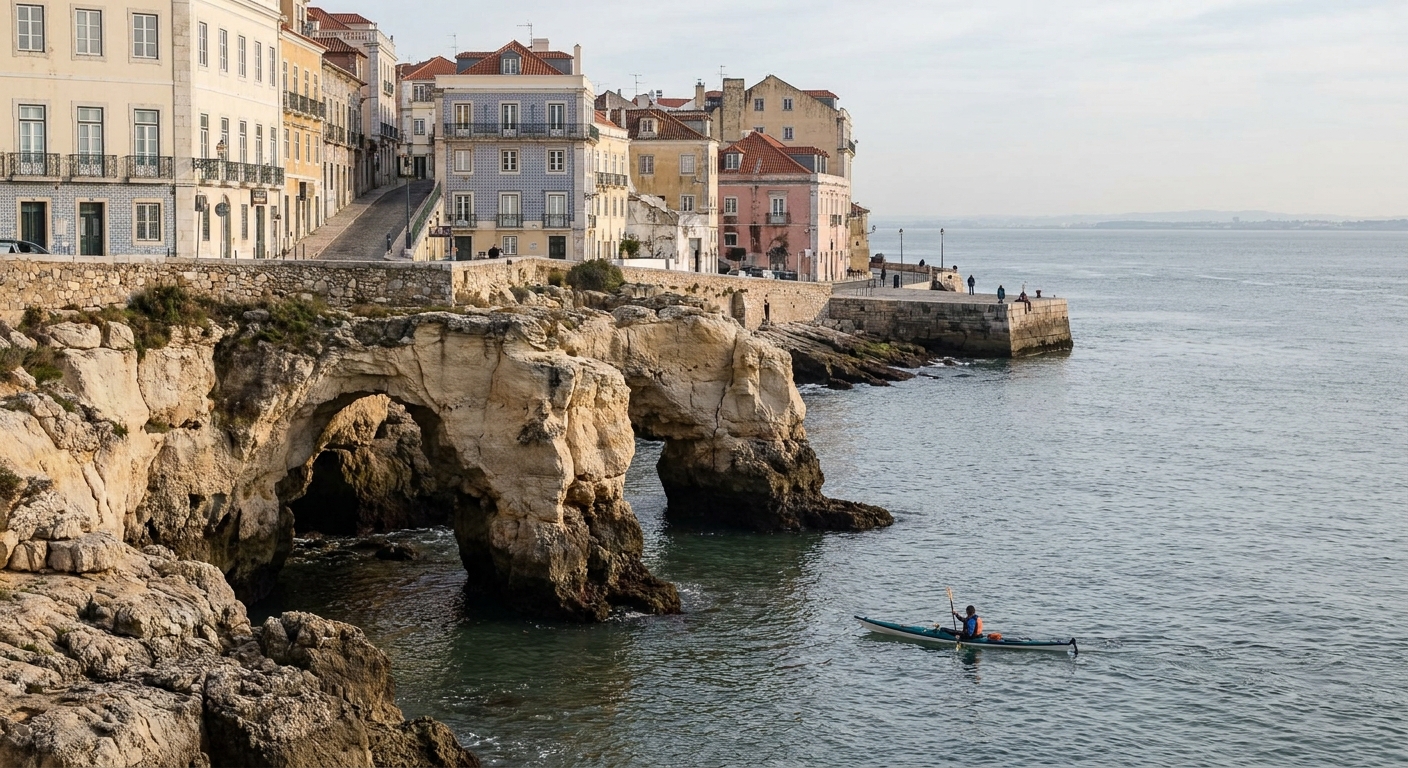
At 61.3°F the cliffs become a walk rather than a heat-management exercise, and that is the month’s real gift. The Benagil cave sits under a maritime authority order in force since August 13, 2024 and amended in 2025: no swimming in from the beach or from a boat, with or without a float, and no craft may land on the sand inside. Kayak and paddleboard tours run with a licensed guide, capped by how many craft are inside at once. Motorized boats stay 15 meters off the arches and enter by the western one. Detail sits on our Benagil page.
The Fortaleza de Sagres opens 09:30 to 17:30 with last entry at 17:00, and one ticket covers the fortress and the walk out onto the promontory, which is the reason to go. We could not read the adult price at source: the monument’s own page loads its price table in JavaScript and the regional ticket shop was unreachable, so ask at the gate. Sundays and public holidays are free until 14:00, but only for people resident in Portugal, which does not include visitors. More at Sagres.
What costs nothing in January is precisely what summer charges for in patience. The clifftop viewpoints at Ponta da Piedade, the salt-pan tracks behind Tavira, the walled old town of Faro: free, walkable, and parked outside rather than circled around. With sunset at 5:39 p.m. you can take the good light from a viewpoint and still be at a dinner table by seven.
The Algarve in January: two-day itinerary and daylight hours
Day one, west. On the road by 8:30, with the sun barely up at 7:42, and at Sagres for the 09:30 opening. Walk the promontory first while the low light is still doing the work, then the fortress buildings. Lunch in town around one, then drive east to Lagos for the Ponta da Piedade clifftops between 3:30 and 4:45, which is the last honestly good light of the day. Dark by six, dinner at seven, and no night driving beyond the town.
Day two, center and east. Morning on the Carvoeiro cliffs, a guided Benagil paddle only if the sea cooperates, then Tavira and the salt pans for the afternoon. If yours is one of the 1.8 days that deliver 0.39 inch or more, drop the cliffs entirely: Faro’s old town, a two-hour lunch and the museums keep a wet day upright. Read the forecast hour by hour rather than writing off the whole of it, and keep the driving for the wet hours.
The Algarve in January vs December and February
| Faro normals | December | January | February |
|---|---|---|---|
| Average high | 62.8°F | 61.3°F | 62.6°F |
| Average low | 49.5°F | 46.9°F | 47.8°F |
| Precipitation | 3.54 in | 1.94 in | 1.65 in |
| Days with 0.04 in or more | 7.0 | 6.0 | 5.4 |
| Sea surface | 63.4°F | 62.0°F | 61.3°F |
December runs warmer at night, 49.5°F against 46.9°F, and far wetter: 3.54 inches over 7.0 rain days, against January’s 1.94 inches over 6.0. February is the driest of the trio at 1.65 inches and 5.4 rain days, with afternoons a shade above January at 62.6°F. The sea moves the other way through the whole winter, cooling from 63.4°F in December to 62.0°F in January and 61.3°F in February.
Shift four weeks later and you buy the driest month of the Algarve winter plus lengthening afternoons. You give up 0.7°F of sea temperature, which nobody entering 62-degree water is going to register. Shift four weeks earlier and you get warmer nights and the holiday atmosphere, at the cost of nearly twice the rain and one extra wet day. See December and February for their own normals.
Is January a good time to visit the Algarve?
Yes, if the trip stands on land. Walkers, drivers, photographers, golfers and anyone who wants a cliff path to themselves get the best version of this coast in January, at 61.3°F, with roughly 25 dry days in the month and no queue for anything. No, if the trip stands on water. A 62.0°F sea, zero lifeguard cover anywhere in the region, and 9 hours 57 minutes of daylight add up to a poor beach week however cheap the room.
When the answer lands on no, February is the nearer fix than a jump to summer. It is drier than January by 0.29 inch and by 0.6 of a rain day, its days average 62.6°F, and the light is growing rather than shrinking. The genuine beach season begins when the lifeguards do, June 1 for most of the coast under the 2026 order, and our month-by-month verdict sets the rest of the country against that date.
What no other month hands over: the emptiest version of the most photographed 150 kilometers in Portugal, in the softest light of the year, with the Benagil cap on craft inside the arches and nobody competing for the slots.
The last word
Book the car before the room, and settle now whether your January is a walking trip or a beach trip, because the coast has already settled it. The 2026 bathing-season order gives one beach in Castro Marim lifeguard cover from July 1 to August 31 and not a day beyond. January sits nowhere near that window, which is exactly why the cliff above that beach, at 61.3°F and with the sun setting at 5:39, will be yours alone.
Sources & data for this guide
- January normals, rain days and IPMA thresholds · IPMA, normais climatológicas 1991-2020, station 554 Faro, altitude 5.0 m · checked Sep 9, 2026
- December and February normals, same station and same period · IPMA · checked Sep 9, 2026
- Sea surface 62.0°F, mean of daily maxima 2015-2024 · Open-Meteo Marine API · checked Sep 9, 2026
- Sunrise 7:42 a.m., sunset 5:39 p.m., 9 h 57 min of daylight on January 15 · sunrise-sunset.org, converted to Europe/Lisbon · checked Sep 9, 2026
- 2026 lifeguarded bathing season, council by council · Diário da República, Portaria n.º 204-A/2026/1 of April 30, 2026, Annex I · checked Sep 9, 2026
- Benagil access rules · Autoridade Marítima Nacional, Edital 019/2024 as amended by Edital 009/2025. The edital was not read at source, so treat the craft cap and time limits as unconfirmed · checked Sep 9, 2026
- Fortaleza de Sagres hours and resident free entry · Monumentos do Algarve / DRC Algarve. The adult ticket price loads in JavaScript and could not be read, and the regional ticket shop was unreachable · checked Sep 9, 2026
- A22 toll status · unconfirmed. vialivre.pt and Infraestruturas de Portugal serve their pages in JavaScript · verification attempted Sept 9, 2026
- Prices, opening hours and municipal taxes change · confirm with the operator when you book.