
ALENTEJO · OCTOBER · 1991-2020 NORMALS
Mid-October afternoons in the Alentejo still climb to an average of 75.4°F, warm enough to cross Évora’s square in shirt sleeves, while breakfast outdoors at 54.1°F wants the fleece you will carry all day and wear for two hours of it. The cork oaks throw longer shadows than in summer, the roads between the walled towns are quiet on a Tuesday, and the rain that barely showed in September, 1.33 inches of it, more than doubles.
Across October the same thermometer records 3.21 inches, spread over 7.7 days that reach at least 0.04 inch. That is the trade of the month: the afternoons of a Portuguese summer minus roughly ten degrees, plus a one-in-four chance that any given day turns wet. Drivers, walkers and long-lunch people get the better end of it. Beach-first travelers do not.
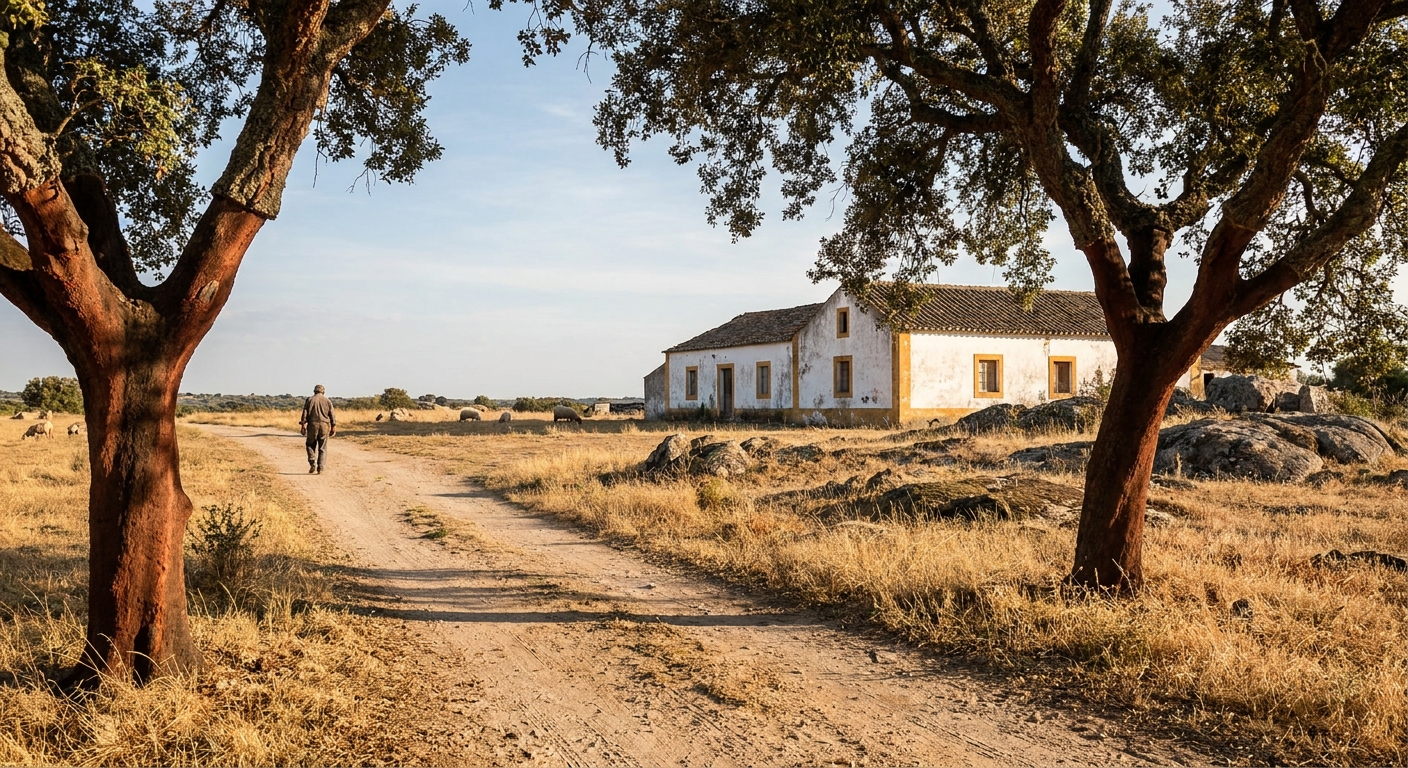
THE MONTH AT A GLANCE · ALENTEJO IN OCTOBER
October averages 75.4°F by afternoon and 54.1°F at dawn, with measurable rain on about one day in four: strong for driving, walking and eating, thin for anything that needs the sea.
AVG HIGH 75.4°F · 7.7 RAIN DAYS · 11H15 OF DAYLIGHT ON OCT 15
Go for: walled-town walking at 75.4°F, back roads through cork-oak country with nobody behind you, and a 6:54 p.m. sunset that lands before dinner instead of after it.
Think twice before: building the week around swimming: we could not verify a sea-temperature series for this coast, and 3.21 inches of rain falls across the month.
Normals: IPMA station 558, Évora, 1991-2020 · Daylight: sunrise-sunset.org · full sources at the end
On this page
- Average highs, lows and rain days75.4°F, 54.1°F and 3.21 inches at Évora
- What to pack for OctoberA 21-degree swing between dawn and 4 p.m.
- Crowds, room prices and the tourist taxWhat we verified, and what we could not
- Things to do in Alentejo in OctoberÉvora, Monsaraz and the Alqueva shore
- A two-day itineraryTwo days built on 11 hours of light
- October vs September and NovemberHow the three months compare, in IPMA normals
- Is October a good time to visit?Yes to drive and walk, no to swim
One caveat before the packing starts. Every figure here is measured at Évora, 247.6 m up and standing in the middle of the Alentejo rather than on its coast, and the region is far too big for one instrument to describe. The higher ground of the Serra de São Mamede runs colder and much wetter than these readings, and the coast south of Sines keeps its own weather. Read the numbers below as the inland plain, then adjust upward for hills and seaward for wind.
Alentejo weather in October: average highs, lows and rain days
| Measure | October normal | On the ground |
|---|---|---|
| Average high | 75.4°F (24.1°C) | Shirt sleeves from late morning |
| Average low | 54.1°F (12.3°C) | A fleece at breakfast, outdoors |
| Precipitation | 3.21 in | Nearly two and a half times September |
| Days at 0.04 in or more | 7.7 | Roughly one day in four |
| Days at 0.39 in or more | 2.8 | Under three proper soakings |
| Daylight, Oct 15 | 11h15 | Sunrise 7:39 a.m., sunset 6:54 p.m. |
IPMA, Portugal’s national weather service, publishes the 1991-2020 normals for station 558 at Évora: average high 75.4°F, average low 54.1°F, 3.21 inches of precipitation over the month. That matters more than it sounds. These come off a real thermometer at 247.6 m, not a reanalysis grid cell averaged over a chunk of landscape, and station readings and model readings routinely disagree by a couple of degrees on the overnight minimum. When you see a different October low quoted elsewhere, check what produced it before you repack.
The 7.7 wet days are days recording at least 0.04 inch, and 2.8 of them reach 0.39 inch or more. Careful with those counts: they use IPMA’s thresholds, not the 0.10-inch threshold American tables lean on, so the two sets of rain-day figures are not interchangeable. Turned around, the number is friendlier than the inches suggest: roughly 23 days of a normal October record no measurable rain at all, and fewer than three bring the kind of downpour that rewrites an afternoon.
Between the 54.1°F dawn and the 75.4°F afternoon sits a 21.3-degree swing, and that spread, not the headline high, decides your bag. A fleece or a light down layer for the first two hours, a shirt for the middle of the day, and a packable rain shell for the 2.8 heavy days. Shoes matter too: Évora’s granite and marble paving turns slick under a shower. Our Portugal packing guide covers the rest of the suitcase.
On October 15 the region gets about 11 hours 15 minutes of daylight, with sunrise at 7:39 a.m. and sunset at 6:54 p.m. local time. That reshuffles the day in two useful ways. The good photographic light on the walls arrives at a civilized hour instead of before breakfast, and the drive home from a hilltop village happens in the dark on unlit rural roads. Plan the last leg of each day to end before seven, or accept driving by headlight.
How warm is Alentejo in October, and what do you pack?
Take the two ends together: 75.4°F at the top of the afternoon, 54.1°F before sunrise, a gap of 21.3 degrees inside a single day. September runs a wider gap still, 26.8 degrees between 85.1 and 58.3. November closes it to 17.5, between 63.7 and 46.2. October sits in the middle of that narrowing, which is what makes it the month people describe as pleasant and pack for badly.
In practice you dress twice a day. Morning at a café table is long sleeves and a jacket, and the jacket stays on until mid-morning. By two in the afternoon the square is a T-shirt at 75.4°F, and the jacket is dead weight in a daypack, which is exactly why a small daypack beats a big camera bag here. Evenings fall back toward the overnight figure quickly after that 6:54 p.m. sunset, so the fleece earns its second shift at dinner.
No frost-night count for Évora appears in our sources, so we give none: what we can say is that the month’s average low sits 22.1 degrees above freezing. As for the water, we could not verify a sea-surface temperature series for the Alentejo coast, so no ocean figure appears anywhere here. Keep one thing in mind when you find such a number elsewhere: published sea temperatures are usually averages of daily maxima, so they read slightly warmer than a true 24-hour mean.
How busy is Alentejo in October? Crowds, room prices and the tourist tax
October falls outside Europe’s summer school holidays, and that is a calendar fact rather than a price series. We looked for occupancy data and monthly room-rate data for the Alentejo and found neither, so we crown no month the cheapest and none the most expensive. What the region costs in broad strokes, from a rural inn to a tasting lunch, sits in our Portugal trip-cost guide, which is built on tiers rather than on month-by-month rates.
That leaves booking to reasoning, and we would rather say so than invent a lead time. Most American trips here start with a Lisbon flight and a rental car, and the two decisions are usually made the same week, so treat the room the same way: fix it when you fix the flight, especially for a Friday or Saturday night in a small hilltop village where a handful of properties carry the whole weekend. Our where-to-stay guide sorts the bases.
On the municipal tourist tax, we could not verify a current per-night rate for Évora or for the coastal councils, so no percentage and no euro amount appear here. Portuguese municipalities set these locally and change them, sometimes with a seasonal cap. Ask your property what it charges and how it collects it, because it is frequently taken at check-in rather than on the booking site, in cash more often than you would expect.
The one line where paying more genuinely changes October is the car. With 11h15 of daylight and rain on roughly one day in four, a vehicle you are happy to drive on unlit back roads after dark, with room for wet coats, buys you the whole region instead of one town. Automatics cost more and sell out first in Portugal, as our car-rental guide explains, and October is not the month to gamble on a last-minute counter.
Things to do in Alentejo in October: Évora, Monsaraz and the Alqueva shore
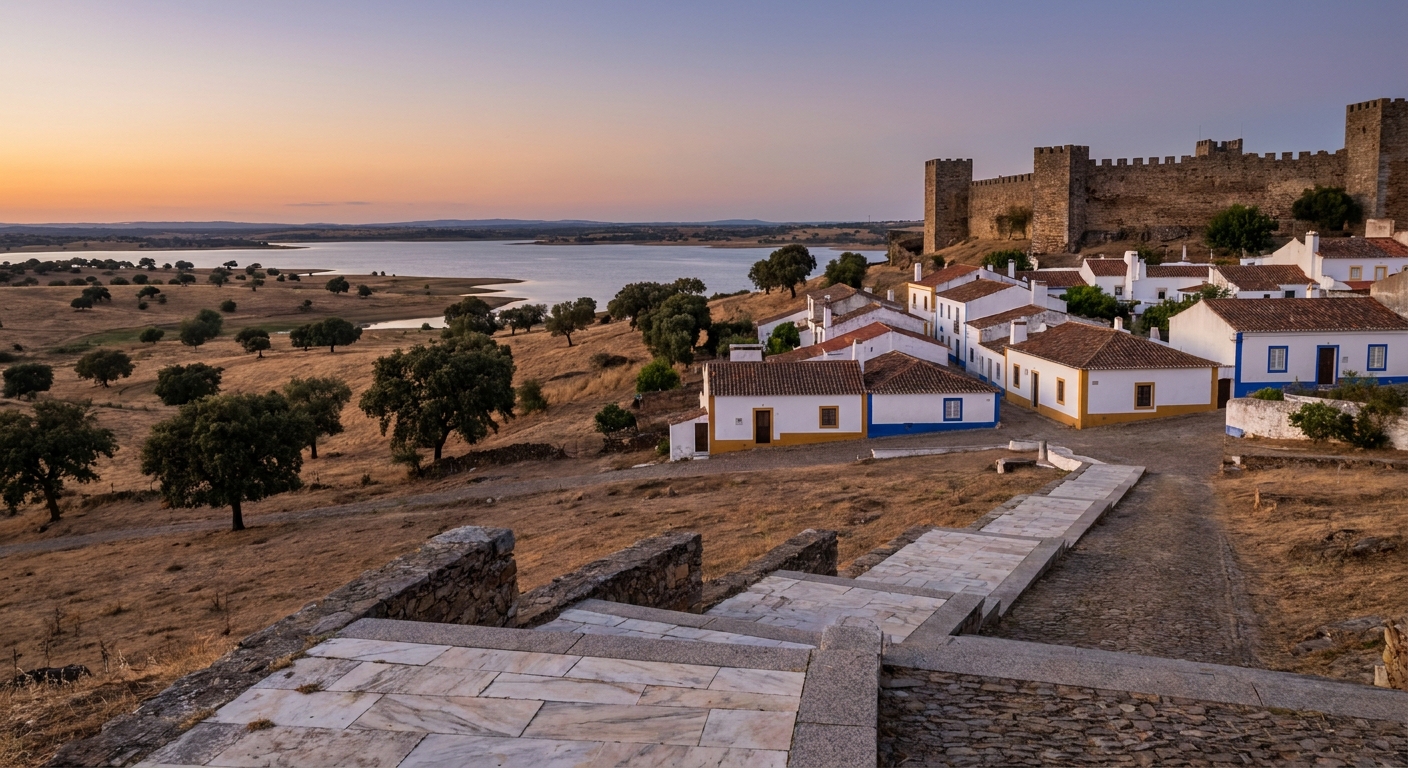
What October unlocks is midday. At 75.4°F you can walk a walled town at noon, which is 9.7 degrees cooler than the September average of 85.1°F and a different physical experience on open stone. Long drives work too, because the light holds from 7:39 a.m. to 6:54 p.m. without the glare that flattens the plain in high summer. The same month asks for a plan B two or three times, and that is the whole negotiation.
Start with Évora, the walled UNESCO town the weather station sits in, with its Roman temple, its cathedral roof and its bone chapel. Then Monsaraz, a fortified village on a ridge above the Alqueva reservoir, and Marvão up on the northern granite. One caution we will not paper over: we could not verify current admission prices or opening hours for any of these sites, so confirm them with the operators before you drive an hour to a closed door.
October changes the air around these places, not the places themselves. A cathedral interior or a marble quarry gallery stays roughly where it was in August, while the outside air swings 21.3 degrees across the day, so the indoor half of the visit feels cool at 10 a.m. and welcome at 3 p.m. Reverse the classic summer order: walk the walls in the middle of the day, and save the interiors and the tasting rooms for the cold end of the morning.
On free admission we have nothing verified, and municipal free days in Portugal move around, so ask at the ticket desk rather than trusting a list. What costs nothing in October is most of the good part: the walk around Évora’s walls, the back roads through cork-oak and olive country, the reservoir shore at Alqueva, and the sunset from a ridge at 6:54 p.m., which in June you would have waited until well after dinner to see.
Alentejo in October: a two-day itinerary for Évora and Monsaraz
Day one, Évora. Breakfast indoors around 8 a.m., because sunrise is 7:39 and the terrace is still near 54°F. Walk the old town from 9:30 to 12:30 while the air climbs toward the afternoon average. Long lunch, then the warmest stretch, 2 to 5 p.m. at 75.4°F, on the walls and the aqueduct rather than inside a museum. Be at a viewpoint by 6:30 for the 6:54 sunset, and eat late, Portuguese-style.
Day two, east to the reservoir. Drive out at 9, Monsaraz by 10:30, the village and the ridge before lunch, the Alqueva shore in the afternoon, back on the road by 6 so the final half hour is not in the dark. If one of the 2.8 heavy days lands on you, flip it: cellars and museums in the morning, the drive in the clearing hours, and an extra night booked in Évora instead of a wet ridge. Our food and drink guide covers the tasting side.
Alentejo in October vs September and November
| Normal (1991-2020) | September | October | November |
|---|---|---|---|
| Average high | 85.1°F | 75.4°F | 63.7°F |
| Average low | 58.3°F | 54.1°F | 46.2°F |
| Precipitation | 1.33 in | 3.21 in | 3.39 in |
| Days at 0.04 in or more | 3.6 | 7.7 | 8.8 |
| Day-night spread | 26.8°F | 21.3°F | 17.5°F |
Line the three up and October looks less like a compromise than like a hinge. It gives up 9.7 degrees of afternoon against September and keeps 11.7 over November. On rain it has already joined the wet half of the year: 3.21 inches is within 0.18 inch of November’s 3.39, and both are more than double September’s 1.33.
Shift four weeks earlier and you buy warmth and dryness, 85.1°F afternoons and only 3.6 wet days, at the cost of harder midday walking and a region still holding its summer visitors. Our September guide makes that case in full. Shift four weeks later and November hands you 46.2°F mornings, 8.8 wet days and short light, with the compensation that the plain turns green and the roads empty out further.
Is October a good time to visit Alentejo?
Yes, if your trip moves on wheels and feet. For a driving week between walled towns, a wine-and-table trip, or a first Portugal loop that pairs the region with Lisbon, October’s 75.4°F afternoons are close to the ideal working temperature. No, if the plan leans on water. We have no verified sea figure for this coast, the air drops to 54.1°F overnight, and 7.7 wet days is a real number to build a beach week against.
If water and certainty matter more than comfort, take September: 85.1°F by afternoon, 1.33 inches of rain across the whole month, and 3.6 wet days instead of 7.7. You will walk less happily at noon and share the towns with more people, and you will trade our region’s autumn quiet for a near-guarantee of dry dates. The twelve-month view across Portugal sits in our best-time guide.
Of the three months on this hinge, October is the only one that keeps its afternoon average above 70°F while the month’s rainfall passes 3 inches, which is the specific combination that makes a long midday walk and a green horizon possible on the same trip.
The last word
The decision is not really about temperature, it is about odds. Going from September to October, your chance of a wet day roughly doubles, from 3.6 days to 7.7, while the afternoon loses 9.7 degrees. If your dates are flexible and the sea is on the list, go earlier. If they are fixed and the point is the plain, book the car first, keep one afternoon unplanned for the drive to Monsaraz, and be on the ridge before 6:54 p.m.
Sources & data for this guide
- October, September and November normals, rain-day counts and thresholds · IPMA (Instituto Português do Mar e da Atmosfera), 1991-2020 climate normals, station 558 Évora, altitude 247.6 m · checked Sep 23, 2026
- Daylight, sunrise 06:39 UTC and sunset 17:54 UTC on October 15, converted to local time · sunrise-sunset.org · checked Sep 23, 2026
- Scope caveat carried from IPMA: these readings describe the inland plain at Évora, not the high ground or the coast, where conditions differ · checked Sep 23, 2026
- We found no sea-surface temperature series we trust for the Alentejo coast, so we publish no water figure. Where such figures exist they are usually averages of daily maxima, slightly warmer than a 24-hour mean.
- We found no occupancy or monthly room-rate series for the region, so we crown no month cheap or expensive, and we could not verify a municipal tourist-tax rate.
- Admission prices and opening hours for the sites named here could not be verified by us and change often · confirm with the operators before you travel.
To plan your stay
- Things to Do in the Alentejo: Évora, the Almendres Stones, Alqueva's Dark Sky and the Wine Towns
- Best Time to Visit the Alentejo: Weather Month by Month, Summer Heat and the Quiet Season
- Alentejo in September: Weather, Rain Days and a Two-Day Plan from Évora
- Alentejo in November: Weather, Rain Days, Crowds and a Two-Day Plan