
In the first days of November, marigold petals trail across doorsteps in Tulum town, and small altars appear in courtyards with candles, photographs and plates of a grandmother’s favorite dishes. The jungle is still deep green from the wet months, the sea has kept its warmth, and the evenings finally ask for nothing more than a thin shirt. It is a month when Tulum settles between rainy season and winter, with ceremony in the town and long beach afternoons on the coast.
What is the weather like in Tulum in November?
November is warm and noticeably less sticky than the months before it, with sunny days broken by the occasional shower.
| Month | Average high (°F) | Average low (°F) | Rain (in) | Rain days | Sea (°F) | Daylight on the 15th |
|---|---|---|---|---|---|---|
| October | 86.9 | 69.8 | 8.04 | 10.8 | 85.9 | 11 hours 43 minutes |
| November | 85.6 | 67.1 | 3.63 | 7.6 | 84.1 | 11 hours 13 minutes |
| December | 84.4 | 66.4 | 1.66 | 5.7 | 82.1 | 10 hours 57 minutes |
Afternoons are hot in the sun but the air has lost its summer heaviness, so walking the ruins or biking along the coast road is comfortable. Mornings and evenings feel pleasantly soft, and dinner outside needs no sweater unless a breeze picks up off the water.
Showers are shorter and farther apart than in October, though a stormy afternoon can still sweep through and leave the roads puddled. The sea stays inviting for long swims, and daylight fades a little after five, so sunsets arrive earlier than in the fall.
What to do in Tulum in November
Día de Muertos in town
Día de Muertos, October 31 to November 2, spills into the opening days of the month. In Tulum pueblo, families build ofrendas with cempasúchil (marigolds), pan de muerto, candles, sugar skulls and the foods their relatives loved. Some restaurants and hotels set up public altars, and you can simply walk the main avenue and the side streets to see them.
The mood is warm rather than somber. Painted faces, music and neighbors visiting one another make it feel like a family reunion. Try pan de muerto with hot chocolate in the morning, and look for the Maya tradition of hanal pixán, a meal shared with the souls of the departed, which is the local heart of the celebration in this part of Yucatán.
Cenote days
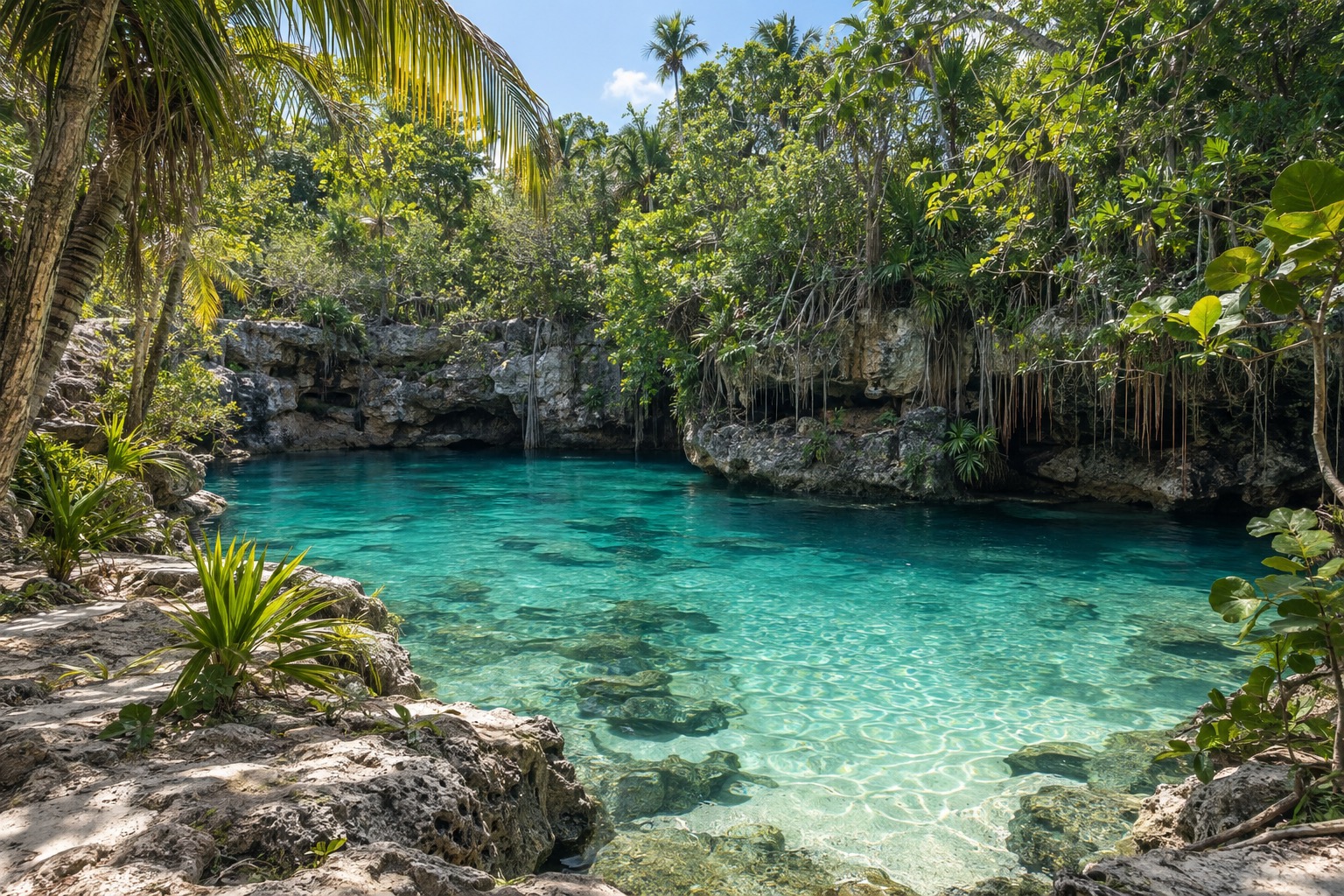
With the heavy rains behind us, cenotes are a very good way to spend a November day. Gran Cenote and the Dos Ojos system near Tulum are among the favorites, with water that tends to clear as the season dries, stalactites overhead and turtles drifting in the shallows. Snorkeling is the main draw.
Go in the morning, when the light slants through the openings and the pools are quiet. The water feels cool against the warm air, which is exactly the point after a sunny stretch of beach.
Beach, ruins and the Sian Ka’an side
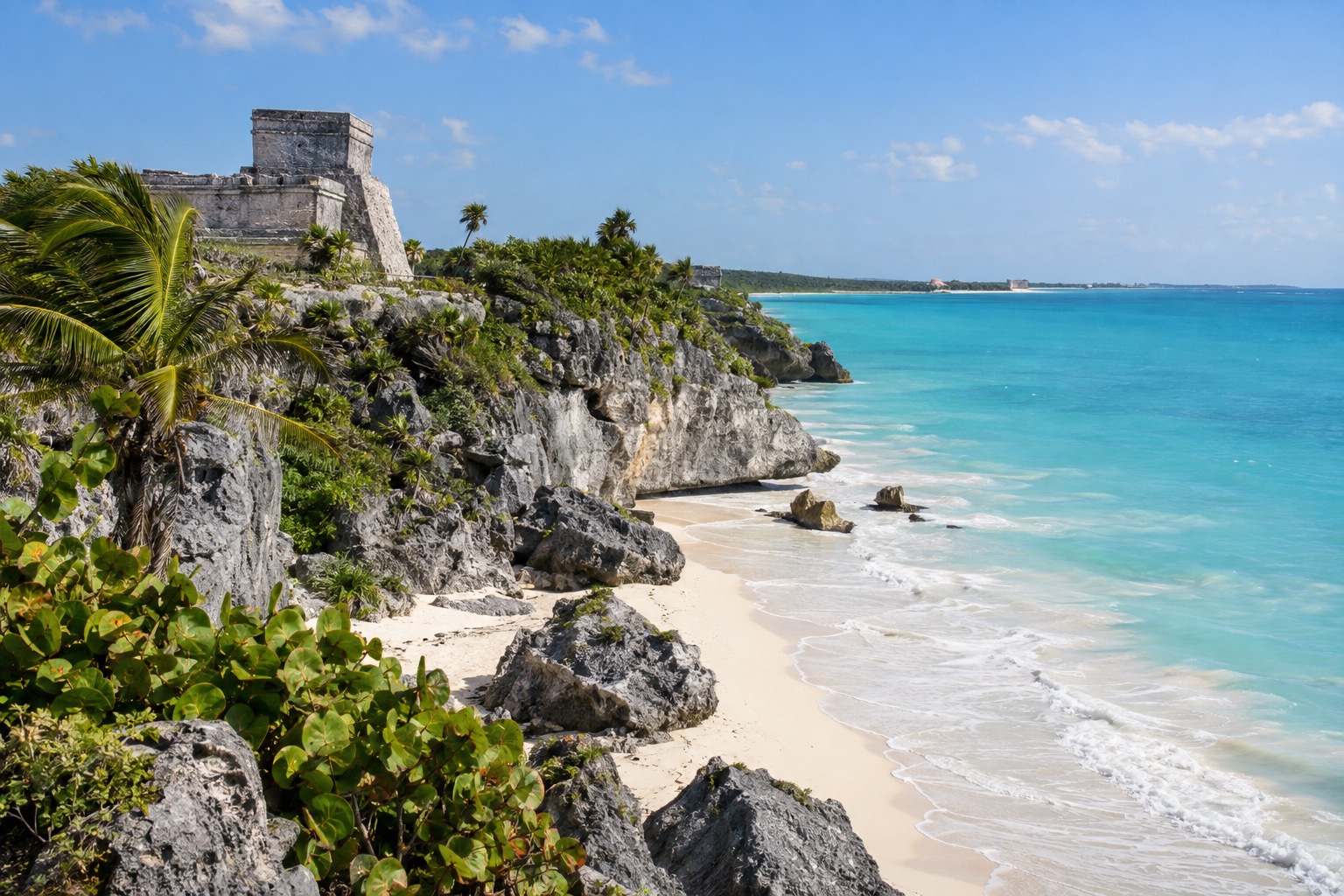
The sea is still warm enough to swim all day, and November beaches are calmer than the summer ones, though sargassum is not mentioned here as a concern. The Tulum ruins sit on a cliff over the water and are lovely on a clear morning, when the heat has not yet built.
Beyond the town, the Sian Ka’an biosphere reserve offers lagoons, mangroves and birdlife, with boat outings that glide through channels once used by the Maya. Along the beach road, grilled fish, ceviche, cochinita pibil tacos and fresh coconut water suit the weather, and mezcal cocktails start the evening.
Is Tulum busy in November?
Early November is moderately busy and the month gets livelier toward its end, but it remains calmer than the winter holiday weeks.
Día de Muertos brings Mexican families and curious travelers at the start of the month, and the U.S. Thanksgiving week draws visitors from the north in the final days. Beach clubs and the ruins fill up around midday, while the cenotes are calmest early. Rooms and restaurant tables are easier to find in the middle of the month than at the end, and the town feels relaxed.
What to pack for Tulum in November
Pack light, breathable clothes for warm days, plus a few extras for water and shade.
- Lightweight cotton or linen layers, with one thin wrap for breezy evenings
- Water shoes for rocky cenote entrances
- Mosquito repellent for jungle edges and dusk
- A brimmed hat and sunglasses for midday on the coast
- A light rain shell for a passing afternoon shower
Good to know before you go
The U.S. State Department rates the state of Quintana Roo Level 2, ‘Exercise increased caution,’ due to terrorism and crime.
The Atlantic hurricane season runs through November 30, so the first weeks of the month still sit inside it, though the peak has long passed. Plan with a little flexibility for weather, and expect some small businesses to run shorter hours around Día de Muertos.
Is November a good time to visit Tulum?
Yes, especially for travelers who want warm water, green scenery and a cultural moment without the peak winter crowds.
Compared with October, November brings fewer rainy days, cooler nights and a calmer sea. December is drier still and slightly cooler, but with the holiday rush arriving. November is the balance between those two. What makes it memorable is the first weekend, when marigold altars and candlelit courtyards share the town with the Caribbean light, and the beach is still warm enough for a late swim.
Sources
- Servicio Meteorologico Nacional (CONAGUA), normales climatologicas 1991-2020, estacion 23025 (Tulum, Tulum), checked September 29, 2026
- Open-Meteo Marine API, average 2015-2024, checked September 8, 2026
- sunrise-sunset.org, sunrise and sunset on the 15th of the month, checked September 8, 2026
- U.S. Department of State, Bureau of Consular Affairs, Mexico Travel Advisory, travel.state.gov, checked September 29, 2026
- NOAA National Hurricane Center, checked September 29, 2026