
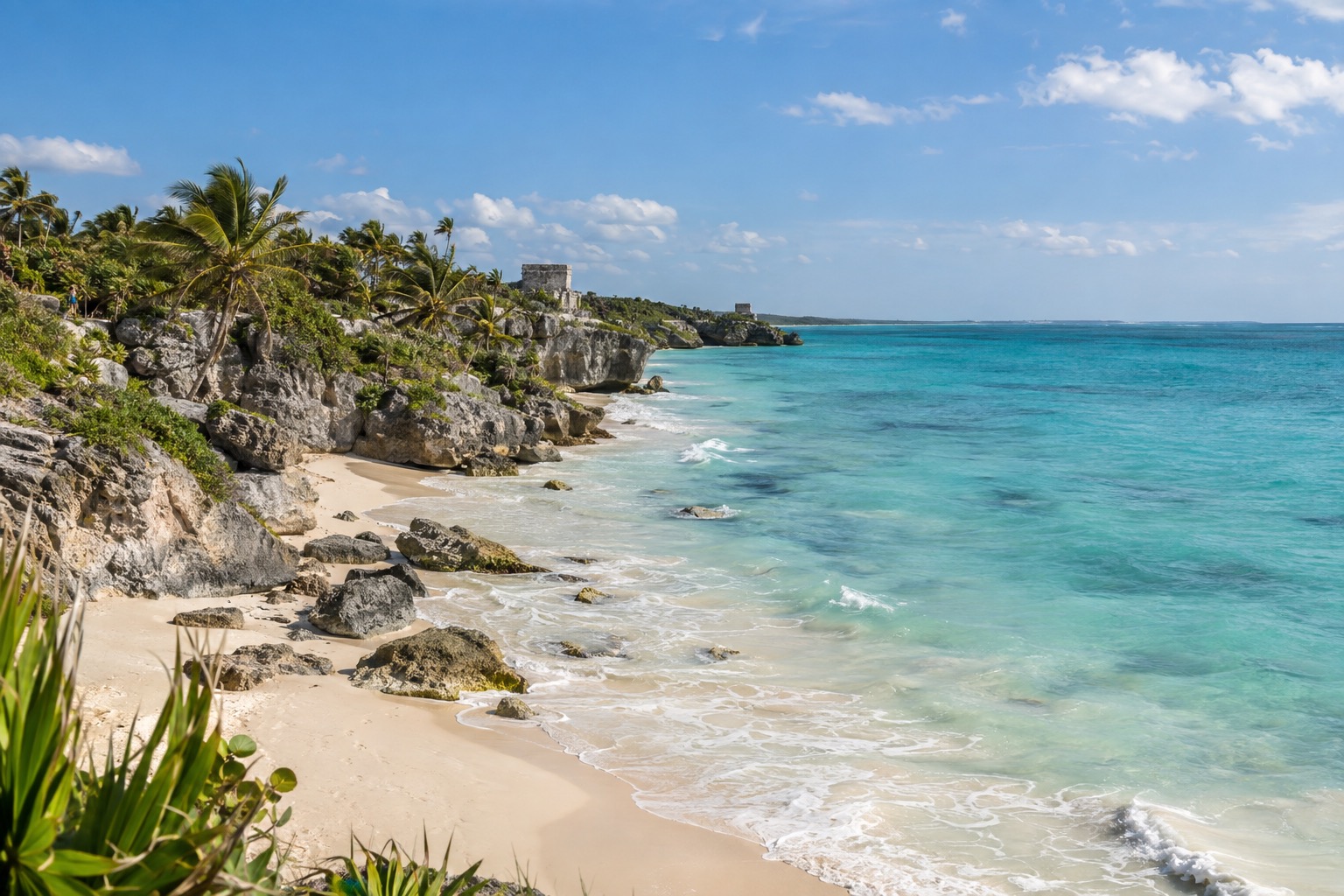
On a January morning in Tulum, the first light hits the cliffs, the sea is a clear turquoise, and the cafés along the beach road are already serving eggs with black beans and strong coffee. The year here swings between bright, breezy winter weeks, a hot and sticky summer, and an autumn of heavy tropical downpours. For most travelers, the best stretch runs from late autumn through spring, when the ruins, the cenotes and the sand all work at once.
When is the best time to visit Tulum?
The best time to visit Tulum is from December through April for most travelers, with November and early May as good shoulder months. Days are warm but not oppressive, the sea is inviting, and rain tends to come as short showers rather than long storms.
For beach and sea, February to April is the sweet spot: the water is warm, the mornings are clear, and you can spend whole days between a lounger and a snorkel mask. Sightseeing is easiest in the cooler winter months. The ruins sit on a cliff with little shade, so walking them in January or February is far more pleasant than in the sticky heat of summer.
Travelers on a tighter budget or after a calmer pace do well in late spring and in the stretch from late October into November, when the crowds thin and rooms are easier to find. Expect more rain, and some sargassum on the beaches in late spring.
Families should know that March is spring break season: beach clubs get loud, the sand fills up, and the mood tilts toward parties. Early December, January after the holidays, and April after Easter week are friendlier for children, with more room on the beach and a gentler soundtrack.
Tulum weather by month
Tulum stays warm in every month, so the real differences are rain, humidity and the feel of the sea.
| Month | Average high (°F) | Average low (°F) | Rain (in) | Rain days | Sea (°F) |
|---|---|---|---|---|---|
| January | 83.8 | 64.9 | 2.38 | 7.3 | 81.2 |
| February | 85.3 | 66.4 | 1.65 | 4.2 | 80.6 |
| March | 86.7 | 68.9 | 1.30 | 4.7 | 81.2 |
| April | 87.4 | 70.5 | 1.59 | 4.0 | 82.3 |
| May | 88.5 | 71.2 | 3.53 | 5.6 | 84.1 |
| June | 88.0 | 72.7 | 5.93 | 7.6 | 85.7 |
| July | 88.7 | 72.1 | 3.87 | 8.3 | 86.0 |
| August | 88.3 | 72.3 | 3.59 | 9.0 | 87.1 |
| September | 88.0 | 71.6 | 6.97 | 11.2 | 87.1 |
| October | 86.9 | 69.8 | 8.04 | 10.8 | 85.9 |
| November | 85.6 | 67.1 | 3.63 | 7.6 | 84.1 |
| December | 84.4 | 66.4 | 1.66 | 5.7 | 82.1 |
The year falls into three moods. From December to April, days are bright and the nights are cool enough for a light layer, with a few showers and the occasional cold front. May and June grow steadily hotter and stickier. From August through October the rain days pile up and the downpours are heavy, often arriving as a stormy afternoon after a bright morning, and the air feels thick even when the sun is out.
When is Tulum cheapest and least crowded?
Tulum is quietest from September through mid-November and again in the weeks between New Year and spring break. In those stretches the beach road is calm, restaurants have tables, and hotels are easier to book and often more flexible on rates.
The busiest weeks follow the American calendar: Christmas and New Year, spring break through March, and Easter week, when Mexican families also head to the coast. Mexican school vacation, from about early July to late August, fills the beaches with domestic visitors even though the weather is hot and wet. Thanksgiving week brings a smaller bump.
In peak weeks, expect peak-season rates, long waits at popular beach restaurants, and a crowded ruins site by mid-morning. In the quiet months, you may have a stretch of sand nearly to yourself, though some smaller places close for a break in the autumn.
Which months should you avoid in Tulum?
If you want reliable beach weather, avoid August through October, when the hurricane season peaks and rain is at its heaviest.
The Atlantic hurricane season runs from June 1 to November 30, with most activity from mid-August to mid-October. Most days in that window are simply hot, humid and showery, but a storm can disrupt flights and close beaches for days. September and October have the most rain days of the year, and the downpours can flood roads and leave dirt tracks muddy.
Sargassum is the other trouble. The brown seaweed usually piles up worst from spring into summer, and for many beach trips it is the first disappointment: a smelly tideline, murky water at the edge, and crews raking the sand each morning. It varies from beach to beach and week to week, so no stretch of coast is guaranteed clear.
Winter has its own quirk, the nortes. These cold fronts blow in from the north, bringing a gray day or two, a strong breeze, choppy water and a chill in the evenings. They are short, and the sunshine returns right after, so they matter far less than sargassum or hurricane season.
Summer heat is the last thing to weigh. Highs sit near 90°F with humidity, and the ruins offer little shade, so go at opening time or plan on cenotes in the afternoon.
When can you swim in Tulum?
You can swim in the sea in Tulum all year, because the water never gets cold.
From December to March it is pleasantly cool on first contact and then comfortable, ideal for long swims and snorkeling. By May the sea turns bathwater-warm, and in late summer it is hot enough that it offers little relief from the heat. Sea conditions change more than temperature does: winter fronts can bring waves and a rougher surf, while calm mornings in spring give the glassiest, clearest water.
The beaches themselves shift by season. Winter and early spring bring wide, clean white sand and the best visibility. Late spring and summer can bring sargassum, which makes some stretches less appealing, and the autumn rains cloud the water after storms. On those days, cenotes make a good alternative.
Festivals and events in Tulum through the year
Winter holidays and Carnival
Christmas and New Year are the biggest party weeks on the coast. Hotels and beach clubs put on dinners, fire shows and DJ sets, and the town square fills with families eating tamales and sweet bread. The December 12 feast of the Virgin of Guadalupe brings processions and small fireworks in the streets of the town center.
Carnival arrives in February or early March, depending on the Easter calendar. Expect costumed parades, music and dancing in nearby towns, with more of a local flavor than a tourist one. It suits travelers who like street scenes and do not mind crowds. A good tip is to stay near the town center for the evening, since the beach road can be quiet when the action is in town.
Easter week and spring
Semana Santa, the week before Easter, is a major vacation for Mexican families. Beaches are packed with picnics and music, and there are quiet religious observances in town. The ruins and cenotes get busy, and roads toward the coast can slow to a crawl.
The spring equinox in March draws visitors to Maya sites around the region, where the angle of light on the old stones has meaning. Tulum’s beach scene also hosts music and wellness gatherings in the dry months, many of them timed to the full moon. They suit travelers who like a lively evening, less so those who want early nights.
Nature seasons: whale sharks and turtles
Sea turtles nest on the beaches from roughly late spring through summer, and hatchlings scramble to the water on warm nights into early autumn. Local groups and some hotels protect the nests, and you may spot tracks in the sand at dawn. Keep lights low and give nests plenty of space.
Whale shark season off the coast runs through the summer months, with boat trips leaving from towns farther north. It is a long outing, best for confident swimmers who like open water. In the same season, the Sian Ka’an reserve to the south is at its greenest, with birds and mangroves along the canals, though the wet weather brings mosquitoes and humidity.
Día de Muertos, observed from October 31 to November 2, arrives as the rains ease. Altars with marigolds, candles and photographs appear in homes, shops and the town plaza, and families visit the cemeteries. Watch from the edges and let the families lead the moment, since these are private remembrances as much as celebrations.
Sources
- Servicio Meteorologico Nacional (CONAGUA), normales climatologicas 1991-2020, estacion 23025 (Tulum, Tulum), checked September 29, 2026
- Open-Meteo Marine API, average 2015-2024, checked September 8, 2026
- sunrise-sunset.org, sunrise and sunset on the 15th of the month, checked September 8, 2026
- NOAA National Hurricane Center, checked September 6, 2026
- INAH, official for the Tulum archaeological zone, inah.gob.mx/zonas/99-zona-arqueologica-de-tulum, checked September 29, 2026
- Wikipedia, "Tulum", en.wikipedia.org, checked September 29, 2026 (source secondaire)
- INAH, inah.gob.mx/zonas-arqueologicas, checked September 29, 2026
- UNESCO World Heritage Centre, record 410, whc.unesco.org/en/list/410, checked September 29, 2026
- reserve de sourcage (CONANP dediee non atteinte, 404), aucun chiffre affirme
- common knowledge; no single official source available
- Wikipedia, "Tulum International Airport", en.wikipedia.org, checked September 29, 2026 (secondary source; the group’s official site not reachable that day)
- Wikipedia, "Tulum Municipality", en.wikipedia.org, checked September 29, 2026 (source secondaire)
- U.S. Department of State, Bureau of Consular Affairs, Mexico Travel Advisory, travel.state.gov, checked September 29, 2026
- Gobierno del Estado de Quintana Roo, portal visitax.gob.mx, checked September 29, 2026 (amount unconfirmed)