
Mornings in Tulum begin with the smell of coffee and griddled tortillas along Avenida Tulum, while cyclists in sandals weave toward the coast and the jungle hums behind the beach clubs. It is an easy, sunburned, barefoot kind of town, and most days pass without a hitch. Still, this is Quintana Roo, and a clear-eyed look at safety belongs in any plan: where to stay, what to watch for, and how to move around.
Is Tulum safe to visit?
Millions of people visit this coast and enjoy it, but a trip here calls for the same alertness you would bring to any busy resort region, and nobody can promise it will go smoothly. The advisory for Quintana Roo mentions violence involving gangs and criminal organizations, and says bystanders have been hurt in shootings between rivals.
In practice, that means the tourist zones, the beach road and the center of town are where visitors spend nearly all their time, and where it pays to stay aware of your surroundings once the sun goes down. The advisory also notes that crime, both violent and non-violent, has affected visitors in tourist and non-tourist areas alike.
If something goes wrong, Tulum is one of the cities with a Tourist Assistance Module. At these offices, staff can assist with emergency phone numbers, legal guidance, and tourist information, and they may also help you file a report with police if your passport is lost or file a complaint about a service provider.
Safety by area in Tulum
Beach zone (Zona Hotelera)
A slim road hugs the sand, with small hotels, beach clubs and restaurants tucked along its edge. The feel is relaxed and low-rise, barefoot luxury rather than a loud party scene, and it draws mostly couples and honeymooners who want to step straight onto the beach.
By day it is busy with walkers and cyclists. After dark, the stretch between restaurants can be dim, so it makes sense to take a taxi back to your hotel rather than wander the road alone. Many cabanas sit set back from the sand, among trees, which makes the walk from the beach to your door part of the evening to plan. A few of the smaller beach spots set card minimums or lack a card machine, so carry some cash and keep it hidden while on the sand.
Tulum Pueblo
The inland town center is more Mexican and less polished than the coast, with a market, street food stalls, local shops and a busy main avenue. Budget travelers, backpackers and long-stay visitors like it for cheap eats, local nightlife and easy bus links.
Around Avenida Tulum, the compact core is walkable and lively into the evening, which is exactly where the advisory’s advice to stay on well-lit pedestrian streets is easy to follow. Keep to the main avenue and the busy blocks near the ADO station when you head back late, and keep phones and wallets in front pockets in crowded market stretches.
Aldea Zama
This planned development of modern condos, wide paved streets and landscaped common areas sits between town and beach. Families, digital nomads and longer-stay visitors choose it for the quieter pace and the sense of security that comes with newer buildings.
The streets are calm, but they are spread out and walking between places is long. Once night falls, this becomes a real concern, because taxis can be scarce late, so arrange your ride home before you leave for dinner. A bicycle or scooter is the easy way around by day.
La Veleta
South of the town, La Veleta is a fast-growing neighborhood of local homes, new condo buildings and unpaved sand or gravel roads. It has a raw, in-between feel, and suits long-term renters and families who want more space and don’t mind being farther from the water.
Many roads are unlit after dark, so a flashlight is useful for any walk at night. Service may not be as dependable as it is in town, so check that your rental comes with a water tank and a backup generator. After rain, taxi rides slow down on the unpaved roads.
Common scams and how to avoid them
The usual traps in Tulum are small and avoidable. Pushy sellers on the beach and around the ruins will press you to buy or to accept a tour on the spot. A friendly no and a steady walk away usually end it, and you lose nothing by comparing offers before agreeing to anything.
Taxis without a set fare are the other classic. Agree on the price before you get in, or use a ride app that shows the fare in advance. At airports, currency counters often give poor rates, so change only a little there and use a bank ATM inside a branch or a busy, well-lit spot for the rest, covering the keypad as you type.
Getting around safely
Distances in Tulum are short, and the way you choose depends on the hour. By day, the beach road is made for bicycles and walking, and colectivos run frequently between the town, the beach and the ruins. A taxi from town to the sand takes about 10 to 20 minutes.
At night, take a taxi and agree on the fare first, or call one by phone or app. Late at night in outlying areas, cars can be scarce, so arrange the return before you leave. From the ADO station on Avenida Tulum, air-conditioned buses run straight to Cancun airport and towns close by, and during high season you can book tickets online.
Driving yourself means narrow beach roads, scarce parking and unpaved streets in some neighborhoods, which are slow and muddy after rain. A private transfer from Cancun airport takes roughly two hours, and Tulum’s own airport is the closer option.
Beach, water and weather safety
Sea conditions change from day to day, and big surf can arrive after a front or a storm. Look at the beach flags before you swim, and if the water looks rough, stay on the sand. The Caribbean here is warm all year, in the low 80s in winter and the mid-80s in summer, so the sun is the more reliable hazard, and a hat, shade and plenty of water help.
The Atlantic hurricane season runs from June 1 to November 30, with most activity from mid-August to mid-October. If you go during that window, you may hit stormy stretches and revised plans, so track forecasts and keep your reservations flexible.
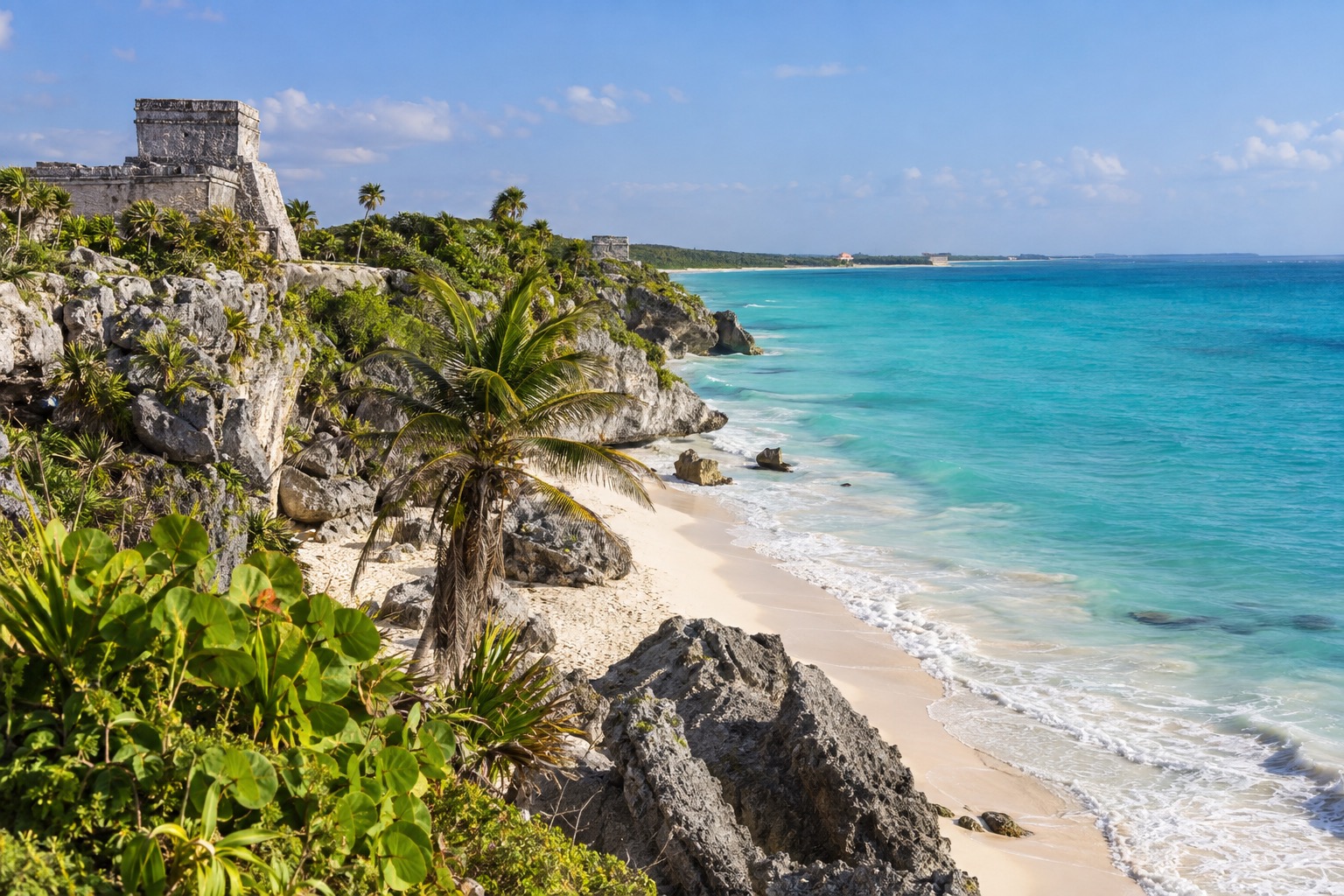
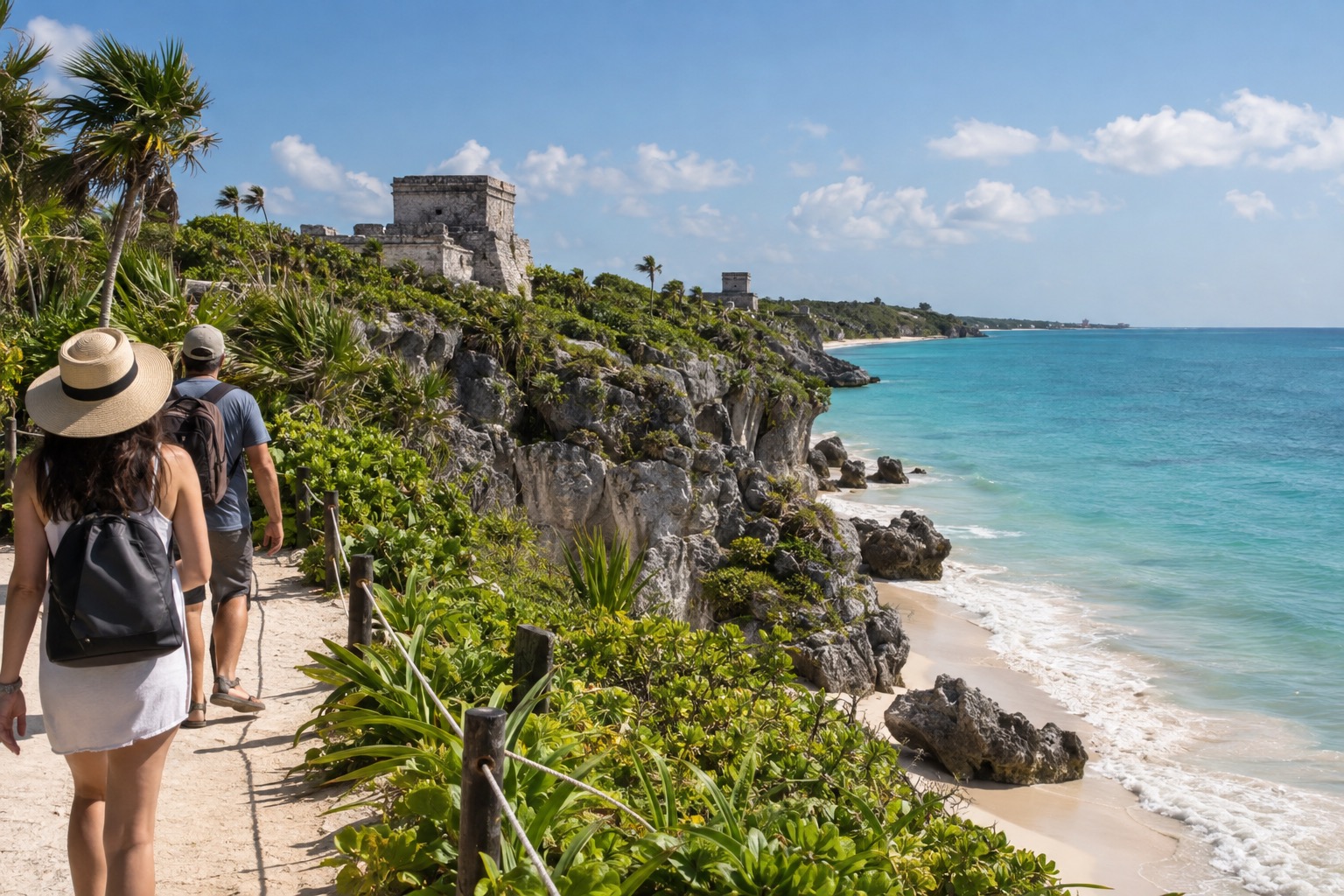
Cliffs at the ruins drop straight to the sea, so keep to the paths. Rain also makes the jungle roads and limestone steps slick around cenotes.
Good to know before you go
The U.S. State Department rates the state of Quintana Roo Level 2, ‘Exercise increased caution,’ due to terrorism and crime.
Carry some cash for small beach spots, keep valuables out of sight, and stay on busy, lit streets at night. Foreign visitors to Quintana Roo also pay a small visitor tax, which is separate from the ruins admission.
| Fee | Amount | Who pays |
|---|---|---|
| Visitax | 2.50 UMA (about 293 pesos) | Foreign visitors entering Quintana Roo, except those entering through the southern border; cruise passengers pay through the cruise line |
Sources
- INAH, official for the Tulum archaeological zone, inah.gob.mx/zonas/99-zona-arqueologica-de-tulum, checked September 29, 2026
- Wikipedia, "Tulum", en.wikipedia.org, checked September 29, 2026 (source secondaire)
- INAH, inah.gob.mx/zonas-arqueologicas, checked September 29, 2026
- UNESCO World Heritage Centre, record 410, whc.unesco.org/en/list/410, checked September 29, 2026
- reserve de sourcage (CONANP dediee non atteinte, 404), aucun chiffre affirme
- common knowledge; no single official source available
- Wikipedia, "Tulum International Airport", en.wikipedia.org, checked September 29, 2026 (secondary source; the group’s official site not reachable that day)
- Wikipedia, "Tulum Municipality", en.wikipedia.org, checked September 29, 2026 (source secondaire)
- U.S. Department of State, Bureau of Consular Affairs, Mexico Travel Advisory, travel.state.gov, checked September 29, 2026 (date issued May 29, 2026) (date issued May 29, 2026)
- Ley de Derechos del Estado de Quintana Roo, art. 51-Octies and 51-Nonies ; UMA value 2026 : INEGI
- NOAA National Hurricane Center, checked September 29, 2026
- Servicio Meteorologico Nacional (CONAGUA), normales climatologicas 1991-2020, estacion 23025 (Tulum, Tulum), checked September 29, 2026
- Open-Meteo Marine API, average 2015-2024, checked September 8, 2026
- sunrise-sunset.org, sunrise and sunset on the 15th of the month, checked September 8, 2026