
After a day on the slopes, the village of Zaō Onsen smells faintly of minerals, and steam drifts up from bathhouses where skiers sit with sore legs in hot water. This is a ski town that is a hot spring town first, set on Mount Zaō in the northern part of Honshu. Skiing here means a day on the mountain and an evening in the water.
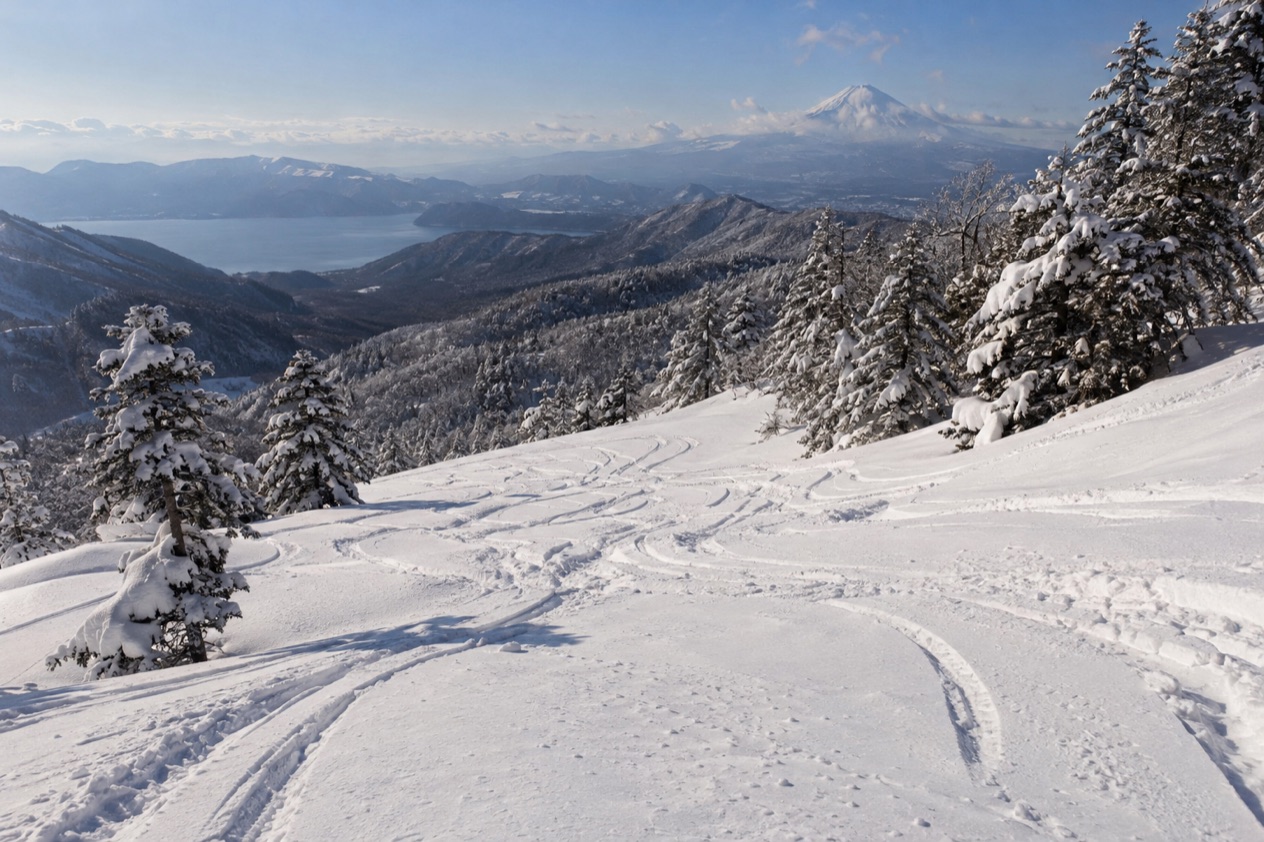
What is skiing like in Zao Onsen?
Skiing in Zao Onsen is mountain skiing tied to a hot spring village, where the onsen is as much a reason to come as the snow. Zaō Onsen is described as a famous hot spring area on Mount Zaō, and the name locals use for it, ‘Springs of Beauty,’ tells you what the place is proud of.
You are not staying in a purpose-built resort. You are staying in a bathing town that happens to sit on a mountain.
That shapes the rhythm of a ski day. You head up the mountain from the village, come back down to it, and the day ends in an onsen rather than in an après-ski bar. Visitors pair the two on purpose, treating the bath as part of the ski plan, the way a runner treats a stretch.
The village and its setting
The village stands on the slopes of the mountain itself, which gives it the feel of a place built around its water. Lodgings in a hot spring town like this are typically inns, where shoes come off at the entrance and guests move between room and bath in a yukata, a light cotton robe. Dinner is often a set meal of regional dishes, and the baths are a fixed part of the evening.
Walking between the baths and the inns at night, with snow on the roofs and steam in the air, is a large part of what people remember. It is a small-town atmosphere rather than a city one, and the mountain is always the backdrop.
| Feature | Detail |
|---|---|
| Elevation of Zaō Onsen | 880 meters above sea level |
| Water temperature, open air public bathhouse | 113 °F/45 °C |
Soaking after skiing
Bathing in Japan follows habits that are worth knowing: you wash at the stools before getting into the shared bath, and the bath itself is for soaking, not for soaping.
There is real depth to the tradition here. Records of the Zaō Onsen date back as far as 110 AD, which makes the baths older than almost anything else you will see on a ski trip. You soak where people have soaked for a very long time, and that sense of continuity is part of the appeal.
How it fits a ski trip
Japan is described by its national tourism organization as an ideal destination for winter sports enthusiasts, thanks to the quality of its snow, its infrastructure and its accommodations. Zao Onsen is one expression of that: a place where the mountain, the lodging and the bath sit in the same village. Travelers who like a ski trip with some culture folded in, rather than a pure resort stay, tend to find it a good match.
If you are comparing destinations, the same national tourism organization names Sahoro, Rusutsu and Hoshino Resorts Tomamu as recommended ski resorts in Japan. Zao Onsen offers something different from a large resort complex: a historic bathing village on a mountain.
When is the season?
The ski season is winter, the months when snow settles on Mount Zaō and the village turns toward the slopes. Zao Onsen is in the northern part of Honshu, and the combination of mountain and altitude is what makes it a winter place. The village itself stands at a good height on the mountainside, so the snow arrives where the inns and baths are.
Winter is also the season when a hot spring feels most rewarding. Cold air outside and hot water inside make the contrast that Japanese onsen towns are built around. Steam rises from the bathhouses, and a soak in the open air with snow nearby is the image people have in mind when they plan a trip like this.
What winter feels like in the village
Winter on Mount Zaō is a matter of snow on rooftops, warm light in inn windows and people crossing between baths in yukata and coats. The mountain is well known in Japan for the snow-covered trees that people call snow monsters, a sight that draws visitors who want to see the mountain in its winter dress. Seeing them depends on the weather and the conditions on the day, so treat them as something you may see rather than a promise.
Evenings are slow. After the lifts close, the village belongs to the bathers, and the day settles into dinner, a bath and early sleep. It is a good place to be if you like to rest well between ski days.
Beyond the snow months
The hot springs do not depend on snow. The records of the springs reach back to 110 AD, which says that people have come for the water in every season for a very long time. A traveler who arrives outside the ski months comes for the bath and the mountain setting, not the slopes.
If skiing is the reason for your trip, plan around winter and let the bath be the second half of each day. If the springs are the main reason, the village makes sense on its own terms, and the mountain simply gives the water its setting.
How do you get there and what does it cost?
You can reach Zao Onsen by road, since the hot spring is accessible via the Tōhoku Expressway, which runs through the northern part of Honshu.
Expect the character of the trip to change as you rise: the air cools, and the landscape turns toward forest and snow.
Planning the trip
A ski day here is built from a few parts: getting up the mountain, staying in the village and taking the baths. Each of those is a separate choice, and each one shapes the whole cost of the trip. Lodging in an onsen inn often includes the baths and sometimes meals, which is how many guests experience the stay, as one package of bed, bath and dinner.
The open air public bathhouse is the place to soak in the village itself, and you will want to keep time for it in your plan. Spending an evening there is part of what the trip is for, not an extra.
What the day is made of
Think of the trip as three things: the way in, the days on the snow and the evenings in the water. Because Zao Onsen is a hot spring town on a mountain, those three are close together, and you do not need to move between towns to enjoy them.
The national tourism organization’s picture of Japan as a country with exceptional snow, infrastructure and accommodations applies here in a small, village-sized way. You arrive, you ski, you bathe, and you sleep in a place that was built for exactly that.
Good to know before you go
Bring a small towel and an unhurried attitude to the baths, since onsen etiquette is a matter of habit: wash first, soak quietly and let the water do its work. The water here is hot, so step in gradually. Keep warm layers for the walk between the baths and your inn, because the village stands high on the mountain and the air cools quickly once the sun is gone.
Sources
- Japan National Tourism Organization, skiing and snowboarding in Japan: regions, resorts, seasons (https://www.japan.travel/en/sports/snow/), checked October 11, 2026
- Wikipedia, Zaō Onsen (https://en.wikipedia.org/wiki/Za%C5%8D_Onsen), checked October 11, 2026