
You step out of a hotel onsen with steam rising off your shoulders, and the mountain air is cold enough to sting. Your skis lean against the wall by the entrance, and somewhere up the road a lift is already turning.
This is the daily rhythm in Shiga Kogen, a highland ski resort in Nagano Prefecture where many separate ski fields are joined into one big area. Skiing here means long days on snow, then hot water and a hotel dinner at night, in a place that feels like a mountain village rather than a theme park.
What is skiing like in Shiga Kogen?
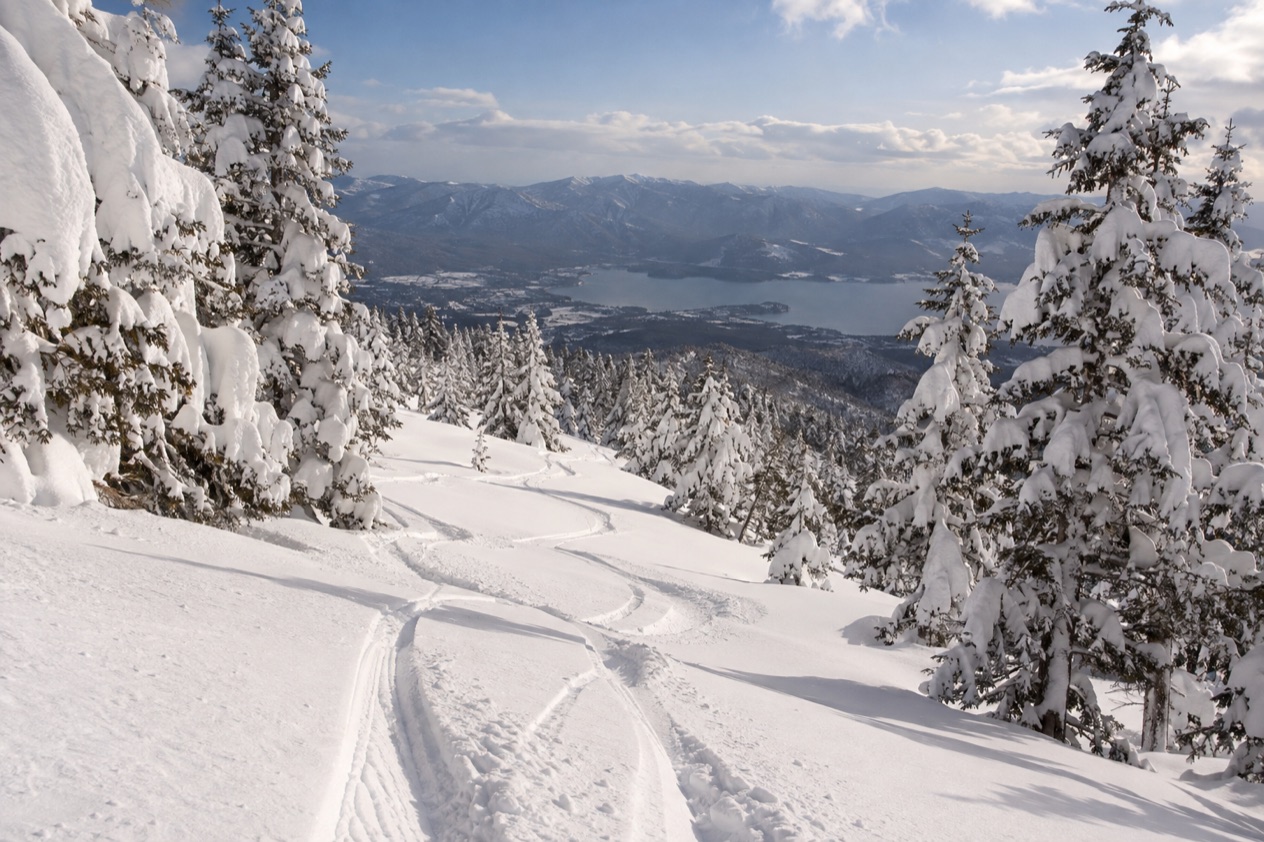
Skiing in Shiga Kogen is skiing across a whole highland of connected ski fields rather than on one mountain with one base. The resort sits in Jōshin’etsu-kōgen National Park, in the highlands of Yamanouchi, Nagano, and it is arguably the largest ski resort in Japan and the second highest in elevation. You ski out of one field, ride a lift in the next and spend the day moving through the area, with a hotel or a hot bath waiting at the end.
Japan National Tourism Organization describes Japan as an ideal destination for winter sports because of the quality of its snow, its infrastructure and its accommodations. Shiga Kogen is where that description turns into something you can picture: lifts, lodges, snowy forest and hot springs, all in the same national park.
A resort made of linked ski fields
Shiga Kogen is not a single mountain. It is a group of smaller ski fields that were joined together, and each one has its own lifts, its own slopes and its own character. A day here is less about repeating one favorite run and more about travelling across the area, trying a different field after lunch and ending up somewhere you did not start.
That layout suits skiers who like to roam. A group with mixed tastes can drift apart for a few runs and meet again at a lodge or a lift station, since the fields connect. The hotels are scattered through the highlands, so where you sleep shapes which fields you ski first thing in the morning.
| Feature | Detail |
|---|---|
| Area | 1.64 square miles |
| Interconnected ski fields | 18 |
| Lifts in total | 48 |
| Natural hot spring sources | Over seven |
| Highest bakery, Unjō no Yado Yokote Sanchō Hyutte | 7,562 feet above sea level |
Skiers and snowboarders on the same slopes
Starting in winter 2015-16, all of Shiga Kogen became open to both skiers and snowboarders. Before that, some areas were restricted to skiers only, so older guidebooks and forum posts may still describe a resort with limits that no longer apply.
The change matters for mixed groups. A snowboarder and a skier can now share the same itinerary across the whole network, without planning around closed fields or splitting up for the day.
After the lifts: onsen, bread and convenience stores
The resort is home to natural hot spring sources, and many hotels have their own onsen baths. Soaking after a day on snow is part of the whole experience here. You come in with cold cheeks and tired legs, wash first as is the custom, and ease into water that comes straight from the ground.
Food is mostly a hotel affair. Shiga Kogen has no supermarkets or major grocery stores, only small convenience stores, mostly inside hotels. For something different, there is a restaurant, bakery and hotel high on the mountain that claims to be the highest bakery in Japan. Fresh bread, coffee and a view over the snow make it a good excuse for a detour.
When is the season?
The official ski season at Shiga Kogen runs from mid-to-late November through April and until Golden Week, the first week of May. That is a long winter, and it is a different mountain at each end of it: early on the village is just waking up for the year, and at the end the snow is turning spring-like around the lodges.
| Period | What happens |
|---|---|
| Mid-to-late November | Official ski season begins |
| April 1 onward | Spring ski season begins, with lift ticket discounts |
| April 1 onward | Maruike, Hasuike and Sunvalley ski areas cease operation |
| Golden Week, first week of May | Official ski season ends |
Opening in late autumn
The season begins in mid-to-late November, when the highlands are making the shift from autumn into winter. For anyone who likes starting the ski year early, this is the opening window. The hotels are returning to their winter routine, and the onsen baths are steaming again after the quiet months.
The exact opening day is not fixed from one winter to the next, which is why the dates read as a span. Travelers planning around the opening weeks do well to treat the start of the season as a general period rather than a single date.
Spring skiing from April
From April 1 onward the spring ski season begins, and lift tickets are offered at a discount. Spring skiing has its own mood: the days feel looser, and lunch on a lodge terrace becomes part of the plan.
There is one change in the layout. Three ski areas, Maruike, Hasuike and Sunvalley, cease operation once April begins. Anyone building a spring route should expect the network to be a little smaller, and should plan around the fields that stay open.
Running until Golden Week
The season stretches until Golden Week, the first week of May, which is a string of Japanese public holidays. Shiga Kogen can still be a ski destination as spring arrives elsewhere in the country, and a late trip combines snow in the highlands with the first warm days in the valleys below.
One more seasonal habit shows how the mountain shifts. Fishing in Shiga Kogen is prohibited from October 1 until April 5, so the winter ski months and the closed fishing period overlap, and the highlands belong to snow sports while the streams stay off limits.
How do you get there and what does it cost?
You get to Shiga Kogen by bus: during the ski season, buses run between Nagano Station and Iiyama Station and Shiga Kogen and Yudanaka. That gives the resort two railway towns to connect through, and it means the trip from the rail network up into the highlands is a bus ride on the way in and on the way out.
Buses from Nagano Station and Iiyama Station
Nagano Station and Iiyama Station are the two stations from which the ski-season buses travel to and from the resort. The buses also serve Yudanaka, a name worth knowing because it appears alongside Shiga Kogen on the route.
These buses run during the ski season, which ties the trip to the dates covered above. A traveler arriving by rail steps from the station onto a bus and rises into the national park, with the winter landscape changing along the way.
Staying on the mountain
Once you arrive, the practical picture is simple. Hotels are where you sleep, bathe and usually eat, and many have an onsen.
With no supermarkets or major grocery stores in the resort, the hotel becomes the center of the day. Breakfast before the lifts, a bath after, and dinner in the dining room make a rhythm that visitors settle into quickly. Costs for lift tickets, lodging and bus fares are set by the operators, and the discounted spring lift tickets from April 1 are the one price change tied to the calendar.
Good to know before you go
Plan on hotels as your base for food and supplies, since the only shops are small convenience stores, mostly inside the hotels. The onsen are part of the stay, so a hotel with a bath is a pleasure to look for when choosing where to sleep. Spring visitors should remember that three ski areas close from April 1, and everyone should remember that the buses from Nagano Station and Iiyama Station run during the ski season.
Sources
- Japan National Tourism Organization, skiing and snowboarding in Japan: regions, resorts, seasons (https://www.japan.travel/en/sports/snow/), checked October 11, 2026
- Wikipedia, Shiga Kogen (https://en.wikipedia.org/wiki/Shiga_Kogen), checked October 11, 2026