
Snow keeps falling past the windows of the tower hotel while skiers in the lobby tug on boots and compare which slope to try first. That is the rhythm of Rusutsu, a Hokkaido resort that Japan’s national tourist board lists among its recommended ski destinations. It suits anyone who wants a big, mixed-level mountain with a hotel, an amusement park and golf under one operator.
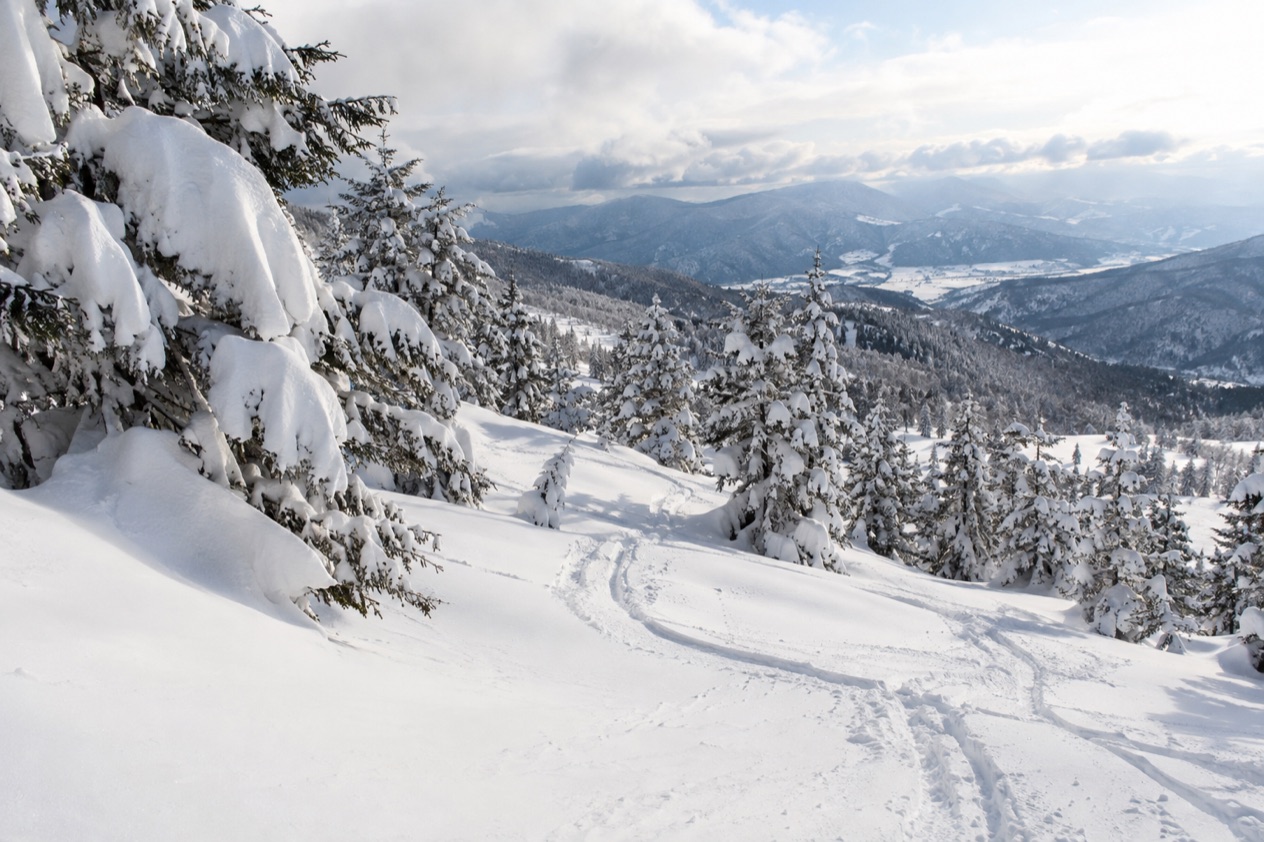
What is skiing like in Rusutsu?
Skiing in Rusutsu means a large resort with runs for every level, run by a single company, Kamori Kanko, and described as the largest resort in Hokkaido. The slopes are split among four levels of difficulty, so a group with mixed abilities can share one mountain and meet for lunch.
The resort has also been named Japan’s Best Ski Resort at the World Ski Awards six times since 2017, which tells you how it is regarded in the ski world. Beyond the lifts, Rusutsu is built as a destination, with a tower hotel, an amusement park and golf courses that give the place a life outside winter.
The slopes by level
| Level | Number of slopes |
|---|---|
| Beginner | 10 |
| Intermediate | 12 |
| Advanced | 11 |
| Very advanced | 4 |
The spread leans toward the middle. Intermediate runs are the most numerous, and the advanced runs come close behind, so skiers who have outgrown the learning slopes have plenty to work through before the steepest terrain calls.
Beginners get their own set of runs rather than a single corner of the hill. A family can start a first-timer on the gentlest slopes while stronger skiers peel off toward the harder trails, then regroup when the day winds down.
Skis, snowboards and snowscooters
Every slope at Rusutsu allows skiing, snowboarding and snowscooting. That matters for mixed groups: a snowboarder and a skier do not have to split up because one trail favors one kind of gear, and a family can try something different without leaving the marked runs.
Snowscooting, a ride on a small board with a seat and handlebars, is the least familiar of the three to most visitors. Seeing it on the same slopes as skis and boards is part of the fun, and it gives non-skiers in a group a reason to be on the mountain.
The tower and the resort around the slopes
The tower at the heart of the resort opened in 1993 and has been called The Westin Rusutsu Resort since July 8, 2016. It gives the resort a clear landmark, and a ski day often ends there with boots off and a hot meal after hours in the cold.
What sets Rusutsu apart from a simple lift-and-lodge mountain is how much else shares the property. The amusement park, the golf courses and the summer pools mean the same grounds that fill with skiers in winter serve a different crowd when the snow is gone.
When is the season?
The snow season runs through the heart of winter, from December to March, and the weather figures for nearby Kutchan, close to Niseko, show how steady the snowfall is across those months. They are the figures of that town, not of the slopes themselves, but they give a sense of what a Hokkaido winter in this part of the island is like.
| Month at Kutchan | Average high (°F) | Average low (°F) | Snowfall (inches) | Days of snow or sleet |
|---|---|---|---|---|
| December | 32.0 | 19.8 | 99.6 | 28.9 |
| January | 28.4 | 14.7 | 99.6 | 30.7 |
| February | 30.2 | 15.1 | 73.6 | 27.0 |
| March | 37.4 | 21.7 | 48.0 | 24.4 |
December and January
These two months bring the biggest snowfalls of the table, and snow or sleet falls on almost every day of both. Highs hover around or below freezing, so what lands on the ground stays, and the days are cold in a way that makes a hot bath or a bowl of ramen feel earned.
January is the coldest month, with lows well down in the teens. Sunshine is scarce in December, and only a little more shows up in January, so expect gray skies and falling flakes rather than long blue days. Humidity stays high, a reminder that this is a wet, snowy climate.
February and March
February still brings plenty of snow, though less than the two months before it, and the sun starts to appear more often. The cold stays, with lows barely above where January left them, so the winter feel holds steady through the month.
By March the snowfall is about half of what December or January delivers, and highs climb above freezing. Sunshine is much more generous than in midwinter, which makes for brighter days on the hill, though snow or sleet still falls on most days of the month.
After the snow melts
When winter ends, the resort turns to other pastimes. The amusement park offers more than 60 attractions, among them eight roller coasters, swimming pools, ropes courses, train rides and go karts. The outdoor swimming attractions open for the summer vacation season, starting from the end of July, and can run as short as four weeks.
Golfers have four courses to choose from: Tower, Izumikawa, River and Wood, with 72 holes in total. For a traveler deciding when to come, the picture is simple: winter is for the slopes, and the warmer months are for the rides, the pools and the fairways.
How do you get there and what does it cost?
Rusutsu is a self-contained resort in Hokkaido, and the pieces of a stay are tied together by one operator, Kamori Kanko. That shapes the trip: the hotel tower, the slopes, the amusement park and the golf courses all belong to the same resort rather than to separate businesses spread across a town.
What a stay at Rusutsu centers on
The anchor is The Westin Rusutsu Resort, the tower that opened in 1993 and took its present name in 2016. Staying in a resort built around a tower means the lodging, the dining and the start of the ski day sit within the same grounds.
Because the resort covers so much, the cost of a trip depends on what you choose to do: skiing in winter, the amusement park and pools in summer, or a round on one of the four golf courses. Rates for lodging and lift access are set by the resort, and they are best read from the resort itself when you plan.
Other Hokkaido resorts on the recommended list
Japan’s national tourist board names Rusutsu alongside two other Hokkaido resorts as recommended places to ski: Sahoro Ski Resort and Hoshino Resorts Tomamu. All three appear on the same list as examples of the island’s winter sports offering.
The board describes Japan as an ideal destination for winter sports because of the exceptional quality of its snow, its infrastructure and its accommodations. For a traveler weighing options, Rusutsu stands out through its size, its operator and the range of its slopes.
Good to know before you go
Winter here is wet and cold, with snow or sleet on most days from December to March and sunshine in short supply, especially in midwinter. Plan for gray light and falling flakes rather than clear skies, and treat any bright day as a bonus.
Because the same resort offers pools, rides and golf in summer, the property feels like a different place once the snow is gone. Yen amounts for lodging, lift access and meals are set by the resort and its restaurants, so read them there when you choose your dates.
Sources
- Japan National Tourism Organization, skiing and snowboarding in Japan: regions, resorts, seasons (https://www.japan.travel/en/sports/snow/), checked October 11, 2026
- Wikipedia, Rusutsu Resort (https://en.wikipedia.org/wiki/Rusutsu_Resort), checked October 11, 2026
- Japan Meteorological Agency (JMA), Normal values 1991-2020, monthly (https://www.data.jma.go.jp/stats/etrn/view/nml_sfc_ym.php?prec_no=16&block_no=47433), station Kutchan, elevation 176 m, checked October 11, 2026