
After a day on the slopes, the steam rising from an outdoor onsen bath mixes with the cold air coming off Mount Myoko, and a bowl of something hot waits at the end of the evening. That is the rhythm of Myoko Kogen, a ski area in Niigata Prefecture where historic resorts, a very long run and hot springs sit within the same mountain landscape. It suits skiers who like a ski trip with a bath at the end of every day.
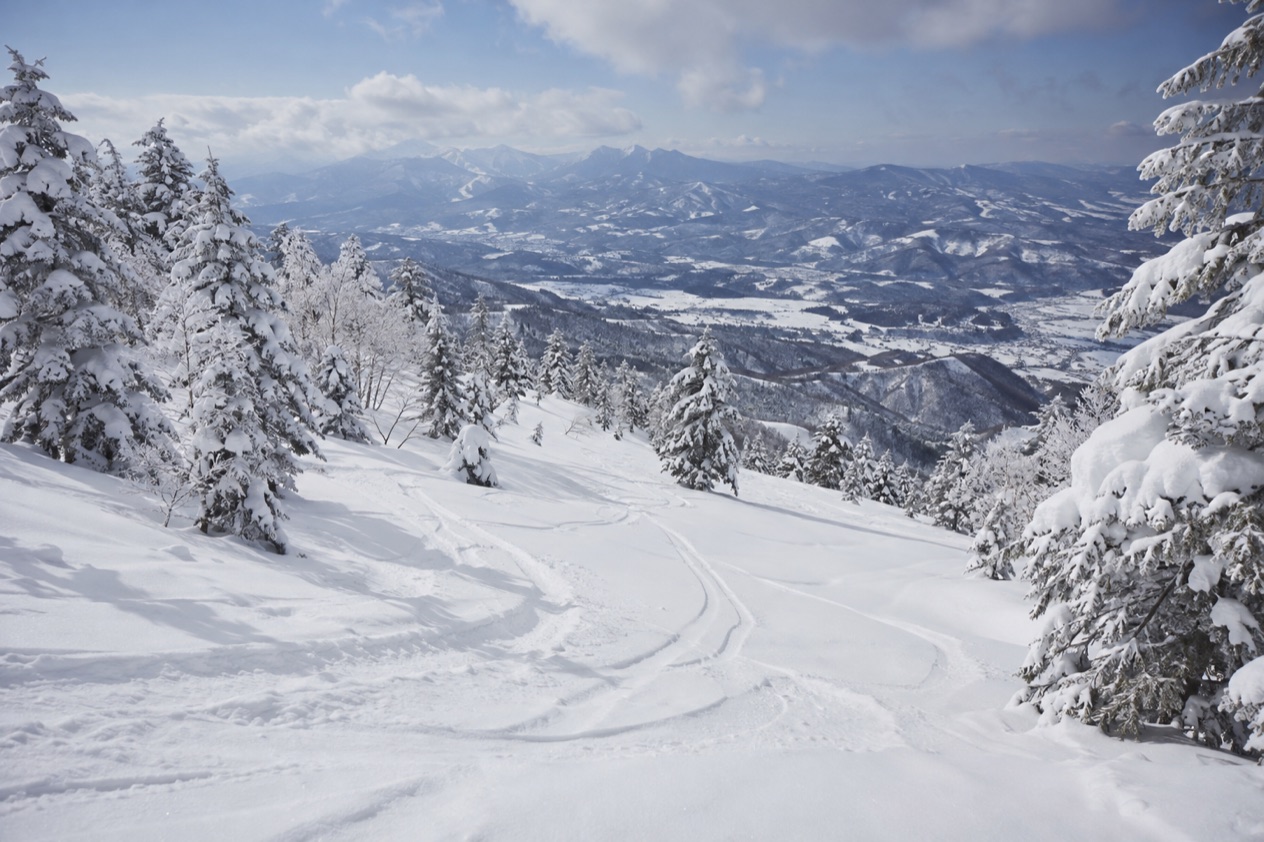
What is skiing like in Myoko Kogen?
Skiing in Myoko Kogen is skiing in a mountain town rather than in a purpose-built resort village, with several separate ski areas, each with its own history, spread across the slopes of Mount Myoko. The area is famed for its ski resorts, and the name comes up whenever skiers talk about Japan’s winter mountains. Japan as a whole is described by the Japan National Tourism Organization as an ideal destination for winter sports because of the quality of its snow, its infrastructure and its accommodations, and Myoko Kogen is one place where that description takes shape.
The setting matters as much as the slopes. Mount Myoko rises to 8,051 feet, and the ski areas sit on its flanks, so a day of skiing is framed by a large volcanic peak.
Between Mount Myoko and neighboring Mount Mae lies the Jigoku-dani valley, where the hot springs of the area come from. That geography explains the character of a stay here: the mountain gives the snow, and the valley gives the bathwater.
Akakura, a resort with a long history
Akakura was founded in the 1930s, which makes it one of the oldest established ski areas in the world. That age shows in the character of the place. It feels like a mountain village that grew up around skiing over many decades, rather than a resort assembled in one go. Lodges, small inns and family-run places to eat give the area its identity.
For a traveler, Akakura is a way to ski somewhere with a past. You are on a mountain where skiing in Japan has been part of local life for generations, and the evening routine of a hot bath, a meal and an early night belongs to that tradition. It suits skiers who care about atmosphere as much as about vertical drop.
Suginohara and the longest run in Japan
Myoko Suginohara boasts the longest ski run in Japan, and that single fact shapes how skiers think about the area. A long run changes the feel of a day: instead of many short laps, you can string together a descent that keeps going, with the valley and the town slowly coming closer below you.
It is a draw for skiers who like to cruise and take in the view as they go, and a good reason to include Suginohara in a stay that also covers Akakura. Having two ski areas with such different reputations within the same town is one of the pleasures of choosing Myoko Kogen over a single-resort destination.
Onsen, the second half of the day
Myoko Kogen is well known for its many local onsen, the hot springs that emanate from the Jigoku-dani valley. The word onsen means both the spring and the bathhouse built around it, and in a ski town the bath is not an extra but half of the day. Tired legs, cold hands and a steaming pool outdoors make a natural pair.
Many ski towns in Japan are built this way, but here the link is visible on the map, since the springs come from the very valley between the two mountains you ski beneath. Small inns often build their evening around the bath, then dinner, then sleep.
Kanzuri and other tastes of the town
Kanzuri, a traditional fermented condiment, is made in Myoko. It is a spicy paste, and it gives the town a food identity beyond the usual ski-resort menu. After a day outside, a table with hot dishes and a little local seasoning is the kind of meal the area suits.
Beyond the table, the town keeps older layers of history. Samegao Castle, the ruins of a Sengoku period castle, is a National Historic Site in Myoko, and so is the Kannondaira-Tenjindo Kofun Group, from the Kofun period. They give the area a story that goes well beyond skiing.
When is the season?
The ski season in Myoko Kogen is a winter season, the months when the mountain is covered in snow and the lodges around Akakura and Suginohara fill with skiers. Japan’s reputation for winter sports rests on the quality of its snow, and this part of Niigata Prefecture is one of the places where that reputation is lived out on the slopes.
Outside winter, the same landscape changes character completely. The mountain that holds the ski runs is still there, the valley still sends hot water up from the ground, and the town goes on with its ordinary life.
A winter day, from slopes to bath
A ski day in Myoko Kogen often has three parts. The first is the mountain itself: the lifts, the runs and the view of a snow-covered peak. The second is a break for something hot to eat, and the third is the onsen, which turns the end of a cold day into the most relaxed hour of the trip.
Because the hot springs come from the valley between Mount Myoko and Mount Mae, the bath feels tied to the place, and the habit of ending a day in warm water is central to why people choose a ski town in Japan over one elsewhere. Evenings tend to be about dinner and sleep, with the snow outside doing the rest.
Beyond the snow months
When the snow is gone, Myoko still has things to see. The Kofun period burial mounds of Kannondaira-Tenjindo and the ruins of Samegao Castle are both National Historic Sites, and they give a walk through the area a historical thread. Mount Myoko itself remains the dominant shape on the horizon.
Kanzuri, the fermented condiment, is made in the town through the year, and the onsen of the Jigoku-dani valley keep flowing whatever the weather. For a traveler who comes outside the ski months, these are the threads that make the visit worth it, though the page of the year most associated with Myoko is the snowy one.
How do you get there and what does it cost?
You get to Myoko Kogen by traveling to Myoko, a city in Niigata Prefecture, and the cost of a trip there is made up of the parts every ski vacation has: lift access, a bed, meals and the baths. The place is a real town, which means the ski areas are reached through a community rather than through a gated resort.
Where Myoko sits
Myoko is a city located in Niigata Prefecture, Japan. It is also a place with a clear mountain landmark: Mount Myoko, which gives the area its name and its slopes. When you plan a trip, think of the destination as a mountain town with several ski areas, notably Akakura and Suginohara, rather than as one single resort with a single base.
That distinction shapes the stay. Choosing a base near Akakura means being in one of the oldest established ski areas in the world, while choosing the Suginohara side means being near the longest run in Japan. Both belong to the same town and the same mountain, so the choice is about atmosphere and the kind of skiing you want most.
What a trip is made of
A ski trip here has four kinds of expenses: getting onto the lifts, sleeping in a lodge or inn, eating, and the onsen. The area’s fame for ski resorts means lodging and services are built around visitors, and the hot springs of the Jigoku-dani valley are part of what a stay includes in spirit if not always in price.
Japan is described by its national tourism organization as having exceptional infrastructure and accommodations for winter sports, and Myoko Kogen sits inside that picture. Other resorts the organization recommends, such as Rusutsu, Sahoro and Hoshino Resorts Tomamu, are in Hokkaido, a different part of the country, and they give a sense of the wider range of ski destinations a traveler could weigh against Myoko.
A town with its own character
Myoko is twinned with Slovenj Gradec in Slovenia and with Zermatt in Switzerland, a link that says something about its identity as a mountain community. Zermatt is a ski town known around the world, so the pairing places Myoko among the alpine places that live by their peaks.
The town is also a member of the World Health Organization’s Alliance for Healthy Cities. That fits with the hot springs and mountain air that visitors come for, and it adds a note of local pride to the stay: this is a place that thinks about wellbeing as part of how it presents itself.
Good to know before you go
Myoko Kogen is a town of about thirty thousand people, so a ski trip here is also a visit to a community with its own food, history and rhythm. Kanzuri, the local fermented condiment, makes a distinctive thing to taste, and the onsen of the Jigoku-dani valley are as much a part of the visit as the runs. The Japan National Tourism Organization lists other ski resorts in Hokkaido for travelers who want to compare, but Myoko stands out for pairing one of the oldest ski areas in the world with the longest run in Japan.
Sources
- Japan National Tourism Organization, skiing and snowboarding in Japan: regions, resorts, seasons (https://www.japan.travel/en/sports/snow/), checked October 11, 2026
- Wikipedia, Myōkō, Niigata (https://en.wikipedia.org/wiki/My%C5%8Dk%C5%8D,_Niigata), checked October 11, 2026