
It usually starts at a kitchen table months before the trip, when someone looks at the suitcase and asks whether skis, boots and a snowboard really need to cross the Pacific. Japan’s resorts are built for visitors, and Niseko, Hakuba and Rusutsu are used to travelers arriving with a lot of enthusiasm and not much equipment.
What should you know about ski rentals in Japan?
The main thing to know is that rental is part of how a Japanese ski trip is organized, because the resorts are set up around visitors who arrive by train, bus or plane with little more than a bag of clothes. Japan is described by its national tourism organization as an ideal destination for winter sports because of its snow, its infrastructure and its accommodations, and gear is part of that infrastructure. What the traveler has to decide is which resort, which month and how much equipment to bring from home.
Rental shops in ski towns work much as they do elsewhere in the world. You describe your level, your height and your boot size, you try on boots, and you walk out with skis or a board and poles.
Resorts with a large international following, Niseko above all, are used to explaining all this in English. Smaller resorts reached mostly by domestic skiers may be more comfortable in Japanese, so a few words, a written boot size and some patience go a long way.
What you actually need to sort out
Think of gear as four separate questions. Skis or a snowboard are the bulky ones. Boots are the personal ones, since fit decides whether the day is a pleasure or a punishment. Helmets and goggles are the small items that travelers often prefer to carry from home. The clothing layer, jacket, pants, gloves and a warm base, is the one that people already own.
Travelers settle this by bringing what is personal and renting what is bulky. Boots, goggles, a helmet and gloves go in the luggage, while skis or a board are picked up in the village. That is a habit rather than a rule, and plenty of people rent everything, especially on a first trip or when the route involves several trains and buses.
Why tree runs change what you rent
Tree runs are graded differently from resort to resort, but the grades are typically numeric, with 1 as the easiest. That grading matters when you choose equipment, because a rental ski that suits groomed runs is not always the ski you want among the trees.
Tell the shop what you plan to ski. If the plan is mostly groomed slopes with one adventurous afternoon, say so. If you came for the powder in the woods, say that instead. The staff will sort the options, and a few honest sentences about your level are worth more than any brand name.
Packing around the gear question
- Boots, goggles, a helmet and gloves are the personal items many skiers prefer to carry themselves.
- Skis or a snowboard are the bulky items that rental shops in the ski villages are there to supply.
- Jackets, pants and base layers are best taken from your own closet, because they decide whether you stay warm on a cold lift.
- A written note of your height, weight and boot size saves time at a rental counter where the language may be a barrier.
Which resorts and seasons matter?
The resort and the month decide almost everything about a rental trip, and the season generally runs from early December to late April, with exact dates set by each resort according to its location. Hokkaido in the north and the high mountains of Nagano tend to have snow earlier than other regions, and January and February are the months when snowfall is most frequent. For the most reliable powder on Hokkaido, those two months are the ones to aim for.
| Region | Season |
|---|---|
| Japan, general | Early December to late April |
| Hokkaido and high-altitude Nagano | Peak in January and February |
| San’in (Shimane and Tottori) | Late December to March |
Niseko and Rusutsu in Hokkaido
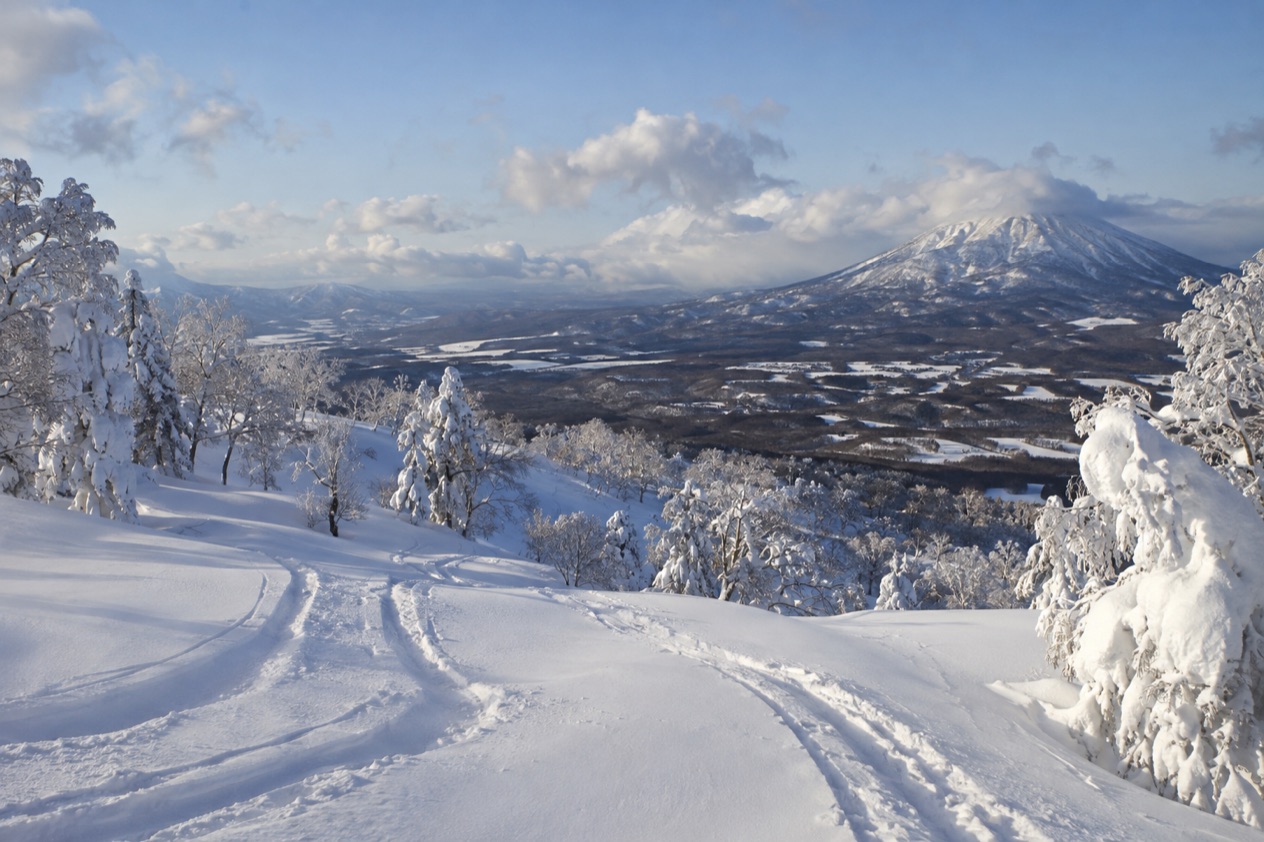
Niseko is the largest ski resort in Japan, and it is also the most developed and popular. It offers the most English-language activities of any resort in the country, and the views of Mount Yotei are part of the scenery. For a traveler who wants to rent gear without wrestling with language, that mix of services makes it the place where most of the questions answer themselves.
Rusutsu sits right next to Niseko and is renowned for its tree runs, heavy snowfall and very good lift system. The Epic Pass is valid at Rusutsu, which matters to anyone who already holds one and wants to arrive with their own skis.
Beyond them, Sapporo Teine lies less than an hour from the city of Sapporo, which suits a skier who wants a day on the slopes without leaving the city behind. Sahoro and Hoshino Resorts Tomamu are also among the ski resorts recommended by the national tourism organization.
Hakuba and the Nagano mountains
Hakuba lies in the Japanese Alps in Nagano Prefecture, and it draws winter sports enthusiasts through its access from Tokyo and the variety of its ski area. The Epic Pass is valid here too. The high Nagano mountains get snow early in the season, so the early weeks of winter are not out of the question for a trip, though the deepest part of the season is still January and February.
Hakuba is the resort the long-distance buses from Tokyo were designed for. Services run direct from the capital to major resorts, particularly those around Nagano, and they are operated by Nagano Snow Shuttle and other companies. That matters for gear, because a direct bus means one transfer for a ski bag instead of several.
Gala Yuzawa, Kagura and Daisen
Gala Yuzawa in Niigata is Japan’s only ski resort with a dedicated Shinkansen station, and a gondola connects directly to the train station. A traveler can arrive from the capital in ordinary clothes and be on a lift soon after stepping off the train. Kagura is a ski resort higher up than Gala Yuzawa, reached by taking the Shinkansen to Jomo Kogen Station.
Far to the west, Daisen is the largest ski area in the Chugoku region, with 14 lifts along the slopes of Mt Daisen. Its local season in the San’in region is a bit shorter than elsewhere, running from late December to March, so a trip there needs a tighter calendar than one to Hokkaido.
How do you plan?
Planning comes down to choosing the month, choosing the resort and deciding how the gear will get there, in that order. Start with the calendar, because the Christmas and New Year holidays and early February attract the largest number of skiers to the slopes. The weeks between those peaks, and the shoulder months of December and March, give a different feel on the mountain, and the choice of resort should follow from the month you can travel.
Getting to the snow
| Resort | Way in |
|---|---|
| Niseko | Flight from Tokyo to New Chitose Airport, then a direct bus with stops in Hirafu, Niseko Village and Annupuri |
| Hakuba | Long-distance transfer from Narita and Haneda airports by Chuo Taxi, or direct buses from Tokyo |
| Gala Yuzawa | Shinkansen to the station connected to the gondola |
| Kagura | Shinkansen to Jomo Kogen Station |
| Sapporo Teine | Less than an hour from the city of Sapporo |
For Hokkaido, New Chitose Airport near Sapporo is the closest major airport to the ski fields. The flight from Tokyo takes 1.5 hours, and the direct bus to Niseko takes 3 hours. For Hakuba, the Chuo Taxi transfer from Narita and Haneda airports takes 4 to 5 hours.
Fitting the gear to the route
A route with a flight, a bus and a village at the end is the kind of trip where carrying less is a kindness to yourself. Each leg means lifting the bags again, and a ski bag is the heaviest item to lift. Travelers who rent in the village travel with a duffel and a small pack, and arrive ready to walk to the lodging.
A train route to Gala Yuzawa or Kagura changes the arithmetic, because the Shinkansen stations are connected to the slopes or close to them. Skiers with their own equipment may choose the train for that reason. Whichever way you go, fix the resort first and decide on gear second, since the services available at the village are what make a rental plan work.
A rough order for a first trip
- Choose the weeks you can travel and see whether they fall on a holiday peak.
- Pick a resort that matches that month and your level, whether groomed runs or tree runs.
- Work out the route from Tokyo, by plane and bus, by long-distance bus or by Shinkansen.
- Decide which items you will carry and which you will rent in the village.
- Note your sizes in writing before you leave home.
Good to know before you go
Skiing in Japan carries real risk, and 30 to 40 skiers die on Japanese slopes every year. Head trauma and asphyxiation each account for around two in five of those deaths, which is a reason to treat a helmet and care among the trees as part of the gear list. Exact dates for lifts and the season are set by each resort, so the resort’s own calendar is the last word on when the snow season opens and closes.
Sources
- Japan National Tourism Organization, skiing guide (https://www.japan.travel/en/guide/skiing/), checked October 11, 2026
- Japan National Tourism Organization, skiing and snowboarding in Japan: regions, resorts, seasons (https://www.japan.travel/en/sports/snow/), checked October 11, 2026
- Wikivoyage, Skiing in Japan (https://en.wikivoyage.org/wiki/Skiing_in_Japan), checked October 11, 2026