
At the rental counter, a pair of boots stiffer than you expected sits next to a trail map covered in unfamiliar kanji, and the first-timer starts wondering whether Japan is the right place to learn. Outside the window, snow is falling on a lift line where people in bright jackets stamp their feet and trade steaming cups of something hot.
Japan can work for a first week on skis, because the season is long and the resorts range from giant to one attached to a train station. What matters is choosing the right month and the right mountain.
What should you know about skiing in Japan for beginners?
A beginner can ski in Japan, and the useful things to know are when the snow arrives, how resorts treat the terrain between the trails, and what a first day on skis looks like. The Japan National Tourism Organization calls the country an ideal destination for winter sports because of the quality of its snow, its infrastructure and its accommodations. For someone learning, that means a setting built around snow, with lifts, lodges and hot food close at hand.
The shape of the season
The season generally opens in December and runs into April, but each resort sets its own dates according to its location. Lifts on a low mountain may start spinning later than those on a high one, so the date on a friend’s trip report is not the date for yours.
For a first trip, think in terms of a window rather than a day. January and February are when snowfall is most frequent in the snowiest regions, which makes them the months when a beginner is most likely to find a white, cushioned slope. The end of the season has a different mood, with softer afternoons and a mountain that feels slower, though what the snow does in any given spring is never certain.
Tree runs and why beginners should read the signs
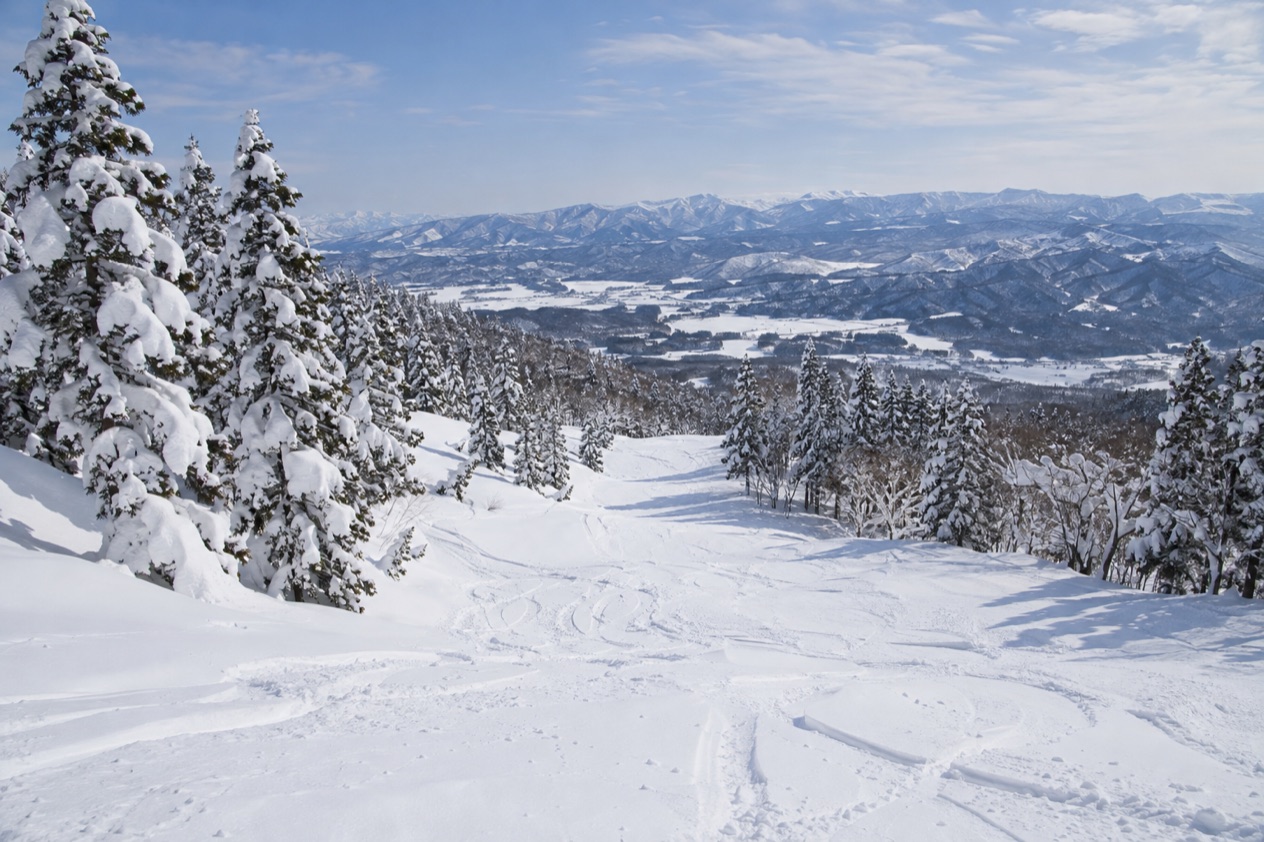
Japanese resorts are known for tree runs, the lanes of snow between birches and other trees that skiers who have seen photos of Japan often dream about. Grading for these runs varies by resort, but it is typically numeric, starting from 1 as the easiest. That tells a beginner something simple: the number on the sign is a local scale, so read it at each mountain instead of assuming it matches the last one.
It also helps to know that about 30 to 40 skiers die in Japan every year, around 40 percent from head trauma and another 40 percent from asphyxiation. Those figures are a reason to treat the trees and the unmarked snow as places for later seasons, and to spend the first days where the trail is marked and the grooming is obvious. A helmet is a sensible habit for the same reason.
What a first day usually feels like
A first day on snow starts at the bottom of the mountain with boots, skis or a board, and a lesson in a flat area where standing, sliding and stopping come before any lift ride. Instruction in English is part of the picture at some resorts.
Lunch is part of the experience. A resort cafeteria might serve curry rice, ramen, a bowl of udon or a rice bowl with fried pork, all eaten with wet gloves piled on the next chair. After skiing, many people head for a hot bath at their lodging, which is a good reason to choose a place to stay that suits a tired body as much as a mountain schedule.
Which resorts and seasons matter?
The resorts that matter most to a newcomer are the ones the Japan National Tourism Organization and other sources single out: Niseko and Rusutsu in Hokkaido, Hakuba in Nagano, and Gala Yuzawa and Kagura in the Niigata area, with Sapporo Teine, Daisen and a few others rounding out the list. Each has its own reason to be on a short list, set out here in a table.
| Resort | Region | What stands out |
|---|---|---|
| Niseko | Hokkaido | The largest ski resort in Japan, also the most developed and popular, with the most English-language activities and views of Mount Yotei |
| Rusutsu | Hokkaido, right next to Niseko | Excellent tree runs, heavy snowfall and a very good lift system |
| Sapporo Teine | Near Sapporo | Located less than an hour from the city of Sapporo |
| Hakuba | Japanese Alps, Nagano Prefecture | Easy access from Tokyo and a diversity of ski area |
| Gala Yuzawa | Niigata | A gondola connected directly to the train station |
| Kagura | Higher up than Gala Yuzawa | Reached by Shinkansen to Jomo Kogen Station |
| Daisen | Chugoku area (Shimane and Tottori) | The largest in the Chugoku area, with 14 lifts |
Hokkaido: Niseko, Rusutsu and the northern resorts
Niseko is the name most travelers have heard, and for good reason: it is the largest ski resort in Japan and the most developed. Its villages, Hirafu, Niseko Village and Annupuri, are the stops on the bus from the airport, and Mount Yotei rises as a backdrop to the slopes. For a first-time skier traveling in a group with mixed ability, a place with that many activities in English is a comfort.
Rusutsu sits right next to Niseko and is renowned for its tree runs, heavy snowfall and a very good lift system. Sahoro and Hoshino Resorts Tomamu are two more Hokkaido names the Japan National Tourism Organization recommends. Hokkaido is where you aim for January and February if reliable powder is the goal.
Nagano and Niigata: Hakuba, Gala Yuzawa and Kagura
Hakuba lies in the Japanese Alps in Nagano Prefecture and draws winter sports enthusiasts with its easy access from Tokyo and the diversity of its ski area. The high-altitude mountains of Nagano, like Hokkaido, tend to see snow earlier than other regions.
In Niigata, Gala Yuzawa is easily accessible because a gondola is directly connected to the train station. It is Japan’s only ski resort with a dedicated Shinkansen station. Kagura, higher up the mountain valley, is reached by taking the Shinkansen to Jomo Kogen Station. For someone who would rather arrive by train with a rental bag than coordinate a transfer, these two names are worth a look.
Seasons by region
| Area | Season | Note |
|---|---|---|
| Japan in general | Early December to late April | Exact dates set by each resort |
| Hokkaido and high-altitude Nagano | Snow earlier than other regions | Peak in January and February, when snowfall is most frequent |
| San’in region (Shimane and Tottori) | Late December to March | A bit shorter than the rest of the country |
The calendar has crowds in it, too. The Christmas and New Year holidays and early February attract the largest number of skiers to the slopes. A beginner who wants lift lines to feel manageable has a reason to think about the weeks around those dates.
How do you plan?
Planning a first ski trip to Japan starts with choosing a resort, then working out how to reach it from Tokyo or a major airport, then picking dates that avoid the heaviest crowds.
Getting to Hokkaido
To reach Niseko from Tokyo, you take a plane to New Chitose Airport (Shin-Chitose) in Hokkaido, a 1.5-hour flight. From there a direct bus of 3 hours runs to Niseko with stops in Hirafu, Niseko Village and Annupuri. New Chitose is the closest major airport to the ski fields on the northern island.
Rusutsu, next door to Niseko, and Sapporo Teine, less than an hour from the city of Sapporo, sit in the same part of the island. A trip that starts in Sapporo can include a night or two in the city, with its food halls and ramen counters, before the mountain begins.
Getting to Nagano and Niigata
For Hakuba, Chuo Taxi offers a long-distance transfer service from Narita and Haneda airports, taking 4 to 5 hours. There are also long-distance buses from Tokyo direct to major resorts, particularly those around Nagano, with services operated by Nagano Snow Shuttle and other companies.
In Niigata, the Shinkansen does the work. Gala Yuzawa has its own dedicated station with a gondola connected directly, and Kagura is reached by getting off at Jomo Kogen Station. Skiers who like to step off a train and into a gondola with their boots in a bag have a plan that fits.
Passes, dates and a rough shape for the week
A skier who already holds an Epic Pass has a reason to look at Hakuba and Rusutsu, since the pass is valid at both. The pass is a question for a trip that includes several ski days rather than one afternoon of learning.
A beginner’s week can follow a simple rhythm: a lesson day, a day of repeating the same slope until it feels familiar, then a lighter day with a gondola ride for the view. Evenings belong to the bath, a hot pot or a plate of grilled skewers at an izakaya (a casual pub). If the first days go well, the last one can be spent trying a slope that last week would have felt out of reach.
Good to know before you go
Ski resorts set their own opening dates, so confirm the dates of the one you pick against the general season, which runs from early December to late April. The Christmas and New Year weeks and early February bring the largest crowds, and the San’in region’s season ends earlier than the rest.
Treat marked trails as your home for the first days, and read each resort’s tree run numbers before going near the trees. A first trip rewards modest plans, a warm lunch and a bath at the end of the day.
Sources
- Japan National Tourism Organization, skiing guide (https://www.japan.travel/en/guide/skiing/), checked October 11, 2026
- Japan National Tourism Organization, skiing and snowboarding in Japan: regions, resorts, seasons (https://www.japan.travel/en/sports/snow/), checked October 11, 2026
- Wikivoyage, Skiing in Japan (https://en.wikivoyage.org/wiki/Skiing_in_Japan), checked October 11, 2026