
The question usually comes up around a kitchen table in the fall, when a ski trip to Japan is half planned and someone starts watching videos of skiers disappearing into snowy forest. Backcountry and cat skiing, where a snowcat tows you up instead of a chairlift, sit at the edge of what Japan’s ski industry offers. The country’s season runs from early December to late April, and the choice of region and month shapes everything else.
What follows sorts out how to think about off-piste terrain in Japan, which resorts and months are worth building a trip around, and how to plan the journey itself.
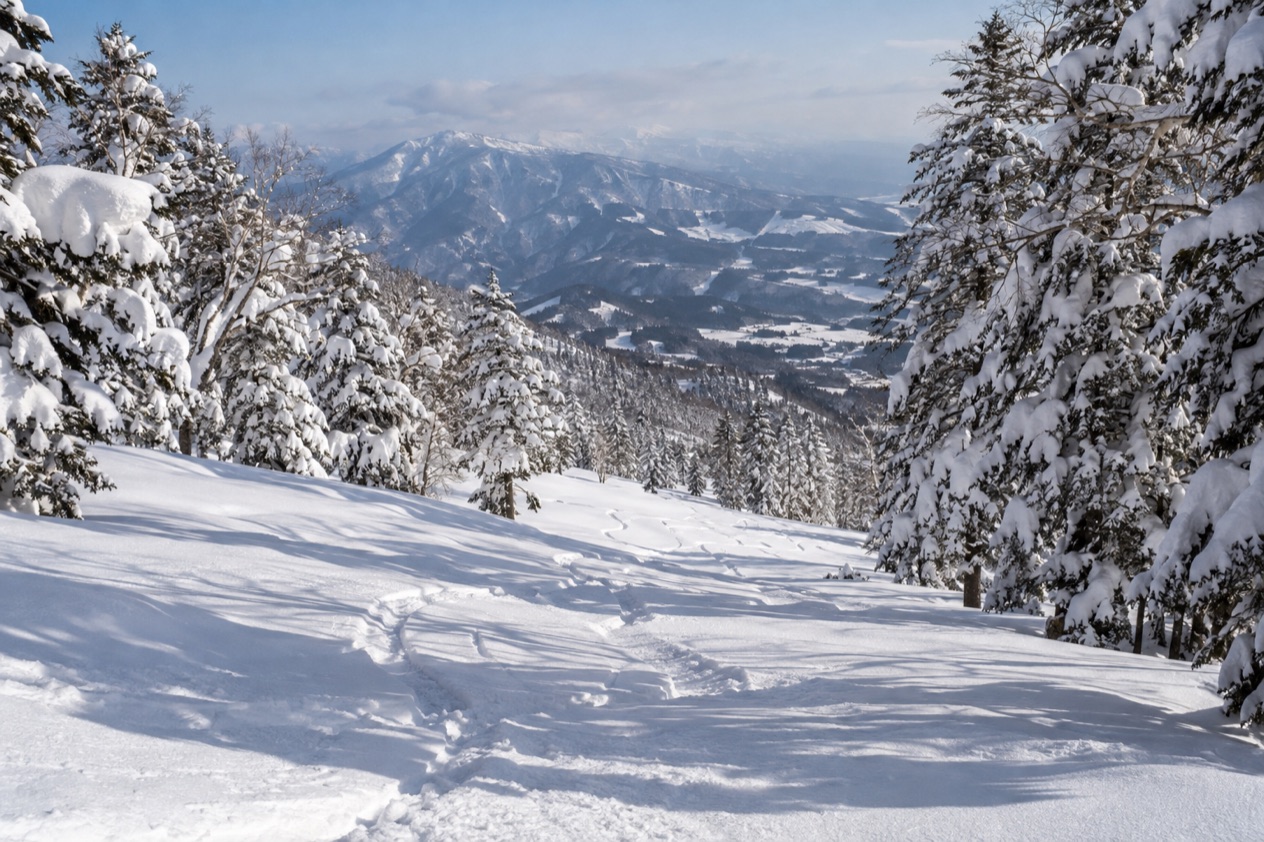
What should you know about backcountry skiing in Japan?
The first thing to know is that Japan treats off-piste skiing as part of a wider winter-sports culture, and that culture is built on snow quality, lift infrastructure and good lodging. The Japan National Tourism Organization calls the country an ideal destination for winter sports enthusiasts because of the exceptional quality of its snow, its infrastructure and its accommodations. Backcountry and cat skiing grow out of that base, so most trips start at a resort town rather than a remote hut.
Cat skiing swaps the chairlift for a snowcat, a tracked vehicle with a cabin, that carries a small group to slopes the lifts do not reach. Backcountry skiing means leaving the marked runs and earning or finding your own descent. Both put you in terrain where nobody grooms the snow and nobody has packed a path for you.
Tree runs, the Japanese way of skiing off the groomers
Much of what travelers call backcountry in Japan starts with tree runs, the lines of snow between trunks that skiers weave through. Tree run grading varies by resort, but the systems are typically numeric, starting from 1 as the easiest. Because the scale belongs to each resort, a 2 on one mountain is not guaranteed to feel like a 2 on another.
That makes the first day at any new resort a calibration day. Start at the bottom of the scale, learn how that mountain uses its numbers, and move up from there. Skiing among trees demands constant turning decisions, so the lowest-numbered runs are where you find out how the snow and the spacing feel under your skis.
What the risk looks like
Skiing in Japan carries real danger, and it is worth reading the numbers plainly. Thirty to forty skiers are killed in Japan every year, around 40 percent from head trauma and another 40 percent from asphyxiation. The asphyxiation figure is a reminder that deep snow and trees can be hazardous in their own right, not only fast groomed slopes.
Those figures cover skiing across the country, not backcountry alone, and they are a reason to take terrain choices seriously. They belong in the planning, next to the grading system and the season, rather than in the afterthought file.
What a day on the snow feels like
Ski days in Japan tend to end in the same way, with a hot meal and a soak. A bowl of ramen or a plate of katsu after hours in the cold, then an onsen, a hot spring bath, is the rhythm many ski towns are built around. In a snowcat day the pattern is the same, only the morning is spent riding up through falling snow instead of queuing at a gondola.
Lodging ranges from small guesthouses to full resort hotels, and the infrastructure the tourism organization praises shows up in details like boot rooms and drying racks. Arrive in town with dry layers for the evening, since the walk from dinner back to the room is part of the winter experience.
Which resorts and seasons matter?
The seasons that matter are January and February in Hokkaido, and the wider window from early December to late April everywhere else, while the resorts to know include Rusutsu, Sahoro, Hoshino Resorts Tomamu, Hakuba and Daisen. Which one suits you depends on the region you want to ski and the pass in your pocket.
| Region | Season |
|---|---|
| Japan overall | Early December to late April |
| Hokkaido, most reliable powder | January to February |
| San’in region (Shimane and Tottori) | Late December to March |
Hokkaido and its recommended resorts
On the northern island of Hokkaido, January and February are the months to aim for if reliable powder is the goal. That is the claim worth planning around, and it covers the island as a whole rather than one mountain. December and the spring weeks sit on either side of it, still inside the season but outside the window for the most dependable snow.
The Japan National Tourism Organization lists Rusutsu Ski Resort, Sahoro Ski Resort and Hoshino Resorts Tomamu among its recommended ski resorts. Each has its own character, and the three names make a sensible starting list when you compare terrain, lodging and lift access. Rusutsu also takes the Epic Pass, which matters if you already hold one.
Hakuba, Rusutsu and the Epic Pass
The Epic Pass is valid at Hakuba and Rusutsu, which is the connection many American skiers look for first. Holding it turns those two resorts into the obvious places to start a comparison, since lift access is already settled and the question becomes snow, terrain and the kind of town you want to sleep in.
| Pass | Valid at |
|---|---|
| Epic Pass | Hakuba, Rusutsu |
Long-distance buses run from Tokyo direct to major ski resorts, particularly those around Nagano, with services operated by Nagano Snow Shuttle and other companies. That bus link is what ties the Nagano resorts into a Tokyo-based trip.
Daisen and the San’in season
Not every ski area follows the national calendar. In the San’in region of Shimane and Tottori the local season is a bit shorter than the rest of the country, running from late December to March. A trip there fits a winter that starts after the holidays and ends before April.
Daisen is the largest ski area in the Chugoku region, with 14 lifts along the slopes of Mt Daisen. It makes sense for a traveler who wants a different corner of Japan from the famous northern powder fields, and who is willing to work inside a tighter window.
How do you plan?
Planning starts with three choices made in order: the month, the region and the way you will get there. Settle the month first, because it decides whether Hokkaido’s reliable January and February snow is your target or whether you are happy with the wider season from early December to late April.
Getting to Hokkaido
Sapporo’s New Chitose Airport is the closest major airport to the ski fields on Hokkaido. If your plan is built around the island’s powder months, that airport is the gateway the plan hangs on, and every resort comparison should begin from it.
From there you choose your resort. Rusutsu, Sahoro and Hoshino Resorts Tomamu are all on the recommended list, so the decision comes down to the kind of stay you want and whether a pass already covers the lifts. Match the resort to the month, not the other way around.
Getting to Nagano and Niigata
For resorts around Nagano, long-distance buses leave Tokyo direct to major ski resorts, operated by Nagano Snow Shuttle and other companies. This is the link that lets a Tokyo stay and a ski stay sit in the same trip.
Gala Yuzawa holds the distinction of being Japan’s only ski resort with a dedicated Shinkansen station. That is a fact about the resort’s access and nothing more, but it sets Gala Yuzawa apart in a country where most ski towns sit at the end of a bus or a local line.
Building the trip around terrain
Once the month and the gateway are chosen, shape the days around the terrain. Start with groomed runs and the lowest-numbered tree runs, learn how the resort’s grading works, and add off-piste or cat skiing days after you have felt the snow. Given the number of skiers killed in Japan each year, that order is a sensible habit rather than a rule.
Leave an evening free after each big day for the onsen and a long dinner. Japan’s ski towns are built for that rhythm, and a trip that has room for it tends to feel less like a race through terrain and more like a winter visit to a mountain town.
Good to know before you go
Ski days in Japan are physical and cold, so the habits that matter are the ordinary ones: dry layers waiting at the lodge, a hot meal after the lifts close and a soak in an onsen before bed. The season runs into late April, and the San’in region wraps up in March, so a spring trip needs a resort that is still open. Skiing deaths are a real part of the picture, which is why choosing terrain with care is part of the plan from the start.
Sources
- Japan National Tourism Organization, skiing and snowboarding in Japan: regions, resorts, seasons (https://www.japan.travel/en/sports/snow/), checked October 11, 2026
- Wikivoyage, Skiing in Japan (https://en.wikivoyage.org/wiki/Skiing_in_Japan), checked October 11, 2026