
At the foot of Osaka Station, commuters pour through the ticket gates, department store doors slide open on perfume counters and food halls, and a few steps underground the passages run on in every direction under the streets. Come back after dark and the same corner of Kita-ku is lit by towers and shop signs, with izakaya filling up and takoyaki hissing on griddles. Umeda is where Osaka’s northern rail termini meet its shopping and business life, and choosing where to sleep here means deciding how close to the station, and how close to the city’s other districts, you want to be.
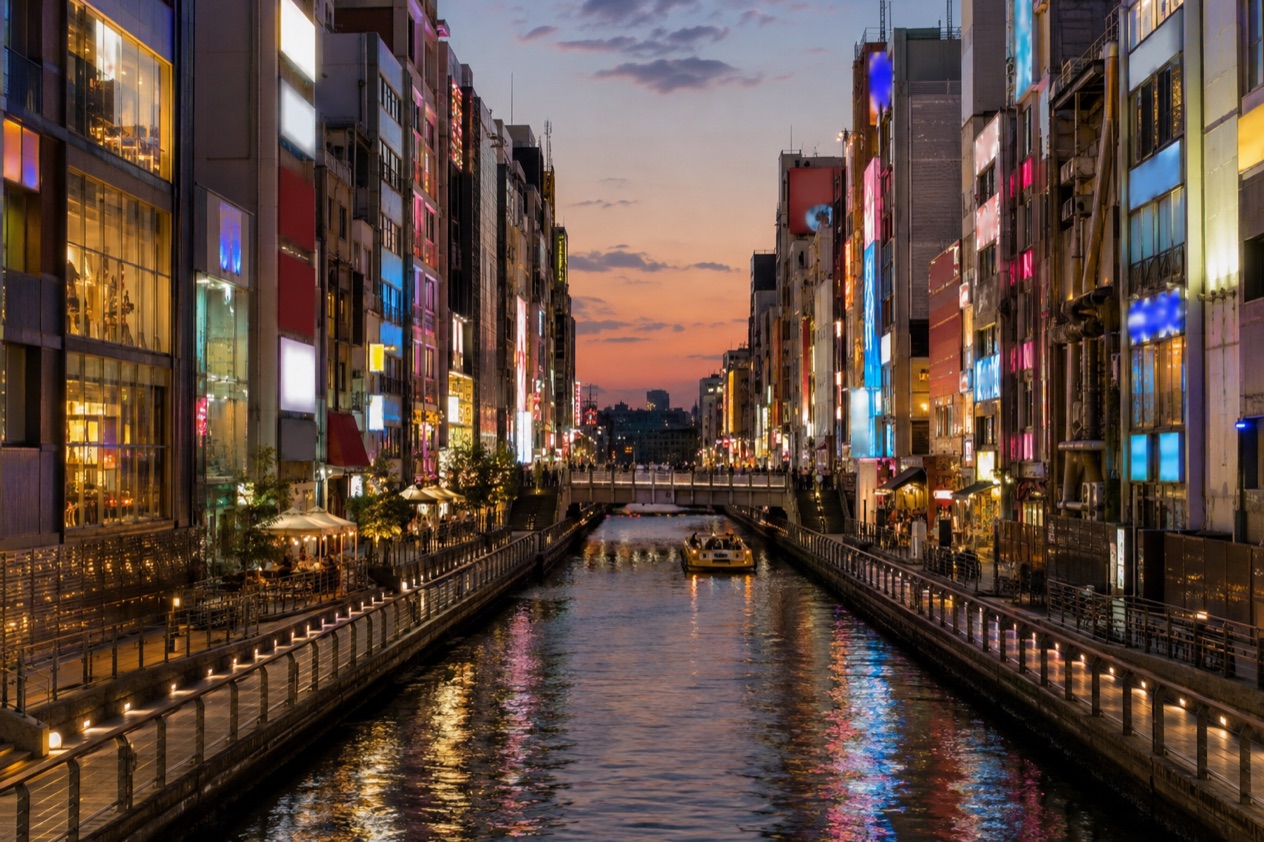
What is the best area to stay in Umeda?
For a first visit, the streets right around Osaka Station and Umeda Station are the strongest choice, because everything you need starts at the front door: JR trains, the subway, department stores and an underground city of shops and restaurants. Sightseers who plan to spend their days in Dotonbori, Shinsaibashi and the bay will like the same spot, since the Midosuji Line runs from Osaka and Umeda stations straight to Shinsaibashi and on to Namba.
If you arrive by Shinto-Kansen luggage in hand, or rather by Shinkansen, the area around Shin-Osaka Station is the other serious option. The Tokaido and Sanyo Shinkansen trains arrive there, north of the city center, and from Shin-Osaka a JR local line takes you to Osaka Station. It suits travelers who are mostly passing through Osaka on a wider rail route through Japan, and who want the bullet train at the doorstep.
Nightlife seekers have two moods to choose from. Umeda itself has the izakaya, the late takoyaki counters and the lit towers of a business and entertainment district.
Those who want the neon canal scene of Dotonbori can stay in Umeda and ride the Midosuji Line there, or choose a base further down that same line. Budget-minded travelers and families should think less about a neighborhood label and more about the station: a lodging that puts a train line within reach lets you cover the city without a taxi.
The areas differ in what surrounds the hotel door. Around Osaka Station City you step out into a layered world, with shops above ground, below ground and inside the station buildings.
Kita, the newest centre of Osaka, spreads that energy outward toward museums, a mint and a river-side calm of its own. Shin-Osaka is a transport node, defined by the Shinkansen. Shinsaibashi and Dotonbori, one ride down the Midosuji Line, are the food-and-entertainment side of the city that Osaka is known for.
Think about your days first. If they are full of train rides, stay beside the station. If they revolve around eating your way through the evening, a night or two nearer Dotonbori fits.
If you carry bags from a Tokyo run on the Shinkansen and leave early for another city, Shin-Osaka removes a transfer. Umeda rewards the traveler who likes to walk out the door into shops, coffee and a dozen ways to get somewhere else.
Osaka as a whole is described by Japan’s national tourism office as a charming and relaxed city known for its food, entertainment and nightlife, with some history and culture to discover. Umeda is where that relaxed side meets the city’s working day, and your hotel choice decides which of the two greets you first in the morning.
The best areas to stay in Umeda
Around Osaka Station and Umeda Station
This is the heart of the district. Osaka Station City refers to the whole area around Osaka Station, above and below ground, and JR Osaka Station handles the largest number of passengers of any station in the JR West network.
Waking up here means hearing the morning rush from your window, then stepping into department store food halls and cafés that open onto station concourses. Hanadako, a takoyaki shop inside Umeda Station, is a typical way to start a first Osaka evening, with hot, soft octopus balls eaten from a paper boat.
Lodging in this part tends toward large city hotels and business hotels, the kind with desks in the room and a lobby full of people checking in on rail itineraries. Boutique stays and apartments exist in the streets nearby, but the dominant style is practical and tied to the stations. It suits first-timers, short stays, travelers who want rain-proof routes, and anyone who prefers to spend the day moving between neighborhoods by train.
Getting around is the reason to stay here. The underground city beneath Umeda connects most local train stations and gives access to retailers, eateries and department stores, so on a wet day you can cross a good part of the district without going outside.
From Osaka or Umeda Station the Midosuji Line reaches Shinsaibashi, and by staying on to Namba you arrive at Dotonbori. A tip: learn which station name your hotel uses, because Osaka and Umeda are separate names for stations that sit side by side, and the signs underground use both.
Kita, Osaka’s newest centre
Kita is the newest centre of Osaka and sits around Umeda Station, so a stay in its streets is a stay within reach of the station crowds but with a different pace once you step away from the concourses. Its sights are a mix of the scientific and the seasonal. Osaka Science Museum draws families and curious adults, while the Japan Mint holds a cherry blossom tunnel road that opens for a limited week in mid-April and has drawn close to a million visitors in that short span.
Lodging here ranges from hotels near the offices to apartment-style stays and smaller properties on side streets. It suits travelers who want to be near the station but would like to explore museums and a mint garden in the daytime and come back to a calmer corner at night. Families with school-age children may find the science museum useful for a rainy afternoon, and spring visitors may time a stay for the mint’s blossom week.
| Site | Open |
|---|---|
| Osaka Science Museum | Tuesday to Sunday, 09:30 to 17:00. Closed December 28 to January 4 and on public holidays |
| Japan Mint museum | 09:00 to 16:45, free |
| Hanadako takoyaki, Umeda Station | 10:00 to 23:00 every day |
As a base, Kita keeps you close to the same rail network as the station area. The tip is to match your dates to what you want to see: the museum closes on Mondays, and the mint’s blossom road is limited to a single week in mid-April, so a spring stay needs a little planning around it.
Shin-Osaka, for the Shinkansen
Shin-Osaka is where the Tokaido and Sanyo Shinkansen trains arrive, north of the city center. From Tokyo, the Tokaido-Sanyo Shinkansen takes about two and a half hours to Shin-Osaka, and from there a JR local line carries you on to Osaka Station. The district around the station is built around travel, with lodging that suits an arrival or an early departure rather than an evening stroll.
Think of Shin-Osaka as a practical choice. It suits travelers who are linking Osaka to other cities by Shinkansen, those with luggage, and anyone who prefers to step off the train and into a hotel. The kind of lodging you find is mostly business hotels. The trade-off is that the shops, takoyaki counters and underground passages of Umeda are one local train away rather than outside your door.
A tip for this base: remember that Shin-Osaka and Osaka Station are different stations. The Shinkansen does not stop at Osaka Station, so choose your hotel by the station you will use more, and plan the JR local line ride to Umeda for the evenings when you want food and shops.
Down the Midosuji Line: Shinsaibashi and Dotonbori
Not strictly Umeda, but the most common alternative. From Osaka or Umeda Station, the Midosuji Line takes you to Shinsaibashi Station for Shinsaibashi and Dotonbori, and staying on to Namba Station also reaches Dotonbori. A night or two here puts the shopping arcades and the canal-side food streets at your door, the side of Osaka known for food, entertainment and nightlife.
Lodging in these districts leans toward smaller hotels, guesthouses and apartments among the shops and restaurants. It suits nightlife seekers, food-minded travelers and anyone who would rather walk to dinner than ride a train to it. The tradeoff is the reverse of Umeda: the stations of Osaka and Umeda, with their long-distance connections, are a Midosuji Line ride away, and that ride is the one you will make on arrival and departure days.
Umeda areas compared
| Area | Best for | Feel | Getting around |
|---|---|---|---|
| Osaka Station and Umeda Station | First visit, sightseeing by rail | Department stores, food halls and an underground city | JR trains, subway and the underground passages connecting local stations |
| Kita | Museums, the Japan Mint, spring blossom | The newest centre of Osaka, around Umeda Station | The station network of Umeda |
| Shin-Osaka | Shinkansen arrivals and departures | A transport hub north of the city center | Tokaido and Sanyo Shinkansen, then the JR local line to Osaka Station |
| Shinsaibashi and Dotonbori | Food, entertainment and nightlife | Shopping streets and the canal-side food district | Midosuji Line from Osaka or Umeda Station, to Shinsaibashi or on to Namba |
The first trade-off is closeness against variety. Staying beside Osaka and Umeda stations gives you the entire rail network and the underground city, which makes rain, luggage and long days easier to handle, but the surroundings are those of a major commercial and business district. A base further down the Midosuji Line trades some of that rail connection for the food streets and shopping arcades that many people come to Osaka for.
The second is old energy against new. Kita is the newest centre of Osaka, with museums, a mint and the glass-and-steel feel of the station towers. Dotonbori and Shinsaibashi carry the older picture of the city, the one built on eating and entertainment. You can taste both from Umeda, since the Midosuji Line joins them, and many travelers choose a single base and ride out for the other.
Shin-Osaka stands apart from this contrast. It is about the Shinkansen first, and the rest second. It works well for a night between two long train rides and less well for a stay built around evenings out. If you are unsure, the station area of Osaka and Umeda is the middle path, close to the Shinkansen by a JR local line and close to Dotonbori by the Midosuji Line.
One more consideration is the bay. Osaka Bay is reached from Osaka or Umeda stations via the JR Loop Line and the Chuo subway line, and Universal Studios Japan, which opened in 2001 and features attractions like the Wizarding World of Harry Potter, sits in the bay area. A stay at the station puts both rail routes at your disposal for a day out there.
How to choose your hotel in Umeda
Start with the station. In Umeda the sensible way to choose is by which station and which line you will use most, since the district is defined by its rail termini and the underground city that links them. A hotel at Osaka Station City puts the JR network, the subway and the shops in the same building cluster, while one in Kita or Shin-Osaka tilts toward a specific use, museums and blossoms in one case and the Shinkansen in the other.
The kind of lodging follows the neighborhood. Large city hotels and business hotels dominate the station areas, with rooms for travelers who arrive by train and leave by train. Smaller guesthouses and apartment-style stays are more at home among the shopping streets and food districts such as Shinsaibashi and Dotonbori. A ryokan, the traditional inn with tatami floors and futon bedding, is a different experience that Osaka’s rail-hub districts are not built around, and a capsule hotel is a compact sleeping pod aimed at a night’s rest rather than a stay.
Think about what you will carry. Travelers with large bags arriving at Shin-Osaka from Tokyo, a ride of about two and a half hours, may prefer a hotel near that station, then move on to the Umeda area if they extend their stay. Those with a lighter pack can base at Osaka Station and treat the Midosuji Line as their daily route to Dotonbori and Shinsaibashi.
For families, the station area offers the underground city for rainy hours and the Osaka Science Museum in Kita, open Tuesday through Sunday. Universal Studios Japan in the bay area gives a day trip by the JR Loop Line. For travelers with limited mobility, the advantage of a hotel beside the station is that the passages below ground link many local stations and department stores, so fewer trips need to begin on the street.
Nightlife and food shape other choices. Hanadako in Umeda Station serves takoyaki every day until late, and the station district is full of eateries in the underground city. If your evenings are built around Dotonbori, a hotel near the Midosuji Line stops at Shinsaibashi or Namba shortens the end of the night. Either way, pick the base that matches your first morning and your last night, and let the Midosuji Line fill in the rest.
A last sorting question is how much of Osaka you want to be in versus how much you want to pass through. Umeda is a district of commerce, business and entertainment, so its hotels are tuned to people on the move. Choose it for the connections, and pick another part of the city if you want a base that feels like a neighborhood rather than a crossroads.
Good to know before you go
From Tokyo, the Tokaido-Sanyo Shinkansen takes about two and a half hours to Shin-Osaka Station, and a JR local line then carries you to Osaka Station in the heart of Umeda. Once there, the underground city links most local train stations, so a hotel near either Osaka Station or Umeda Station keeps the rest of the network within reach.
Umeda is Kita-ku’s commercial and entertainment district, and its name means plum field, a small echo of an older landscape beneath the towers. Station signs use both Osaka and Umeda for neighboring stations, so keep your hotel’s station name handy when you arrive.
Sources
- Wikipedia, Umeda (https://en.wikipedia.org/wiki/Umeda), checked October 11, 2026
- Wikivoyage, Osaka/Kita (https://en.wikivoyage.org/wiki/Osaka/Kita), checked October 11, 2026
- Japan National Tourism Organization, Osaka (https://www.japan.travel/en/destinations/kansai/osaka/), checked October 11, 2026
To plan your stay
- Best Time to Visit Osaka: Cherry Blossoms, Autumn Color, Weather and Festivals
- Things to Do in Osaka: Osaka Castle, Dotonbori Street Food, Universal Studios Japan and Day Trips
- Osaka from Tokyo: Shinkansen Services, Shin-Osaka Station and Where to Go on Arrival
- Know Before You Go to Osaka: Entry, Money, Getting Around, Weather and Etiquette