
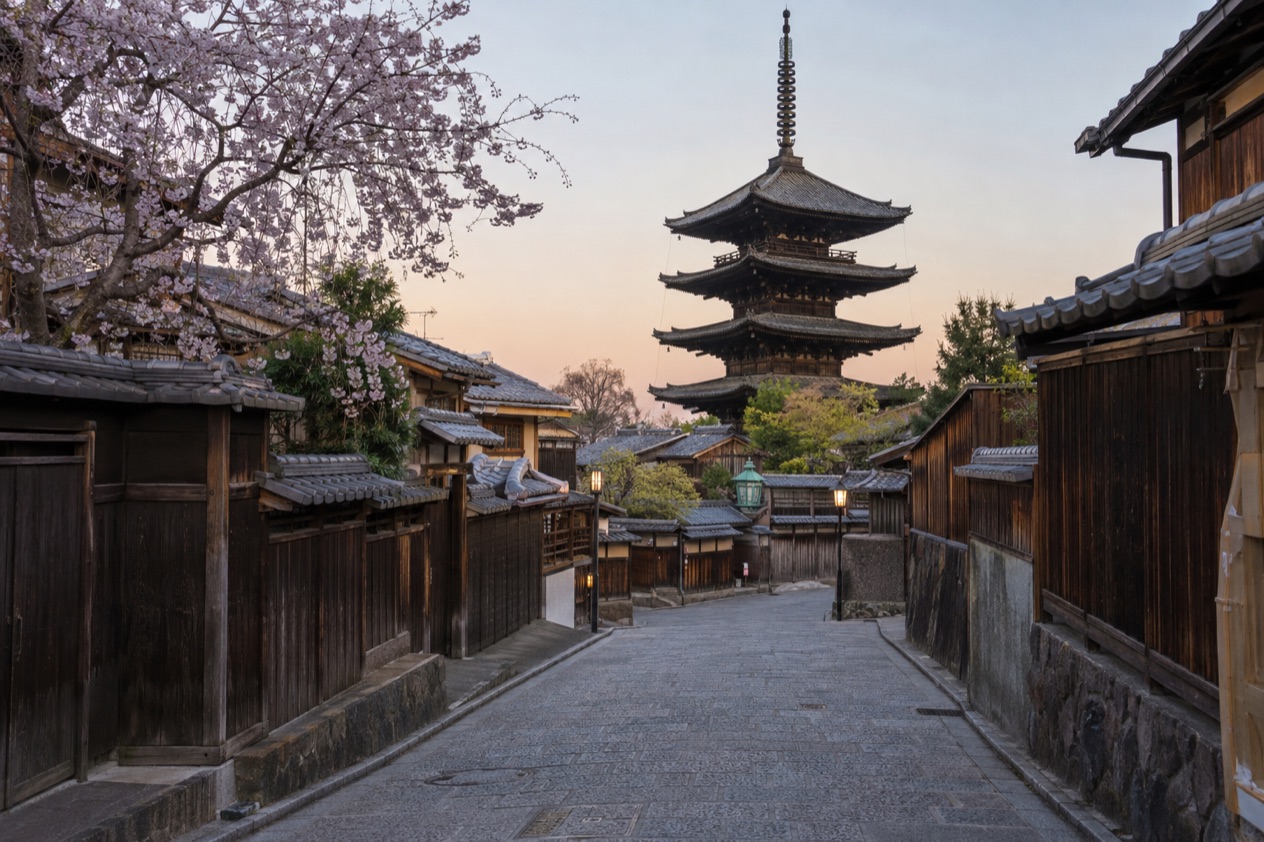
At dusk in Gion, the paper lanterns come on along Hanamikoji, and the lattice fronts of the old wooden houses turn amber. A woman in a kimono hurries past on wooden sandals, a taxi slows for a doorway, and somewhere behind a sliding screen a teahouse is getting ready for its guests. Staying here means choosing between sleeping inside that old geisha district, on its edge, in the temple hills of Higashiyama, or beside the trains at Kyoto Station.
What is the best area to stay in Gion?
For a first visit, Gion Kobu is the answer, because you wake up on the streets everyone has come to see. If your plan is mostly temples and shrines, Higashiyama suits you better. If you are moving between cities by train, or want the widest choice of hotel types, the area around Kyoto Station is the practical base, and Gion Higashi is the pick for a smaller, more tucked-away stay.
Families usually do best where the rail connections are strongest, which points to Kyoto Station, since it is served by the Tokaido Shinkansen and sits at the start of Kyoto City Bus route 100. Travelers on a tighter budget tend to look at business hotels and guesthouses toward the station side, while those who want a ryokan, a traditional inn with tatami rooms and a multi-course dinner, look at the old streets of Gion itself.
Nightlife in Gion is of a particular kind. It is not clubs but teahouses, small bars and restaurants behind wooden doors, where an evening unfolds slowly. If that appeals, sleeping within the district means you can walk back to your room when the lanterns are still lit, with no last train to think about.
The areas differ less in distance than in mood. Gion Kobu is the larger of the two geisha districts, and it includes the famous Hanamikoji street. Gion Higashi is smaller and occupies the northeast corner.
Across the Kamo River from the center, Higashiyama is the eastern region of Kyoto, with the temple slopes and stone lanes that lead up toward them. Kyoto Station is something else again, a big modern building with a department store, a floor of ramen restaurants and a theater.
Gion began as an entertainment district in front of Yasaka Shrine, in the Sengoku period, and the way it is laid out still follows that logic. Streets of teahouses and restaurants gather in front of the shrine, and lodging tucked among them tends to be small.
A ryokan or a renovated machiya, the narrow wooden townhouse typical of Kyoto, may have only a handful of rooms. Larger hotels cluster where the streets widen, and the biggest rooms in terms of choice sit near the station.
Think about what a normal day looks like for you. If it begins with a shrine at sunrise and ends with a long dinner, the old district is worth the compromise on room size.
If it begins with a Shinkansen platform and ends with a day trip, the station area saves effort. The Japan National Tourism Organization recommends visiting shrines early in the morning or late in the evening when they are illuminated, and a base in Gion or Higashiyama makes that rhythm natural.
Spring adds one more consideration. The Miyako Odori, staged by the geisha of Gion Kobu, runs through the whole month of April, from April 1 through April 30, during the cherry blossom season. Staying in Gion Kobu then puts you among the people heading to the performances, and the district takes on a festive air.
Summer has its own marker in the Gion Matsuri, one of the traditions Kyoto is known for, alongside the machiya townhouses and the hanamachi districts where geishas live and work. Whenever you come, the choice is the same. Sleep inside the history, or sleep beside the connections and walk into the history by day.
The best areas to stay in Gion
Gion Kobu: inside the old district
Gion Kobu is the larger of the two hanamachi, or geisha districts, and the one that holds Hanamikoji street. The streets here are lined with machiya, and some of them work as ochaya, the teahouses where geisha entertain guests. You wake to the sound of sandals and sliding doors, and in the evening you may catch a glimpse of a maiko on her way to an appointment.
Lodging is small in scale. Expect ryokan with a few tatami rooms, boutique hotels fitted into old buildings, guesthouses and apartment-style rentals in converted townhouses. It suits couples, first-time visitors who want atmosphere and travelers who care more about the setting than about a large lobby. It is less suited to people with a lot of luggage or anyone who wants a big hotel with every service.
Getting around is by the Keihan Railway, which serves the entire area of Eastern Kyoto, and on foot among the lanes. A tip: shrines and temples are better enjoyed early or late, as the Japan National Tourism Organization suggests, and from here you can step out at those hours without planning transport.
Gion Higashi: the smaller district
Gion Higashi is the smaller geisha district and occupies the northeast corner of Gion. It shares the same origins in front of Yasaka Shrine and the same wooden streetscape, but with fewer teahouses to pass and a more compact feel to the evening. If Hanamikoji is where the crowds head, this is the part of Gion where you can sit with a drink and watch the lanterns without the main thoroughfare in front of you.
The lodging is of the same family as in Kobu, with small inns, guesthouses and renovated townhouses, and you can also find simple business-style hotels along the busier avenues at the edge. It suits travelers who want to be in Gion but would like a little distance from its busiest lane, and those returning for a second visit.
For transport, the Keihan Railway again serves the area, and from it you can travel south toward Hirakata and Osaka, with easy connections to Uji at Chushojima Station. Heading north, the line meets Eastern Kyoto’s other end at Demachiyanagi Station.
Higashiyama: temple slopes across the river
Higashiyama is the eastern region of Kyoto, across the Kamo River. It is the part of the city that most visitors imagine when they think of old Kyoto, with temples, shrines and stone-paved lanes. Staying here means that your first coffee is taken near the sights rather than on the way to them, and that evenings are spent among temple gates and lit pathways.
Lodging ranges from ryokan and small hotels to guesthouses and apartment rentals. It suits travelers who plan to spend most of their time on foot among temples, and anyone who likes the idea of a day that starts and ends in the same neighborhood. It is a weaker choice if you will be hopping between cities every day.
On Kyoto’s municipal subway Tozai Line, Higashiyama Station, north of Gion, and Keage Station, near Nanzen-ji, are convenient for reaching Higashiyama. Kyoto City Bus route 100 runs from Kyoto Station to Ginkakuji, stopping only at major attractions in Higashiyama, and the Keihan Railway serves the whole of the east side.
Around Kyoto Station: the practical base
Kyoto Station is served by the Tokaido Shinkansen line, which makes it the starting point for exploring Kyoto and for connecting to major cities across the country. The station building houses a full floor of ramen restaurants, an Isetan department store, a theater and a Granvia luxury hotel, and Kyoto Tower stands a few steps from the main entrance, visible across the entire city.
This is where you find the widest range of lodging, from large hotels and business hotels to capsule-style stays and guesthouses. It suits families with luggage, travelers on a rail itinerary, anyone who wants a late dinner and a shop open nearby, and those who like to keep their options open. The cost is atmosphere, since you leave the old streets behind each night.
From here, Kyoto City Bus route 100 reaches Ginkakuji with stops only at the major attractions of Higashiyama, a useful link to the eastern temples. The Tokaido Shinkansen links the station to other major cities, so a day away from Kyoto starts at your door.
Gion areas compared
| Area | Best for | Feel | Getting around |
|---|---|---|---|
| Gion Kobu | First visit, atmosphere | Machiya, teahouses and Hanamikoji street | Keihan Railway, on foot |
| Gion Higashi | Second visit, a smaller district | Smaller geisha district in the northeast corner | Keihan Railway, on foot |
| Higashiyama | Temples and shrines | Eastern Kyoto across the Kamo River | Tozai Line (Higashiyama and Keage stations), Keihan Railway, city bus route 100 |
| Around Kyoto Station | Rail travel, families, wide choice of hotels | Station building with ramen floor, department store and theater | Tokaido Shinkansen, bus route 100 to Ginkakuji |
The main trade-off is between sleeping near the station and sleeping among the old streets. The station gives you the Shinkansen, a large choice of rooms and the practical conveniences of a big building, while Gion gives you the lanterns, the wooden fronts and the sense that the city is already around you when you open the door. Neither is wrong, and the right one depends on how many nights you spend in Kyoto and how many of those days begin with a train.
A second trade-off sits between the old town and the new. Gion and Higashiyama belong to the Kyoto of machiya, shrines and hanamachi, the traditions the Japan National Tourism Organization points to. Kyoto Station belongs to the Kyoto of department stores and towers. Central Kyoto, where Nijo Castle stands with its nightingale floors that sound like a bird when walked on, sits between those two worlds in spirit, with history and city life side by side.
Within Gion itself, the choice between Kobu and Higashi is a choice of scale. Kobu is larger and holds the famous street, so it is where the most lanterns, teahouses and passersby gather. Higashi is smaller, and a stay there trades some of that energy for a more contained evening. Both are served by the Keihan Railway, so the rail connection does not separate them.
Higashiyama sits between the two logics. It keeps the old-Kyoto atmosphere, and the Tozai Line and the bus give it links to the rest of the city. If you want to be near temples and also reach Kyoto Station by bus, it is a middle road that gives up neither the setting nor the connection.
One more thing shapes the decision, and that is the kind of room you want. Old houses turned into inns tend to offer smaller, traditional rooms with futon bedding laid out on tatami, while larger hotels near the station offer Western-style rooms. Think about which you would rather come home to after a long day, and the area will often choose itself.
How to choose your hotel in Gion
Start with the kind of lodging, because it matters more than the exact street. A ryokan is a traditional inn, usually with tatami floors, futon bedding and a dinner served in the room or in a dining room.
In Gion, ryokan sit among the machiya, and staying in one is the closest you can get to living inside the district. Shoes come off at the entrance, and you move through the building in slippers or socks.
A hotel in the Western sense gives you a bed, a private bathroom and a front desk, and the largest ones are found around Kyoto Station, where a Granvia luxury hotel sits inside the station building itself. For travelers who want to step from the platform to the lobby without crossing a street, that is a clear advantage, especially with luggage in hand.
Business hotels are plain, compact rooms with a private bath, designed for a night’s rest rather than a long stay in the room. They suit solo travelers and anyone who plans to spend the day out.
Capsule-style stays go further, offering a sleeping pod and shared facilities, and appeal to those who want a bed and little else. Guesthouses, often run in converted townhouses, add a social side, with shared spaces where travelers swap notes about the day.
Machiya stays deserve their own mention. These are narrow wooden townhouses, and some in Gion have been turned into small lodgings, with a courtyard, sliding doors and a stairway that creaks. They are part of what the Japan National Tourism Organization names among Kyoto’s traditions, and sleeping in one is a way to see that tradition from the inside rather than from the street.
Next, think about the station. Where you sleep relative to a station decides your mornings. Near Kyoto Station you have the Tokaido Shinkansen. In Higashiyama you have Higashiyama Station and Keage Station on the Tozai Line. In Gion you have the Keihan Railway. Look at which line leads to the places you plan to see and let that guide you, rather than the name of the neighborhood.
Families should weigh rail access and room type together. A larger hotel near the station offers more room to spread out and a department store and ramen floor close by for easy meals. Gion’s small inns and townhouses are charming, but a room with futon bedding on tatami works differently from a room with beds, so look at what each property offers for the number of people in your group.
For travelers with mobility needs, the old lanes of Gion and Higashiyama are paved in stone, and the lodging within them is often in historic buildings with steps, narrow doorways and stairs. A hotel in the station building, by contrast, is a modern structure. Ask the property directly about its entrance and rooms before choosing, because older buildings vary from one to the next.
A last consideration is what you want from the evening. Staying in Gion means the lanterns, the teahouses and the chance of seeing a maiko on her way to an engagement, though that is a chance and not a promise. Henshin studios in Gion dress tourists as maiko or geisha for a fee, and by law in Kyoto those tourists dress inaccurately so as not to impersonate the real thing, a detail that tells you how seriously the district takes its traditions.
Put it together and a simple pattern emerges. Choose a ryokan or machiya in Gion Kobu or Gion Higashi for atmosphere, a small hotel or guesthouse in Higashiyama for temples, and a hotel by Kyoto Station for rail travel and range. Pair that with one or two nights in a second area if you have the time, and you get both sides of Kyoto without compromise.
Good to know before you go
Kyoto Station, served by the Tokaido Shinkansen, is the arrival point for most travelers, and from there Kyoto City Bus route 100 runs to Ginkakuji through Higashiyama, while the Keihan Railway serves the eastern side of the city and extends as far as Osaka. Which line suits you depends on where your lodging stands, so check the nearest station when you choose. Kyoto’s municipal subway Tozai Line adds stops at Higashiyama and Keage for the temple slopes.
Sources
- Wikipedia, Gion (https://en.wikipedia.org/wiki/Gion), checked October 11, 2026
- Wikivoyage, Kyoto/Higashiyama (https://en.wikivoyage.org/wiki/Kyoto/Higashiyama), checked October 11, 2026
- Japan National Tourism Organization, Kyoto (https://www.japan.travel/en/destinations/kansai/kyoto/), checked October 11, 2026
To plan your stay
- Best Time to Visit Kyoto: Cherry Blossoms, Autumn Leaves, Weather by Month and Festivals
- Things to Do in Kyoto: Temples, Gardens, Food and Day Trips
- Kyoto from Tokyo: Shinkansen Trains, Nozomi vs. Hikari and Kodama, and a First Day in Kyoto
- Know Before You Go to Kyoto: Entry, Money, Getting Around and Local Etiquette