
A December evening in Hakone begins with steam. It lifts off the outdoor onsen baths, and the cold air makes the water feel hotter than it is.
Lanterns come on in the ryokan, tea arrives with a small sweet, and the hills of Fuji-Hakone-Izu National Park go dark behind the windows. December here is a month for soaking, for black eggs at Owakudani and for a boat ride across Lake Ashinoko, made for travelers planning a winter stay in the hills west of Tokyo.
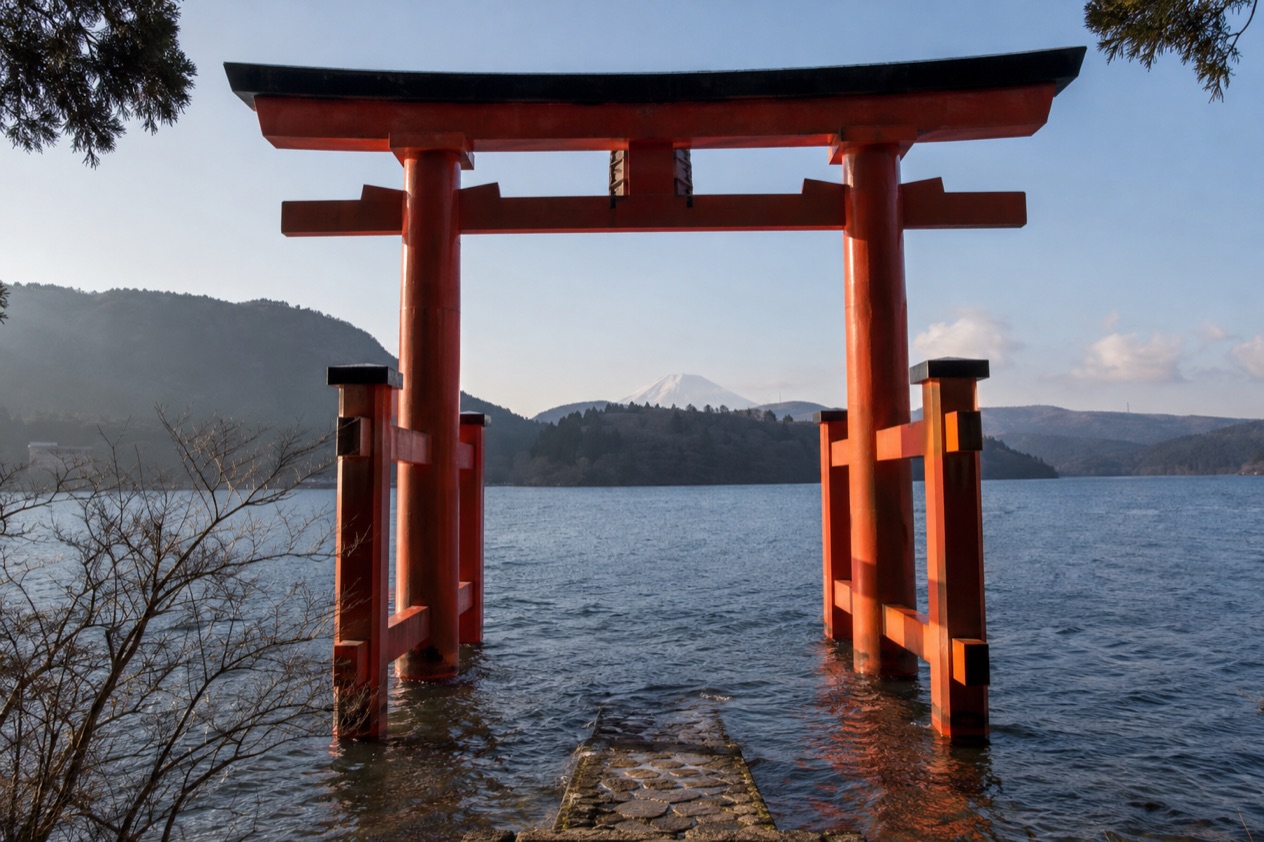
What is the weather like in Hakone in December?
December in Hakone is cool and drier than November, with winter sunshine building toward January.
| Month | Average high (°F) | Average low (°F) | Precipitation (in) | Hours of sunshine | Daylight on the 15th |
|---|---|---|---|---|---|
| November | 63.3 | 46.9 | 4.70 | 149 | 10 h 21 min |
| December | 55.4 | 37.6 | 2.94 | 171 | 9 h 48 min |
| January | 51.1 | 33.1 | 3.30 | 180 | 10 h 01 min |
There, afternoons in December sit in the mid-50s, which feels like a crisp autumn day, and nights drop to a few degrees above freezing. A light jacket will not carry you through an evening walk to a restaurant or a stroll back from the bath, so plan on a real coat, a scarf and something warm for your hands.
The mountain side of Hakone is wetter than the foot of the hills. In an average December it collects about 4.25 inches of precipitation, so a rain jacket is worth carrying when you head up toward the ropeway and the lake. The month has less rain than November on both sides of the area, and the sunshine hours climb from one month to the next, which gives the winter landscape its clearer, harder light.
Daylight is short, under ten hours in the middle of the month. That shapes how you spend your days: outdoor stops belong in the daylight hours, and the evening is the time for the bath, dinner and a slow stay indoors. Shops, museums and lodgings carry the evening in a way that suits the dark.
What to do in Hakone in December
The great December pleasure in Hakone is hot water. The area is world-renowned for its natural hot springs and for views of Mount Fuji, and a cool month gives a bath its full meaning.
Japan has a custom of floating yuzu citrus in the bath around the winter solstice, and in a spa town you may find a bathhouse or ryokan that follows it. The scent is sharp and bright, and it suits the season.
December also has its own calendar. Christmas is not a national holiday in Japan, though gifts are sometimes exchanged, so December 25 is an ordinary day with lights in the windows rather than a day when everything stops. The real turning point is New Year.
The official Japanese New Year falls on January 1, and a bowl of soba on New Year’s Eve is a well-known way to close the year. Osechi, the boxed New Year dishes, comes with the first day of January.
The Hakone Freepass Hako Ticket Plus combines the digital pass with the Hako Ticket, which covers applicable art museums, hot springs and activity facilities, and it is valid for 2 days or 3 days.
Food in a hill town in winter leans toward warm bowls. Odawara, at the foot of the hills, has a reputation for kamaboko, the pounded fish cakes that turn up in shops and on tables.
A ryokan evening with the hot springs
A traditional ryokan is the way many travelers meet Hakone’s hot springs. In December the bath, whether indoors or in an open-air pool, is the main event of the evening.
Plan the stay around dinner. Once you are settled, the evening has a pattern: a bath before the meal, the meal, then a second soak before bed if you like.
Owakudani and the ropeway
Owakudani sits in the volcanically active heart of Fuji-Hakone-Izu National Park, where steam rises from the ground and the air carries a mineral smell. The black eggs sold here are boiled in the hot springs, and they are said to prolong life. Eating one is a small ritual, and in cool weather the warm shell is welcome in your hands.
The Hakone Ropeway is one of the eight transport means on the Freepass, so a ride across the volcanic landscape fits naturally into the day. You look down on vents and bare slopes, and on a clear day the view may include Mount Fuji. Bring the extra layer, since the mountain side of Hakone is wetter than the foot of the hills.
Lake Ashinoko and the art museums
A crossing in December puts you on open water with winter air on your face, and the shoreline hills form a long, dark frame around the lake. A scarf and gloves make the deck pleasant.
Hakone is also an art destination. In December the museums give you indoor hours when the weather turns, and the open-air collection is a good reason to put on a coat and walk slowly between pieces.
A two-day itinerary for Hakone in December
From there, board the Hakone Tozan Train, which is part of the Freepass, and let the hills rise around you. Because daylight is short in December, put the volcanic landscape in the middle of the day.
Spend the late afternoon moving toward your ryokan, check in, and put on the yukata. The evening belongs to the bath and to a multi-course dinner. If rain sets in, the ryokan’s own bath becomes the plan, and it is a good one.
Day 2 starts with a slow breakfast and a last soak, then moves to Lake Ashinoko for the Hakone Sightseeing Cruise. Cool air over the water suits a scarf and a hot drink afterward. Midday leads to Sengokuhara and its art museums, which also work as the rain card, because a gray day only makes the galleries more inviting.
Dinner can be a restaurant meal in town, with warm dishes and a last look at the shops before you leave. Keep a thin layer in reach, since the mountain side is wetter and the evening cool.
Is Hakone busy in December?
Hakone is extremely popular with visitors because of its closeness to Tokyo and its views of Mount Fuji, and December keeps that reputation without adding a holiday rush of its own.
Christmas is not a national holiday in Japan, so December 25 does not bring the long weekend that other holidays do. The month moves toward its end, and the last days run into the New Year holidays, when many restaurants and attractions are closed. That makes the final stretch of the month a different kind of trip from its first weeks, with more shuttered doors and a slower town.
In a normal week, Hakone-Yumoto keeps its restaurants and gift shops busy, and Sengokuhara keeps its art museums open for the afternoon. You will find people in line for the black eggs at Owakudani and on the decks of the lake boats. The cool weather draws people toward the baths, and a ryokan evening in winter has a settled, indoor feel.
For the pace of your trip, the main point is the calendar. Early and mid December carry the everyday rhythm of a spa town. The closing days of the month belong to the New Year, with osechi on the table and many places closed, so plan meals and museum visits with that in mind.
What to pack for Hakone in December
Pack for cool air, a wetter mountain side and many hours spent taking shoes on and off. These items cover most of what the month asks for:
- A warm coat, since afternoons sit in the mid-50s and nights drop close to freezing.
- A scarf and gloves for the ropeway and the lake cruise, where you stand in open air.
- A rain jacket, because the mountain side of Hakone collects more precipitation than the foot of the hills.
- Slip-on shoes, for ryokan entrances and for the many places where footwear comes off.
- Clean, whole socks, which matter when shoes come off at a ryokan or a museum.
- A small day bag for a thin extra layer, a hot drink and the black eggs.
Good to know before you go
The calendar matters more than the weather this month. Christmas is not a national holiday, so the day itself is not a closure date.
The Hakone Freepass covers eight kinds of transport, and the Hako Ticket Plus adds museums, hot springs and activity facilities, which helps when you are comparing a day of rides with a day of indoor stops.
Hakone in December vs November and January
Daylight is longer, and the sunshine hours are the fewest of the three months. A lighter coat will do for November, and a rain jacket matters more. This is the month for travelers who want longer days and are willing to accept more rain.
Moving four weeks later takes you to January, the coldest and sunniest of the three months. Daylight is a little longer than in December, and the New Year holidays open the month, with osechi on January 1 and many restaurants and attractions closed at the start. January suits travelers who want the clearest winter light and are comfortable planning around the closures of the first days.
December sits in the middle: cooler than November, less rain than either neighbor on the mountain side, and not yet under the full cold and New Year closures of January. If you want a bath in cool air and fewer wet days, stay with December. If you want the longest daylight, shift earlier. If you want the sunniest hours, move later and plan around the New Year.
Is December a good time to visit Hakone?
Yes, December is a good time to visit Hakone for travelers who want hot springs, art and a boat ride in cool air, and who are happy to plan their sightseeing around short daylight.
It will suit people who like long baths and slow dinners, who enjoy a coat and a scarf on the ropeway, and who want museums as a rain card. It is less suited to travelers who want long daylight hours for outdoor sightseeing, or who plan to travel in the last days of the month, when many restaurants and attractions are closed for the New Year holidays.
On arrival, start with the part of Hakone that depends on daylight. Take the Tozan Train, the ropeway and the lake cruise while the light holds, and keep the evening for the ryokan bath and dinner.
What December gives Hakone is a clear match between the weather and the main attraction. The air is cool, the sunshine is building, and the hot springs that made the area world-renowned are most welcome. You step out of a steaming bath into cold air, with the hills dark around you and a warm yukata waiting.
Sources
- Japan Meteorological Agency (JMA), Normal values 1991-2020, monthly (https://www.data.jma.go.jp/stats/etrn/view/nml_amd_ym.php?prec_no=46&block_no=1008), station Odawara, elevation 14 m, checked October 11, 2026
- Computed from the date and the latitude of the place (sunrise equation, solar elevation -0.833 degrees), October 11, 2026
- Japan National Tourism Organization, winter in Japan (https://www.japan.travel/en/guide/winter-guide/), checked October 11, 2026
- Wikipedia, Christmas in Japan (https://en.wikipedia.org/wiki/Christmas_in_Japan), checked October 11, 2026
- Japan National Tourism Organization, shop and attraction hours, national holidays (https://www.japan.travel/en/plan/business-hours-and-holidays/), checked October 11, 2026
- Wikipedia, Japanese New Year (https://en.wikipedia.org/wiki/Japanese_New_Year), checked October 11, 2026
- Wikipedia, Public holidays in Japan (https://en.wikipedia.org/wiki/Public_holidays_in_Japan), checked October 11, 2026
- Japan National Tourism Organization, skiing guide (https://www.japan.travel/en/guide/skiing/), checked October 11, 2026
- Japan National Tourism Organization, skiing and snowboarding in Japan: regions, resorts, seasons (https://www.japan.travel/en/sports/snow/), checked October 11, 2026
- Wikipedia, List of ski areas and resorts in Japan (https://en.wikipedia.org/wiki/List_of_ski_areas_and_resorts_in_Japan), checked October 11, 2026
- Wikipedia, Climate of Japan (https://en.wikipedia.org/wiki/Climate_of_Japan), checked October 11, 2026
- Japan National Tourism Organization, Hakone (https://www.japan.travel/en/destinations/kanto/kanagawa/hakone-and-around/), checked October 11, 2026
- Hakone Tourist Information (https://www.hakonenavi.jp/international/en/), checked October 11, 2026
- Wikipedia, Hakone, Kanagawa (https://en.wikipedia.org/wiki/Hakone,_Kanagawa), checked October 11, 2026
- Wikivoyage, Hakone (https://en.wikivoyage.org/wiki/Hakone), checked October 11, 2026
To plan your stay
- Things to Do in Hakone: Lake Ashi, Owakudani, Open-Air Museum and Hot Springs
- Where to Stay in Hakone: Hakone-Yumoto, Lake Ashi, Sengokuhara and Ryokan Stays
- Hakone from Tokyo: Romancecar, Shinkansen, Local Trains and the Hakone Freepass
- Know Before You Go to Hakone: Getting There, the Freepass, Weather and Etiquette