
September may be the sweetest month on Crete. The sea is near its warmest, the days still feel like summer, and most of the island stays open while August's crowds and prices ease week by week.
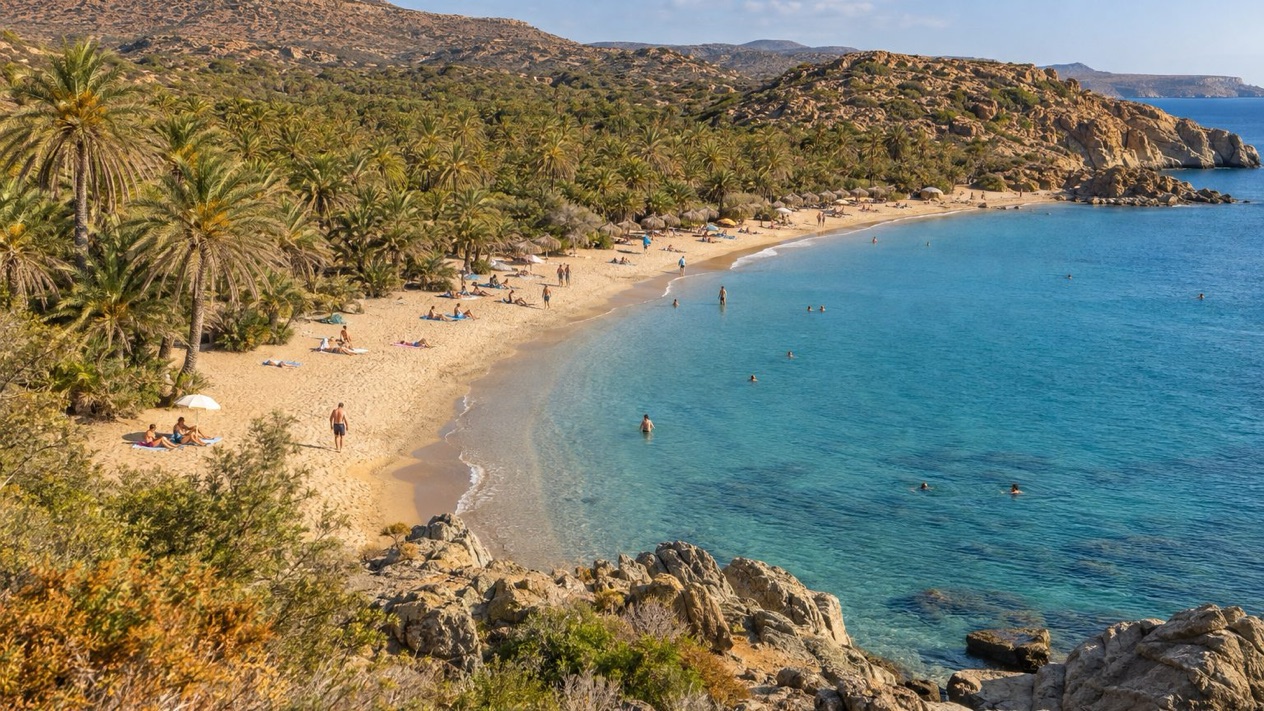
What is the weather like in Crete in September?
| Month | Average high | Average low | Sea | Rainfall | Sunshine per day |
|---|---|---|---|---|---|
| August | 85°F (29°C) | 73°F (23°C) | 78°F (25°C) | 0.1 in (1 mm) | 11.5 h |
| September | 81°F (27°C) | 69°F (20°C) | 76°F (25°C) | 0.4 in (11 mm) | 9.3 h |
| October | 75°F (24°C) | 63°F (17°C) | 73°F (23°C) | 2.2 in (55 mm) | 6.9 h |
September still feels like summer across the island, and early in the month can bring real heat. After sunset the coast stays pleasantly warm, while mountain villages turn noticeably cooler. The south coast runs warmer and drier than the north.
Rain is rare in the first half of the month. Showers become more likely toward the end, but they tend to be short, and most days stay sunny.
The sea feels bath-like, and even people who normally feel the cold find it comfortable. Swimming is excellent all month. On a beach day, the wind often counts for more than a few degrees of difference in the air or water. Exposed beaches such as Falasarna can turn rough on a hot, sunny day, so check the local forecast before a long drive to a particular beach.
How does September compare with August and October?
August is one of the two hottest months, and it brings bigger crowds and higher prices. September is a touch cooler, which makes it the better month for sightseeing and hiking, and the sea stays very close to its August warmth.
October is quieter and cheaper, and swimming is still good into the month. The trade-off is real. October brings lower highs, a cooler sea and much more rain than September, so swimming days are harder to count on, especially in the later weeks. Keep a plan B for wet days, such as the museums in Heraklion and Chania.
Is September a good time to visit Crete?
Yes, for most travelers, and especially in the second half of the month. September is still part of the main tourist season, so hotels, restaurants, tours and beach facilities are up and running. Some restaurants and tourist businesses start to close toward the end of the month, so confirm anything you plan to rely on.
Early September feels like high summer, with hot days, busy beach towns and lively nightlife. Crowds thin steadily from there, and the biggest change comes in the last week. Chania and Rethymno stay lively, but the famous beaches and sights have more breathing room. Elafonisi and Balos stay busy all month, so get there first thing in the morning or late in the afternoon. If a calmer trip appeals to you, the south coast, the inland villages and eastern Crete are good places to look. Matala and Plakias can still fill up, though they tend to feel less packed than the famous sights in the west.
Prices ease after August, and hotel deals improve as the month goes on. Reserving early is wise for luxury resorts, family hotels and popular places to stay in Chania, Rethymno and Elounda, particularly if you travel in early September.
What is there to do in Crete in September?
Hike Samaria Gorge. September is a lovely time for it, and the later weeks tend to feel easier on the heat. It calls for good fitness and an early start. The gorge can close temporarily for extreme heat, heavy rain or rockfall risk, so check its official operating status before you go. Tours from Chania and Rethymno handle the logistics. Hikers going on their own can ride a bus to Xyloskalo at the top, walk down to Agia Roumeli, and take a ferry from there to Sougia or Chora Sfakion, where a bus takes you onward. The afternoon ferry sets how much time you have, so check connections first.
Visit Knossos and the Heraklion Archaeological Museum. Knossos is more comfortable in September than in July or August, but it still turns hot and crowded by late morning, so arrive when it opens.
Taste wine. Many Cretan wineries are busy with the grape harvest in September, and the countryside around Archanes, Peza and Dafnes near Heraklion is home to a number of well-regarded ones. Reserve tastings ahead, especially during the harvest.
Drive the south coast. Plakias, Agia Galini, Matala, Paleochora and Frangokastello make a great road trip through the mountains. To reach Loutro, drive to Chora Sfakion and take a boat from there, as the village has no road access.
Head to the beaches. Agioi Apostoloi is a group of sheltered coves near Chania with shallow water and good facilities, which makes it a good pick for families and for windy days. Almyrida and Kalyves are relaxed, family-friendly beaches with shallow swimming areas. Balos is a beautiful spot, though it takes some effort to reach. The boat from Kissamos is the easiest way when the weather allows, while the drive means a rough access road, possible rental-car restrictions and a steep walk back up from the beach. Elounda and Mirabello Bay offer luxury resorts and sheltered swimming, with views of the lagoon and the island-fortress of Spinalonga. From Chania or Rethymno it is a long way, so it does not suit a day trip.
How do you get around Crete in September?
Flights and ferries run frequently in September. Heraklion and Chania both have direct flights from a range of European cities and regular connections to Athens, though some international routes are seasonal, frequencies vary by airport, and some airlines trim their schedules as fall advances. Ferries from Heraklion and Chania (Souda) to Piraeus sail all year, and most days include an overnight departure. High-speed ferries link Heraklion with Santorini and other Cycladic islands in September; these routes are seasonal and schedules thin out late in the month. Strong winds can delay or cancel sailings, high-speed ferries in particular, and transportation strikes can disrupt ports and airports. Check timetables for your exact dates and leave a generous gap between a ferry arrival and an international flight.
A rental car is the easiest way to reach the south coast, the wineries, the mountain villages and far-flung beaches. Roads are quieter than in August, but mountain routes are steep and winding, so drives take longer than the distances suggest. You don't need a car for your whole stay. If you spend several days in Chania or Rethymno, you might rent a car just for the days you plan to explore, since the old towns are best on foot and parking nearby can be hard. If you keep a car overnight, pick accommodation with a realistic parking arrangement. Reserve an automatic in advance, particularly for early September.
Buses suit a trip based in a single town, though timetables make spur-of-the-moment day trips and remote beaches harder to manage.
Greek law requires drivers to carry both a valid U.S. driver's license and an international driving permit, even if the rental company does not ask to see the permit. Petty crime is common at popular tourist spots, and thieves are known to break into rental cars to take passports, valuables and luggage, so it is wise to keep those items with you.
What should you pack for Crete in September?
Pack for summer, plus a few extras. Bring light clothing, swimwear, sunglasses, a hat and sunscreen. The UV index is high, so apply sunscreen even on cloudy days. A light sweater or jacket covers cooler evenings, boat trips and mountain outings, and a compact umbrella handles a late-month shower. Comfortable shoes suit old-town streets and archaeological sites, and proper hiking shoes are a must for Samaria Gorge or mountain trails. A reusable water bottle helps on hot days at the beach and the sites.
What do Americans need to enter Greece?
U.S. citizens can visit Greece without a visa for up to 90 days for tourism or business. The passport should have at least three months of validity beyond your planned departure date, and a passport that has been reported lost or stolen will not be accepted for entry. Officers may ask for proof of sufficient funds and a return ticket or other evidence of departure, so keep both easy to reach. Once in Greece, carry your passport or another photo ID at all times.
Sources
- santorinidave.com (https://santorinidave.com/crete-in-september), checked October 18, 2026
- atlifestylecrossroads.com (https://atlifestylecrossroads.com/my-perfect-greek-vacation-top-things-to-see-in-crete/), checked October 18, 2026
- tui.co.uk (https://www.tui.co.uk/holidays/weather/europe/greece/crete/september.html), checked October 18, 2026
- community.ricksteves.com (https://community.ricksteves.com/travel-forum/greece/fall-in-crete), checked October 18, 2026
- travelscoop.co.uk (https://travelscoop.co.uk/weather-september/greece/greek-islands/crete), checked October 18, 2026
- U.S. Department of State (https://travel.state.gov/content/travel/en/international-travel/International-Travel-Country-Information-Pages/Greece.html), checked October 15, 2026
- U.S. Department of State (https://travel.state.gov/content/tsg_aem/us/en/home/international-travel/travel-advisories/destination.grc.html), checked October 15, 2026
- anek.gr (https://www.anek.gr/en-gb), checked October 15, 2026
- anek.gr (https://www.anek.gr/en-gb/destinations/chania), checked October 15, 2026
- Visit Greece (GNTO) (https://www.visitgreece.gr/en/islands/crete), checked October 15, 2026