
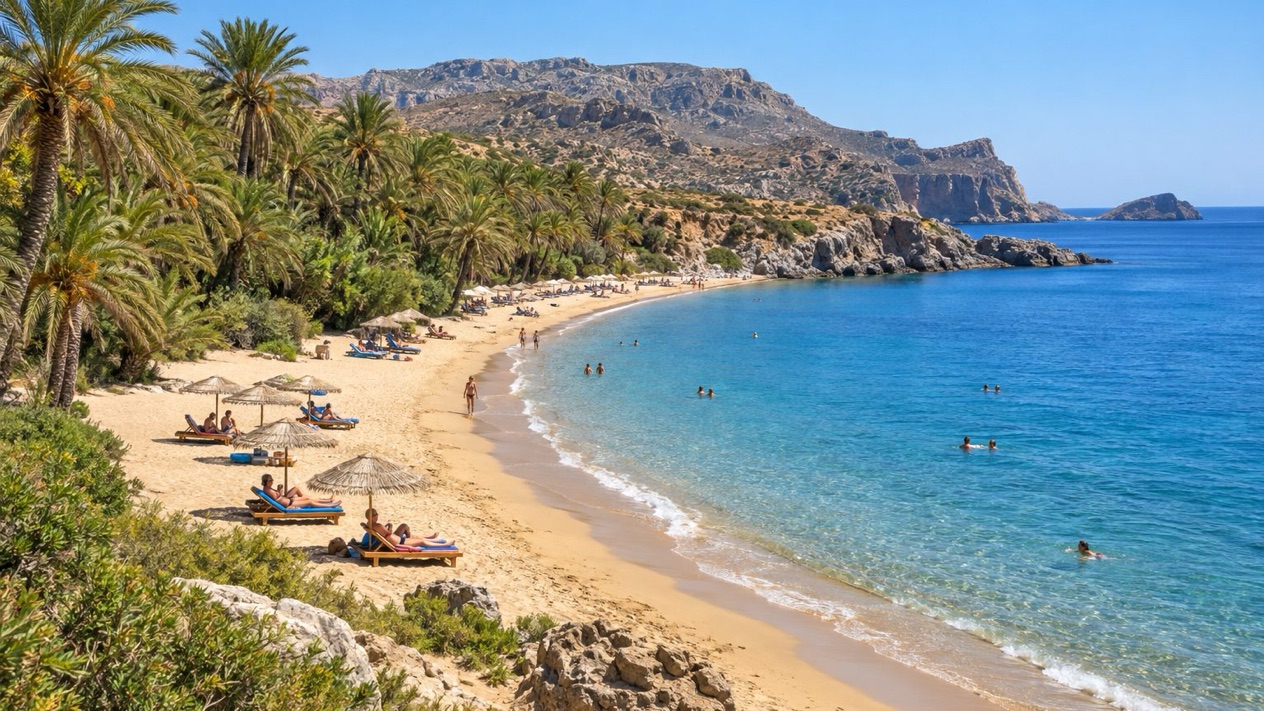
Expect hot, sunny days and sea water that invites a swim, with the beaches, gorges, ancient sites and boat tours all running for the season. The island is busy, yet it hasn't reached the full crush of July and August, and an early start still buys you a quieter morning at the famous places.
What is the weather like in Crete in June?
| Month | Average high | Average low | Sea | Rainfall | Sunshine per day |
|---|---|---|---|---|---|
| May | 75°F (24°C) | 60°F (16°C) | 66°F (19°C) | 0.5 in (12 mm) | 10.0 h |
| June | 82°F (28°C) | 68°F (20°C) | 72°F (22°C) | 0.1 in (2 mm) | 12.0 h |
| July | 85°F (29°C) | 73°F (23°C) | 76°F (25°C) | 0.0 in (0 mm) | 12.2 h |
Expect long, sunny days that grow hotter as the month goes on. Afternoons are hot, inland valleys can run hotter than the coast, and the mountain villages stay cooler. Coastal evenings are warm, and a light northerly breeze often keeps the air from feeling heavy. The sun is strong all month.
The sea is swimmable from the start of June, though early in the month it can feel brisk at windy, exposed beaches. Shallow, sheltered bays warm up faster, and by the second half of the month most visitors find the water comfortable.
Rain is rare, and rarer still in late June, so wind is the thing to watch. Northerly winds can whip up chop on exposed north- and west-coast beaches such as Agia Marina, Platanias and Falasarna, even under a clear sky. The south coast can be calmer, though it isn't shielded from the wind, and Plakias in particular can get extremely windy. Check a short-range forecast before giving a whole day to Balos or Falasarna, and keep a sheltered beach in reserve. Agioi Apostoloi, Marathi, Loutraki and the beaches around Elounda and Mirabello Bay are the reliable picks for calm water.
Is June a good time to visit Crete?
Yes, for most travelers. June is still high season, though, so don't expect empty sand. Smaller south-coast villages, mountain towns and the quieter corners of eastern Crete feel noticeably calmer.
Starting your day early helps a lot with the crowds. Elafonisi draws crowds even in June, so arrive first thing in the morning for easier parking, or come in the late afternoon. Balos fills up by late morning as well.
Prices climb through the month, and the last weeks are the priciest. Book hotels, rental cars (automatics go first) and ferries well ahead, ideally at least two months out for the second half of June.
How does June compare with May and July?
May is cooler, with a chillier sea and the lowest prices of the three. June brings real summer: long sunny days, warmer water and a fuller island, at prices above May but below July and August. July adds a few more degrees, steadier Meltemi winds, archaeological sites that fill up faster and a spike in car rental rates.
The two halves of June feel different, too. Early June suits hiking, sightseeing and road trips, with gentler temperatures, smaller crowds and lower hotel prices. Late June suits a beach holiday, with hotter air and warmer water, along with busier resorts, more traffic and higher rates. If you want to swim and also hike, aim for early June.
What is there to do in Crete in June?
Hike Samaria Gorge in early June, before the strongest summer heat arrives. Start as early as you can and carry plenty of water. Agia Roumeli, at the bottom, has no road, so arrange the boat out and your onward transportation ahead of time. Imbros Gorge is a shorter, less demanding alternative.
See Knossos the moment it opens. Shade is thin, and the heat and tour groups build quickly. Spend the hottest hours in the Heraklion Archaeological Museum instead, home to the world's most important collection of Minoan artifacts and pleasantly cool inside.
Save another morning for Phaistos. The palace sits on a ridge above the Messara plain, looking out to the White Mountains and the Libyan Sea, and it feels quieter and more dramatic than Knossos, especially before the day heats up and other visitors arrive.
Take a boat trip. Spinalonga boats leave from Plaka, Elounda and Agios Nikolaos, with Plaka offering the shortest crossing, but restoration work can affect opening, so confirm access first. Strong winds can cancel departures, so check the forecast and schedules, and reserve popular small-group trips early, particularly in late June.
Head into wine country. The vineyards around Archanes, Peza and Dafnes, just south of Heraklion, make an easy outing. Book tastings ahead and pair one with Knossos or lunch in Archanes. Police run random alcohol tests, so hand the keys to a driver or go easy on the pours.
June also opens the summer festival season. Open-air events, music evenings and food markets pop up in the old towns of Chania and Rethymno, and the Heraklion Summer Festival usually begins in late June. Village saints' feast days, called panigiri, happen through the month, with music, food and dancing late into the night. They're local celebrations, and respectful visitors are generally welcome.
Where should you stay in Crete in June?
Pick a base that fits the trip. Chania is the strongest first choice for western Crete, within reach of Falasarna, Balos, Elafonisi and Samaria Gorge, though the big beaches are day trips from town. Elounda is a luxury resort with views of the lagoon and the island-fortress of Spinalonga, a fine choice for couples and a relaxing beach holiday. Agios Nikolaos makes a lively eastern base with waterfront restaurants and easy access to Elounda and Spinalonga. For a quieter south-coast stay, look at Plakias or Paleochora, both reached over mountain roads. Heraklion suits museums, wineries and ferry or airport connections more than beach time.
Crete is too big to cover both ends from one base, so if you're staying eight nights or more and want western and eastern Crete, split your stay between two. Wherever you land, book a room with air conditioning, even for early June. Hot weather can show up at any point in the month, and opening the windows may not be practical in busy towns.
How do you get to and around Crete in June?
In summer, Chania and Heraklion airports have nonstop flights from abroad, plus connections to Athens and other Greek cities. Overnight ferries link Crete with Piraeus, and seasonal high-speed boats connect Heraklion with Santorini and other Cycladic islands. Book ferries early, especially high-speed seats, cabins and vehicle spaces. Not all island routes run daily, and strong winds can delay or cancel fast crossings, so check timetables before booking nonrefundable hotels, and avoid a ferry arrival on the same day as an important flight.
A rental car is a great way to reach the beaches, mountain villages, wineries and south coast. Greek law requires you to carry a valid U.S. driver's license, and insurance companies may require an international driver’s permit. Greece has one of the highest traffic fatality rates in the European Union, and talking or texting on a phone while driving is illegal, so keep the phone out of your hands. Distances fool people, since a short stretch of winding mountain road can take far longer than the map suggests. Thieves break into rental cars for passports, valuables and luggage, so take them with you when you step away. Much of the old towns in Chania and Rethymno is pedestrianized, so choose lodging with convenient parking. Forest fires are common in the dry summer months and occasionally close roads.
Buses connect the main cities with the established north-coast resorts. They suit a stay based in one area, though they're less handy for remote beaches and mountain villages. Validate your ticket when you ride, since traveling without a valid one can bring a fine of up to 60 times the basic fare.
What should you pack for Crete in June?
Light summer clothes, swimwear, a hat, sunglasses and plenty of sunscreen, reapplied after swimming. Comfortable walking shoes handle old towns and ruins, while gorges and mountain trails call for proper hiking shoes and a refillable water bottle. A light sweater or jacket earns its place on windy boat trips, ferries and evenings in the mountain villages.
What do Americans need to enter Greece?
U.S. citizens can enter Greece without a visa for up to 90 days for tourism or business. Your passport should have at least three months of validity beyond your planned departure date, and a passport you've reported lost or stolen will get you turned away, so travel on a valid replacement. Be ready to show proof of sufficient funds and a return ticket or other evidence of departure if asked. Once you arrive, carry your passport or another photo ID at all times.
Sources
- santorinidave.com (https://santorinidave.com/crete-in-june), checked October 18, 2026
- tui.co.uk (https://www.tui.co.uk/holidays/weather/europe/greece/crete/june.html), checked October 18, 2026
- elissos.com (https://www.elissos.com/crete-in-june/), checked October 18, 2026
- tuiholidays.ie (https://www.tuiholidays.ie/f/holidays/weather/europe/greece/crete/june.html), checked October 18, 2026
- accuweather.com (https://www.accuweather.com/en/gr/heraklion/2282907/june-weather/2282907), checked October 18, 2026
- U.S. Department of State (https://travel.state.gov/content/travel/en/international-travel/International-Travel-Country-Information-Pages/Greece.html), checked October 15, 2026
- U.S. Department of State (https://travel.state.gov/content/tsg_aem/us/en/home/international-travel/travel-advisories/destination.grc.html), checked October 15, 2026
- anek.gr (https://www.anek.gr/en-gb), checked October 15, 2026
- anek.gr (https://www.anek.gr/en-gb/destinations/chania), checked October 15, 2026
- Visit Greece (GNTO) (https://www.visitgreece.gr/en/islands/crete), checked October 15, 2026