
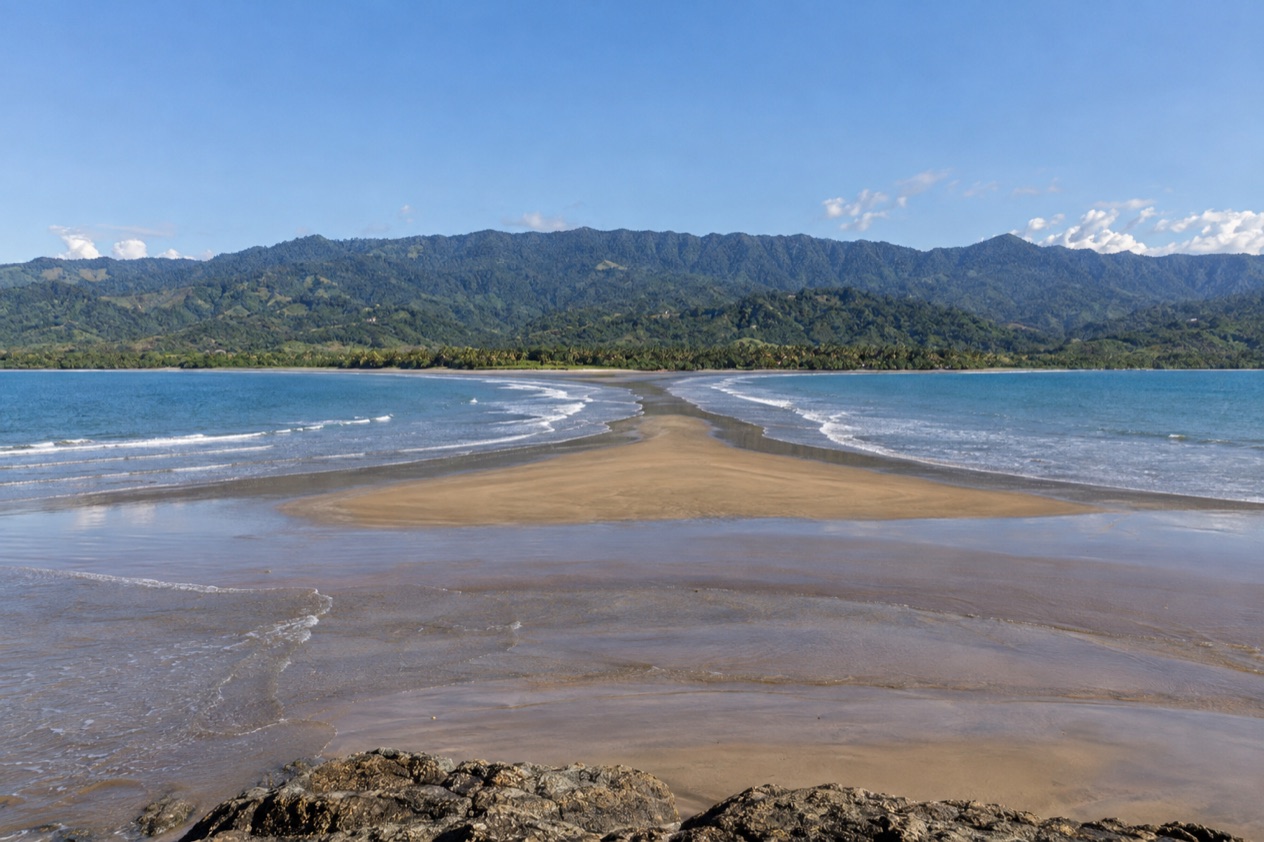
Early on an April morning in Uvita, the light comes up over the rainforest hills and the first scarlet macaws cross the sky, squawking as they go. When low tide arrives at Marino Ballena, the sand spreads into a whale’s tail shape, and barefoot families stroll along its two curved arms. April brings short showers between sunnier stretches as the green season begins, with whales still possible offshore, warm water and a coast that is changing color by the week.
What is the weather like in Uvita in April?
April in Uvita is hot, humid and increasingly wet, with sunny mornings giving way to heavy showers later in the day. It is the month when the rainy season takes hold, so rain shows up on most days as short showers or a wetter spell, even if it rarely lasts from dawn to dusk.
| Month | Average high (°F) | Average low (°F) | Rain days | Sea (°F) |
|---|---|---|---|---|
| March | 84.1 | 73.4 | 15.3 | 87.4 |
| April | 83.1 | 73.6 | 23.3 | 87.8 |
| May | 81.9 | 73.8 | 29.7 | 87.7 |
The day’s finest hours come before noon. Breakfast comes with air that is warm already, a bright sun, and hillsides giving off a soft steam, so this is when to take beach walks, go hiking, or do anything that calls for open sky. Clouds usually build over the mountains by midday, and the rain tends to arrive in the afternoon, sometimes as a short downpour and sometimes as a long, steady soak that turns the dirt roads slick.
Evenings stay warm enough for shorts and an open-air dinner, though the humidity means you will feel sticky once the sun goes down. Nights are not cool, so a fan or air conditioning matters for sleeping. A light rain jacket is more useful than an umbrella, and quick-drying clothes beat cotton that never quite dries.
The light is a pleasure in April. Days run a bit over twelve hours, and after a storm clears, the sky often turns a washed gold over the water. The sea stays very warm all month, so a rainy afternoon never makes the ocean feel cold.
Can you swim in Uvita in April?
Yes, the sea is warm enough that you can stay in as long as you like, with water temperatures that feel like a bathtub rather than a plunge. Warmth is not the same as safety, though, and the Pacific here has real power.
The beaches around Uvita open onto the open Pacific, so waves and currents can change from one day to the next. Rip currents prove deadly year after year, killing multiple U.S. tourists, but lifeguards and unsafe-condition warnings are missing at most beaches.
Ask locally about the day’s conditions, watch how the water moves before you go in, and keep to shallow water if the surf looks heavy. Where flags or lifeguards are present, follow them.
At Marino Ballena, watch how the water moves before you go in, and keep to shallow water if the surf looks heavy. Snorkelers often head out by boat to the rocky areas offshore, where fish can be seen when the water is clear, though rain runoff sometimes clouds it. Bring a rash guard, sunscreen and water shoes for the rocks, and leave valuables off the sand.
What to do in Uvita in April
April has two rhythms here. Early in the month, and in whatever week Holy Week falls, Costa Rican families pour onto the beaches, and the town feels like a holiday. Later, as the rains build, the crowds thin and the jungle turns lush, with waterfalls running and the hills a deep green.
Holy Week moves every year. Holy Thursday and Good Friday are national holidays, most businesses close, and Costa Rican families fill the beaches. April 11 is Juan Santamaria Day, also a national holiday. Expect picnics on the sand, music from parked cars and long lunches of grilled fish, rice and beans at beachside sodas.
Marino Ballena National Park and the whale’s tail
The park is what brings most people to Uvita. When the tide is low, a sandbar arcs into the ocean like a whale’s tail, and you can stroll along it with water washing against both sides. The park stretches along the coast, with several beach sectors and a mix of sand, rock and forest behind.
Go in the morning, when the light is clear and the air is cooler, and plan your walk around the tide. The tail is only fully visible when the water is low, so ask at your lodging for the day’s timing.
It suits almost everyone, from families with small children to photographers chasing the curve of the sandbar. Bring a hat, water and sandals you do not mind getting wet, and stay clear of the surf on the open side.
Whale watching at the end of the season
April falls at the end of the first humpback whale season, which runs roughly from December to April. You may see breaching, tail slaps or a mother and calf drifting close to the coast. Dolphins are also often seen on these outings, which makes the trip worthwhile even on a quiet day for whales.
Pick a morning outing, bring a light layer for the wind and sunscreen for the glare. If you are prone to seasickness, take precautions before boarding, because the swell can be lively.
Waterfalls, jungle and birds
Inland from the coast, the hills behind Uvita hold waterfalls, forest trails and farms that welcome visitors. April’s rain brings the falls back to life, and the forest is loud with birds and insects. Scarlet macaws, toucans and tanagers are common sights for those who go early with a guide.
Trails turn muddy fast, so wear shoes with grip and start in the morning before the afternoon showers. Rivers can rise quickly after heavy rain, so stay out of swollen water and follow the advice of local guides. Guided walks are the usual way to see wildlife, and they also help you find the best spots.
In town again, little eateries offer casado, a plate of rice, beans, salad and plantains with fish, chicken or beef to pick from, plus chilled fruit beverages known as frescos. Try the fresh fish, often grilled with garlic, and finish with a coffee grown in the southern highlands.
A two-day itinerary for Uvita in April
Day 1 is for the park. Start early, when the air is warm but not yet heavy, and head to Marino Ballena at low tide if you can, walking the whale’s tail while the sky is clear. Take a dip or splash around in the shallow water, then eat a late breakfast of gallo pinto, the rice and beans combo, at a little soda close to the entrance.
By midday, the heat builds, so take a long lunch in the shade with fresh fish and a cold fresco. In the afternoon, clouds usually roll in, and this is the moment for a rest or a slow wander through the shops and cafes in town. If the rain starts, linger over coffee or visit a chocolate or craft shop and wait it out.
After a storm, the sunset sky can turn orange and pink. Grab dinner at a restaurant without walls, choosing grilled fish or rice with shrimp, then get to bed early.
Pick a morning whale-watching outing, then return by late morning, shower off the salt and eat lunch in town.
Choose a guided walk so you can spot birds and frogs, and keep a rain jacket in your daypack. If the weather turns hard, switch to a farm tour, a cooking class or a long, slow meal at a restaurant with a roof.
End the day with a quiet dinner and an early night. End the day with a quiet dinner and an early night.
Is Uvita busy in April?
It depends on the week, because April is a month of two moods. When Holy Week falls in April, Uvita fills with Costa Rican families, beach days get crowded and rooms tighten up. Outside that week, the town is calmer, and as the rains build, it feels increasingly quiet.
Holy Thursday and Good Friday are national holidays, most businesses close, and families fill the beaches. April 11, Juan Santamaria Day, also brings a long weekend feel. During these days, beach parking is scarce, restaurants run full and some shops keep short hours.
Book rooms and rental cars early for the holiday week, and expect a more relaxed pace in the other weeks, when you can often find a place a little closer to your date. Tables at popular restaurants fill up on holiday evenings, so go early or reserve if you have a favorite.
During busy weeks, book whale-watching boats and guided tours ahead. In quieter weeks, you can usually arrange them locally. Before your visit, check Marino Ballena National Park’s official page for its current entry and reservation rules.
What to pack for Uvita in April
Pack for heat, humidity and sudden rain, with clothes that dry fast and shoes that grip wet ground.
- A light rain jacket, because afternoon downpours are common.
- Quick-drying shorts and shirts, since cotton stays damp in the humidity.
- Sunscreen and a hat for bright mornings on the sand.
- For slippery paths and tide pools full of rocks, bring sturdy sandals or shoes made for water.
- Closed shoes with grip for muddy forest paths.
- A dry bag for phones and cameras on boat trips and in storms.
- Insect repellent for the forest and evenings.
Good to know before you go
The U.S. State Department rates Costa Rica Level 2, ‘Exercise increased caution,’ due to crime; it says petty crime is common throughout Costa Rica and that violent crime also affects tourists, including armed robbery, homicide and sexual assault.
April sits at the edge of the green season, so plan around the rain by doing outdoor things in the morning and keeping afternoons flexible. If Holy Week falls in April, expect closures on Holy Thursday and Good Friday, and book lodging and transport well ahead.
Roads to some beaches and hillside lodges can be slick after heavy rain, so allow extra time getting around. On this coast, rip currents pose a genuine danger, and lifeguards are absent from most beaches.
Uvita in April vs March and May
March is drier, with more sunshine and fewer afternoon storms, and the sea is just a touch cooler. It is the better choice for anyone who wants long beach days and clear skies, and whale season is still in full swing. The trade-off is a busier coast, especially if Holy Week lands in March.
May brings far more rain, falling on the majority of days, and turns the surroundings a rich, vivid green. Crowds thin, the whales have mostly moved on, and the mood is quiet and lush. Waterfalls and rivers run strong, though some trails and roads become harder going.
Choose March if sun and whales matter most, and April if you want a balance of warm water, some whale chances and fewer people. Pick May if you prefer quiet, green scenery and do not mind rain shaping your days.
Is April a good time to visit Uvita?
Yes, April is a good time for travelers who like warm water, a lush landscape and the chance of a late whale sighting, and who can live with afternoon rain. It suits couples, families and nature lovers who plan their outdoor time for the morning.
It is less ideal for anyone who wants guaranteed sun all day or a strictly dry beach week. If you are sensitive to humidity or to heavy rain, another month will suit you better.
On arrival, check the tide for Marino Ballena and plan your first morning around it, since the whale’s tail is the signature sight. Then arrange a boat trip or guided walk while the weather is still cooperative. What makes April special here is the turning of the seasons: the last whales of the first season, the first big rains greening the hills, and a sandbar shaped like a tail that appears and vanishes with the tide.
Sources
- Open-Meteo / ECMWF ERA5, normals 1991-2020 computed for the grid cell at 9.1561N 83.7347W, checked October 8, 2026
- Open-Meteo Marine API, average 2015-2024, checked October 8, 2026
- sunrise-sunset.org, sunrise and sunset calculated for the 15th of the month, checked October 8, 2026
- U.S. Department of State, Costa Rica Travel Information, Safety and security (https://travel.state.gov/content/travel/en/international-travel/International-Travel-Country-Information-Pages/CostaRica.html), checked October 8, 2026
- U.S. Department of State, Costa Rica Travel Advisory, issued April 1, 2026 (https://travel.state.gov/content/travel/en/traveladvisories/traveladvisories/costa-rica-travel-advisory.html), read via the State Department open data API on October 8, 2026