
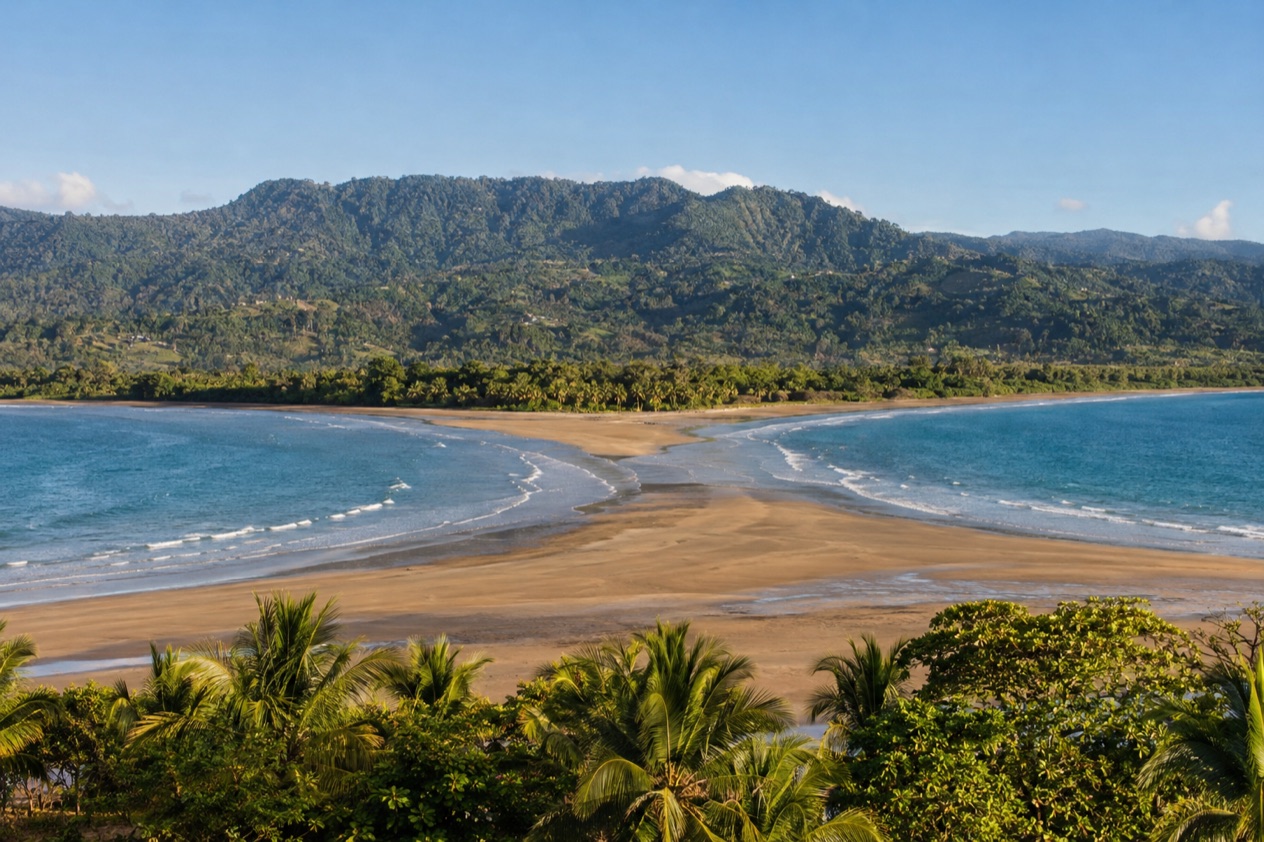
Early on a January morning in Uvita, the road to the beach is quiet except for toucans calling from the almond trees and a few surfers carrying boards toward the sand. Out past the surf line, a humpback may slap the water, and the sandbar at Marino Ballena slowly emerges in the shape of a whale’s tail. This is the south Pacific coast of Costa Rica in the dry season, with school vacation crowds, warm sea and whale season under way.
What is the weather like in Uvita in January?
January in Uvita is hot, humid and green, with short showers that still come on most days but grow less frequent as a drier stretch takes hold. The table puts the month between a wetter December and a drier February.
| Month | Average high (°F) | Average low (°F) | Rain days | Sea (°F) |
|---|---|---|---|---|
| December | 81.2 | 71.6 | 25.3 | 84.5 |
| January | 82.1 | 71.4 | 18.6 | 85.8 |
| February | 83.4 | 72.2 | 12.9 | 87.0 |
Mornings are the best part of the day. The air is soft, the light is clear and the forest behind town is loud with birds, so that is the time for walking beaches, trails and anything in the sun. By early afternoon the heat builds and clouds often pile up over the mountains behind the coast.
Rain in January usually arrives as a shower or a passing storm, most often in the afternoon or evening, and it can be heavy while it lasts. Some days stay dry from start to finish, and others bring a gray, drizzly stretch. It is a dry-season month, but showers are still possible, so plan the outdoor hours for the morning and leave the afternoon flexible.
Evenings stay warm enough for shorts and sandals, and you can eat outside without a layer. Pack for sweat and sudden rain rather than for cool air. Daylight is steady and the sun sets early in the evening, so dinner plans start around dusk.
Can you swim in Uvita in January?
Yes, the sea is warm enough for long swims, and you will not need a wetsuit for snorkeling or for surfing. Water that warm feels more like a tepid bath than a refreshment, and it is easy to stay in for a long while.
The beaches around Uvita face open Pacific swell, so waves are usually present and sometimes large. Several U.S. tourists drown each year because rip currents are so dangerous, and at most beaches you will find no lifeguards and no warnings about unsafe conditions. Before you head in, check with a surf school or the hotel about how the water looks that day, spend a few minutes studying the waves, and use the shoreline as a spot for wading, floating or playing.
Marino Ballena’s long beach draws many visitors, but rip currents are dangerous and most beaches have no lifeguards or warnings about unsafe conditions. Surfers head to the beaches toward Dominical, where the breaks are steadier. Bring a rash guard, water shoes for the rocky patches and plenty of sunscreen, because the January sun is strong even under cloud.
What to do in Uvita in January
The big natural event of the month is the humpback whale season. These whales visit this coast two times each year, about December through April and then about July through October, and January falls within that first window. You may see them from boats, from the shore or from a hillside lookout, but sightings are never guaranteed.
The month also brings the holiday mood. New Year’s Day on January 1 is a national holiday, and Costa Rican schools are on their long summer break from December into early February, so families fill the beaches, seaside sodas and small hotels.
In Guanacaste, far to the north, the Fiestas Civicas of Santa Cruz fill that town in mid-January with bull-riding, parades and street food. Uvita itself is a quieter, outdoorsy place without a big civic festival.
Marino Ballena National Park and the whale’s tail
The park is the reason most people come. At low tide the sandbar at Punta Uvita stretches into the sea in the shape of a whale’s tail, and you can walk out along it with water lapping on both sides. It is a gentle, photogenic stroll, with sand, shells and pelicans, and the views back toward the forested hills are pretty.
The best moment is the morning, before the heat and the afternoon clouds. Families, couples and casual walkers all enjoy it, but it is open to sun and wind, so bring a hat and water. Since park rules, entry arrangements, and hours can change, look at the park’s official page before you head out.
Whale-watching boat trips
Boat tours are how most visitors see humpbacks up close, and January is part of the first whale season. Small boats go out from the coast near Uvita in the morning, when the sea tends to be flatter, and the trips often pass the park’s rocky islets, where birds nest and the water can be clear for a look at the fish.
You may see a mother and calf, a breach or a tail slap, or you may only see spouts in the distance. That is the nature of wildlife. The boats suit most travelers who are comfortable on the water, and a hat, sunscreen and a light shirt are the useful things to bring along. Seasickness tablets help if you are prone to it.
Beaches, forest and waterfalls around town
Away from the park, Uvita has quieter corners. Playa Colonia and the beaches north of town are popular with surfers and walkers, and the hills behind have trails and viewpoints where the Pacific spreads out below. Dominical, a short hop up the coast, has surf breaks, craft stalls and a relaxed beach-town feel for an easy afternoon.
Rain in January makes the forest bright green and the rivers fuller, and it can bring slippery trails and muddy paths in the afternoon. Go early, wear shoes with a grip and carry a light rain jacket. Waterfall visits are a classic in this region, but check the local conditions and the rules for any water before you plan on getting in.
At the table, expect the country’s everyday plates. A casado is a plate of rice, beans, salad, plantains and a protein, gallo pinto is rice and beans for breakfast, and ceviche is a staple near the water. Cold coconut water (pipa fria) and fruit shakes made with local fruit are the right drinks for the heat. Small seaside sodas and open-air restaurants are the usual places to try them.
A two-day itinerary for Uvita in January
Day 1 begins early at Marino Ballena National Park, while the air is cool, the light is soft and the sandbar is most striking if the tide cooperates. Walk the sand, look for birds along the shoreline and take a swim in the shallows if the water looks gentle. Lunch is a casado at a simple soda in town, and by early afternoon you are ready for a rest out of the sun.
Afternoon showers are common, so keep that window loose. If it rains, a long lunch, a cacao or coffee tour in the hills, or a quiet hour at a café will fill the time well. When the clouds break, head to a west-facing beach for sunset. Daylight lasts about 11 hours 41 minutes on January 15, so dusk arrives in the early evening and dinner follows on the coast.
Day 2 starts on the water with a whale-watching tour, since the sea is usually at its flattest in the morning. You may see humpbacks, dolphins or seabirds. Head up the coast to Dominical for lunch, a browse through the craft stalls and a look at the surfers on the beach.
In the afternoon, take a forest walk or settle into a hammock and watch the clouds roll in. If the rain starts, shift to a café or a roadside restaurant with a roof and a view. End the evening with grilled fish or a plate of rice and beans at a family-run place in town, and turn in early.
Is Uvita busy in January?
Yes, it is one of the livelier months, though the town never turns into a crowd scene. Costa Rican schools are on their long summer break from December into early February, and New Year’s Day is a national holiday, so domestic families join the foreign visitors who come for the whales and the drier weather.
What fills first are the beachfront rooms, the small hotels with pools and the whale-watching boats. Restaurants are busiest at dinner, and the road along the coast carries more traffic on weekends and holiday days. The trails and the quieter beaches stay calm, especially early in the morning.
Book rooms and rental cars early if your trip falls around New Year’s Day and the first weeks of the month, since those are the holiday weeks. Later in the month you can book a bit closer to the date, though the good places still go quickly. Boat tours are worth reserving a few days ahead. For the park, check its official page for any rules about entry, since they change.
What to pack for Uvita in January
Pack for heat, humidity and an afternoon shower, with a few things for the water and the trails.
- Light, quick-drying clothes, because the air is warm and sticky.
- A light rain jacket or small umbrella for the afternoon showers.
- Sunscreen, a hat and sunglasses for the strong sun on the beach and boat.
- Water shoes or sandals with a grip for rocky shores and wet trails.
- A rash guard or swim shirt for snorkeling, surfing and long days in the sun.
- Insect repellent for the forest and the evenings.
- A dry bag for your phone and camera on boat trips.
Good to know before you go
The U.S. State Department rates Costa Rica Level 2, ‘Exercise increased caution,’ due to crime; it says petty crime is common throughout Costa Rica and that violent crime also affects tourists, including armed robbery, homicide and sexual assault.
January is a busy month for domestic travel, so rooms and cars go first around New Year’s Day and the first weeks. Roads along the coast can be slow, and afternoon rain can make mountain roads slick, so plan longer drives for the morning.
Beaches here usually have no lifeguards, so treat the water with care and talk to locals about the day’s conditions. Bring your passport, and keep in mind that Costa Rica requires proof of onward travel or a return ticket.
Uvita in January vs December and February
Going four weeks earlier puts you in December, the wettest of the three months, with rain falling more days and the forest soaked through. Whale season has just begun, the holiday crowds peak around Christmas and New Year’s, and rooms tend to be tight. The sea is a little cooler, and the season has a festive, lively feel.
Going four weeks later puts you in February, which is drier, hotter and brighter. Showers become less frequent, the sea warms further and whales are still in the area, though the best time to see them can vary. School vacation ends early in the month, so the beaches begin to thin out and rooms get easier to find.
If you want the greenest forest and the holiday spirit, December suits you. If you want the most sun and the quietest beaches, February is the pick. January sits in the middle, with enough sun for the sandbar walk and enough showers to keep the hills lush, and it is a sensible choice for travelers tied to school vacation weeks.
Is January a good time to visit Uvita?
Yes, it suits travelers who love the outdoors, want warm water and hope to see humpback whales, and who do not mind a shower or two in the afternoon. Families on school break, couples looking for a beach and nature trip, and surfers will all find plenty to do.
It suits less well anyone who wants guaranteed dry days, empty beaches or the lowest rates on rooms. If that is you, a later month may fit better. Show up with some flexibility, plan your outdoor time for the mornings and keep the afternoons loose for a swim, a rest or a rain delay.
On arrival, settle into town, look at the tide, and check Marino Ballena’s official SINAC listing for current entry arrangements before visiting. What makes January in Uvita special is the mix of warm sea, green hills and whales surfacing offshore, a combination that is hard to find anywhere else on the coast.
Sources
- Open-Meteo / ECMWF ERA5, normals 1991-2020 computed for the grid cell at 9.1561N 83.7347W, checked October 8, 2026
- Open-Meteo Marine API, average 2015-2024, checked October 8, 2026
- sunrise-sunset.org, sunrise and sunset calculated for the 15th of the month, checked October 8, 2026
- U.S. Department of State, Costa Rica Travel Information, Safety and security (https://travel.state.gov/content/travel/en/international-travel/International-Travel-Country-Information-Pages/CostaRica.html), checked October 8, 2026
- U.S. Department of State, Costa Rica Travel Advisory, issued April 1, 2026 (https://travel.state.gov/content/travel/en/traveladvisories/traveladvisories/costa-rica-travel-advisory.html), read via the State Department open data API on October 8, 2026
- U.S. Department of State, Costa Rica Travel Information, Entry and exit requirements (https://travel.state.gov/content/travel/en/international-travel/International-Travel-Country-Information-Pages/CostaRica.html), checked October 8, 2026
To plan your stay
- Things to Do in Uvita: Whale-Tail Beach, Whale Watching, Waterfalls and Where to Eat
- Best Time to Visit Uvita: Dry Season, Whale Seasons, Weather and Festivals
- Uvita in February: Envision Festival, Marino Ballena Beaches and a Two-Day Plan
- Uvita in December: Weather, Marino Ballena Beaches and What to Do