
In Uvita, just after dawn, the jungle past the highway rises with mist from the rain overnight, toucans cry out from the almond trees, and the earliest fishing boats have already cleared the surf line. Somewhere beyond them, a humpback may roll up and blow.
July is when the whales return to this stretch of the southern Pacific coast, and the town feels green, loose and a little wet. It suits travelers who like rainforest, a warm sea and wildlife more than guaranteed sunshine.
What is the weather like in Uvita in July?
July in Uvita is warm, humid and wet: a green-season month with mornings that are often bright and afternoons that frequently turn gray and rainy.
| Month | Average high (°F) | Average low (°F) | Rain days | Sea (°F) |
|---|---|---|---|---|
| June | 81.5 | 73.5 | 29.4 | 85.8 |
| July | 81.0 | 72.9 | 30.8 | 85.3 |
| August | 81.0 | 72.8 | 30.7 | 85.6 |
The heat is steady rather than fierce. Mornings start soft and sticky, and the best hours for walking, birding and beach time come before the clouds build over the mountains behind town.
By early afternoon the sky often darkens, and the rain arrives as a heavy downpour that can last an hour or settle in for the evening. Some days stay dry until dusk, others are gray from lunch on, so plan the outdoor part of the day early.
Nights are warm enough that you will rarely want more than a thin layer, though the air stays damp and laundry dries slowly. The light is lovely in the gaps between showers: washed greens, silver water, and low clouds hanging on the ridges.
Rain falls over the whole coast and the hills, and the rivers run brown after a hard storm. Daylight lasts about twelve and a half hours in mid-July, which gives you a full morning and a long, cloudy evening.
Dress for sweat first and rain second. Quick-drying shirts, a light rain jacket and sandals that can get soaked work better than anything heavy. A good dry bag keeps your phone and camera alive when a storm catches you on the sand.
Can you swim in Uvita in July?
The ocean stays warm in July, but open Pacific swell and strong rip currents mean the water is not always easy.
Warm water does not mean easy water. Open Pacific swell meets the beaches near Uvita, where waves may run large and rip currents are strong along plenty of stretches.
Most beaches here have no lifeguards or warning systems, and rip currents are a serious danger that kill several U.S. tourists every year. If you are not a confident swimmer, stay in shallow water, ask at your lodging about that day’s conditions, and look for flags where they exist.
Families with small children usually do best splashing at the water’s edge and building sandcastles on the wide, dark sand, rather than going deep. Experienced swimmers and surfers will find more to enjoy, especially on the beaches to the south that catch bigger waves.
Rain can cloud the water near river mouths after a storm. Bring a rash guard for the sun on cloudy days, a mask if you want to try snorkeling on calmer days, and a bag for wet gear.
What to do in Uvita in July
The big event of the month is not a festival but an arrival. Twice each year, humpback whales come to this coast, and the second of those seasons starts near July and lasts until roughly October, which is among the longest stretches for watching whales found anywhere.
Whales visit this coast from roughly July to October, but sightings are never guaranteed. Whales are a chance, never a promise, and some trips return with only dolphins, boobies and a good story.
The calendar adds two local touches. School in Costa Rica takes a mid-year break in July, so Costa Rican families fill the beaches and the small restaurants, and July 25, the Annexation of the Partido de Nicoya, is a national holiday that brings a long weekend feel to the coast. Expect music from the sodas and bars, kids on boogie boards, and fried fish being passed around under tin roofs.
Food leans toward the sea and the garden. Look for a whole fried fish with patacones, ceviche with plenty of lime, and the day’s casado, the rice, beans, salad, plantain and choice of meat or fish that every soda serves. A cold fruit smoothie or a coconut from a roadside stand is the right answer to a humid morning.
Marino Ballena National Park and the Whale’s Tail
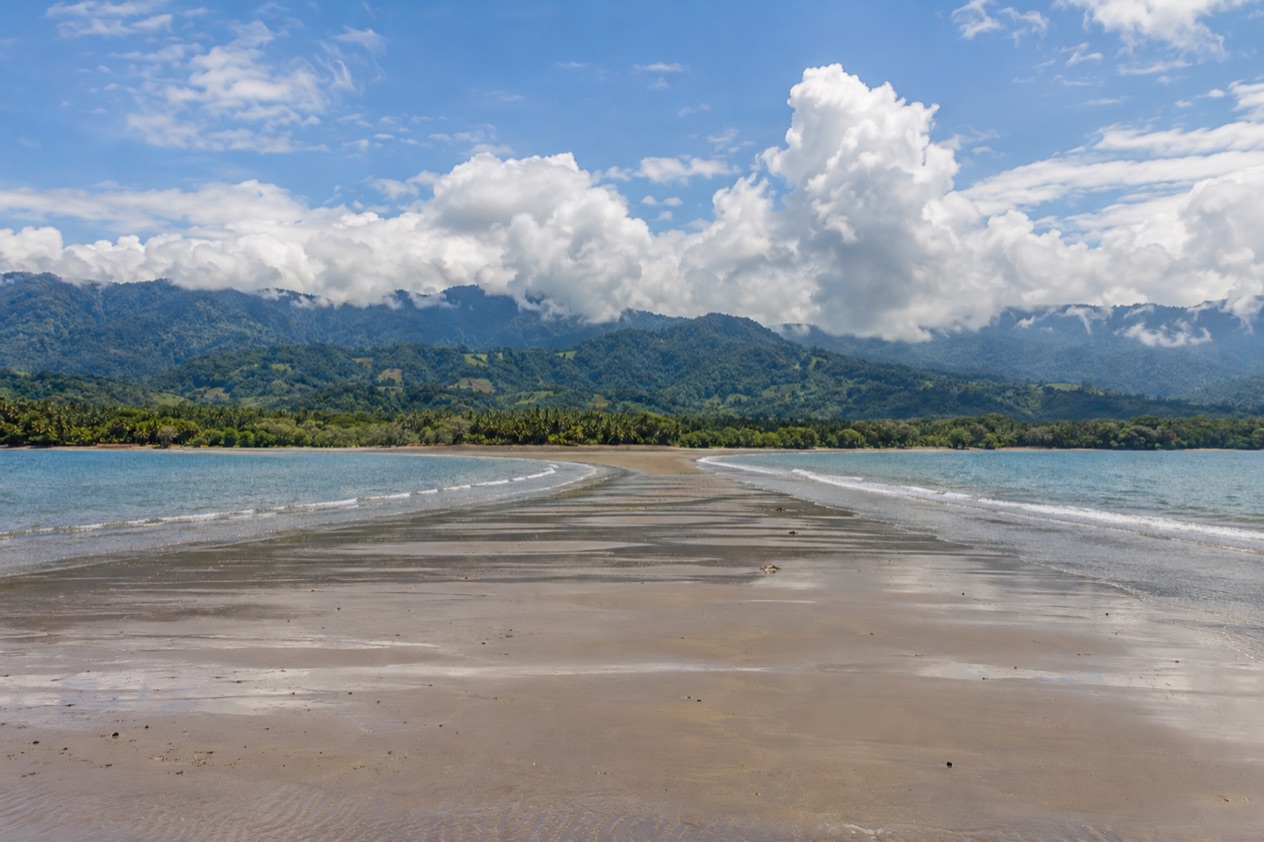
Most visitors come here for the park. At low tide the main beach’s sandbar takes the shape of a whale’s tail, two tips of sand and rock stretching out into the surf.
You see the shape best from a bit of height or from the water, and it is easiest to read when the tide is low and the light is clear. In July, a morning visit gives you the best chance of dry weather and thinner crowds.
Beyond the tail, the park holds quiet stretches of beach backed by forest, where you may hear howler monkeys and see frigatebirds and pelicans overhead. Rain can arrive quickly, so keep your things in a dry bag.
Whale-watching boats and the sea
A whale-watching trip is the way most visitors meet the humpbacks. Most mornings, when the water lies calmer, boats set out from the coast by Bahia Ballena and Uvita and make for open water past the park. You may see mothers with calves, tail slaps, or a breaching whale, along with spotted dolphins riding the bow wave.
The swell can be lively in July, so people prone to seasickness should take precautions and sit toward the middle of the boat. Bring a hat, sunscreen and a rain layer, and keep your camera in a bag until the captain slows down. Sightings are never guaranteed, but the long season gives you a fair chance.
Waterfalls, forest and birds in the green season
July is a fine month for the inland side of Uvita. The hills behind town are loud with birds, and the Nauyaca waterfalls near Dominical draw many visitors for their two-tiered drop through the forest. After rain the falls run full and the trails can be slick, so go in the morning and wear shoes with grip.
A guided walk through lowland forest is the best way to see sloths, toucans, trogons and the occasional coati, and guides know where animals shelter during a shower. When the rain sets in for the day, settle under a covered terrace and watch the storm pass over the palms.
A two-day itinerary for Uvita in July
Day 1 is for the park and the sea. Visit Marino Ballena at low tide, when the whale’s tail appears. Have breakfast at a small bakery or soda in town, with gallo pinto and eggs, then join a morning whale-watching trip, when the water tends to be calmer.
Eat a late lunch of fresh fish at a beachside restaurant, then rest through the hottest and wettest part of the afternoon. If the sky holds, take a short swim near the shore, staying where the waves are gentle and keeping an eye on the water. As the light fades, find a spot to watch the sun drop into the Pacific, then have dinner at a family restaurant in town.
If it pours, trade the beach for a chocolate or coffee tasting at a nearby farm, or sit with a book under a covered terrace and let the storm roll through. Day 2 heads inland. Leave early for a waterfall hike through the hills, when the trail is cooler and the birds are most active, and bring a dry bag and good shoes. On your return, pull over for a smoothie by the road or a fruit stand, then eat lunch at a soda and order a casado or rice and beans.
In the afternoon, visit a botanical garden, a small wildlife project or a craft shop in town while the rain comes and goes. Late in the day, if the sky clears, walk a quiet beach for the golden hour and look for scarlet macaws in the almond trees. Finish with a relaxed dinner and an early night, since July mornings reward the early riser.
Is Uvita busy in July?
Uvita is moderately busy in July, with a mix of Costa Rican families, whale-watchers and travelers who like the green season.
The mid-year school break sends domestic travelers to the coast, and the July 25 holiday can make beaches and small restaurants busier. International visitors come for the whales, but the numbers are well below the dry-season peak around Christmas and the new year. The beaches are rarely crowded, though the best-known stretches are livelier at midday on weekends and holidays.
Rooms are generally easier to find than in the season with more rain, but the break weeks and the holiday weekend are the ones to book early, especially for small lodges close to the park. Quieter weeks are fine to book later.
The rest of the month is calm. Mornings on the trails and at the park are quiet, the town is relaxed, and the afternoon rain keeps a lot of people indoors. If you want a slower trip with fewer tour groups, the first and last weeks of July are the easiest.
What to pack for Uvita in July
Pack light, quick-drying clothes and plan for rain every day, since a wet afternoon is more likely than not.
- A light rain jacket, because showers arrive fast and often.
- Quick-drying shirts and shorts, since the air stays humid and clothes dry slowly.
- Sandals that can get wet and shoes with grip for muddy waterfall trails.
- A dry bag, to protect your phone and camera on the boat and the beach.
- Sunscreen and a hat, as cloud cover still lets the sun through.
- Binoculars, for whales offshore and birds in the canopy.
- Bug spray, for evenings and time in the forest.
Good to know before you go
The U.S. State Department rates Costa Rica Level 2, ‘Exercise increased caution,’ due to crime; it says petty crime is common throughout Costa Rica and that violent crime also affects tourists, including armed robbery, homicide and sexual assault.
July is part of the green season, so the forecast is a mix of sun and showers, and roads to waterfalls and farms can turn muddy after heavy rain. Build slack into your days, keep the first half of the day for outdoor plans, and leave flexible time for the afternoon. The holiday weekend on July 25 can mean busy roads and crowded beaches, so allow extra time if you are moving between towns.
The sea needs respect whatever the weather. Most beaches have no lifeguards, rip currents are common, and the best protection is to stay in shallow water, watch the waves before you go in, and follow any flags you see.
Uvita in July vs June and August
Moving the trip to June gives you a slightly drier feel, with a bit more sunshine between the showers. The whales are mostly absent, since the second season has not yet started, and the school break has not begun, so the beaches and lodges are quieter. It is a good choice if you care more about forest, waterfalls and a calm pace than about whales.
August brings more rain and a deeper green, with the whale season well underway. Sightings tend to be more reliable than in early July, and the mid-year family rush has ended, so rooms and boats are easier to find. The sea stays warm, the surf can be lively, and the evenings are often wet.
Choose July if you want the start of the whale season and a festive, family feel around the holiday weekend. Choose June for quiet and a little more sun, and August for better whale odds and calmer crowds, as long as you can live with more rain.
Is July a good time to visit Uvita?
Yes, July is a good time to visit Uvita for travelers who love wildlife, green landscapes and a warm sea, and who are happy to plan around the afternoon rain.
It will suit whale lovers, birders, hikers and families who enjoy a lively beach town, as well as anyone who prefers lush forest to dry-season dust. Travelers seeking a dependably sunny week at the beach, those put off by damp air, or anyone uneasy about big ocean swells and rip currents may find it a poorer fit.
On arrival, plan the park and the whale boat first, since those are the mornings when the weather is most helpful and the sea is most forgiving. After that, let the rain set the pace, with waterfalls, farm visits and long meals filling the gaps. What makes July special in Uvita is the moment the humpbacks come back: a warm, rain-washed coast where a spout on the horizon can turn an ordinary morning into the best part of the trip.
Sources
- Open-Meteo / ECMWF ERA5, normals 1991-2020 computed for the grid cell at 9.1561N 83.7347W, checked October 8, 2026
- Open-Meteo Marine API, average 2015-2024, checked October 8, 2026
- sunrise-sunset.org, sunrise and sunset calculated for the 15th of the month, checked October 8, 2026
- U.S. Department of State, Costa Rica Travel Information, Safety and security (https://travel.state.gov/content/travel/en/international-travel/International-Travel-Country-Information-Pages/CostaRica.html), checked October 8, 2026
- U.S. Department of State, Costa Rica Travel Advisory, issued April 1, 2026 (https://travel.state.gov/content/travel/en/traveladvisories/traveladvisories/costa-rica-travel-advisory.html), read via the State Department open data API on October 8, 2026