
On a December evening in Hope Town, the harbor fills with masts and the cottages along the water light up with strings of Christmas bulbs. In July the same harbor is hot and bright, full of boats and the smell of fried conch.
The Abacos, a chain of cays strung along the north of the Bahamas, change character with the calendar. Each season suits a different kind of trip, from sailing weeks to quiet winter walks.
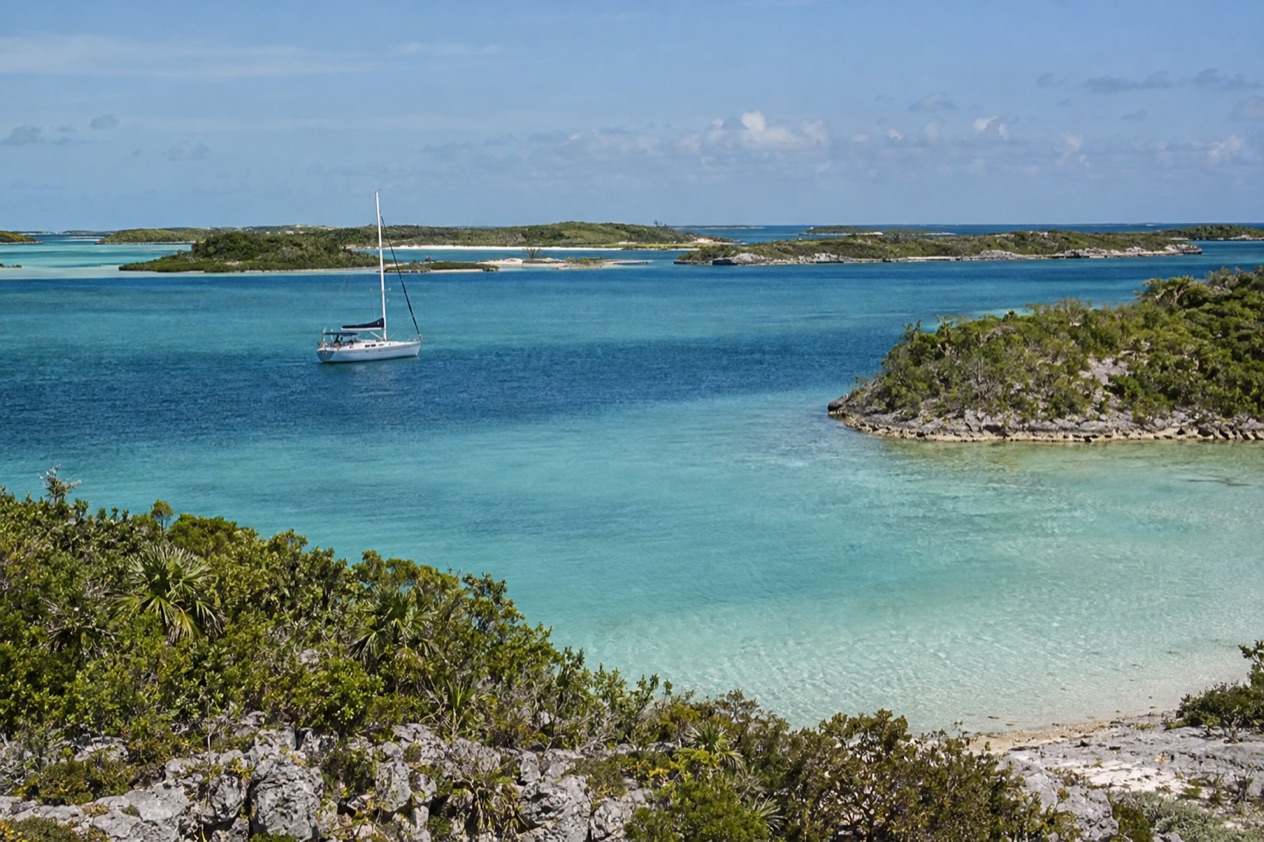
When is the best time to visit the Abacos?
The best time for most travelers is spring, from March through May, with late November to early December a close second for people who want quiet. The air is warm without being heavy, the sea is warming up, and the hurricane season has not started yet or has just ended.
For beach and sea days, May through October gives the warmest water, and June to September is when the boating season is in full swing. The trade-off is the heat and the rain, which come in stormy afternoons rather than gray weeks. For sightseeing on foot, such as the lanes of Hope Town, the clapboard houses of Green Turtle Cay and the climb up the Hope Town Lighthouse, the cooler months of December through April are easier on the legs.
For quiet and a lighter crowd, aim for the weeks after the summer rush and before the winter season gets going, roughly late September to mid-November, though that stretch sits inside the Atlantic hurricane season. Late spring, before school lets out, is another calm window. Couples who want waterfront dinners and bike rides through town tend to be happiest in the cooler, brighter months.
Families should know that March is spring break season for American students, and the cays feel livelier then, especially around the marinas and the busiest beaches. Summer suits children out of school who love boats, shallow water and sandy picnics, as long as everyone is ready for hot afternoons. A late-spring trip, after the March rush and before the summer heat, often balances both.
The Abacos weather by month
The sea around Marsh Harbour moves from cool in winter to bathwater in late summer, and the days stretch and shrink by almost three and a half hours.
| Month | Sea at the Abacos (°F) | Daylight on the 15th |
|---|---|---|
| January | 77.3 | 10 h 42 min |
| February | 76.1 | 11 h 19 min |
| March | 76.6 | 12 h 03 min |
| April | 77.2 | 12 h 51 min |
| May | 80.4 | 13 h 30 min |
| June | 83.5 | 13 h 51 min |
| July | 86.5 | 13 h 41 min |
| August | 86.7 | 13 h 06 min |
| September | 86.1 | 12 h 20 min |
| October | 83.9 | 11 h 34 min |
| November | 80.8 | 10 h 53 min |
| December | 78.2 | 10 h 32 min |
In Nassau, highs go from the high 70s in winter to the low 90s in August, and rain falls on a handful of days a month in winter against about two weeks in late summer. The two seasons rain differently. Winter brings short showers and the odd gray, breezy day after a cold front, while summer rain tends to arrive as heavy downpours and thunderstorms that blow through and clear.
The sea does most of the talking for travelers. It stays pleasantly mild through winter, warms quickly in May, and holds a very warm plateau from July to September. The light follows the same arc: December afternoons fade early, so dinner plans start sooner, while June evenings stay bright long after supper.
What is there to do in the Abacos in each season?
December to April: cool breezes, long walks and holiday lights
Winter is the season for exploring by foot and bike. In Hope Town you pass colorful cottages, small galleries and beachside cafés, then climb the red-and-white candy-striped lighthouse for a view over the harbor. Cars and golf carts are permitted on the outskirts of town, and the village itself is the only settlement on Elbow Cay, so it keeps an intimate pace.
Tahiti Beach, at the southern tip of Elbow Cay, is soft white sand lined with coconut trees, reached only on foot, by bike or by boat. It makes a good picnic stop on a bright winter afternoon. Waterfront restaurants in Hope Town serve fresh local seafood, and candlelit dinners by the harbor suit the cooler evenings.
Green Turtle Cay rewards a slow day on the same terms: New England–style houses, small shops and restaurants, and beaches to walk. Leave the most intensive sailing and long boat days for the warm months, when the water invites more time on the sea.
May to August: hot water, boat days and regattas
As the sea warms through May and June, the Abacos turn into a boater’s playground. Ferries and private boats link the cays, since Green Turtle Cay, for one, has no airport and can only be reached by ferry or boat from the mainland. Treasure Cay’s large marina hosts seasonal fishing tournaments, and sailing weeks fill the harbors of Hope Town and Marsh Harbour.
Summer is the time to visit Man-O-War Cay, a tiny Loyalist-founded community of a few hundred people where family-owned businesses carry names like Albury. Spend the cooler morning hours ashore and the hot afternoons on or near the water. Thunderstorms often build in late afternoon, so plan indoor stops, such as a café or a harbor-side restaurant, around that time.
September to November: the shoulder months
The sea stays very warm into October and gives way slowly in November, so water days are still on the table. These are also months with fewer visitors and a slower rhythm. Marsh Harbour, the commercial center of the Abacos with the only stop light in the Out Islands, is a calm place to base yourself and run errands.
The trade-off is hurricane season, which runs through the end of November and peaks in the early fall. Travelers who come in these months should keep an eye on forecasts and keep plans flexible. Many visitors settle into Hope Town or Treasure Cay for a few quiet days of reading, walking and eating by the water, leaving the long boat hops for another visit.
When is the Abacos cheapest and least crowded?
The Abacos are quietest in the weeks after the summer vacation rush and before the winter season gets going, roughly from September through much of November, and again in late spring before school lets out. In those windows, the lanes of Hope Town, the marinas and the beach at Tahiti Beach feel more relaxed, and rooms are easier to find.
The busy stretches follow the American calendar. Christmas and New Year bring families and boat owners to the cays, and March fills with spring break travelers. Easter week, which moves each year, is another lively time, and summer, once school is out, keeps the harbors busy with boaters and families. Holiday weeks mean peak-season rates and fuller marinas.
Small places feel crowds quickly. On Elbow Cay or Man-O-War Cay, a few extra boats in the harbor change the mood of the whole village, and a quieter week lets you take the bike lanes, the lighthouse stairs and the waterfront tables at your own pace. If a quiet trip matters most, the shoulder months give you the cays at their calmest, with the trade-off of hurricane season in the early fall.
Which months should you avoid in the Abacos?
If you want certainty about the weather, avoid the peak of hurricane season, roughly mid-August to mid-October. The Atlantic season officially runs from June 1 to November 30, with the peak around September 10, and the Abacos have a history that the Bahamas does not forget: Hurricane Dorian made landfall on Great Abaco Island on September 1, 2019.
Outside those weeks, the main drawbacks are the heat and the rain of summer. From June through September the days are hot, the sea is as warm as it gets, and afternoon storms can interrupt boat plans. Travelers who like to be active outdoors often find the cooler months far more comfortable for walking, biking and climbing the lighthouse.
Winter has its own quirks. A cold front can bring a gray, breezy day with showers, and on those days the cays feel less like a beach destination and more like a place for a long lunch. These spells are short, and they matter much less than a hurricane watch, but they are a reason not to count on every winter day being a beach day.
The Bahamas Ministry of Tourism & Aviation monitors tropical storms and hurricanes in the Atlantic, and travelers are encouraged to check the Bahamas.com hurricane page for updates. If you travel between June and November, treat the forecast as part of the trip.
When can you swim in the Abacos?
The sea around the Abacos is warmest from about June through October, and it stays on the mild side through the rest of the year. May is when the water starts to feel like summer, and by July it has reached its peak, staying very warm into early fall. The coolest months are January and February, when a dip feels refreshing rather than warm.
Beaches change with the seasons. In winter and spring, sand walks and picnics are the main pleasure. Tahiti Beach, for example, has soft white sand lined with coconut trees and arcs out into calm clear water, which makes it a pleasant place to linger in any season. In summer, boat trips and anchored lunches become the way to enjoy the water.
Conditions on any given day depend on wind and weather, and a gray cold-front day in winter or a stormy afternoon in summer can change the plan quickly. Treat the sea table as a guide to temperature, and remember that the best water days often come in the late morning.
Festivals and events in the Abacos through the year
Winter holidays and Junkanoo
Christmas and the days around it are when the cays feel most festive. Harbors and cottages are strung with lights, churches fill, and the small settlements gather for carols and community events. Hope Town and Green Turtle Cay, with their New England–style architecture and waterfront lanes, make an especially pretty backdrop for the season.
Junkanoo, the Bahamian street parade of cowbells, drums, horns and elaborate paper costumes, is traditionally held on December 26 and January 1. You can expect music in the streets and a lively atmosphere in the settlements. If Junkanoo is high on your list, plan to be in the Bahamas for those dates, and expect a livelier, busier trip.
Spring and summer on the water
Boating defines the warm months. Treasure Cay’s marina hosts seasonal fishing tournaments, and sailing events bring fleets into the harbors of Hope Town and Marsh Harbour. If you like to watch boats, an evening on a waterfront terrace during a regatta week is a good way to see the Abacos’ sailing tradition up close.
Bahamian public holidays also shape the summer. Independence Day on July 10 brings music and community gatherings, and Emancipation Day in early August is another time for celebration, though sea conditions change from day to day and from one stretch of shore to another. Dates for local regattas and fishing tournaments change from year to year, so look for them when planning rather than assuming a fixed week.
Nature seasons: parrots, turtles and reefs
Abaco National Park was created in 1994 to protect the northern breeding grounds of the Bahama Parrot, and it covers 20,500 acres. The parrots breed in the warmer months, and birders often plan visits around that season. A morning visit can bring you sights and sounds that are very different from the beaches and harbors.
Green Turtle Cay takes its name from the many green turtles in the area, and you may see turtles when you are out on the water. Farther north, Walker’s Cay is fringed by its own barrier reef, and the surrounding waters host schools of pompano and amberjack, sharks, barracudas, colorful tropical fish, turtles and eagle rays. These are chances, not promises, and the warm months generally offer the most time on the water.
Sources
- Open-Meteo Marine API, average 2015-2024, checked October 10, 2026
- sunrise-sunset.org, sunrise and sunset calculated for the 15th of the month, checked October 10, 2026
- NOAA NCEI, GHCN-Daily station BF000078073 (Nassau Airport), normals 1991-2020 computed from the daily record (https://www.ncei.noaa.gov/access/services/data/v1?dataset=daily-summaries&stations=BF000078073), checked October 10, 2026
- Bahamas Ministry of Tourism, Investments & Aviation (bahamas.com), The Abacos (https://www.bahamas.com/islands/abacos), checked October 10, 2026
- Wikipedia, Abaco Islands (https://en.wikipedia.org/wiki/Abaco_Islands), checked October 10, 2026
- Bahamas National Trust, Abaco National Park (https://bnt.bs/explore/abaco/abaco-national-park/), checked October 10, 2026
- Wikipedia, Hope Town (https://en.wikipedia.org/wiki/Hope_Town), checked October 10, 2026
- Bahamas Ministry of Tourism, Investments & Aviation (bahamas.com), Hope Town (https://www.bahamas.com/natural-wonders/hope-town), checked October 10, 2026
- Bahamas Ministry of Tourism, Investments & Aviation (bahamas.com), travel blog, Hope Town (https://www.bahamas.com/blog/the-top-5-most-romantic-things-to-do-in-hope-town-abaco), checked October 10, 2026
- Wikipedia, Green Turtle Cay (https://en.wikipedia.org/wiki/Green_Turtle_Cay), checked October 10, 2026
- Bahamas Ministry of Tourism, Investments & Aviation (bahamas.com), Green Turtle Cay (https://www.bahamas.com/natural-wonders/green-turtle-cay), checked October 10, 2026
- Bahamas Ministry of Tourism, Investments & Aviation (bahamas.com), Marsh Harbour (https://www.bahamas.com/natural-wonders/marsh-harbour), checked October 10, 2026
- Bahamas Ministry of Tourism, Investments & Aviation (bahamas.com), Man O War Cay (https://www.bahamas.com/natural-wonders/man-o-war-cay), checked October 10, 2026
- Bahamas Ministry of Tourism, Investments & Aviation (bahamas.com), Tahiti Beach (https://www.bahamas.com/natural-wonders/tahiti-beach), checked October 10, 2026
- Bahamas Ministry of Tourism, Investments & Aviation (bahamas.com), Walkers Cay (https://www.bahamas.com/natural-wonders/walkers-cay), checked October 10, 2026
- Bahamas Ministry of Tourism, Investments & Aviation (bahamas.com), travel blog, island hopping in the Abacos (https://www.bahamas.com/blog/the-ultimate-guide-to-island-hopping-in-the-abacos-without-breaking-the-bank), checked October 10, 2026
- Bahamas Ministry of Tourism, Investments & Aviation (bahamas.com), travel blog, Abaco (https://www.bahamas.com/blog/the-ultimate-romantic-escape-to-abaco-bahamas), checked October 10, 2026
- Wikipedia, Treasure Cay (https://en.wikipedia.org/wiki/Treasure_Cay), checked October 10, 2026
- Wikipedia, Marsh Harbour Airport (https://en.wikipedia.org/wiki/Leonard_M._Thompson_International_Airport), checked October 10, 2026
- Wikipedia, Hurricane Dorian (https://en.wikipedia.org/wiki/Hurricane_Dorian), checked October 10, 2026
- Wikipedia, Geography of the Bahamas (https://en.wikipedia.org/wiki/Geography_of_the_Bahamas), checked October 10, 2026
- NOAA National Hurricane Center, Climatology (https://www.nhc.noaa.gov/climo/), checked October 10, 2026
- Bahamas Ministry of Tourism, Investments & Aviation (bahamas.com), Hurricane and storm information (https://www.bahamas.com/hurricane-storm-information), checked October 10, 2026
- U.S. Department of State, The Bahamas Travel Advisory, Level 2 (https://travel.state.gov/), checked October 10, 2026
To plan your stay
- Things to Do in the Abacos: Hope Town Lighthouse, Tahiti Beach, Cays and Conch
- Where to Stay in the Abacos: Treasure Cay, Hope Town, Green Turtle Cay and Marsh Harbour
- The Abacos from Miami: Flights to Marsh Harbour, Island Connections and Hope Town
- Know Before You Go to the Abacos: Entry Papers, Money, Getting Around and Health