
In November, the harbor at Hope Town goes quiet in the late afternoon, the red-and-white lighthouse catches a lower, softer sun, and boats nose back to their moorings with the day’s catch. Crawfish season is in full swing, so the smell of something simmering in brown gravy drifts from kitchen doors. The Abacos in November is a month of mild days, warm water and the cays at an unhurried pace, for travelers who like to spend their time on a beach, a bike or a boat.
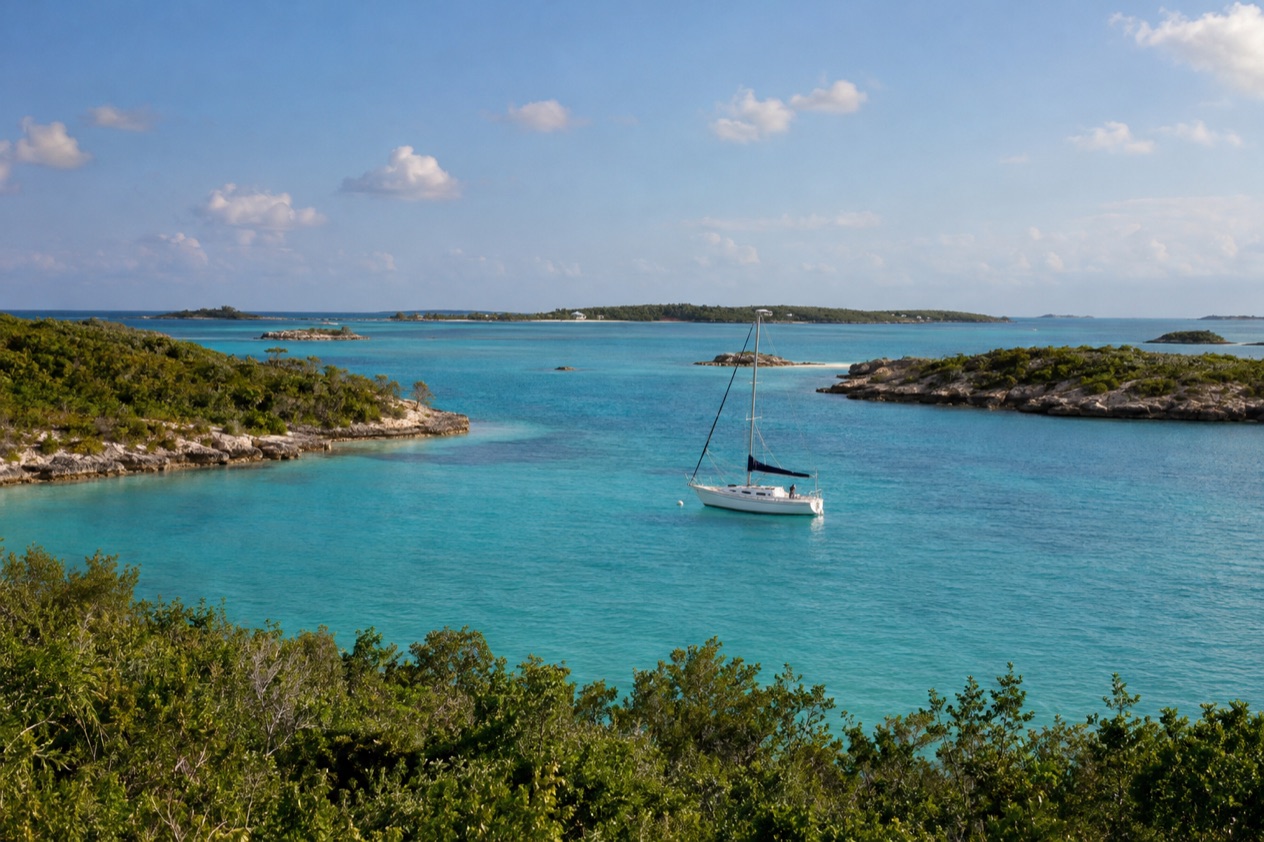
What is the weather like in the Abacos in November?
November is warm and easygoing, with the heat of early autumn easing into pleasant, lighter days and the water still comfortable. The sea cools a few degrees from October, and the days shorten noticeably as the month goes on.
| Month | Sea at the Abacos (°F) | Daylight on the 15th (hours and minutes) |
|---|---|---|
| October | 83.9 | 11 h 34 min |
| November | 80.8 | 10 h 53 min |
| December | 78.2 | 10 h 32 min |
In Nassau, highs average about 83°F in November, with lows around 70°F, and that gives a fair picture of the air across the northern Bahamas: shirt-sleeve afternoons and evenings that are comfortable outdoors, with a light layer useful once the sun is down. Rain falls on a handful of days in Nassau, usually as passing showers rather than whole gray days.
The light is the real change. With the sun setting earlier, golden hour arrives in the late afternoon, and the harbors at Hope Town and Green Turtle Cay take on a warm glow around the time boats come in. Mornings are bright and good for boat trips, bike rides and long beach walks, while evenings invite a slow dinner on a dock.
The water is the other pleasure of the month. At a sea temperature near 81°F, it feels more like a lingering summer than a winter lake, and boat days, snorkeling stops and beach afternoons stay on the menu.
Can you swim in the Abacos in November?
Yes, the sea is warm enough for a long swim, since the water near Marsh Harbour averages about 81°F, a degree or two cooler than the peak of fall but still soft on the skin.
Tahiti Beach, on the southern tip of Elbow Cay, is the picture many people have in mind: soft white sand, coconut trees and a long arc into clear water. It is secluded and reached only on foot, by bike or by boat, so arriving is part of the outing. Conditions change from day to day and from one stretch of shore to another, so how the water looks on the morning you go is what counts.
Around the cays, snorkeling is a favorite way to use the warm water. Walker’s Cay, the northernmost island in the Bahamas, is fringed by its own barrier reef, and the waters there hold schools of pompano and amberjack, colorful tropical fish, turtles and eagle rays, along with larger predators such as sharks and barracudas. Bring a mask, a rash guard for the longer days in the water, and a towel that dries quickly for boat hops between cays.
What to do in the Abacos in November
The month belongs to crawfish. The season in the Bahamas runs from August 1 to March 31, so November sits right in the middle, and the local table shows it. On many menus the words crawfish and lobster are used interchangeably, and if another kind is served, it is named.
Look for crawfish salad, a bright mix of onions, sweet peppers, lime juice and diced lobster, served on greens, on its own or tucked into a sandwich. Stew lobster, big chunks simmered in a rich brown gravy, is the heartier version.
The Abacos is a 120-mile chain, with Great Abaco and Little Abaco as the mainland and a string of cays strung along beside them. Each cay has its own pace, and November, with the sun lower and the air gentler, suits the ones that are best explored slowly.
Hope Town and Elbow Cay
Hope Town is a harbor village of narrow lanes, pastel cottages and picket fences on Elbow Cay, and the candy-striped lighthouse above it is the landmark everyone steers by. Visitors can climb the Hope Town Lighthouse, and the view from the top takes in the harbor, the ocean side and the line of the reef. Morning is a good time to go up, before the sun is high.
Biking is possible through the streets of Hope Town, which fits the village: you drift past gardens, small shops and docks without needing to hurry. Tahiti Beach at the southern end of Elbow Cay makes a natural destination for a bike ride or a boat hop, and a swim there fills a warm afternoon.
Dinner in the village is usually something simple and local, and in November that often means crawfish. Linger at the harbor as the light fades and the lighthouse comes on, a scene that rewards unhurried evenings.
Green Turtle Cay and Man-O-War Cay
Green Turtle Cay, Elbow Cay and Man-O-War Cay are the cays often named together, each with its own charm. Green Turtle Cay has a settlement of clapboard houses and a harbor lined with boats, an easy place to spend an afternoon wandering, sitting with a cold drink and watching the water.
Man-O-War Cay has a quieter, tidier feel, a place of boatbuilding tradition and neat waterfront streets. Spend the middle of the day there, then return to your base by late afternoon so the low sun finds you on the water rather than in a taxi.
Treasure Cay and the north
Treasure Cay is connected to Great Abaco Island in the north. It holds two resorts, Bahama Beach Club and the Treasure Cay Beach Hotel, Marina & Golf resort, along with condos, villas and private homes, many of them for rent. A large marina hosts seasonal fishing tournaments, and the cay has tennis courts and a golf course, so a day can run from the green to the dock.
Marsh Harbour, on Great Abaco, is the hub of the chain, home to Leonard M. Thompson International Airport. Treasure Cay International Airport is the other commercial gateway. From Grand Bahama, Pinder’s Ferry runs twice a day from McLean’s Town to the Abacos.
Walker’s Cay, at the far northern end of the Bahamas, is the destination for those who come for the reef, the turtles and the rays. It rewards a day with a mask and fins and an eye on the water.
A two-day itinerary for the Abacos in November
Day 1 begins early in Hope Town, with coffee on the harbor while the light is soft. Climb the lighthouse in the morning, then wander the lanes on foot or by bike. Around midday, settle into a harbor-side lunch of crawfish salad or a sandwich, and spend the afternoon at Tahiti Beach at the southern tip of Elbow Cay, swimming and walking the sand under the coconut trees.
With about eleven hours of daylight in the middle of the month, the sun sets early enough that the return to the village should start by late afternoon. Watch the harbor turn gold, then have dinner at a dockside table, with stew lobster a fitting choice for the season. If rain moves in, shift to a long lunch, a browse through the village shops and an early evening.
Day 2 moves to Green Turtle Cay for a slower morning among the harbor streets and clapboard houses. Spend midday on the water, with a snorkeling stop if the sea looks inviting, since the water is still warm. Late in the afternoon, head to Man-O-War Cay to see the boatbuilding village and walk its quiet waterfront.
End with an unhurried dinner at a casual spot on the water, ideally with crawfish in some form, and watch the evening settle over the cays. On a showery day, use the time for a long meal, a stroll between squalls, and a few hours indoors with a view of the harbor.
Is the Abacos busy in November?
November is typically a calmer month in the cays, a moment between the summer boating season and the winter holidays, though the exact feel varies from cay to cay and week to week.
The islands are still rebuilding in places after Hurricane Dorian, which struck the Abaco Islands on September 1, 2019, and that shapes what is open and how many rooms are available. Resorts such as those on Treasure Cay, and the many villas and condos for rent, give you a range to choose from. Booking early is a good habit for holiday weeks, while quieter weeks in the month allow for a later decision.
Fishing tournaments at the Treasure Cay marina are seasonal, and they can bring extra people to the dock when they happen. Restaurants on the smaller cays are small too, so for a dinner on a favorite harbor, a table reserved ahead is a sensible plan on any busy evening. If you are crossing from Grand Bahama, Pinder’s Ferry runs twice a day, which shapes how you plan arrivals.
What to pack for the Abacos in November
The days are warm and the evenings gentle, so pack light clothes for the day and one layer for the evening.
- Swimsuits, since the water stays warm enough for several swims a day.
- A mask and snorkel, for the reefs and clear water around the cays.
- A light rain jacket, for the passing showers.
- Sandals and comfortable shoes, for walking the lanes and biking in Hope Town.
- A light sweater for evenings on the dock.
- Sunscreen and a hat, for long boat days.
Good to know before you go
The U.S. State Department rates the Bahamas Level 2, “Exercise increased caution”, and says most crime occurs in Nassau on New Providence and in Freeport on Grand Bahama.
November is the last month of the Atlantic hurricane season, which runs from June 1 to November 30, so the season ends with the month. The Bahamas Ministry of Tourism & Aviation monitors tropical storms in the Atlantic, and travelers are encouraged to check the Bahamas.com hurricane page for updates.
U.S. citizens need a passport valid for at least six months (passport cards are not accepted for arrival by air), and no Bahamian visa is required for a visit of up to eight months. The Bahamas Department of Immigration requires a return or onward ticket, and visitors may be asked to show proof of sufficient funds. The Abacos are reached by air through Marsh Harbour or Treasure Cay, or by the ferry from Grand Bahama.
The Abacos in November vs October and December
Going four weeks earlier brings warmer water and longer days, with the sea close to 84°F in October. It is also the tail of the stormiest part of the hurricane season, and the light is a little longer for late afternoons on the beach. Crawfish season is already open, so the table is much the same.
Going four weeks later brings cooler water, about 78°F, and shorter days, with the hurricane season behind you. December has a more wintry feel in the evenings, and the holiday weeks change the mood in the harbors. Crawfish season still has a few months to run.
Choose October if you want the warmest swimming and the longest days. Choose November for the balance, with comfortable water, softer light and crawfish on the menu. Choose December if the end of the hurricane season matters most to you and a cooler evening suits you.
Is November a good time to visit the Abacos?
Yes, for travelers who want warm water, soft light and slow days among the cays, and who are happy to spend their time on boats, bikes and beaches instead of crowded sights.
It suits those who like to eat well on a harbor, who want a swim without the full heat of early fall, and who enjoy the unhurried pace of small settlements. It is less suited to anyone who needs guaranteed sunshine every hour or who wants a busy nightlife, since the cays are quiet and the days end early.
On arrival, start with the harbor and the lighthouse at Hope Town, then plan a boat or bike hop to Tahiti Beach. The best of November here is a bowl of crawfish salad, a warm swim and the last golden light over the water.
Sources
- Open-Meteo Marine API, average 2015-2024, checked October 10, 2026
- sunrise-sunset.org, sunrise and sunset calculated for the 15th of the month, checked October 10, 2026
- NOAA NCEI, GHCN-Daily station BF000078073 (Nassau Airport), normals 1991-2020 computed from the daily record (https://www.ncei.noaa.gov/access/services/data/v1?dataset=daily-summaries&stations=BF000078073), checked October 10, 2026
- Bahamas Ministry of Tourism, crawfish season (https://www.bahamas.com/blog/its-crawfish-season), checked October 10, 2026
- NOAA National Hurricane Center, Climatology (https://www.nhc.noaa.gov/climo/), checked October 10, 2026
- Bahamas Ministry of Tourism, Investments & Aviation (bahamas.com), Hurricane and storm information (https://www.bahamas.com/hurricane-storm-information), checked October 10, 2026
- Wikipedia, Hurricane Dorian (https://en.wikipedia.org/wiki/Hurricane_Dorian), checked October 10, 2026
- Bahamas Ministry of Tourism, Investments & Aviation (bahamas.com), travel blog, Abacos and Grand Bahama after Hurricane Dorian (https://www.bahamas.com/blog/things-to-know-when-visiting-the-bahamas-after-dorian), checked October 10, 2026
- Bahamas Ministry of Tourism, Investments & Aviation (bahamas.com), Tahiti Beach (https://www.bahamas.com/natural-wonders/tahiti-beach), checked October 10, 2026
- Bahamas Ministry of Tourism, Investments & Aviation (bahamas.com), Walkers Cay (https://www.bahamas.com/natural-wonders/walkers-cay), checked October 10, 2026
- Bahamas Ministry of Tourism, Investments & Aviation (bahamas.com), travel blog, island hopping in the Abacos (https://www.bahamas.com/blog/the-ultimate-guide-to-island-hopping-in-the-abacos-without-breaking-the-bank), checked October 10, 2026
- Wikipedia, Treasure Cay (https://en.wikipedia.org/wiki/Treasure_Cay), checked October 10, 2026
- Wikipedia, Marsh Harbour Airport (https://en.wikipedia.org/wiki/Leonard_M._Thompson_International_Airport), checked October 10, 2026
- Wikipedia, Geography of the Bahamas (https://en.wikipedia.org/wiki/Geography_of_the_Bahamas), checked October 10, 2026
- Bahamas Ministry of Tourism, Investments & Aviation (bahamas.com), Island FAQ (https://www.bahamas.com/plan-your-trip/island-faq), checked October 10, 2026
- Bahamas Department of Immigration, Entry requirements (https://www.immigration.gov.bs/entry-requirements/), checked October 10, 2026
- Bahamas Department of Immigration, Before your arrival (https://www.immigration.gov.bs/entry-requirements/before-your-arrival/), checked October 10, 2026
- U.S. Department of State, The Bahamas Travel Advisory, Level 2 (https://travel.state.gov/), checked October 10, 2026
To plan your stay
- Things to Do in the Abacos: Hope Town Lighthouse, Tahiti Beach, Cays and Conch
- Where to Stay in the Abacos: Treasure Cay, Hope Town, Green Turtle Cay and Marsh Harbour
- The Abacos from Miami: Flights to Marsh Harbour, Island Connections and Hope Town
- Know Before You Go to the Abacos: Entry Papers, Money, Getting Around and Health