
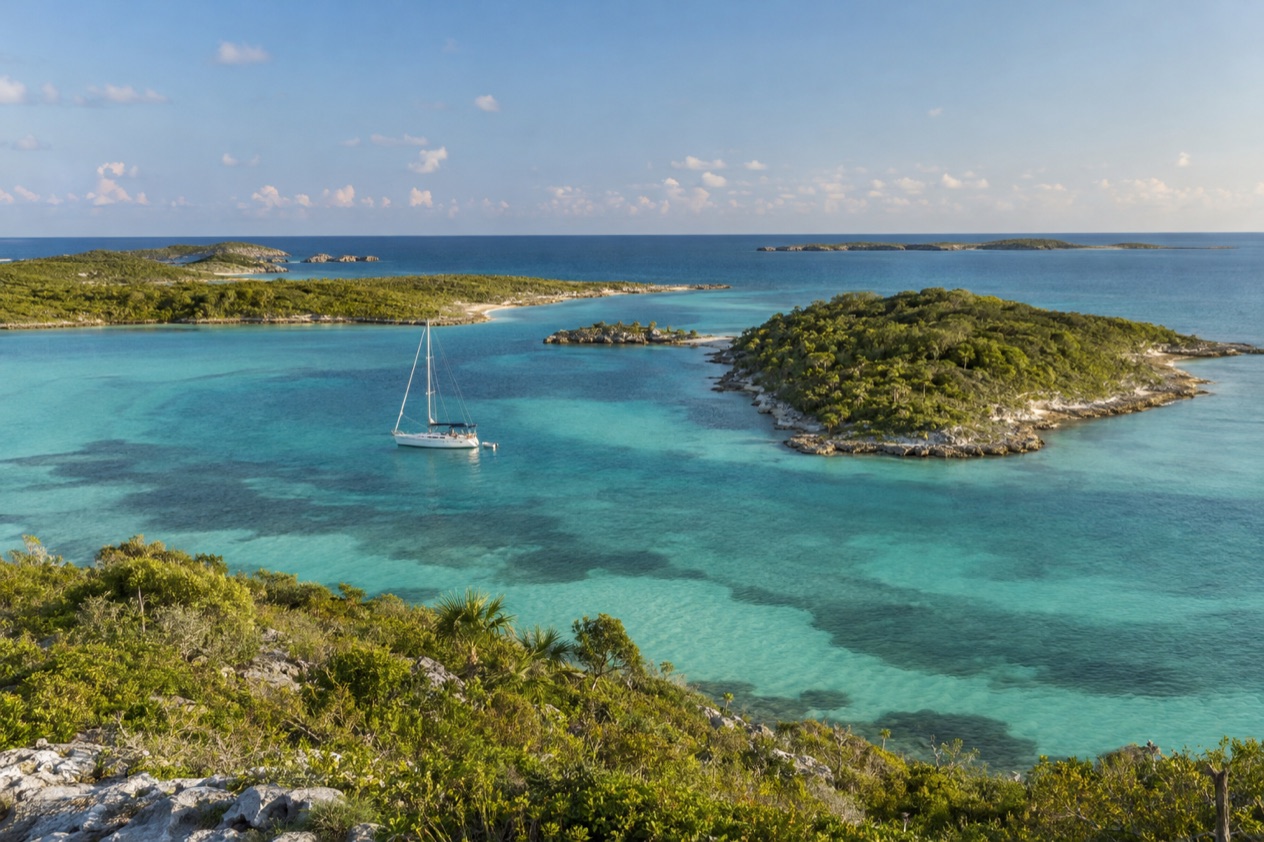
In April the harbors of the Abacos fill with the clatter of halyards and the smell of diesel and fresh paint as sailboats are readied for the season. Dinghies tie up at the docks of the small settlements, and the afternoon light turns the shallows a pale glass green. The month suits travelers who want warm sea, long days and a string of small cays to hop between.
What is the weather like in the Abacos in April?
April is warm and bright, with a sea that is nearly at swimming temperature and days that stretch well into the evening.
| Month | Sea at the Abacos (°F) | Daylight on the 15th (hours and minutes) |
|---|---|---|
| March | 76.6 | 12 h 03 min |
| April | 77.2 | 12 h 51 min |
| May | 80.4 | 13 h 30 min |
In Nassau, highs average about 84°F in April, with nights in the upper 60s and only a handful of rainy days. That sets the tone for the whole month: shirt-sleeve afternoons, evenings that are comfortable on a dock or a porch, and showers that tend to be brief when they come.
Mornings are the soft part of the day. The harbors are still, the light is low and gold, and it is the time for a walk through a settlement or a first coffee on the water. By early afternoon the sun is strong enough that you will want shade, a hat and a swim.
The days are noticeably longer than in March, so dinner can be unhurried and there is light left for a last boat ride or a stroll after eating. The sea is a shade warmer than a month earlier, and a light layer is all you need once the sun goes down.
Can you swim in the Abacos in April?
Yes, the sea is warm enough for a proper swim, though it is a little cooler than it will be a month later, so a long float may feel fresh at first.
On Elbow Cay’s southern tip, Tahiti Beach curves into water that is calm and clear, its powdery white sand bordered by coconut palms. You can get there only by walking, cycling or boat, and that isolation from the settlements is what you feel.
Elsewhere, the cays offer shallow harbors and sandy margins where people wade, paddle and snorkel. Which stretch is quiet and which is choppy depends on the wind of the day and the side of the island you are on, so the best plan is to try more than one shore. Bring a mask, reef-safe sunscreen and a rash guard if you tend to feel cool in the water.
Far to the north, Walker’s Cay is ringed by its own barrier reef, and its waters hold sharks and barracudas alongside turtles and eagle rays. That is a place for those who want to see marine life as it is, not for casual wading.
What to do in the Abacos in April
April is a month for moving between cays by boat, with warm water, long light and a spring mood in the harbors. The Abacos form a chain stretching about 120 miles, with Great Abaco and Little Abaco as the mainland and a scatter of cays offshore, each with its own character.
Seasonal fishing tournaments are held out of the big marina at Treasure Cay, so you may find the docks busy with anglers and boats. Boats are what the month is about, whether you ride one, watch one come in or simply eat lunch beside the harbor.
Hope Town and Elbow Cay
Hope Town is the cay most people picture: pastel cottages, a tight harbor and a candy-striped lighthouse above it all. You can climb the Hope Town Lighthouse, and from the top the reefs and cays spread out in blues that shift with the clouds.
Biking is possible through the streets of Hope Town, and the lanes are made for slow wandering past gardens, small shops and porches. In April the long afternoon light is good for photographs, so save the climb for later in the day when the color deepens.
Leaving Hope Town behind, head south to Tahiti Beach, where you can swim and picnic, and pack your own supplies because the spot stays quiet and out of the way. It suits couples, families who like a bit of an expedition and anyone who wants a long, quiet afternoon.
Man-O-War Cay
Man-O-War is a small, tidy cay with a long boat-building tradition and a few hundred residents. Its story goes back to Loyalist farmers, and many families still carry the Albury name and run their own businesses.
Three churches serve the cay, and the mood is quiet and orderly. Walk the lanes, look at the harbor and stop in the shops, which are family-run. It is a place to browse and chat, and to enjoy a slower pace than the bigger settlements.
Green Turtle Cay and Treasure Cay
Green Turtle Cay has its own unmistakable charm, with a historic settlement feel and water all around. Treasure Cay is different, a resort area joined to Great Abaco with a marina, tennis courts and a golf course, and two resorts, Bahama Beach Club and Treasure Cay Beach Hotel, Marina & Golf, plus rental condos and villas.
Pair them if you want contrast: a morning among old streets, then an afternoon of golf or a beach day. Treasure Cay has its own airport as well, one of the two commercial ways into the Abacos.
Walker’s Cay and the northern reef
Walker’s Cay is the northernmost island in the Bahamas. Its barrier reef and its schools of pompano and amberjack draw people who care more about what is under the surface than what is on the sand.
With the sea warming through April, it is a good month to think about time in the water. Expect big fish, rays and plenty of color, and keep in mind that this is open sea, wilder than the sheltered harbors farther south.
A two-day itinerary for the Abacos in April
Day 1. Fly into Marsh Harbour, the commercial center, and head out toward Elbow Cay while the morning is still cool. Walk Hope Town’s lanes first, then climb the lighthouse around midday for the view over the reefs, and lunch at a harbor-side spot with a plate of conch.
In the afternoon, rent bikes or walk south to Tahiti Beach and swim in the warm shallows. Be back in Hope Town for the evening, when the harbor turns pink and the long April light lingers, and have dinner on a dock.
If rain turns up, shelter in a shop or café in Hope Town and wait it out. Showers are usually short, and the lighthouse looks even better in the clearing sky afterward.
Day 2. Start on Man-O-War Cay, where the settlement wakes early and the lanes are quiet. Stroll the harbor, browse the family-run shops and listen to the boatyards getting to work.
By midday, move on to Treasure Cay for lunch at the marina and a stretch of beach time or a round of golf. Let the afternoon go slowly, and watch the fishing boats come back toward the docks.
If the weather turns, the marina and the resort restaurants make a dry place to sit. Finish with an early dinner and a last look at the water as the sun goes down.
Is the Abacos busy in April?
It is moderately lively, with boaters and spring-break visitors filling the harbors, but the cays are spread out enough that you can usually find a quiet corner.
The marinas are where the energy gathers, especially when fishing tournaments run at Treasure Cay. Restaurants near the docks fill at dinner, while the small settlements stay calm through the day.
For rooms, rentals and boat plans, reserve early for the holiday weeks around Easter and let the ordinary weeks of the month be more flexible. Small places have few rooms, so a first choice can disappear quickly. Because the cays are linked by water, line up your boat and lodging together.
Only by walking, biking or boating can you get to Tahiti Beach, which means it never has the feel of a crowd scene, even during a busy week. Early mornings in any settlement are quiet and make for the best strolls.
What to pack for the Abacos in April
Pack for sun, sea and boats, with one layer for the evening.
- Swimsuits and a rash guard, since you will be in and out of the water.
- Reef-safe sunscreen and a wide-brimmed hat for the strong afternoon sun.
- A mask and snorkel for the shallows and reefs.
- Sandals and sturdy walking shoes for lanes, docks and the lighthouse stairs.
- A light sweater for evenings on the water.
- A small dry bag for boat rides.
Good to know before you go
The U.S. State Department rates the Bahamas Level 2, “Exercise increased caution”, and says most crime occurs in Nassau on New Providence and in Freeport on Grand Bahama.
April falls well before the Atlantic hurricane season, which runs from June 1 to November 30. Getting to the Abacos means flying into Marsh Harbour (MHH) or Treasure Cay (TCB), or taking Pinder’s Ferry from McLean’s Town on Grand Bahama, which runs twice a day.
For entry by air, U.S. travelers must carry a passport good for no less than six months, as passport cards do not qualify. U.S. citizens visiting as bona fide visitors need no Bahamian visa, and a return or onward ticket is required, with proof of funds possible on request.
The Abacos in April vs March and May
Moving earlier, to March, gets you a slightly cooler sea and shorter days, with showers about as likely. It is a good choice if you prefer a fresher feel on the water and quieter docks before the spring boating rush.
Moving later, to May, brings the warmest water of the three, the longest days and more rain. It suits swimmers and snorkelers who want the sea at its softest and do not mind a brief downpour now and then.
Stay in April if you want a balance: warm enough to swim without hesitation, bright evenings and drier days than May. Shift to March for a cooler feel, or to May for the warmest sea.
Is April a good time to visit the Abacos?
Yes, especially for travelers who want boats, warm sea and long light without the heat of summer.
It will suit couples, families and anyone who likes moving between small cays. It is less ideal for those who want the hottest water or who dislike the odd shower. On arrival, get out on the water first, by ferry, boat or bike, so the cays make sense as a chain. What stays with you from April here is the light: long evenings over pastel harbors, the lighthouse glowing at dusk and the quiet of a cay when the boats come in.
Sources
- Open-Meteo Marine API, average 2015-2024, checked October 10, 2026
- sunrise-sunset.org, sunrise and sunset calculated for the 15th of the month, checked October 10, 2026
- NOAA NCEI, GHCN-Daily station BF000078073 (Nassau Airport), normals 1991-2020 computed from the daily record (https://www.ncei.noaa.gov/access/services/data/v1?dataset=daily-summaries&stations=BF000078073), checked October 10, 2026
- Bahamas Ministry of Tourism, Investments & Aviation (bahamas.com), Marsh Harbour (https://www.bahamas.com/natural-wonders/marsh-harbour), checked October 10, 2026
- Bahamas Ministry of Tourism, Investments & Aviation (bahamas.com), Man O War Cay (https://www.bahamas.com/natural-wonders/man-o-war-cay), checked October 10, 2026
- Bahamas Ministry of Tourism, Investments & Aviation (bahamas.com), Tahiti Beach (https://www.bahamas.com/natural-wonders/tahiti-beach), checked October 10, 2026
- Bahamas Ministry of Tourism, Investments & Aviation (bahamas.com), Walkers Cay (https://www.bahamas.com/natural-wonders/walkers-cay), checked October 10, 2026
- Bahamas Ministry of Tourism, Investments & Aviation (bahamas.com), travel blog, island hopping in the Abacos (https://www.bahamas.com/blog/the-ultimate-guide-to-island-hopping-in-the-abacos-without-breaking-the-bank), checked October 10, 2026
- Bahamas Ministry of Tourism, Investments & Aviation (bahamas.com), travel blog, Abaco (https://www.bahamas.com/blog/the-ultimate-romantic-escape-to-abaco-bahamas), checked October 10, 2026
- Wikipedia, Treasure Cay (https://en.wikipedia.org/wiki/Treasure_Cay), checked October 10, 2026
- Wikipedia, Geography of the Bahamas (https://en.wikipedia.org/wiki/Geography_of_the_Bahamas), checked October 10, 2026
- Bahamas Ministry of Tourism, Investments & Aviation (bahamas.com), Island FAQ (https://www.bahamas.com/plan-your-trip/island-faq), checked October 10, 2026
- Bahamas Department of Immigration, Entry requirements (https://www.immigration.gov.bs/entry-requirements/), checked October 10, 2026
- Bahamas Department of Immigration, Before your arrival (https://www.immigration.gov.bs/entry-requirements/before-your-arrival/), checked October 10, 2026
- U.S. Department of State, The Bahamas Travel Advisory, Level 2 (https://travel.state.gov/), checked October 10, 2026
- NOAA National Hurricane Center, Climatology (https://www.nhc.noaa.gov/climo/), checked October 10, 2026
To plan your stay
- Things to Do in the Abacos: Hope Town Lighthouse, Tahiti Beach, Cays and Conch
- Where to Stay in the Abacos: Treasure Cay, Hope Town, Green Turtle Cay and Marsh Harbour
- The Abacos from Miami: Flights to Marsh Harbour, Island Connections and Hope Town
- Know Before You Go to the Abacos: Entry Papers, Money, Getting Around and Health