
Along Lincoln Street in Sitka stands a big, plain, two-story log building with a steep roof, painted in the warm yellow-ochre of old Russian Alaska. Rain often beads on its shingles, and the spruce and hemlock of the town press close.
This is the Russian Bishop’s House, a National Historic Landmark and a unit of Sitka National Historical Park. It is a visit for people who like to walk through rooms where history was lived, led by a ranger who knows the stories.
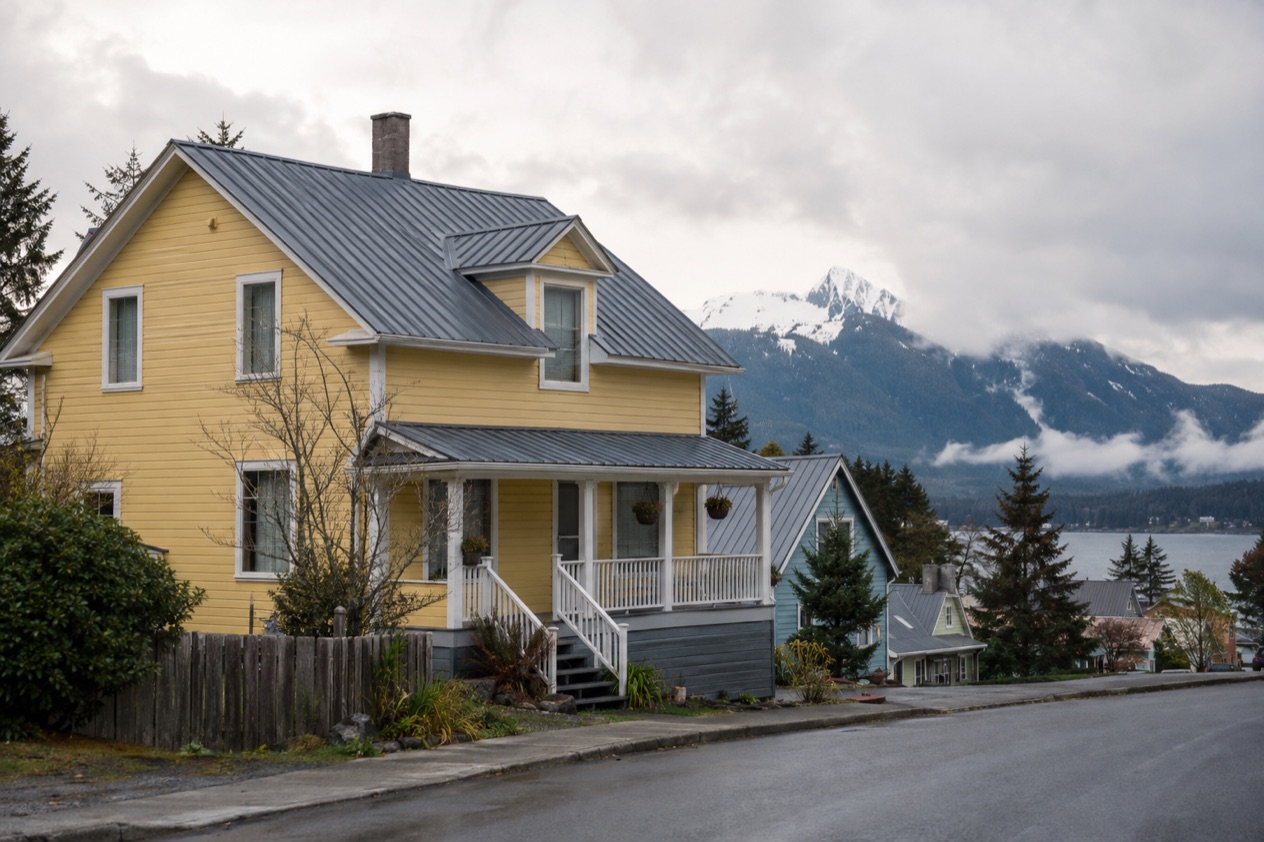
Is visiting Sitka’s Russian Bishop’s House worth it?
Yes, if you like history you can stand inside, and it suits curious adults, school-age kids and anyone who wants to understand why a Pacific island town has onion domes in its skyline. The house was the home and administrative center of Ivan Veniaminov, the first Bishop of Alaska, and today it is open to the public on ranger-guided tours.
That means you do not just look at furniture behind a rope. You hear how a bishop, his household and a whole colonial church organization lived and worked here.
What sets it apart from the other historic stops in town is its scale and its intimacy. Sitka National Historical Park tells the Tlingit story through its totem poles and its forest, and the Battle of 1804 on its trails.
The Bishop’s House tells the Russian side from the inside, in a log building that was a residence, a chapel house and a school all at once. It is a house, not a monument, and the difference shows in the details: the stairs, the furnished rooms, the way daily life ran upstairs while work went on below.
It also pairs naturally with the rest of the park. A walk through the rain forest and a stop at the visitor center give you the Tlingit homeland, and the house gives you the Russian chapter that followed.
Seen together, they make a fuller afternoon than either one alone. Sitka also has twenty-two buildings and sites on the National Register of Historic Places, so this house is one chapter in a town that wears its history openly.
What to see at Sitka’s Russian Bishop’s House
The log house and its story
The main house is a two-story log structure, about 42 by 63 feet, built in the early 1840s as the residence and administrative center of Ivan Veniaminov. Look at the walls, the heavy timbers and the steep roofline. It is among the oldest surviving examples of Russian-built architecture in Alaska, and it has outlasted a very long list of owners and uses.
Veniaminov was a priest, a scholar and a builder of schools, and the house reflects an energetic man who ran a vast diocese from a small island town. The building was restored by the National Park Service as part of the park, and it was named a National Historic Landmark in 1962.
Listing on the National Register of Historic Places followed in 1966. A ranger guide ties these dates to the people who lived behind these walls.
Museum exhibits and the furnished second floor
Inside, the house holds museum exhibits and a furnished second floor that show Russian activities in Alaska. The ground floor is where you learn the broader story, with exhibits on the colony, the church and the people who passed through. Upstairs the feeling changes, because the rooms are set up as living quarters, and the guide can point out what each space was for.
Look for the domestic touches, the furniture, the arrangement of rooms and the signs of a household that stayed in touch with a faraway homeland. If you come when the house is closed, a virtual tour is available on a computer or mobile device, and you can also watch the film Russian Bishop’s House: An Icon Reborn when house tours are unavailable. It follows the restoration of the building.
The Old School and the house’s later lives
East of the main house stands the Old School, a two-story wood-frame building from 1897 that once provided a kindergarten and a girls’ school. It gives the property a second layer, because the church here was always about teaching as well as worship, and the school grew out of that tradition.
The main house itself changed roles over the decades. Its first floor served as an inn for a time, and in the 1920s the ground floor housed a printing operation that produced the Sitka Sun and the Sitka Tribune. A building that was a bishop’s home, then a boarding house, then a print shop tells you a lot about how Sitka kept reinventing itself after the Russian era.
The park around it
The house is one part of Sitka National Historical Park, which the Park Service describes as Alaska’s oldest national park unit. The wider park protects a temperate rain forest of towering spruce and hemlock, tidelands where you may find sea stars and crabs, and the river called Kaasdahéen (Indian River). There is a collection of totem poles with an unusual story of how it came to be, and rangers lead activities on historic Totem Park, the Battle of 1804 between Russians and Tlingit, and Russian exploration and settlement.
Kids of all ages can become Junior Rangers in the park, which gives a younger visitor a reason to look closely at the exhibits. The visitor center displays artifacts, and many of those are owned by Tlingit clans and are still used for ceremonial purposes. That is a reminder that this history is living and not frozen behind glass.
Hours, tickets and rules
The house is open to the public on ranger-guided tours, so a visit means joining a guide and not wandering freely on your own schedule. Ranger-led programs in the park are free and typically offered from May through September.
When the house is closed to tours, the virtual tour and the film take its place. The table gives the values the Park Service and Sitka sources state, including the nearby Fortress of the Bear for planning a combined day.
| Site | Open |
|---|---|
| Russian Bishop’s House | Ranger-guided tours |
| Ranger-led programs, Sitka National Historical Park | Typically May through September (free) |
| Fortress of the Bear | Daily 9AM–5PM in summer, Friday–Saturday 10AM–3PM in winter |
The only rule the sources set out for the house is that you see the interior with a ranger. There is no stated permission to wander the building alone, and nothing here suggests you can climb on structures or touch the historic fabric. Keep to what the guide shows you and enjoy the rooms from where you are led.
How to get to Sitka’s Russian Bishop’s House
The house is at 501 Lincoln Street in Sitka, and most of the park is an easy walk from downtown, the Bishop’s House included. That makes it one of the simplest sights in town to reach once you are in Sitka. The harder part is reaching Sitka itself, which sits on Baranof Island and is accessible only by air and by sea.
Getting to Sitka
Because no road connects the town to the mainland, you arrive by plane or by boat. Alaska Marine Highway ferries provide year-round service for passengers and vehicles to Sitka, which suits anyone traveling the Inside Passage with a car. Cruise passengers come in at Old Sitka Dock, and from there a free shuttle bus of about 15 minutes carries them to Harrigan Centennial Hall in downtown Sitka.
From downtown you are within walking range of the sights of the park. The Park Service lists the Russian Bishop’s House, the visitor center, the Totem Trail loop, the Riverview Trail and the Russian Memorial Trail loop together as an easy walk from downtown, so you can plan the house as one stop among several.
Getting around once you are there
Walking between the visitor center and the Bishop’s House takes most people about 10 minutes. That short connection lets you link the house with the forest and the totem poles in one outing.
Sitka also has a local bus called The Ride, with three lines (Green, Red and Blue) running Monday through Friday from 6:30AM to 6:30PM. It does not run on New Year’s Day, Memorial Day, Labor Day, Alaska Day, Thanksgiving Day or Christmas Day. Plan around those dates if you were counting on the bus.
When to visit Sitka’s Russian Bishop’s House
The strongest season for a visit is the stretch from May through September, when ranger-led programs in the park are typically offered, and a ranger-guided house tour fits most naturally into a day with other scheduled activities. In that stretch you can hear rangers speak about Totem Park, the Battle of 1804 and Russian exploration and settlement, then walk to the house for the Russian side of the story.
Sitka is a rainy place with an oceanic climate and abundant precipitation through the year, so a house museum is a good use of a wet day. Winter is cold, with January the coldest month, and it also brings snow, while August is the warmest month and still mild. Dress for damp weather in any month you come. Since the house is a tour-based visit, the weather matters less once you are inside.
Alaska Day and the autumn calendar
Sitka holds an annual Alaska Day Festival, a week-long event that includes a reenactment ceremony of the signing of the Alaska purchase, interpretive programs and other activities. The first recorded festival took place in 1949. For a visitor interested in the Russian Bishop’s House, the festival week is an unusually fitting moment, because the whole town turns its attention to the transfer from Russian to American rule that shaped this house’s story.
Keep in mind that the local bus does not run on Alaska Day, and that ranger-led programs are typically offered only through September. If you come in the festival week, expect the town to feel busier and more ceremonial, and treat the house as one stop in a larger day of programs.
Time of day
Tours are ranger-guided, so your hour of the day depends on when the park schedules them. A reasonable plan is to start with the visitor center and walk to the house afterward, leaving the grounds and the forest for the rest of the day.
Tips for your visit
Bring a rain jacket and shoes that handle wet ground, because the walk between park sites passes under spruce and hemlock in one of the rainiest places in the state. Sitka’s annual precipitation is large, and you are likely to be outdoors for part of the day even if the house itself is dry.
Plan the house as one piece of a day in the park and not as a stand-alone stop. The walk from the visitor center takes about the time of a coffee, and the visitor center is where you will see artifacts that belong to Tlingit clans and are still used in ceremonies. Starting there gives you the Tlingit context, and ending at the house gives you the Russian chapter that came after it.
Combining it with nearby stops
The Totem Trail loop, the Riverview Trail and the Russian Memorial Trail loop are all within walking reach of downtown, and the Park Service groups them with the house. Along the way you may see the tidelands, the forest and the river, and you can look at the totem pole collection, which has an unusual story of how it came to be.
Fortress of the Bear is another Sitka stop, open daily in summer and only on Friday and Saturday in winter, so it needs a little planning if you come in the colder months. A day that mixes the house, the park and a second attraction in town can fill an unhurried afternoon without needing a car.
Families
Kids of all ages can become Junior Rangers in Sitka National Historical Park, which turns the visit into a small quest and gives younger travelers a reason to look closely at the objects on display. The rangers’ scheduled activities add more to see. A house tour is a talk and a walk through rooms, so it suits children who like stories about real people.
If the house is closed, the virtual tour and the film about the restoration still let a family see the rooms, and that can be a good plan for a wet evening in your lodging.
Good to know before you go
The house is run by the National Park Service as part of Sitka National Historical Park, and ranger-led programs in the park are free. Sitka sits on an island reachable only by air and sea, so build your arrival and departure into your plan early.
Rain is part of the setting, and the long, cold, snowy winters shape which activities are offered, with some programs typically running only from May through September. If the house is closed to tours when you come, the virtual tour and the film are there instead.
Sources
- Wikipedia, Russian Bishop%27s House (https://en.wikipedia.org/wiki/Russian_Bishop%27s_House), checked October 11, 2026
- National Park Service, Sitka National Historical Park, plan your visit: things2do (https://www.nps.gov/sitk/planyourvisit/things2do.htm), checked October 11, 2026
- Wikipedia, Sitka, Alaska (https://en.wikipedia.org/wiki/Sitka,_Alaska), checked October 11, 2026
- Wikivoyage, Sitka (https://en.wikivoyage.org/wiki/Sitka), checked October 11, 2026
- National Park Service, Sitka National Historical Park, plan your visit: hours (https://www.nps.gov/sitk/planyourvisit/hours.htm), checked October 11, 2026
- National Park Service, Sitka National Historical Park, plan your visit: directions (https://www.nps.gov/sitk/planyourvisit/directions.htm), checked October 11, 2026