
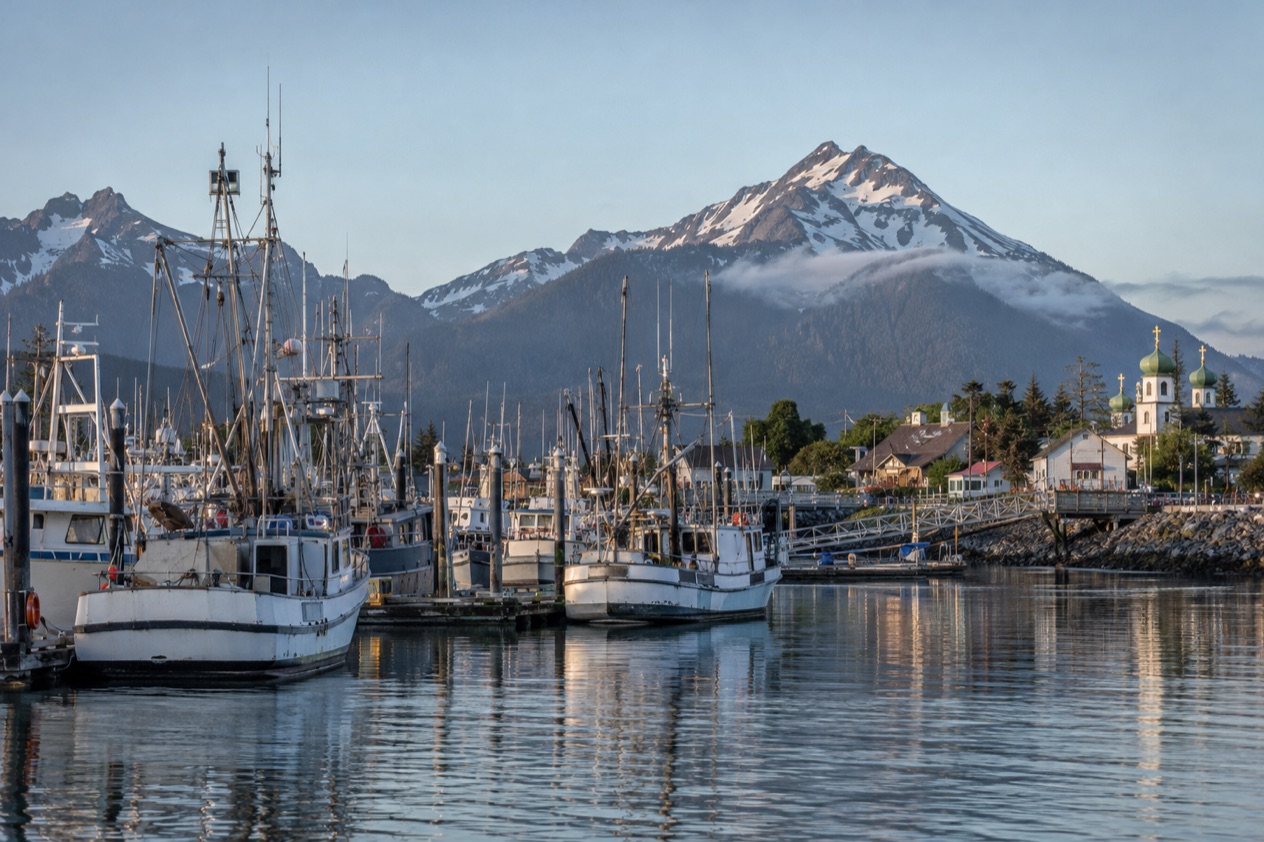
On Lincoln Street, the onion dome of St. Michael’s Cathedral rises over a town of fishing boats, spruce-covered hills and rain that comes and goes without much ceremony. Sitka is a small island town where Tlingit, Russian and American stories sit side by side, and it suits travelers who like their days built around history, forest walks and good seafood.
What are the best things to do in Sitka?
The best things to do in Sitka are the ones that tie its layered past to its wild setting: walking among totem poles in the rain forest, stepping inside the Russian Bishop’s House, meeting rescued animals, and eating fish that came off a boat nearby. Here are the essentials, each told in more detail further on.
- Walk the wooded paths of Sitka National Historical Park, where totem poles stand among spruce and hemlock beside Kaasdahéen (Indian River).
- Tour the Russian Bishop’s House, a National Historic Landmark with a furnished second floor that shows how a bishop’s household lived.
- Visit the Alaska Raptor Center, a sanctuary in the Tongass National Forest that cares for injured birds of prey.
- See brown bears at Fortress of the Bear, a place to look closely at animals you would rarely approach in the wild.
- Stroll Lincoln Street and the harbor area, where the cathedral, shops and fishing boats are close together.
- Take a boat out on Sitka Sound, the island-studded water that once drew fur traders from across the Pacific.
- Time a visit for the Alaska Day Festival, a week of reenactments and programs marking the transfer of Alaska.
- Sit down to salmon, halibut and other local seafood, the plainest and best reason to be hungry in Sitka.
Sitka sits on Baranof Island and can be reached only by air and by sea, which shapes everything about the visit. The pace is slow, the town is compact, and the weather is part of the experience, since rain gear and layers are recommended at any time of year. Plan indoor and outdoor stops side by side so a wet afternoon turns into museum time rather than lost time.
Sitka has a population of 8,458 by the 2020 census, making it one of the three largest cities in Southeast Alaska alongside Juneau and Ketchikan. Even so, it feels like a village where the cultural sites, the harbor and the trailheads are all part of the same small world. That scale is a large part of the pleasure here.
Sights and landmarks in Sitka
The sights of Sitka are mostly about layers of history, and the layers are close together. A Tlingit homeland, a Russian colonial capital and an American town have all left something in a small area, so a day on foot covers a surprising amount.
Sitka National Historical Park
Sitka National Historical Park is the heart of a visit, and it is Alaska’s oldest national park unit. It preserves a landscape that drew Tlingit, Russians and Americans, and sometimes brought them into conflict, including the site of a significant battle that prepared the way for America’s purchase of Alaska from Russia. The park is at 106 Metlakatla Street.
Two miles of wooded pathways wind through temperate rain forest with towering spruce and hemlock, and many replica totem poles stand along them. Visitors can also see totem poles obtained from Haida and Tlingit communities. The tidelands hold sea stars and crabs, and during spawning season you can watch salmon swimming up Kaasdahéen (Indian River).
In the visitor center, ceremonial and traditional objects from Tlingit and Russian Orthodox cultures are on display. Many of the artifacts are owned by Tlingit clans and are still used for ceremonies, which makes them living objects rather than museum pieces. Go slowly here. The forest is quiet, the poles are best seen one at a time, and the light under the trees changes with every passing cloud.
The Russian Bishop’s House
At 501 Lincoln Street, the Russian Bishop’s House was built in 1841–43 as the home and administrative center of Ivan Veniaminov, the first Bishop of Alaska. Today it is a historic house museum and a National Historic Landmark, restored by the National Park Service as part of Sitka National Historical Park. Parts of it once served as a schoolhouse.
Museum exhibits tell the story of Russian activities in Alaska, and the furnished second floor shows how the household lived, with the rooms arranged to feel inhabited rather than staged.
Fortress of the Bear
Fortress of the Bear is a place to watch brown bears in an enclosure built around them, a different experience from a chance sighting in the wild. You look down on the bears from a viewing platform and notice details that are hard to catch at a distance, such as the way they move, wade and dig. It is a favorite for families, and there is no need to hurry.
| Site | Open |
|---|---|
| Fortress of the Bear | Summer: daily 9AM–5PM. Winter: Friday–Saturday 10AM–3PM |
Cathedral, Castle Hill and town landmarks
Lincoln Street is the town’s historic spine, and St. The Russian Orthodox presence is still part of the community, and the cathedral sits in the middle of the shops and cafés, not apart from them.
Castle Hill, a rise above the harbor, is the spot where the Russian governor’s residence once stood and where the flag changed hands in the Alaska transfer. Other stops for a slow day include the Sheldon Jackson Museum, which holds Alaska Native artifacts, the Sitka Historical Museum, the Russian cemetery in the trees, and Totem Square, where a totem pole and a view of the harbor share a small plaza.
Outdoor things to do in Sitka
Outdoors in Sitka means rain forest, tidelands and cold water, and the Sound is the stage for most of it. Sitka Sound is bordered by Baranof Island and Kruzof Island and opens to the Pacific, and boats are the way to see it properly. Wildlife is a chance rather than a promise, so go for the setting and treat any whale, otter or eagle as a bonus.
Forest paths and the Indian River
Kaasdahéen (Indian River) runs through the park, and during spawning season you may see salmon swimming upstream. The tidelands nearby hold sea stars and crabs.
Beyond the park, the Tongass National Forest surrounds the town, and a number of trails climb into the hills. Mount Verstovia, Harbor Mountain and Beaver Lake are names locals use for their favorite outings, and they reward walkers with views of the Sound and the islands when the clouds lift. Bring layers and rain gear, as the National Park Service advises for Sitka at any time of year.
Boat trips on Sitka Sound
Sitka Sound was a major center of the maritime fur trade in the early 19th century, and a boat trip lets you see why. Islands, kelp beds and rocky shores crowd the water, and you may spot sea otters, sea lions, seabirds, bald eagles or whales on the way. Sightings vary from trip to trip, so enjoy the scenery, the salt air and the spruce-covered shores either way.
Charter boats and wildlife tours leave from the harbor, and travelers combine a boat outing with a fishing charter for salmon or halibut. Kayakers also paddle sheltered waters among the islands. Dress warmly, because the wind on the water is cooler than the town streets.
The Alaska Raptor Center
The Alaska Raptor Center is a sanctuary in the Tongass National Forest in Sitka, set among tall trees. It admits injured birds of prey every year and releases birds back to the wild every year, which gives the visit a sense of purpose beyond sightseeing. Eagles, owls and other raptors can be seen at close range.
It is a good outdoor stop for anyone curious about the wildlife of Southeast Alaska, especially if you want to look closely at birds you might otherwise only see as dots above the water. The surrounding forest setting makes the trip itself part of the pleasure.
Alaska Day and Sitka’s seasons
Sitka has an oceanic climate with abundant precipitation, a small temperature range between seasons and a mean annual temperature of 45.3 °F. In practice, that means mild days, frequent rain and a landscape that is lush in every season. The Alaska Day Festival, held each year around October 18, brings a week-long run of events to town.
The festival includes a reenactment ceremony of the signing of the Alaska purchase, interpretive programs and other activities, and the first recorded festival was in 1949. If your dates line up, it adds a ceremonial layer to the walk through Sitka’s historic streets.
Day trips from Sitka
Because Sitka is reachable only by air and sea, day trips here are mostly boat outings and short excursions along the coast and into the forest. They are best seen as ways to widen the picture of a wild island rather than as long journeys to other towns.
Sitka Sound and Kruzof Island
Kruzof Island lies on the northwest edge of Sitka Sound, and its volcano, Mount Edgecumbe, shapes the horizon from town. A day on the water can bring you close to its forested shores, seabird colonies and quiet coves, with the possibility of whales, sea otters or sea lions along the way.
This outing suits travelers who want wild scenery and do not mind a day outdoors in changeable weather. A boat or floatplane operator in Sitka can tell you what is possible on a given day. Bring layers, waterproof outerwear and binoculars, which turn a distant shape into a recognizable animal.
Starrigavan and the forests beyond town
The forest trails and estuary at Starrigavan Recreation Area are a favorite escape from downtown, with spruce, moss and birdlife around the water. It is the kind of place to spend a morning with a thermos and a camera, listening to the forest and watching the tide change.
Salmon runs, eagles and the occasional deer make it a lively place for patient walkers, though wildlife is never guaranteed.
Fishing charters and wildlife cruises
A day on a charter boat is one of the most direct ways to experience Sitka’s waters. Anglers head out for salmon or halibut, while wildlife cruises focus on whales, otters, sea lions and seabirds. Either way, the islands and the surrounding mountains provide the backdrop.
Fishing trips suit travelers who enjoy being on the water and want to bring a catch home or have it prepared. Wildlife cruises suit photographers and families. Dress warmly, and take the day as it comes, since the Sound has its own moods.
Other outings nearby
- Hoonah, a traditional Tlingit village near Glacier Bay and home of the Xúnaa Ḵáawu, lies elsewhere in Southeast Alaska and is a reminder of how much of this coast Tlingit people have long called home.
- Juneau and Ketchikan, the other two largest cities of Southeast Alaska, give a sense of the region’s scale and are reached by air or sea, as Sitka is.
- Alaska Marine Highway ferries serve Sitka year-round, linking it by water to the rest of the region.
What to eat in Sitka
Eating in Sitka starts with the sea, and the best meals tend to be the simplest ones. Salmon, halibut and shellfish arrive from the surrounding waters, and local cooks understand that fresh fish needs little more than heat, salt and a squeeze of lemon.
Salmon, halibut and the catch of the day
Salmon is the dish of the region, and you may find it grilled, baked on a cedar plank, smoked or turned into chowder. King and coho are names to watch for on menus. Smoked salmon in particular makes a good snack for the trail or the boat, with its rich, salty, slightly sweet taste.
Halibut shows up as fish and chips, pan-seared fillets and tacos, with firm white flesh that stands up to a crisp batter. Black cod, rockfish and spot prawns may also appear, depending on the season and the boats. Ask what came in that day, since the best menus change with the catch.
Shellfish, seaweed and Southeast Alaska specialties
Crab, prawns and other shellfish are part of the local table, often served simply with butter. Seaweed, which Tlingit and other Southeast Alaska communities have long harvested, sometimes appears in salads, snacks and jars at local shops. Herring roe on kelp is a traditional food linked to the waters around Sitka.
Berries add the sweet side of the region, with blueberries, salmonberries and huckleberries turning up in jams, pies and baked goods. Fireweed honey and spruce tip flavors are other local touches you might find in shops or on a dessert plate.
Russian echoes, cafés and craft drinks
Sitka’s Russian past leaves a light trace on the table. Look for pirozhki, small filled pastries, and for tea served in the Russian way at some spots. Bakeries and cafés around the downtown streets are good places to warm up with a pastry and a hot drink after a damp walk.
Coffee is a serious matter in a town this wet, and local roasters and small shops are easy to find on the main streets. Craft beer is also part of the local scene, and a pint in a harbor-side pub is a fine way to end a day on the water. Expect casual rooms, wood and fishermen’s gear on the walls.
Things to do in Sitka at night
Evenings in Sitka are quiet and unhurried, and the best of them involve a good meal, a walk and a drink in a small room. This is a fishing town and not a nightlife destination, so the pleasure is in the atmosphere more than in the program.
Dinner and a harbor-side stroll
Start with dinner at a restaurant serving local fish, then walk off the meal along the harbor, where masts creak and lights reflect in the water. The walk is gentle in feeling and quiet in sound, with gulls, ropes and the occasional boat engine for company.
If the sky is clear, the hills and the water take on deep shades, and the cathedral dome stands out against the evening. In rain, the streets glisten and the windows glow, and the scene is just as atmospheric. Either way, a jacket and a hood are all you need.
Pubs, music and small-town socializing
Sitka’s bars and pubs are the main evening gathering places, and they tend toward the casual, with fishermen, students, artists and visitors sharing the same tables. Local beer, simple food and conversation are the main attractions, and live music turns up now and then in small venues.
It is worth asking at your lodging or at a café what is on during your stay, as community events, talks and performances come and go. Harrigan Centennial Hall, in downtown Sitka, is the sort of venue where gatherings happen, so keep an eye out for posters and notices around town.
Quiet evenings
A quiet night in Sitka is also a good night. Read by a window while the rain taps the glass, plan the next day’s trail or boat trip, or sit with a hot drink in a café that stays open late. The rhythm of the town invites slowing down.
Some travelers use the evening to revisit the day’s themes, thinking about the totem poles in the forest or the rooms of the Russian Bishop’s House. After a day of walking and history, a calm evening feels like part of the experience, not a gap in the schedule.
Things to do in Sitka with kids
Children in Sitka tend to enjoy the animals, the forest and the sense of exploring, and the town offers all three without much effort. The key is to pair outdoor time with a dry stop, since rain is a regular guest and a good rain jacket makes it part of the fun.
Junior Rangers and the forest paths
Kids of all ages can become Junior Rangers at Sitka National Historical Park, which gives them a mission as they walk. The forest paths with their totem poles, mossy trunks and the river make a natural adventure, and children often enjoy spotting each pole and learning the stories behind them.
In spawning season, watching salmon in Kaasdahéen (Indian River) can be a highlight. The tidelands with sea stars and crabs add another layer of discovery. Bring rain gear for everyone, and let children set the pace, stopping to look at whatever catches their attention.
Bears, birds and other animals
Fortress of the Bear is a natural choice for families, since children can watch brown bears from a safe vantage point. The Alaska Raptor Center is another favorite, with eagles, owls and other birds of prey that can be seen at close range, along with the story of how injured birds are cared for and released.
A boat trip on Sitka Sound adds the chance to look for whales, otters, sea lions and seabirds, though sightings are never certain. Bring binoculars and snacks, and keep expectations open so the scenery becomes the main event if the animals stay out of sight.
Museums and rainy-day options
The visitor center at Sitka National Historical Park and the Russian Bishop’s House give children a hands-on look at the past, with objects to examine and rooms to imagine. The furnished second floor of the Bishop’s House can spark questions about how people lived in another century.
Other town museums, a library visit or a hot chocolate in a café are good fallbacks when the rain turns heavy. Layers matter for children as much as for adults, as the National Park Service advises for any visit, so pack extra socks and a dry change of clothes.
Good to know before you go
Sitka is reached only by air or sea. Air service runs year-round on Alaska Airlines to Rocky Gutierrez Airport, and Alaska Marine Highway ferries carry passengers and vehicles to the town year-round.
For cruise passengers, a free shuttle bus runs from Old Sitka Dock to Harrigan Centennial Hall in downtown, a ride of 15 minutes. Bring rain gear and layers whatever the season, and keep the Fortress of the Bear hours in mind, since winter days are shorter than summer ones.
Sources
- Greater Sitka Chamber of Commerce (https://www.sitkachamber.com/), checked October 11, 2026
- Wikivoyage, Sitka (https://en.wikivoyage.org/wiki/Sitka), checked October 11, 2026
- Wikipedia, Sitka, Alaska (https://en.wikipedia.org/wiki/Sitka,_Alaska), checked October 11, 2026
- Wikipedia, Sitka National Historical Park (https://en.wikipedia.org/wiki/Sitka_National_Historical_Park), checked October 11, 2026
- Wikipedia, Sitka Rocky Gutierrez Airport (https://en.wikipedia.org/wiki/Sitka_Rocky_Gutierrez_Airport), checked October 11, 2026
- Wikipedia, Sitka Sound (https://en.wikipedia.org/wiki/Sitka_Sound), checked October 11, 2026
- National Park Service, Sitka National Historical Park, plan your visit (https://www.nps.gov/sitk/planyourvisit/index.htm), checked October 11, 2026
- Alaska Raptor Center, Sitka (https://www.alaskaraptor.org/), checked October 11, 2026
- Wikipedia, Russian Bishop%27s House (https://en.wikipedia.org/wiki/Russian_Bishop%27s_House), checked October 11, 2026
- Wikipedia, Tlingit (https://en.wikipedia.org/wiki/Tlingit), checked October 11, 2026
- Wikipedia, Southeast Alaska (https://en.wikipedia.org/wiki/Southeast_Alaska), checked October 11, 2026