
The ferry horn sounds, the gangway clanks down, and the first thing you notice on the San Miguel waterfront is how unhurried everything feels: scooters idling at the crosswalk, vendors fanning out their hammocks, dive boats slipping away toward the reefs. Cozumel runs on island time, and a few small details make the first day smoother. Money, paperwork, transport and the island’s two very different coasts are worth a moment of thought before you arrive.
What should you know before visiting Cozumel?
Four things matter most: the entry paperwork and the small taxes that come with it, the way pesos and dollars are handled, the choice of where on the island to base yourself, and the fact that the best of Cozumel is in the water on its sheltered western side. Everything else is easy island living.
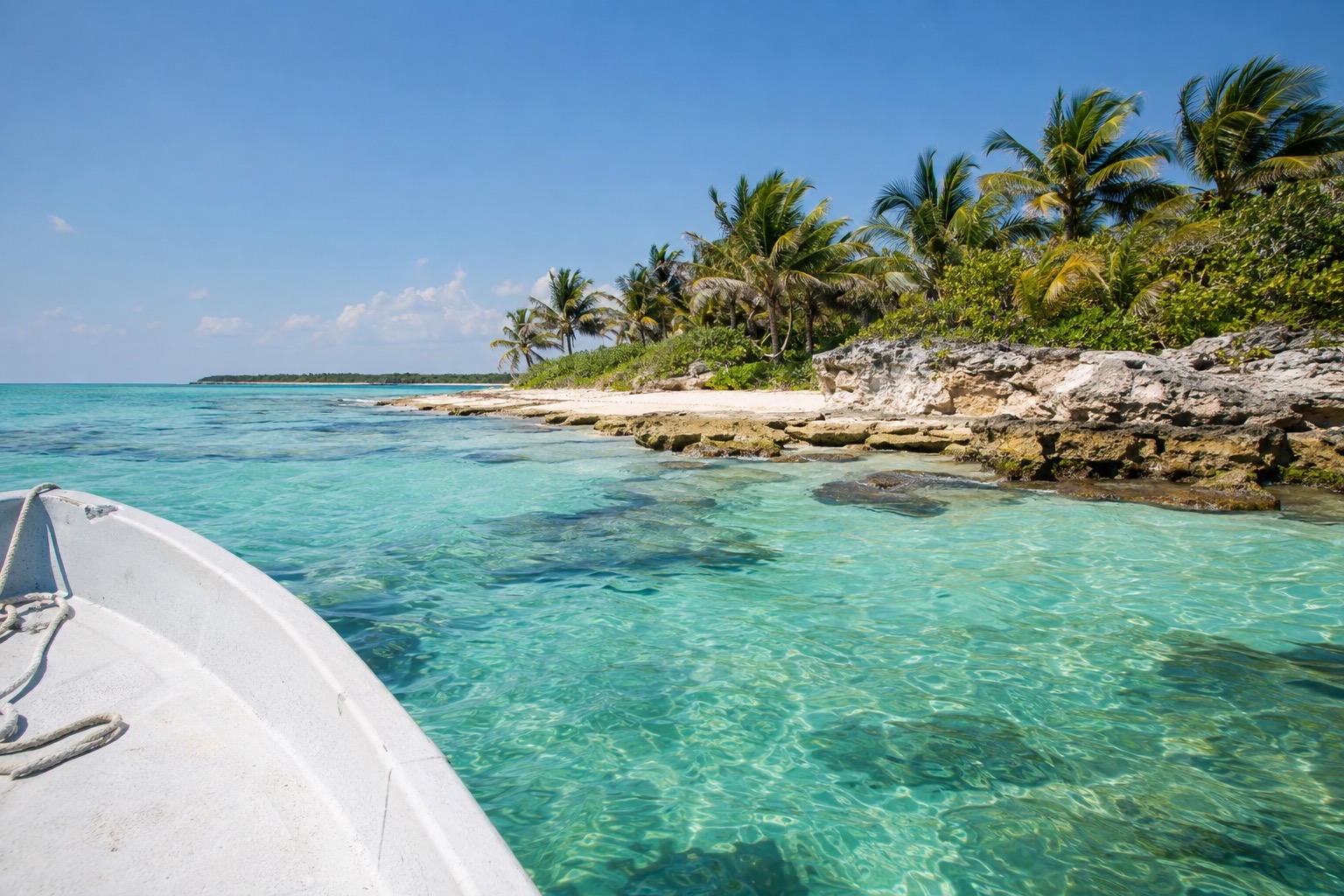
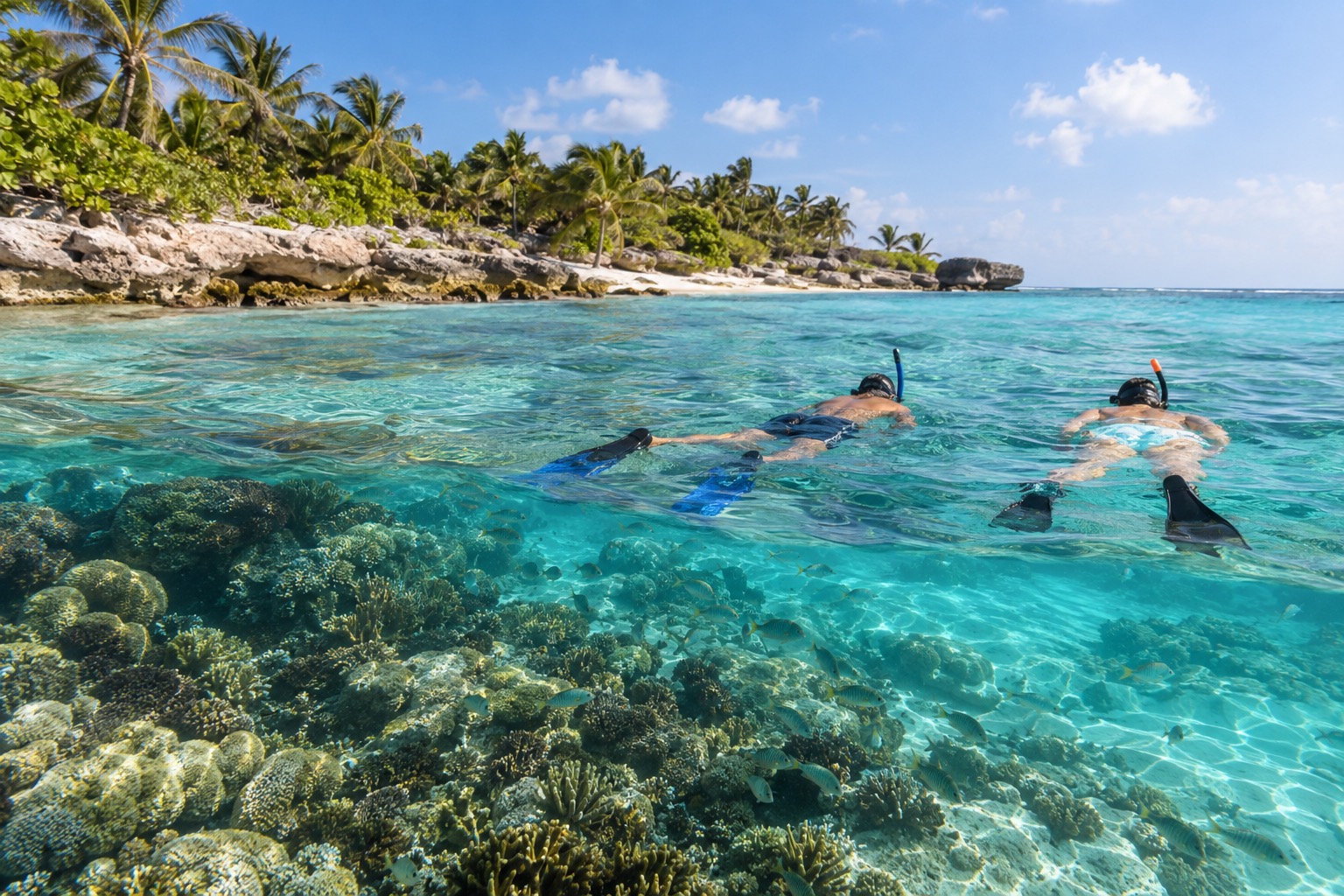
What surprises first-time visitors is how much of the island has no shore access to the famous reefs. Most of the diving and snorkeling is done from a boat, so the trip is organized around a morning departure rather than a stroll into the surf. The other surprise is how quiet the island feels once the cruise crowds head back to their ships in the late afternoon.
Entry, fees and paperwork
Foreign tourists need the Forma Migratoria Múltiple, known as the FMM. If you fly in, the airline folds the fee into your ticket and you receive the form electronically as a QR code, so there is nothing to fill out on paper at the counter.
Two local charges are easy to miss. Visitax is a state fee for foreign visitors entering Quintana Roo, and cruise passengers settle a separate charge through their cruise line instead. Lodging also carries a state tax added to the bill, slightly higher when a host or booking platform collects payment for a short-term rental.
| Fee | Amount | Who pays |
|---|---|---|
| Visitax | 2.50 UMA (about 293 pesos) | Foreign visitors entering Quintana Roo, except through the southern border |
| Cruise passenger fee | 5 US dollars | Cruise passengers, paid through the cruise line |
| Lodging tax (Impuesto Sobre Hospedaje) | 5% of the billed value | Guests of hotels and other accommodation |
| Lodging tax, platform-collected rentals | 6% of the billed value | Guests of short-term rentals paid through a host or booking platform |
| San Gervasio, general admission | 210 pesos | Visitors to the archaeological zone |
| San Gervasio, reduced admission | 105 pesos | Mexican nationals and foreign residents |
Money, cards and tipping
The peso is the currency of the island, and it is the one to count on. In Mexico, dollars are not legal tender, so every shop or restaurant that accepts them calls its own shots, picks its own exchange rate, and sets its own limits. Carrying some pesos for taxis, snacks and small purchases saves arguments over conversion.
Cards are common in restaurants, dive shops and hotels in San Miguel, while small taverns, taco counters and market stalls favor cash. A cash machine on the waterfront is the simplest way to get pesos. As a habit, tipping is customary in restaurants and for dive crews, guides and drivers, and many visitors leave a little extra in cash for hotel staff.
Getting around and staying connected
Where you sleep shapes how you move. In San Miguel, the ferry pier, restaurants and the waterfront are all within walking distance, and the airport is a short ride. Taxis and buses gather around the town, which is the island’s transport hub.
The hotel zones stretch along the coast on either side. The north is a short drive from town, the south a longer one, up to half an hour, and the southern resorts are more spread out.
Staying there without a car means leaning on taxis, which can thin out late in the evening, so arranging transfers ahead makes sense. Corpus Christi, a quiet residential pocket just south of downtown, suits renters who like to cook, though groceries and bigger beaches are a drive away, which is where a rental car or scooter earns its keep.
If you land in Cancún rather than on the island, the ferry from Playa del Carmen completes the trip. Cozumel’s own small airport is the more direct option for many.
Health, water and the sun
The Caribbean sun is strong even on a gray-looking morning, and on a boat there is little shade and plenty of reflection off the water. A hat, a long-sleeved sun shirt and reef-friendly sunscreen are habits most divers and snorkelers adopt quickly. Drink plenty of water, especially in the humid summer months, when afternoons are hot and the sea is bathwater warm.
The sea itself differs by coast. The west, where the town and piers sit, is the sheltered side. The windward east coast takes the open Caribbean, with heavier surf and a stronger undertow, so it rewards a drive and a photo more than a swim. Wherever you get in the water, look for the beach flags and ask locals about the day’s conditions.
Local customs and etiquette
A friendly buenos días or buenas tardes when you enter a shop, a taxi or a small restaurant goes a long way. Handshakes are common, and a bit of Spanish is warmly received even when the conversation continues in English.
Dress is relaxed. Swimwear belongs on the beach and the boat, and most people throw on a shirt and sandals to walk through town or step into a church. Lunch is the main meal and tends to run long, while dinner starts later than many Americans are used to. In the few craft stalls where prices are not marked, a little friendly bargaining is normal, but keep it light and good-humored.
On the reefs, the etiquette is simple: look, do not touch, and keep your fins off the coral. Since these reefs form part of the Mesoamerican Barrier Reef System, divers treat them with a gentle hand.
Good to know before you go
The U.S. State Department rates Quintana Roo Level 2, ‘Exercise increased caution,’ due to terrorism and crime.
The Atlantic hurricane season, which governs Cozumel, runs from June 1 to November 30, so plan flexibility into trips during those months. Keep your digital entry form and your fee receipts handy on your phone, and finish your first morning on the island with a slow walk along the malecón before deciding what comes next.
Sources
- INAH, "Zona Arqueologica San Gervasio" (inah.gob.mx/zonas/zona-arqueologica-san-gervasio), checked September 29, 2026
- APIQROO, "Empresa" (apiqroo.com.mx), checked September 29, 2026
- Ultramar, "Ferry Cozumel" (ultramarsales.ultramarferry.com/es/ferry-cozumel.php), checked September 29, 2026
- Congreso del Estado de Quintana Roo, Ley del Impuesto al Hospedaje del Estado de Quintana Roo, art. 8, congresoqroo.gob.mx, checked September 29, 2026
- Ley de Derechos del Estado de Quintana Roo, art. 51-Octies and 51-Nonies ; UMA value 2026 : INEGI
- Ley Federal de Derechos, art. 8-I ; Instituto Nacional de Migracion, gob.mx/inm, checked September 29, 2026
- U.S. Department of State, Mexico Travel Advisory, travel.state.gov, checked September 29, 2026 (date issued May 29, 2026)
- NOAA National Hurricane Center, nhc.noaa.gov, checked September 29, 2026
- Ley Monetaria de los Estados Unidos Mexicanos, art. 8
- Open-Meteo / ECMWF ERA5, 1991-2020 normals, grid cell 20.5083N 86.9458W, model reanalysis, not a station record, checked September 8, 2026
- Open-Meteo Marine API, average 2015-2024, checked September 8, 2026
- sunrise-sunset.org, sunrise and sunset on the 15th of the month, checked September 8, 2026
To plan your stay
- Best Time to Visit Cozumel: Weather by Month, Crowds, Sea Temperature and Festivals
- Things to Do in Cozumel: Reef Snorkeling, San Gervasio, Island Beaches and Local Food
- Where to Stay in Cozumel: San Miguel, the North and South Hotel Zones and Corpus Christi
- Cozumel Airport to City: Taxis, Transfers, Rental Cars and Drive Times to the Hotel Zones