
Early in the morning in San Miguel, the first dive boats pull away from the waterfront while pelicans sit on the pier posts and the smell of coffee drifts out of the cafés along the malecón. By afternoon the island slows down, with golf carts and scooters rolling past the plaza and fishermen cleaning the day’s catch. Cozumel is a reef island built around the water, a good fit for divers, snorkelers and anyone who likes a relaxed town with some Maya history behind it.
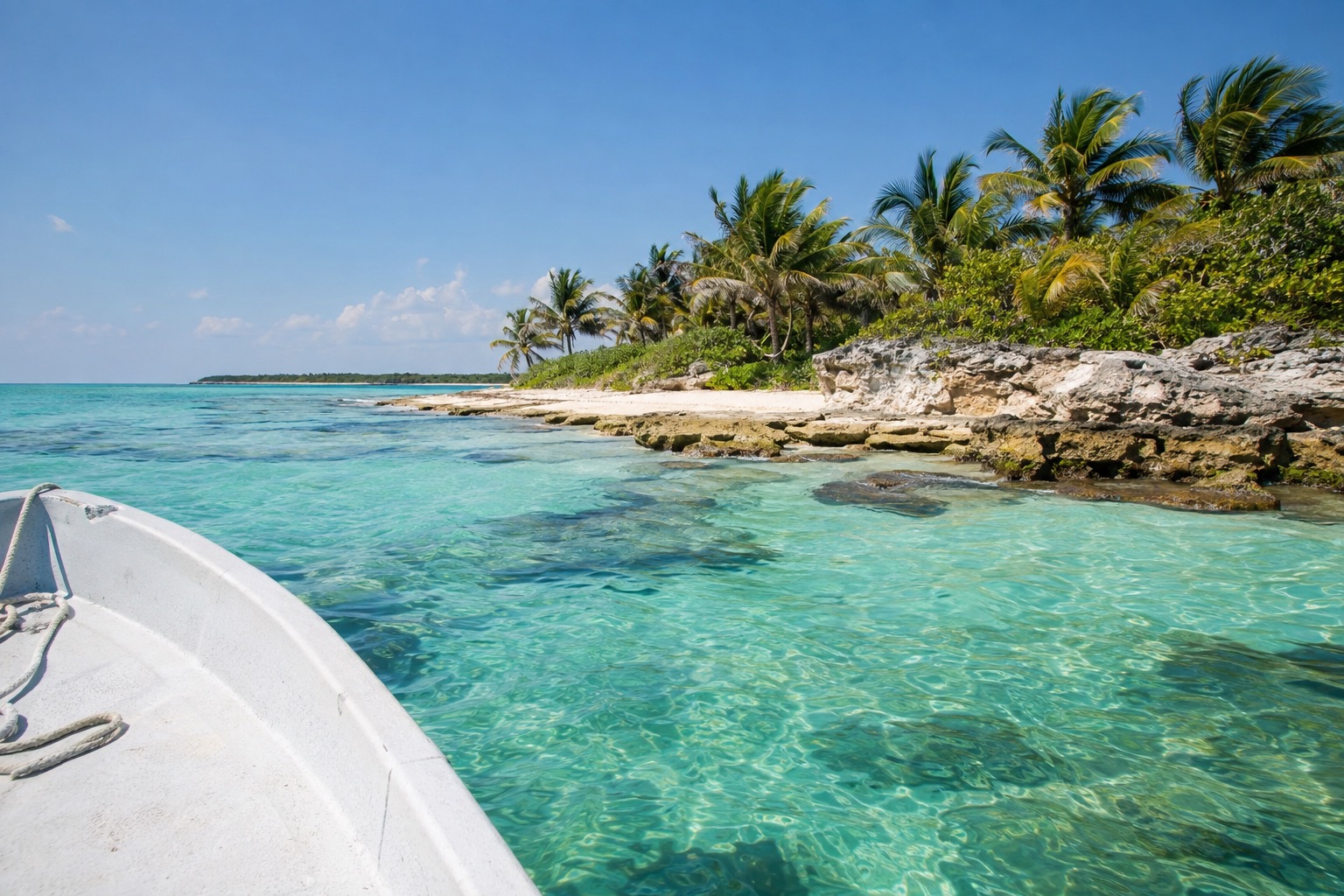
What are the best things to do in Cozumel?
The best things to do in Cozumel happen in and beside the water, with a few good stops on land to round out the days.
- Snorkel or dive the western reefs, part of the Mesoamerican Barrier Reef System.
- Walk among the temples of San Gervasio, the old sanctuary of the goddess Ixchel.
- Spend an afternoon at a calm west-coast beach club.
- Drive the wild east coast and watch the surf from the roadside.
- Stroll the malecón and the main plaza in San Miguel at sunset.
- Eat fresh fish, tacos al pastor and lime soup in town.
- Take the ferry over to Playa del Carmen for a mainland day.
Sights and landmarks in Cozumel
San Gervasio
San Gervasio is the island’s great archaeological site, a sanctuary to the Maya goddess Ixchel that grew after 1000 AD as Chichen Itza rose to power. Most of the buildings you see today date from the Late Postclassic period. Pilgrims once crossed the water to seek her blessing, and the low stone temples, shaded paths and sacred causeways still carry that quiet purpose.
The site sits inland, east of town on the paved transversal road, so it is an easy ride by taxi, scooter or rental car. Go early, before the heat builds, and bring water, since the walk is mostly in open clearings between patches of jungle.
Iguanas and butterflies are common along the paths. Admission is below, though the site’s own page listed it as temporarily closed when we last looked, so confirm it is open before heading out.
| Site | Open | Admission |
|---|---|---|
| San Gervasio | Temporarily closed at last check | 210 pesos general, 105 pesos Mexican nationals and foreign residents |
San Miguel and the waterfront
The town of San Miguel faces the calmer leeward coast, and its seafront is the island’s living room. The malecón stretches along the water with sculptures, benches and views of ferries and cruise ships gliding in. In the evening families and couples stroll here, and the main plaza fills with vendors, musicians and kids chasing each other around the kiosk.
The streets just behind the waterfront hold small shops, bakeries and bars, and the whole center is easy to cover on foot. Late afternoon is the best moment, when the light turns gold and the heat eases. It suits everyone, from cruise visitors with a few hours to travelers staying a week who want a town that feels lived in.
Smaller stops around the island
Beyond the two main sights, a loop around the island turns up small lighthouses, roadside shrines and lookout points where the road meets the sea. Punta Sur, at the southern tip, adds lagoons with birdlife and a view along the reef-lined shore. Most visitors do this loop by scooter, jeep or taxi in half a day, stopping wherever the scenery calls.
The best time to go is morning, when the light is soft and the road is quiet. It suits travelers who like to wander without a fixed plan. Carry water and sunscreen, because shade is scarce along the coast and the sun is strong.
Beaches and outdoor things to do in Cozumel
Snorkeling and diving the western reefs
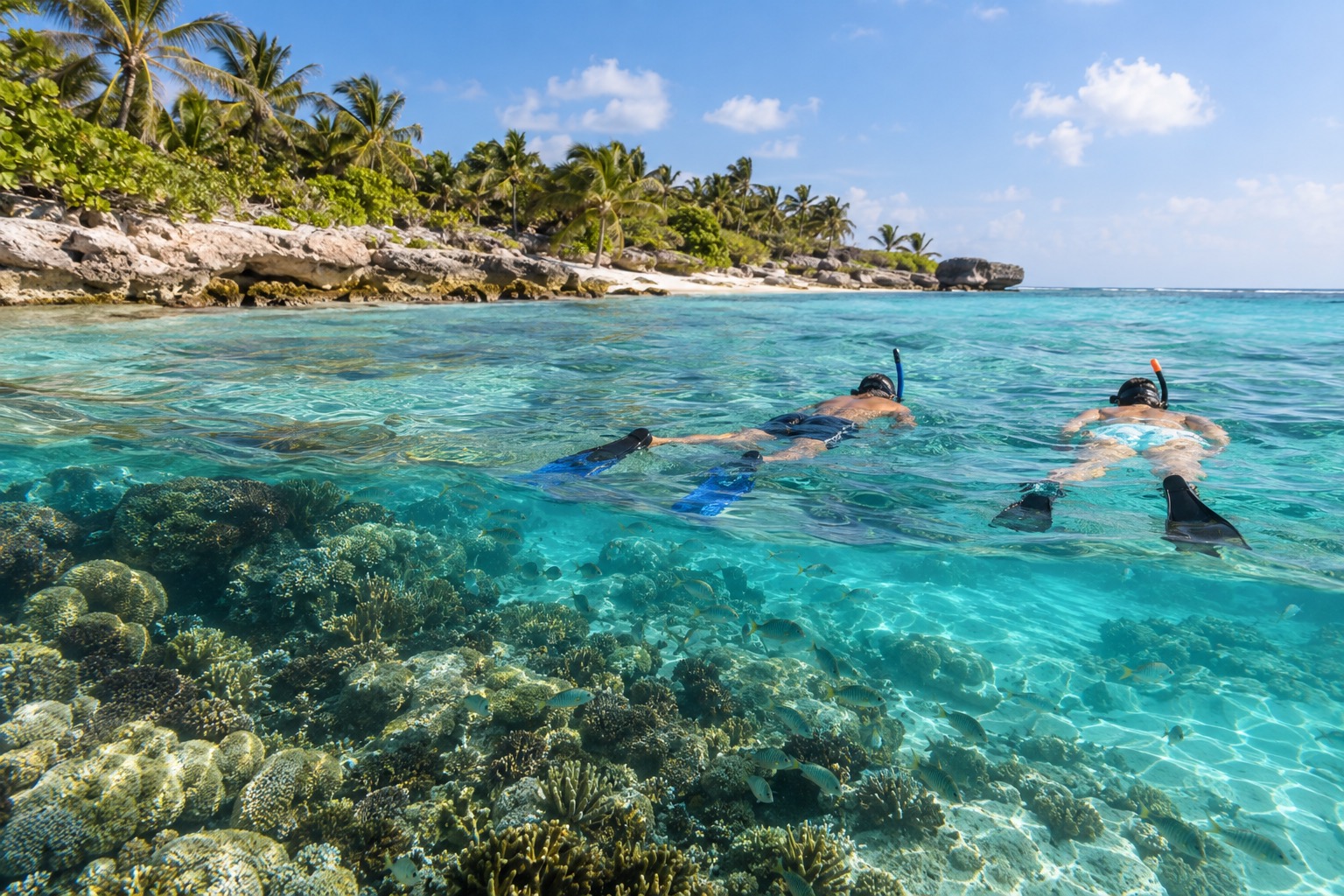
Cozumel is widely visited for scuba diving and snorkeling, and the reason is the leeward reef system, part of the Mesoamerican Barrier Reef System that runs along four countries. Walls drop away into clear blue water, with turtles, rays, eels and schools of colorful fish drifting past coral heads.
Most of these reefs are reached by boat rather than from shore, so the day usually starts at a pier with a crew and a short ride out. Mornings tend to be calmer on the water. Beginners can float over shallow gardens, while certified divers head for the deeper walls and drift dives the island is known for.
West coast beach clubs
The west coast faces the calmer side of the island, where the water is usually gentler for a swim, though conditions still change with the wind. Beach clubs line the shore with lounge chairs, shallow entries, small reefs just off the sand and a menu of ceviche and cold drinks. Families like them because the water stays gentle and there is shade.
Expect music, kayaks and paddleboards at many of them, and a lively crowd when cruise ships are in port. Go on a day with fewer ships if you want more space. Late afternoon is lovely, with sunsets over the water and a softer mood.
The wild east coast
The east coast faces the open Caribbean, with rougher surf and a stronger undertow, so it is for looking and walking rather than casual swimming. The road runs beside long stretches of rocky shore and empty sand, with small beach bars set along the way where you can sit with a cold drink and watch the waves roll in.
It is a favorite for a scooter or jeep ride, with plenty of places to stop for photos and a slow lunch. Wind keeps the air fresher here than in town. Treat the water with respect and keep to the shore unless a spot is clearly sheltered.
Day trips from Cozumel
Playa del Carmen
Playa del Carmen is the natural mainland trip, reached on the Ultramar ferry that links it with Cozumel. The crossing itself is part of the fun, with the island shrinking behind you and the coast coming into view. Once there, Fifth Avenue is a long pedestrian street of shops, cafés and street performers a few blocks from the sea.
It suits travelers who want shopping, a wider choice of restaurants or a beach scene with more energy than Cozumel. Go in the morning to have a full day, and keep an eye on the return schedule so you are not rushing at the end.
Cancun by way of the mainland
Many visitors fly into Cancun because it carries far more international routes than Cozumel’s small airport, then reach the island by ferry from Playa del Carmen. Others do the reverse as a day out, heading north for the Hotel Zone beaches, big resorts and the lively downtown.
It makes a long day, best for people who want city energy and wide beaches after the quiet of the island. Start early and plan your return around the ferry so the evening stays relaxed.
Maya sites on the mainland
After seeing San Gervasio, curious travelers often cross to the mainland to see how the wider Maya world looked. The coast holds clifftop ruins and larger cities, and the story of Ixchel pilgrimages connects the island to those places. Chichen Itza, whose rise shaped San Gervasio’s growth, is the best-known name in the region.
These are long outings that usually mean an organized tour or a rental car from the mainland side. They suit history lovers who do not mind an early start and a full day of walking in the sun.
What to eat in Cozumel
Eating in Cozumel starts with the sea, then moves to the Yucatecan kitchen that anchors the whole region. Fresh grilled fish, ceviche with lime and chile, and shrimp cooked in garlic show up on nearly every menu along the waterfront.
Look for cochinita pibil, pork slow-cooked in achiote and sour orange, served in tacos or on a torta. Sopa de lima, a bright chicken soup with lime and crisp tortilla strips, is a local comfort dish. Tacos al pastor, panuchos and salbutes appear at casual taquerías around the plaza.
To drink, there are cold beers, fresh coconut water, horchata and margaritas on the beach. Small family places a few blocks from the waterfront often serve the most satisfying meals, with simple tables and a short daily menu.
Things to do in Cozumel at night
Evenings in Cozumel are relaxed, centered on the waterfront and the plaza, where people gather after sunset. Many travelers have dinner by the sea, then walk the malecón while the lights come on and the ferries slide in and out.
There is live music in a number of bars, from acoustic sets to reggae and salsa, and a few spots stay lively late. Divers tend to turn in early for morning boats, so the mood is more easygoing than party-driven. For something quieter, an ice cream on the plaza bench or a drink on a rooftop terrace makes a pleasant end to the day.
Things to do in Cozumel with kids
Kids do well in Cozumel because so much of the island is about shallow water, boats and animals. The west-coast beach clubs have gentle entries, shade and floating toys, and many let children snorkel over small reefs close to shore.
A boat ride along the coast, a stop to spot iguanas at San Gervasio and a walk on the malecón fill a day nicely. Heat and strong sun are the main things to plan around, so schedule outdoor time for the morning and take breaks in the shade. Keep children away from the rougher east-coast surf, where the undertow is stronger.
Good to know before you go
The U.S. State Department rates Quintana Roo Level 2, ‘Exercise increased caution,’ due to terrorism and crime.
Cozumel has its own small international airport, though many visitors fly into Cancun and finish the trip by ferry from Playa del Carmen. On the island, taxis, scooters and rental cars handle most distances. Dollars are not legal tender in Mexico, so each business decides whether to accept them and at what rate. The Atlantic hurricane season runs from June 1 to November 30.
| Fee | Amount | Who pays |
|---|---|---|
| Visitax (state fee) | 2.50 UMA, about 293 pesos | Foreign visitors entering Quintana Roo |
| Cruise passenger fee | 5 US dollars, collected by the cruise line | Cruise passengers, instead of Visitax |
| Lodging tax (Impuesto Sobre Hospedaje) | 5% of the billed value, or 6% when a host or booking platform collects payment for a short-term rental | Guests staying in paid accommodation |
Sources
- INAH, "Zona Arqueologica San Gervasio" (inah.gob.mx/zonas/zona-arqueologica-san-gervasio), checked September 29, 2026
- APIQROO, "Empresa" (apiqroo.com.mx), checked September 29, 2026
- Ultramar, "Ferry Cozumel" (ultramarsales.ultramarferry.com/es/ferry-cozumel.php), checked September 29, 2026
- Congreso del Estado de Quintana Roo, Ley del Impuesto al Hospedaje del Estado de Quintana Roo, art. 8, congresoqroo.gob.mx, checked September 29, 2026
- Ley de Derechos del Estado de Quintana Roo, art. 51-Octies and 51-Nonies, congresoqroo.gob.mx, checked September 29, 2026
- Ley Federal de Derechos, art. 8-I ; Instituto Nacional de Migracion, gob.mx/inm, checked September 29, 2026
- U.S. Department of State, Mexico Travel Advisory, travel.state.gov, checked September 29, 2026
- NOAA National Hurricane Center, nhc.noaa.gov, checked September 29, 2026
- Ley Monetaria de los Estados Unidos Mexicanos, art. 8
To plan your stay
- Best Time to Visit Cozumel: Weather by Month, Crowds, Sea Temperature and Festivals
- Where to Stay in Cozumel: San Miguel, the North and South Hotel Zones and Corpus Christi
- Cozumel Airport to City: Taxis, Transfers, Rental Cars and Drive Times to the Hotel Zones
- Know Before You Go to Cozumel: Entry Fees, Pesos and Dollars, Getting Around and Reef Etiquette