
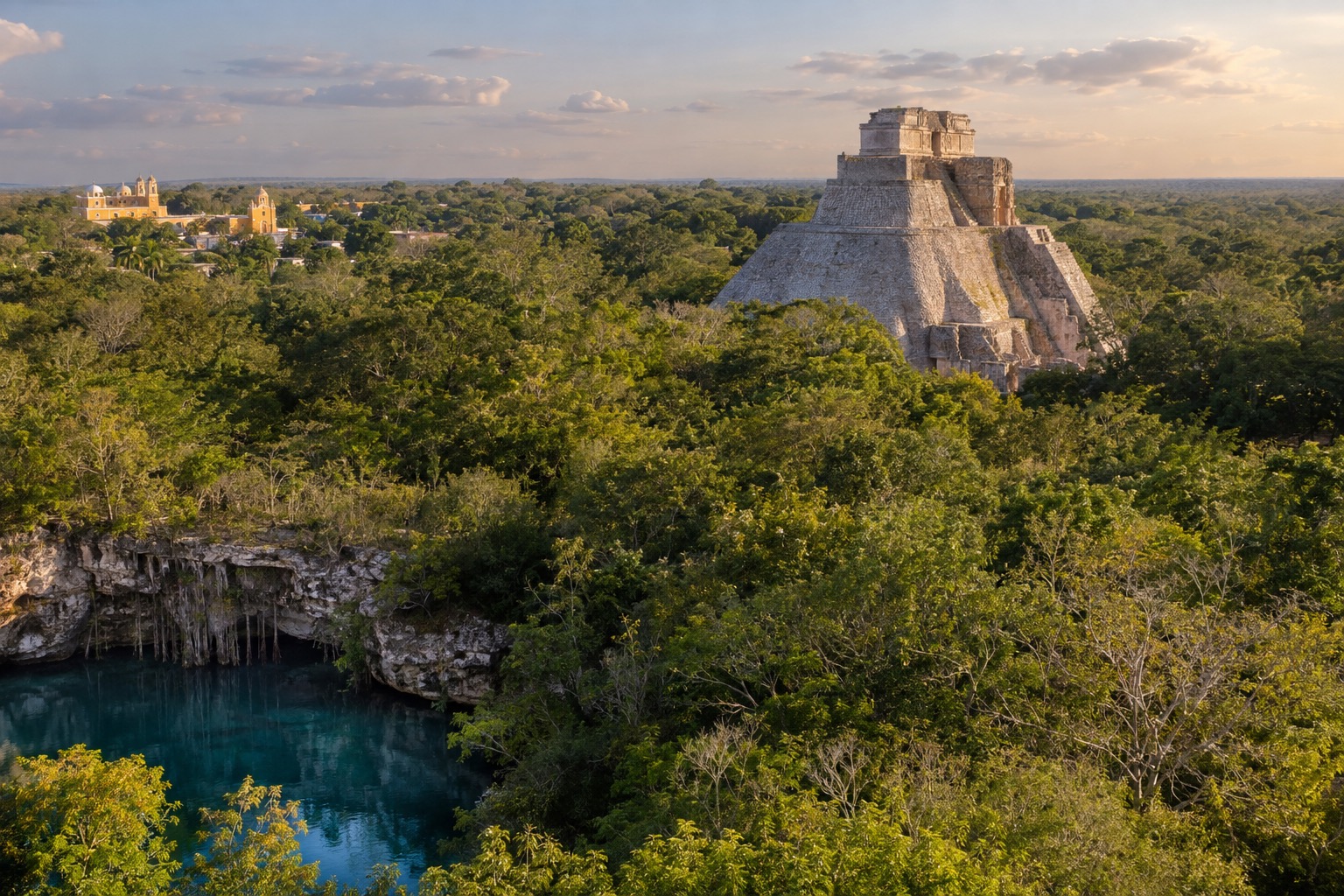
You come up the path from the entrance and the jungle opens onto a lawn, with the pale stepped bulk of the Temple of the Inscriptions rising against a wall of green. Howler monkeys growl somewhere in the canopy, and the stone still holds the damp of the night. Palenque is a Maya city set in dense rainforest in Chiapas, and a visit here is slow, shady and more about atmosphere than checking off monuments.
Is visiting Palenque worth it?
Yes, especially for travelers who care about carved stone, old stories and the feel of a ruin still half swallowed by trees. It suits curious walkers more than anyone looking for sheer scale.
Other Maya sites in the region are open plazas under a big sky, but Palenque is intimate and green. It is known for the refinement of its stone carving and stucco work, and the forest pressing in on every side is part of the experience. UNESCO recognized that combination when it added the site to the World Heritage List in 1987.
What to see at Palenque
The Temple of the Inscriptions
This is the monument everyone comes for, a stepped pyramid crowned by a small temple. Inside it lay the tomb of the ruler Pakal, found by archaeologists who followed a hidden stairway down into the structure. It was one of the great discoveries of Maya archaeology, because until then pyramids in the Maya world were not thought to have been built as funerary monuments.
Look for the long hieroglyphic panels in the temple at the top, which give the building its name and record the history of the dynasty. The best view is from the lawn across from it, where you can take in the whole pyramid with the forested hill rising behind.
It is a fine place to linger in the early hours, when the light is soft on the limestone and the grounds are quiet. Stay on the paths and let the setting do the work.
Carving and stucco in the central group
Beside the great pyramid, the buildings around the central plaza show what Palenque’s artists did best. The palace complex, with its courtyards and its distinctive tower, is the most striking, and fragments of stucco relief still cling to walls and piers. Figures with elaborate headdresses, glyph bands and graceful proportions give the city a reputation for delicacy.
Take your time and look closely, because the details are small and easy to miss. Shifting light changes how the reliefs read, so a second pass through the plaza later in the visit often shows you things you walked past the first time.
The rainforest around the ruins
The jungle is more than a backdrop. Shaded paths wind past smaller temples half hidden in the trees, and the soundtrack is birdsong, insects and the deep roar of howler monkeys. Many visitors find the walks between the buildings as memorable as the buildings themselves.
It suits anyone who likes to wander without a fixed route. In the wetter months the greens are deeper and the air heavier, while the drier months make for easier, brighter walking.
Hours, tickets and rules
The site opens every day of the week, from morning to late afternoon. Entry is cheaper for Mexican nationals and foreign residents of Mexico, and several groups get in free.
| Site | Open | Admission |
|---|---|---|
| Palenque archaeological site | Monday to Sunday, 8:00 a.m. to 5:00 p.m. (last entry 4:00 p.m.) | 210 pesos general; 105 pesos for Mexican nationals and foreign residents of Mexico; free for Mexican nationals and foreign residents on Sundays; free for children under 13, visitors 60 and older, people with disabilities, and Mexican teachers and students with valid ID |
How to get to Palenque
The ruins sit beside the modern town of Palenque, in the lowlands of Chiapas near the Usumacinta River, and the town is the natural base for the visit. It lies about 81 miles south of Ciudad del Carmen, another reference point for planning a route across the region.
When to visit Palenque
Go as early as the gates allow. The morning is the coolest part of the day under the forest canopy, the plazas are quieter, and mist can still hang over the trees. By midday the humidity builds, and the last admission comes in the late afternoon, so an unhurried visit belongs in the first half of the day.
December to February bring only a few rainy days, which makes them the easiest months for walking the site. From June through October rain falls on most days, and September is the wettest, so expect showers and soaked paths, though also deep-green scenery and fewer people. Sundays draw Mexican families, since entry is free for nationals and residents then.
Tips for your visit
Bring water, a hat and sturdy shoes with good grip, since paths and stone can be slick after rain. A light rain layer is worth having in the wetter months, and insect repellent helps in the shade of the forest.
Plan a relaxed half day so you can wander beyond the main plaza without watching the clock. Families with children under 13 enter free, and people with disabilities also enjoy free admission. Afterward, the town next door is the place for a long lunch and a rest out of the heat.
Good to know before you go
The U.S. State Department rates the state of Chiapas at Level 3, Reconsider Travel.
Prices are in Mexican pesos, so carry some cash for the entrance and small purchases around the site. Keep your belongings close in crowded spots, as you would anywhere, and drink plenty of water, since the lowland heat and humidity wear you down faster than you expect.
Sources
- Wikipedia, "Palenque" infobox, en.wikipedia.org, checked September 29, 2026 (secondary source; official UNESCO not reached that day, 403)
- Wikipedia, "Palenque", en.wikipedia.org, checked September 29, 2026
- common knowledge
- INAH, official for the Palenque archaeological zone, inah.gob.mx/zonas/zona-arqueologica-palenque, checked September 29, 2026
- INAH, inah.gob.mx/zonas-arqueologicas, checked September 29, 2026
- INAH, Museo de los Altos de Chiapas Exconvento Santo Domingo de Guzman (inah.gob.mx/museos/museo-de-los-altos-de-chiapas-exconvento-santo-domingo-de-guzman), checked September 29, 2026
- INAH, meme page, checked September 29, 2026
- US Department of State, Mexico Travel Advisory (travel.state.gov), advisory of May 29, 2026, checked September 29, 2026 (date issued May 29, 2026)
- Servicio Meteorologico Nacional (CONAGUA), normales climatologicas 1991-2020, estacion 07087 (La Cabaña, San Cristóbal De Las Casas), checked September 29, 2026
To plan your stay
- Best Time to Visit Mexico: Weather by Region, Crowds, Hurricane Season and Festivals
- Where to Stay in Mexico: Riviera Maya, Los Cabos, Puerto Vallarta, Mexico City and All-Inclusive Areas
- Getting Around Mexico: Buses, the Tren Maya, Taxis and Driving Your Own Car
- Mexico Travel Tips: Dollars, Tourist Tax, Tipping, Tap Water, Driving and Safety by State