
You step off the bus or out of the taxi in Tulum and the first thing you notice is the mix: bicycles weaving along a narrow road, the smell of grilled meat from a taco stand, a beach club playing something soft behind the palms. The town splits into a busy inland center, a barefoot beach strip and newer neighborhoods in between, and each one runs a little differently. A few practical details make the first day easier for anyone coming from the States.
What should you know before visiting Tulum?
Four things matter most: a small tax paid on entry to Quintana Roo, a habit of carrying some cash, the distance between the town and the beach, and the sun. Most other questions follow from those.
First-time visitors are often surprised by how spread out Tulum is. The ruins, the town, the beach road and the newer neighborhoods are separate places, and you move between them by taxi, shared van or bicycle. Many are also surprised that the beach strip feels more like a quiet, low-rise jungle road than a resort town, with small hotels and few big buildings.
Entry, fees and paperwork
Foreign visitors entering Quintana Roo pay a state tax called Visitax, with an exception for those who enter through the state’s southern border. Cruise passengers pay a separate charge through the cruise line instead. The amount is in the table, and it is separate from anything you pay at a site.
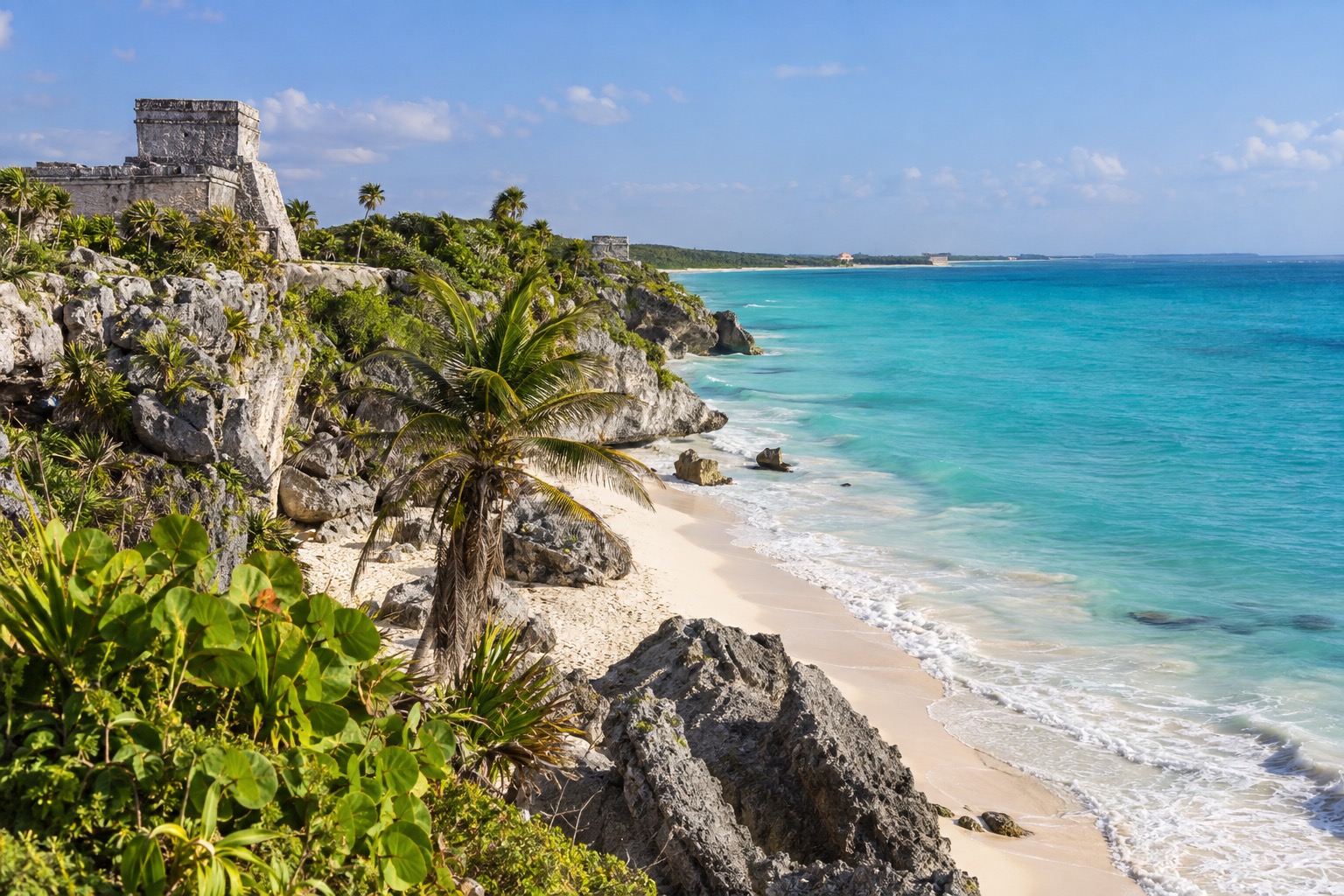
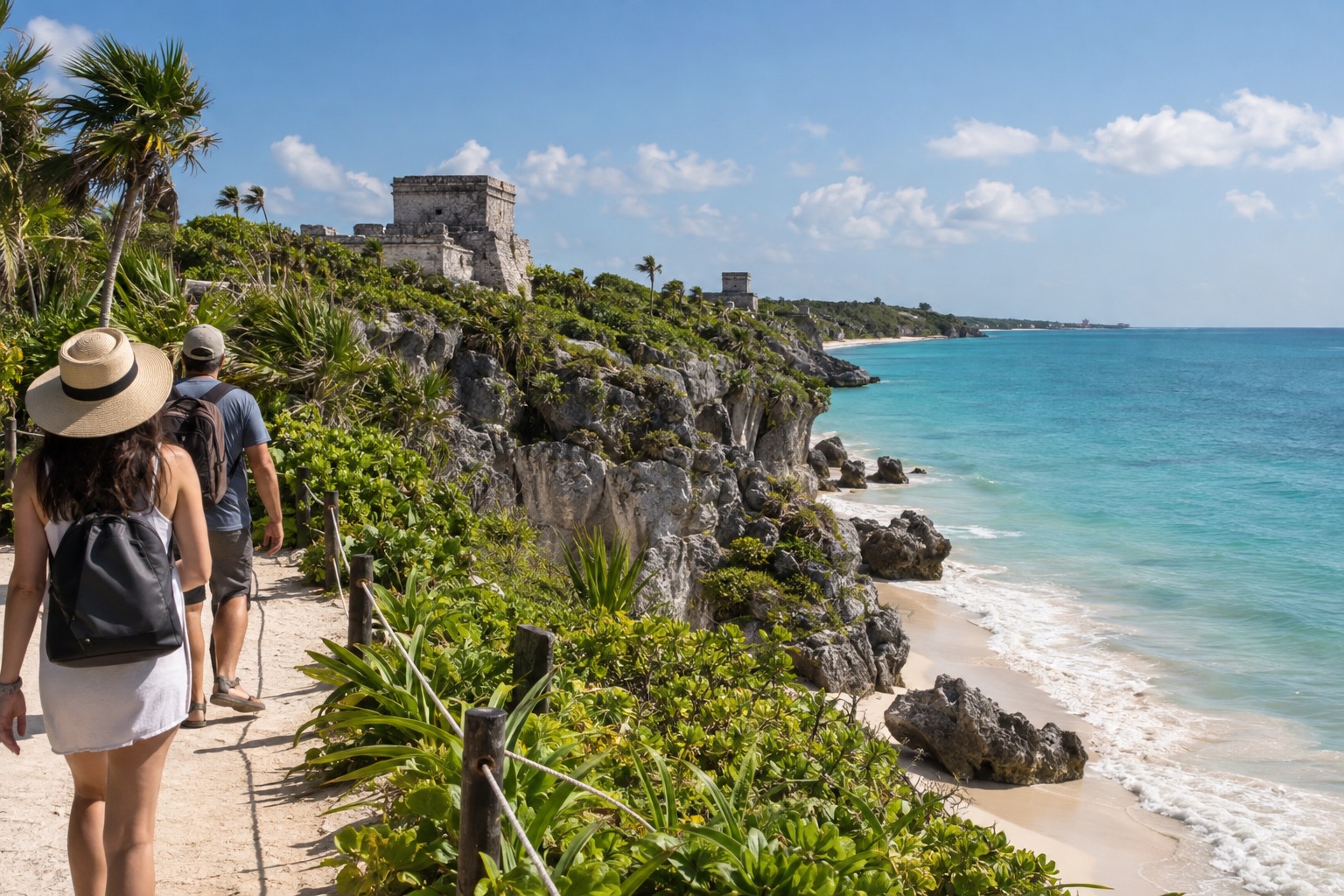
The ruins sit on low cliffs right above the Caribbean, and the entrance is on the federal highway. Mexican nationals and foreign residents of Mexico enter free on Sundays, and children, seniors, people with disabilities and Mexican teachers and students with valid ID have standing exemptions. Hours and the foreign visitor fee are in the second table.
| Fee | Amount | Who pays |
|---|---|---|
| Visitax | 2.50 UMA (about 293 pesos) | Foreign visitors entering Quintana Roo, except through the southern border |
| Tulum ruins admission | 265.00 pesos | Foreign visitors |
| Tulum ruins admission | 80.00 pesos | Mexican nationals |
| Site | Open | Admission |
|---|---|---|
| Tulum archaeological zone | Monday to Sunday, 8:00 a.m. to 5:00 p.m. (last entry 3:30 p.m.) | 265.00 pesos foreign visitors, 80.00 pesos Mexican nationals, free Sundays for Mexican nationals and foreign residents |
Money, cards and tipping
Pesos are the local currency, and they are the easiest way to pay at taco stands, market stalls and small shops in town. Many places in the tourist areas also quote prices in dollars, but the exchange rate you get may not be the best, so paying in pesos is usually simpler.
You can pay with a card at lots of hotels and restaurants, but a few smaller beach spots set minimums for card charges or have no card machine whatsoever. Bring cash for the beach strip. Tipping is a habit rather than a rule: a tip of around ten to fifteen percent is common in sit-down restaurants, and small bills go to bellhops, housekeepers and tour guides.
Getting around and staying connected
Distances in Tulum are short but awkward. From the town center, the beach zone is a taxi ride of 10 to 20 minutes or a bicycle ride of 20 to 35 minutes, and shared vans called colectivos run often to the beach and nearby ruins. In town, the main avenue is compact and easy on foot.
Since the beach road is narrow and parking is scarce, most people travel it on foot or by bike. Taxis can be flagged or called. Around the newer residential neighborhoods, having a bike or scooter makes getting around easier, and late at night taxis may be tough to track down. After rain, rides on the unpaved roads of La Veleta can run slower.
When it comes to airports, Tulum offers its own, roughly 12 miles southwest of the town, while Cancun lies farther north, about 90 minutes to 2 hours away by car or private transfer. The ADO bus leaves the station on Avenida Tulum and goes direct to Cancun airport, a trip of about 2 to 2.5 hours, and buying tickets online is worthwhile in high season.
Health, water and the sun
The sun does most of the work here, in every season. Afternoons in July reach the high 80s and nights stay warm, while January days are in the low 80s with cooler evenings. Hats, sunscreen and a refillable bottle are part of any day at the ruins, where there is little shade on the cliffs.
The sea is warm all year, around the low 80s in January and the mid-80s in July. Waves on the open Caribbean can change from day to day, so check the beach flags before you swim. Rain comes as measurable showers on roughly a week of any given month, and the wetter days in summer feel humid, so a light rain layer is useful.
Local customs and etiquette
A greeting goes a long way. A simple buenos días or buenas tardes when you walk into a shop, a taxi or a small restaurant is the normal habit, and it is usually met with a smile. In town, people dress casually, and beachwear is for the beach, so throw on a shirt and sandals before walking into a market or a church.
Prices in shops and restaurants are generally fixed, while some craft stalls and markets welcome a friendly bit of bargaining. Keep it light and polite. Lunch is the main meal and often runs long, and dinner tends to start later than in many U.S. towns, so restaurants are livelier after dark than at six.
Good to know before you go
The U.S. State Department rates the state of Quintana Roo Level 2, ‘Exercise increased caution,’ due to terrorism and crime.
The Atlantic hurricane season runs from June 1 to November 30, with most activity from mid-August to mid-October, so a trip in those months is worth planning with flexible bookings. Keep your Visitax receipt handy, and from December through April, book beach club daybeds and restaurant tables ahead. One last habit that pays off: carry a little cash, and a flashlight if you are staying on the unlit roads outside the center.
Sources
- INAH, official for the Tulum archaeological zone, inah.gob.mx/zonas/99-zona-arqueologica-de-tulum, checked September 29, 2026
- Wikipedia, "Tulum", en.wikipedia.org, checked September 29, 2026 (source secondaire)
- INAH, inah.gob.mx/zonas-arqueologicas, checked September 29, 2026
- UNESCO World Heritage Centre, record 410, whc.unesco.org/en/list/410, checked September 29, 2026
- reserve de sourcage (CONANP dediee non atteinte, 404), aucun chiffre affirme
- common knowledge; no single official source available
- Wikipedia, "Tulum International Airport", en.wikipedia.org, checked September 29, 2026 (secondary source; the group’s official site not reachable that day)
- Wikipedia, "Tulum Municipality", en.wikipedia.org, checked September 29, 2026 (source secondaire)
- U.S. Department of State, Bureau of Consular Affairs, Mexico Travel Advisory, travel.state.gov, checked September 29, 2026 (date issued May 29, 2026) (date issued May 29, 2026)
- Ley de Derechos del Estado de Quintana Roo, art. 51-Octies and 51-Nonies ; UMA value 2026 : INEGI
- NOAA National Hurricane Center, checked September 29, 2026
- Servicio Meteorologico Nacional (CONAGUA), normales climatologicas 1991-2020, estacion 23025 (Tulum, Tulum), checked September 29, 2026
- Open-Meteo Marine API, average 2015-2024, checked September 8, 2026
- sunrise-sunset.org, sunrise and sunset on the 15th of the month, checked September 8, 2026