
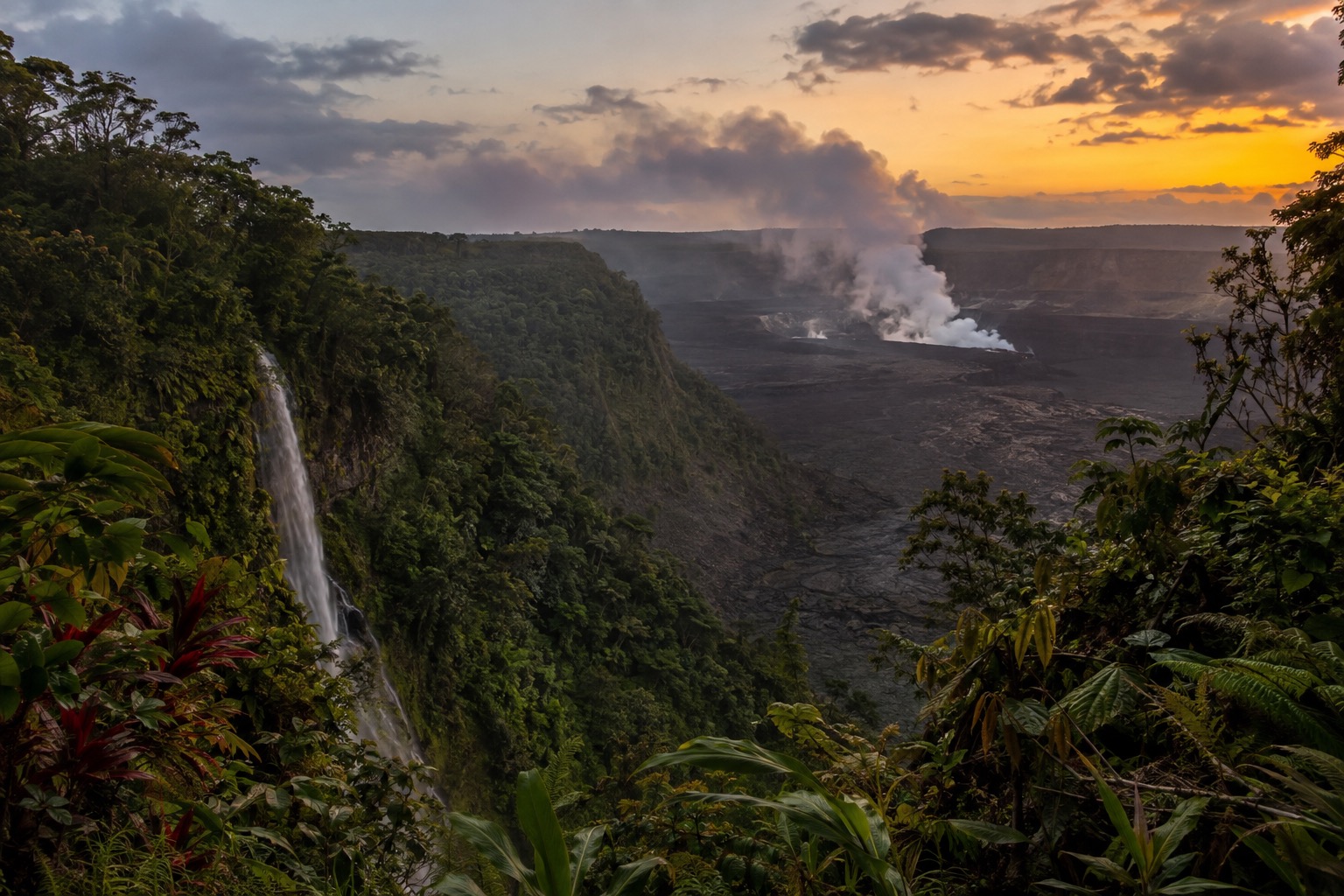
Come December, cool morning air carries steam rising from the vents beside Crater Rim Drive, while visitors pull their jackets tight to the chin and ferns drip in the rainforest. After dark the sky over Kilauea sometimes holds a faint orange glow above the summit crater, and the silence around it feels almost reverent. This is Hawaii Volcanoes National Park in the cool, wet half of the year, a month for layers, lava rock underfoot and slow walks through forest and steam.
What is the weather like in Hawaii Volcanoes National Park in December?
Come December at the summit of Kilauea, the weather changes frequently and carries a cool, damp feel, bringing mild warmth during the day, chilly nights, and rain that can arrive at any moment.
| Month | Average high (°F) | Average low (°F) | Rain days |
|---|---|---|---|
| November | 70.3 | 54.0 | 15.1 |
| December | 68.2 | 51.7 | 15.0 |
| January | 68.3 | 49.4 | 10.7 |
The park headquarters sit high on the volcano, so you are in a mountain climate, not a beach one. Mornings often start gray and brisk, with mist hanging in the ohia forest and the steam vents looking their most dramatic. Midday can bring a break of sun that warms the lava fields enough for short sleeves, but it rarely lasts, and a passing shower is normal rather than a sign the day is lost.
Rain falls on roughly every other day, usually as a shower that blows through in the trade winds, though some days stay drizzly from dawn to dusk. The forest side near the Thurston Lava Tube and the rim gets the most, while the lower, drier stretches toward the coast along Chain of Craters Road are often sunnier and a little warmer. Plenty of rain also means a deep green fern forest and waterlogged trails, so mud is part of the experience.
Evenings turn properly cold once the sun drops, and the sun sets early with about eleven hours of daylight in mid-December. A fleece or light down jacket and a rain shell cover most of it. Because the light fades early, the glow of the crater, when it is active, becomes a main event of the evening.
What to do in Hawaii Volcanoes National Park in December
December suits the park well because the cool air makes long walks comfortable and the clouds and mist give the craters a moody look. There is no single festival that defines the month inside the park, but the holiday season brings families, a gentle buzz in the nearby villages of Volcano and a lot of people hoping for a view of the crater at night. The season also suits warm food after a damp walk: a bowl of soup, a loco moco or a plate of local plate lunch in a village cafe.
Start with the summit area, where the main sights sit close together along Crater Rim Drive. You can stop at overlooks above the great caldera of Kilauea, walk past steaming vents and sulfur banks, and peer into old lava tubes. The forest and the crater edge change character with the weather, so a gray morning is no reason to skip them.
The Kilauea summit and the crater at night
The summit caldera is the heart of any visit. From the overlooks near the visitor center you look across a vast, steaming depression that shows different faces by hour. In the morning the vapor rises in pale columns, and the hush is striking. If the volcano is active, the real show is after dark, when a red glow may light the underside of the clouds.
Glow and eruptions are chances, never promises, and they change from week to week. Dress warmly for the wait, because the rim is exposed and the wind carries a real chill in December. The best plan is to visit in daylight, eat dinner nearby, and return after dark to see whether the sky is lit.
Rainforest walks and lava tubes
The wet season suits the forest. Tree ferns grow taller than a person, birds call from the ohia, and the trails near the Thurston Lava Tube feel like a green cathedral on a drizzly morning. The tube itself is a short walk through a tunnel left behind by flowing lava, a good stop when the rain picks up because the roof keeps you dry.
Wear shoes with grip, since wet rock and roots are slick. Mornings tend to be quieter here, and you may hear native birds before the day trippers arrive. Families with children usually love this stop, as it is short, dramatic and easy to pair with a picnic at a shelter.
Chain of Craters Road to the coast
Across ancient lava flows, the road descends from the chilly summit toward the ocean, and the scenery shifts from forest to bare, black rock. Pull-offs show ancient petroglyphs, steep sea cliffs and the spot where the road ends under a hardened flow. It is warmer and drier toward the bottom, so this is a good choice when the summit is socked in with cloud.
The ocean here is wild, with heavy swells and sheer cliffs, and it is for looking at, not swimming. Treat the shore edges with respect, as the rock can be unstable. Pack a snack and water, because there is little along the way, and plan your return so you are not on the road in the dark.
Around the park, the village of Volcano has small galleries, bakeries and cafes, and wineries and fern-lined lanes make a pleasant detour on a rainy afternoon. Nearby Hilo, on the wet side, has a farmers market and a waterfront for a larger meal after a day on the mountain. Respect the land throughout, since the volcano is sacred to Native Hawaiians, and stay on marked trails and away from fragile rock.
A two-day itinerary for Hawaii Volcanoes National Park in December
Day 1 begins at the summit. Get there at first light, when the chill is in the air and the steam vents look their best in photos, and afterward swing by the visitor center to check on conditions and which trails are open. Walk the rim overlooks and the sulfur banks in the morning, when the crowds are thin and the mist lifts and falls over the caldera.
At midday, step into the rainforest for the Thurston Lava Tube, then eat lunch in the village of Volcano, where cafes and bakeries serve warm food. In the afternoon, take a gentler walk along the rim or visit a gallery, saving energy for the evening. Return to the overlook after dark to look for the crater glow, wrapped in layers.
Day 2 is for the coast. While the morning lava glow is soft and the cliffs look their crispest, drive Chain of Craters Road, stopping at pull-offs for petroglyphs and sea arch views. Eat a packed lunch at the bottom, where the air is warmer and drier than at the summit.
Head back up in the afternoon and aim to be off the road before the early dusk. If the weather turns, switch to the visitor center exhibits, a village cafe and a gallery browse, then a late dinner in Hilo.
Is Hawaii Volcanoes National Park busy in December?
December is moderately busy, with the heaviest crowds in the days around Christmas and New Year and calmer stretches in the first weeks of the month.
The park draws mainland families on school break, cruise passengers on shore days from Hilo, and travelers combining the volcano with beach stays on the Kona side. Overlooks near the visitor center fill at midday and again around sunset if the glow is on. Early mornings and the hours right after lunch are the quieter windows, and the rainy days often thin the crowds noticeably.
Volcano village does not have many rooms, and small inns plus vacation rentals get taken first, so for the holiday weeks you should book early and for early December a little later. Rental cars on the island tend to be harder to find around the holidays, so reserve them with your flights. Restaurant tables in Volcano and Hilo are easiest on weekdays, and a reservation helps on the evenings people come back from the crater.
What to pack for Hawaii Volcanoes National Park in December
Think mountain weather in the tropics: layers, rain protection and shoes that handle wet lava rock.
- A waterproof shell, because showers arrive on most days.
- A fleece or light down jacket for cold mornings and the crater at night.
- Sturdy shoes with grip, for slick roots and sharp lava.
- A warm hat and light gloves for waiting at the rim after dark.
- A small flashlight or headlamp for the walk back from the overlook.
- Water and snacks, since the road to the coast has little.
Good to know before you go
December falls outside the official hurricane season, which runs June 1 to November 30, but wet weather and cloud are common at the summit. Holiday weeks are the busy ones, so book lodging and a car early. Hawaii taxes lodging, and the rates below apply to stays.
| Fee | Amount | Who pays |
|---|---|---|
| State Transient Accommodations Tax | 11.00% | Guests of hotels and rentals |
| County of Hawaii Transient Accommodations Tax | 3% | Guests of hotels and rentals in the county |
Hawaii Volcanoes National Park in December vs November and January
Moving to November brings slightly warmer days and nights, with the same frequency of showers, and a calmer stretch before the holiday crowds. November falls entirely inside the hurricane season, which ends on November 30. It suits travelers who want a bit more mildness and easier lodging.
Moving to January brings the coldest nights of the three and fewer rainy days, so the skies are somewhat more likely to open for views. The holiday rush fades after the first days of the month, and rooms ease up. Winter surf on the north and west shores of the islands continues, which matters if you combine the park with beach days elsewhere.
Choose December if the holiday weeks are your only window and you enjoy the festive mood in the villages. Shift to November for easier bookings and slightly warmer nights, or to January for a bit more chance of clear skies and a quieter park.
Is December a good time to visit Hawaii Volcanoes National Park?
December suits visitors who enjoy crisp air, foggy woods and a striking volcanic setting, and who are fine with bringing a raincoat.
It suits hikers, photographers and families with older children, along with anyone who wants the park in its moody, green mode. Those who want hot, dry beach days should keep the park to a day trip and base themselves on a drier coast. Sun seekers and those hoping for guaranteed clear views of the crater may be happier in a drier month.
As soon as you arrive, stop at the visitor center to check current conditions, then head for the summit overlooks before the midday crowds. What makes December here stand out is that mix: chilly steam curling up from the ground beneath overcast skies, a town lit up for the holidays, and the possibility of a ruddy shine in the nighttime clouds over Kilauea.
Sources
- NOAA NCEI, monthly normals 1991-2020, station USC00511303, checked September 8, 2026
- sunrise-sunset.org, sunrise and sunset calculated for the 15th of the month, checked September 8, 2026
- Hawaii Department of Taxation, Tax Announcement No. 2025-03 (Transient Accommodations Tax Law Changes from 2025 Legislative Session), files.hawaii.gov/tax/news/announce/ann25-03.pdf, checked September 24, 2026
- County of Hawaii, Department of Finance, Transient Accommodations Tax (TAT) page, hawaiicounty.gov/departments/finance/transient-accommodations-tax-tat (live returned HTTP 403 on request, read via Internet Archive Wayback Machine snapshot dated August 14, 2026, same official content), checked September 25, 2026
- Hawaii Department of Taxation, County Surcharge on General Excise and Use Tax page, tax.hawaii.gov/geninfo/countysurcharge/, checked September 25, 2026
- NWS Honolulu / Central Pacific Hurricane Center, « 2026 Central Pacific Hurricane Season Outlook », weather.gov/hfo/hurricaneOutlook2026, checked September 24, 2026
To plan your stay
- Things to Do in Hawaii Volcanoes National Park: Kilauea Iki, Lava Tube, Petroglyphs and Day Trips
- Best Time to Visit Hawaii Volcanoes National Park: Weather, Crowds, Rain and Seasonal Events
- Hawaii Volcanoes National Park in January: Cool Crater Rims, Rain Showers and a Two-Day Plan
- Hawaii Volcanoes National Park in November: Weather, Kilauea Crater Walks and a Two-Day Plan