
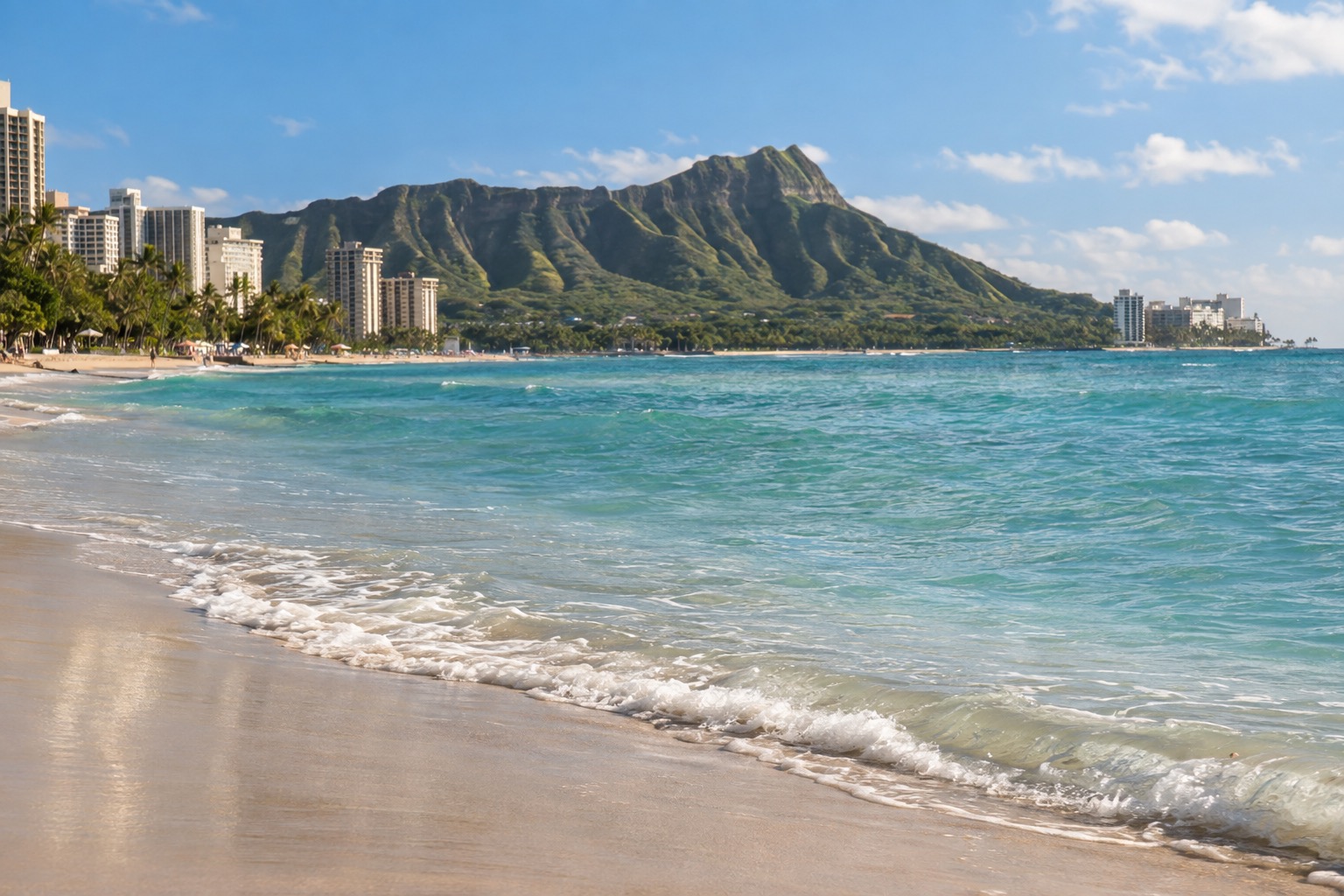
In August, the morning light comes up soft and gold over Diamond Head, and the first surf lessons are already paddling out past the break while the sand is still cool underfoot. By late afternoon the beach fills with families, outrigger canoes slide in, and ukulele music drifts from the hotel courtyards. August in Waikiki is a warm, steady month of long days, easy swims and evenings spent outdoors, made for anyone planning a summer beach vacation on Oahu.
What is the weather like in Waikiki in August?
Hot, sunny and mostly dry, with trade winds that keep the afternoons comfortable rather than sticky. Waikiki sits on the leeward, sheltered side of Oahu, so it gets far less rain than the green mountains behind it.
| Month | Average high (°F) | Average low (°F) | Rain days | Sea (°F) |
|---|---|---|---|---|
| July | 87.1 | 74.5 | 1.5 | 79.3 |
| August | 88.2 | 74.8 | 1.7 | 79.6 |
| September | 88.0 | 74.1 | 2.3 | 80.5 |
Mornings are the best hours for walking, running along the Ala Wai or climbing a trail, because the sun is not yet at full strength and the breeze is gentle. Midday brings intense sun, so you will welcome the shade from a beach umbrella, a lanai or an air-conditioned museum. Since the sun stays up so late, August nights in Waikiki remain mild, letting you eat outdoors in just a T-shirt.
When rain does come, it is usually a brief passing shower that blows in off the mountains and is gone within minutes, often leaving a rainbow over the Koolau ridge. A truly wet day in Waikiki in August is rare. The wetter weather stays up in the valleys and on the windward coast, so a gray sky over the mountains does not always mean a gray beach.
Pack for sun first. Light cotton, a hat and sunglasses cover most days, and the sea temperature, a shade warmer than the water of a mainland summer, feels pleasant to wade into at any hour. The sun reflects hard off the sand and water, so the glare is stronger than the thermometer suggests.
Can you swim in Waikiki in August?
You bet it’s warm enough to swim for a long, easy stretch, and most folks stay in for an hour or more and never get cold. Sea temperatures here are comfortably in the upper 70s, and a rash guard is for the sun rather than the cold.
Summer is the south shore’s gentler season. Swells from the south arrive in this part of the year, and they give Waikiki the long, rolling waves that make it famous for beginner surfing and stand-up paddling.
Along Kuhio Beach, where a breakwall shelters part of the water, the conditions are often mellower, which is why many families settle there. The classic surf breaks are Queens and Canoes, and on a bigger swell day the waves can build fast, so check with the lifeguards about how the day looks and obey the flags and signs.
The Waikiki Aquarium turns its projected arrival dates for box jellyfish on Oahu’s south shore into a published calendar. Because they can appear without warning, heed the signs and stick to lifeguarded beaches. Bring a reef-minded attitude too: look at the fish and turtles, do not touch them, and keep off the coral. Water shoes help on rocky edges, and a mask and snorkel are handy for the calmer corners.
What to do in Waikiki in August
August is a month for being outside from morning to night. The days are long, the sea is warm and the trade winds make the shade pleasant, so the best plans mix a water activity early with something cooler or indoors at midday. Summer here also means the school break, so the beach has a lively, family feel, with kids on boogie boards and grandparents under umbrellas.
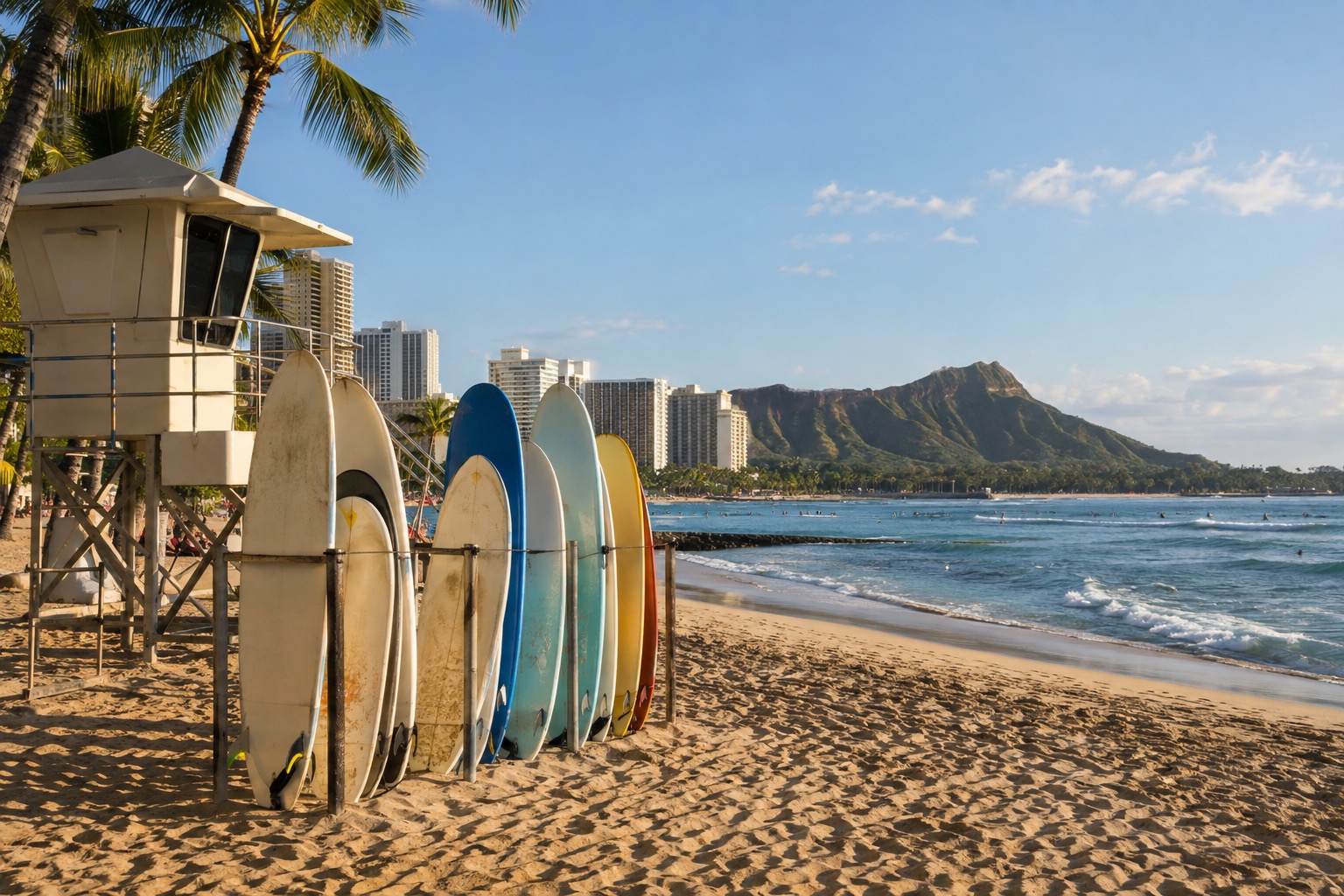
Surfing is the signature activity. The south-shore swells of summer are a good fit for first-timers, and beach boys and instructors work the water along the length of the beach, teaching on long, forgiving boards. Outrigger canoe rides are another Waikiki tradition, a short paddle out past the break with a guide, and the view back toward Diamond Head is the reward.
The beach and the sea, morning to sunset
The long stretch of sand from Kuhio Beach down toward Kapiolani Park changes character with the hours. Early on, it belongs to swimmers, joggers and surfers heading out on the first sets. Midday it fills with umbrellas and towels. By late afternoon the light turns golden, the water glows and people drift toward the shoreline to wait for the sunset.
A quieter end of the beach near Kapiolani Park suits those who like more space. Snorkelers often head toward the rocky edges, and paddleboarders prefer the early hours before the wind picks up. Bring a hat, a towel and plenty of water, and plan your swimming for the morning or the late afternoon, when the sun is gentler.
Diamond Head and the walks above the city
Climb to the top of Diamond Head crater early and you are paid back with a broad look across Waikiki and the coast. In August, start as early as the park allows, because the climb has little shade and the sun gets hot quickly.
You go up stairways and through a tunnel on the trail, then it opens at the lookout, and the entire beach curve lies below you at the end. Diamond Head requires a reservation for many visitors, and the state parks notices page gives the rules.
If the heat is too much, the paths along Kapiolani Park and the Honolulu Zoo area offer flatter walking under big shade trees. Locals picnic here on weekends, and the park often has live music, kite flying and families gathered on the grass.
Food, music and the evening
Dinner in August is often an open-air affair. Poke bowls, shave ice, grilled fish, loco moco and plate lunches turn up at every price level, from walk-up counters to oceanfront restaurants. Fresh tropical fruit and shave ice are especially welcome after a hot day, and a cold drink on a lanai at sunset is a small ritual.
Many hotels and the beachfront stage host hula, slack key guitar and ukulele performances in the evening, and the Kalakaua Avenue sidewalks buzz with strollers and street entertainers. A luau, with kalua pork, poi and a dance show, is one of the most popular evenings out, and the hotels and nearby venues serve them through the summer.
The Waikiki Aquarium, near Kapiolani Park, is a good indoor stop when you need a break from the sun, and it is also where the box jellyfish calendar is published. Shopping along Kalakaua Avenue and the air-conditioned malls offers another midday refuge, and the Honolulu Museum of Art is a short ride away for those who like galleries.
A two-day itinerary for Waikiki in August
Day 1 begins on the sand. Sunrise comes early in August, so be on the beach while the air is cool and the water is quiet. Book a surf lesson or a paddle, and afterward enjoy a late breakfast at a relaxed café offering acai bowls or fresh fruit. As the sun climbs, retreat to shade, a pool or a museum for the hottest hours.
In the afternoon, walk the length of Kalakaua Avenue for shopping and people watching, then head to the beach again as the light softens. Watch the sunset from the shoreline, with outrigger canoes and surfers silhouetted against the sky. Finish with dinner at an oceanfront restaurant and a stroll to hear live music on the beach.
Day 2 starts even earlier, with the hike up Diamond Head while the trail is still cool and the view clear (reserve ahead as the state rules require). Come down for a big breakfast, then spend midday at Kapiolani Park, the Waikiki Aquarium and the shade of the banyan trees.
Later, take a short outrigger canoe ride or a sunset sail if the water looks good, and finish with a luau or a quiet dinner of poke and grilled fish. If rain turns the day gray, shift to the aquarium, a museum, a cooking class or a long lunch, then try the beach again once the shower passes.
Is Waikiki busy in August?
Yes, August is a busy month, because it is the tail end of the summer school break and families fill the beaches, hotels and restaurants. The mood is lively and relaxed, and the crowds are mostly vacationers rather than business travelers.
The beach in front of the big hotels is the most crowded stretch, especially from late morning to the afternoon. Early mornings and the last hour before sunset feel calmer. Popular restaurants, luaus and surf lessons fill up, so book those early, and do the same for rooms and rental cars if your dates fall in the weeks when families are traveling.
Later in the month, as schools begin to reopen, things often ease a little, and it becomes easier to find a table or a room. A hotel bill carries Hawaii’s state transient accommodations tax and Oahu’s county tax, which shape the final cost. For Diamond Head and other state parks, reservations are required in the cases the state parks notices describe, so reserve those first and build the rest of the days around them.
What to pack for Waikiki in August
Think light, sun-ready and comfortable for both beach and city. A small day bag keeps everything handy.
- Pack mineral sunscreen and a hat, since the sun stays strong even when it is hazy.
- A rash guard, for sun protection during long swims and surf lessons.
- Water shoes, helpful on rocky edges and sandy-bottom entries.
- A light rain layer, for the brief showers that blow in from the mountains.
- Sturdy sneakers, for the Diamond Head trail.
- A reusable water bottle, since hot days make you thirsty fast.
Good to know before you go
August falls inside the Central Pacific hurricane season, which runs from June 1 to November 30. Hawaii is rarely hit, but it is wise to keep an eye on forecasts and keep travel plans flexible. Reserve Diamond Head and popular activities first, and expect the beach and Kalakaua Avenue to be busy in the afternoons. Walking covers most of Waikiki, which keeps parking worries to a minimum.
| Fee | Amount | Who pays |
|---|---|---|
| State transient accommodations tax | 11% | Hotel guests |
| Oahu county tax | 3% | Hotel guests |
Waikiki in August vs July and September
Moving the trip four weeks earlier brings a slightly cooler sea and a touch less rain, and the summer break is at its fullest, so the beaches and rooms are in highest demand. July suits families tied to school calendars who do not mind sharing the sand.
Going four weeks later, the sea is a little warmer and showers become a bit more frequent, though still brief. School is back in session, so the crowds often thin and tables are easier to find. September edges closer to the peak of hurricane season, so flexibility matters more.
Families with school-age children will likely choose July or early August, while couples and flexible travelers may prefer late August or September for a calmer beach. For the simplest, most reliable beach weather, all three months are close, so the decision comes down to crowds and your calendar.
Is August a good time to visit Waikiki?
Absolutely, above all for families, beach lovers and those new to surfing in search of dependable sun, warm water and long days. The swells from the south suit learning to surf, and the evenings invite outdoor dinners and music.
It suits those who enjoy a lively crowd less well if you want a quiet, uncrowded beach, or if you dislike heat. Anyone who wants solitude may prefer a shoulder month. On arrival, reserve Diamond Head and any luau or lesson you care about, then spend the first morning in the water. What sets August apart in Waikiki is the rhythm of it: surf lessons at dawn, a warm sea through the afternoon, and the sky turning gold over Diamond Head while a canoe glides in toward the sand.
Sources
- NOAA NCEI, monthly normals 1991-2020, station USC00519397, checked September 8, 2026
- Open-Meteo Marine API, average 2015-2024, checked September 8, 2026
- sunrise-sunset.org, sunrise and sunset calculated for the 15th of the month, checked September 8, 2026
- Hawaii Department of Taxation, Announcement 2025-03 ; City and County of Honolulu, OTAT FAQ, checked September 25, 2026
- Waikiki Aquarium, Box Jellyfish Calendar, checked September 25, 2026
- NWS Honolulu / Central Pacific Hurricane Center, « 2026 Central Pacific Hurricane Season Outlook », weather.gov/hfo/hurricaneOutlook2026, checked September 24, 2026