
On a February morning along the Kohala coast, the lava fields glow gold in early light and the first thing you may hear is a humpback exhaling somewhere offshore. The days are sunny and dry, the evenings are soft enough for dinner outside, and the resort crowds are in a leisurely holiday mood. This is Waikoloa in February: a dry-side vacation of beaches, whale watching and long, easy afternoons.
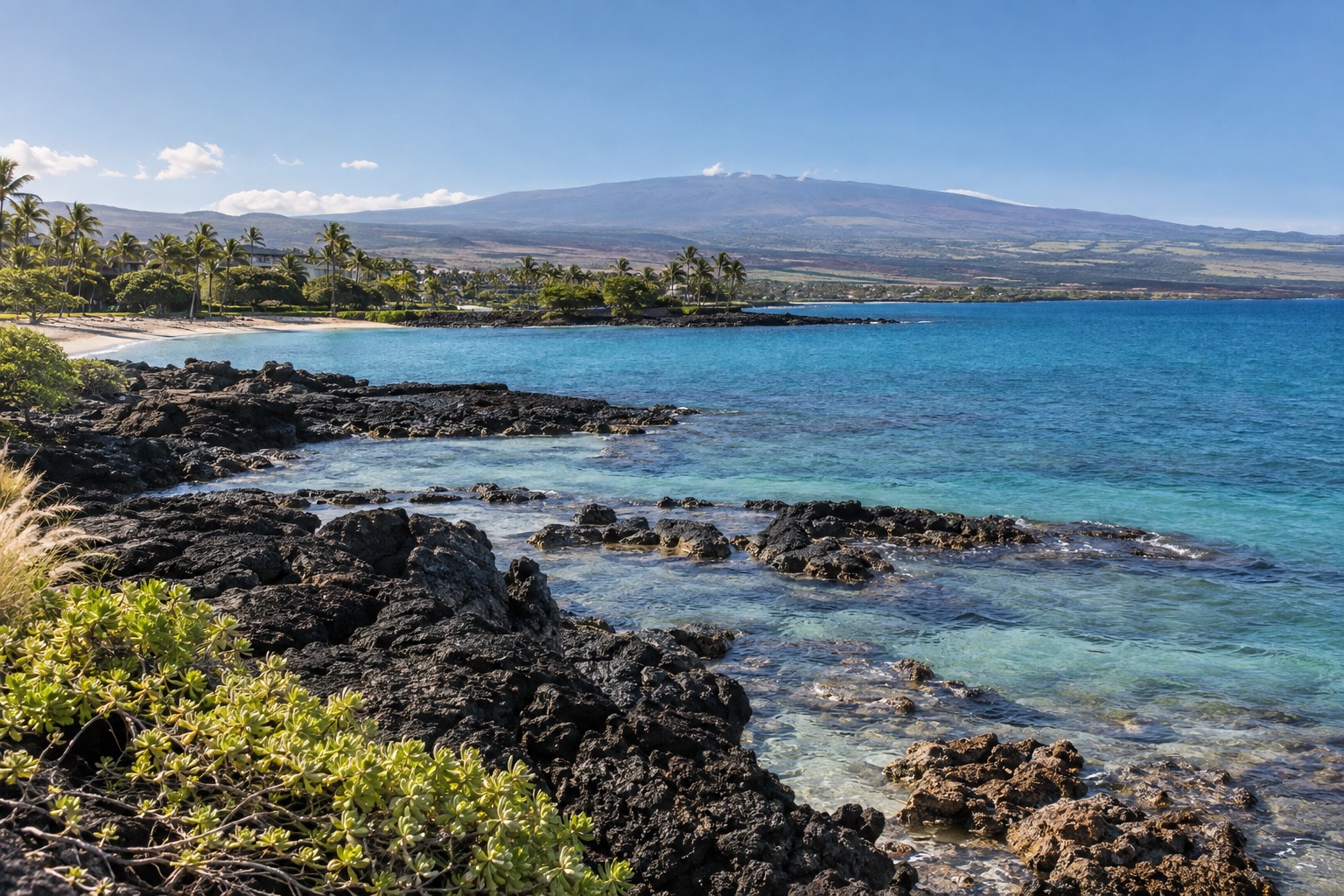
What is the weather like in Waikoloa in February?
February in Waikoloa is warm, sunny and mostly dry, with just enough breeze to keep the afternoons comfortable on the sand.
| Month | Average high (°F) | Average low (°F) | Rain days | Sea (°F) |
|---|---|---|---|---|
| January | 82.2 | 68.3 | 2.2 | 78.1 |
| February | 82.5 | 68.1 | 1.5 | 77.7 |
| March | 83.5 | 69.7 | 1.8 | 77.6 |
Mornings start mild and bright, good for a walk on the shoreline trails or a round of golf before the sun climbs. By midday it is shirt-sleeve weather, and the sun is strong enough that you will want a hat and a break in the shade. Evenings cool off gently, so a light layer is plenty for dinner on a lanai.
Waikoloa sits on the dry leeward side of the Big Island, among black lava fields, so rain is a small part of the story. When it comes, it is a brief passing shower that is often over before you have found your umbrella. The wet weather belongs to the windward side around Hilo, where the same month is far rainier, and a day trip across the island can mean gray skies and downpours.
With just over eleven hours of daylight, late afternoon brings a golden glow, and the sun sets early enough that you can still make a sensible dinner reservation. The ocean stays comfortable for swimming without a wetsuit, which makes the water as much a part of the day as the sunshine.
Can you swim in Waikoloa in February?
The ocean is warm enough in February for a long swim, and most folks remain in the water as long as they please without getting cold.
The calm-water favorites along this coast are the sheltered bays and the sandy stretches in front of the resorts, where the water is usually gentle in the morning. Winter swells can still roll in and make the shore break stronger on some beaches, so the condition changes from one cove to the next and from one day to the next. Snorkelers tend to do best early, when the water is clearest and the breeze has not yet ruffled the surface.
In February the sea at the beach is usually calm and clear, though conditions change, so families and nervous swimmers should stay near shore while confident swimmers can explore farther along the coast. Read the beach signs, follow the flags and ask the lifeguard before going in, since conditions decide everything. Bring a rash guard or a hat for the sun, and leave the turtles and any monk seals resting on the sand alone.
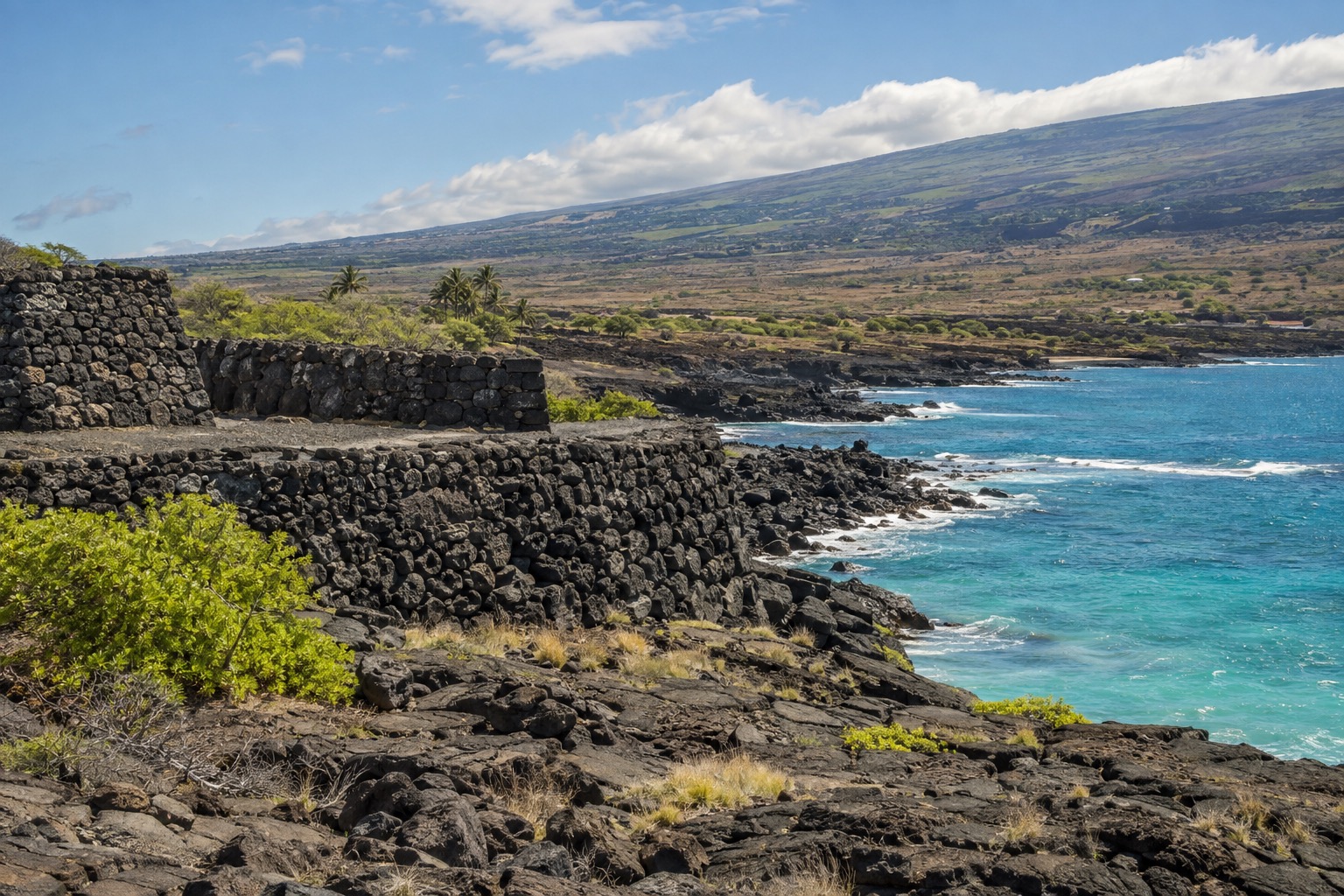
What to do in Waikoloa in February
Humpback whale season in Hawaiian waters falls in February, and few spots beat the Kohala coast for watching them. From a lookout, a beach or a boat, you may spot spouts, tail slaps and the occasional breach, especially on calm mornings when the sea is flat enough to see far. Whales are a chance, never a promise, but patient watchers are often rewarded.
The dry weather also suits the outdoors. Mornings are ideal for walking the old coastal trails, where you pass lava rock, fishponds and ancient paths that locals still use. Afternoons belong to the beach, a pool or a long lunch with the ocean in view.
Beaches and snorkeling on the Kohala coast
The beaches near Waikoloa are the main event: white sand set against black lava, with palms leaning over the shore. Some are broad and lively with chairs and umbrellas, while others are small and quiet, reached by a short walk from the road. Pick by mood, social and easy or secluded and still.
Snorkeling is best in the early part of the day, when you may see reef fish, and sometimes a turtle gliding along the bottom. Winter swell can stir the water, so choose a sheltered cove and check conditions with the lifeguard first. Bring your own mask if you plan to go often, and keep off the reef.
Whale watching and sunset on the water
A boat trip from the nearby harbors is the most direct way to see humpbacks in February. Morning departures usually give the calmest water, while an evening cruise adds a long sunset over the Pacific. Seas can be lively outside the bays, so those prone to motion sickness should plan accordingly.
You can also watch from shore, with a pair of binoculars and some patience. Look for a distant puff of mist or a flash of a fin, then wait for the next one. Many people find the shore version just as satisfying, and it costs nothing.
Petroglyphs, history and local food
Beyond the beach, the area holds fields of ancient petroglyphs carved into the lava, a quiet reminder of the people who lived here long before the resorts. Walk respectfully, stay on the path and do not step on the carvings. Early morning or late afternoon is cooler and softer for photographs.
For food, look for poke by the pound, plate lunches, fresh fish and shave ice from small stands and shopping-center kitchens. Evening meals often come with an ocean view and a gentle breeze, and a table on the terrace is worth asking for. Local coffee from the island is a good souvenir to take home.
If a day feels long, the resorts offer easy pleasures like a lagoon stroll, a spa afternoon or a sunset drink. Plan one active outing and one slow one each day, and February’s steady sunshine will carry the rest.
A two-day itinerary for Waikoloa in February
Day 1 begins early, with coffee and a walk along the coastal trail while the air is cool and the light is soft on the lava. Settle onto a beach by mid-morning, swim and snorkel while the water is clearest, then take a long lunch of poke or fish tacos in the shade.
Spend the hot hours of the afternoon by a pool or in a shop, then head to a west-facing point for sunset. Watch the sky for a possible green flash and for whale spouts on the horizon, then have dinner at a terrace restaurant nearby.
Day 2 is for the water and the past. Join a morning whale-watching cruise while the sea is calmest, and look for spouts and tails along the coast. Return for a casual lunch at a harbor-side spot or a plate-lunch counter.
In the afternoon, visit the petroglyph fields when the sun is lower and the walking is comfortable, then browse a market for coffee and local crafts. Finish with a quiet dinner and a stroll under the stars. If a shower passes, switch to a museum, a spa or a long lunch indoors until the sky clears.
Is Waikoloa busy in February?
Waikoloa is moderately busy in February, with a steady stream of winter visitors escaping the mainland cold.
The long holiday weekends bring the biggest crowds, with resorts filling and restaurants booking up in the evenings. Outside those weeks the pace is gentler, and beaches have room to spread out. Whale cruises, popular dinners and rental cars are the things to line up first.
As a habit, book early for the holiday weeks and a little later for the quieter stretches of the month. Rooms, cars and the best dinner tables are easier to find when you plan ahead, and boat trips tend to fill on the clearest days. Check the reservation rules for any state park or trail you want to visit, since some require advance booking.
Even at its busiest, the Kohala coast has space to wander. A short walk from the main beaches usually leads to a quieter patch of sand, and early mornings are calm almost everywhere.
What to pack for Waikoloa in February
Pack for sun, sea and cool evenings, and keep it light.
- Mineral sunscreen and a hat, because the midday sun is strong even in winter.
- A rash guard, to protect your back while you snorkel.
- Binoculars, for spotting whales from shore.
- Pack a light sweater or jacket for boat rides and evenings with a breeze.
- Sturdy sandals or walking shoes, for lava rock trails.
- A reusable water bottle, for hot afternoons outdoors.
Good to know before you go
February falls well outside the Central Pacific hurricane season, which runs from June 1 to November 30. A rental car makes the coast far easier to explore, and the first things to reserve are whale cruises, a rental and a few dinners. Lodging carries state and county taxes on top of the nightly rate.
| Fee | Amount | Who pays |
|---|---|---|
| State Transient Accommodations Tax | 11.00% | Guests, on lodging |
| County of Hawaii transient accommodations tax | 3% | Guests, on lodging |
Waikoloa in February vs January and March
Moving a month earlier brings a slightly rainier feel, though the dry coast stays mostly sunny, and the sea is a touch warmer. January is also the heart of whale season and carries the busy holiday crowds at the start of the month. If you want the coast at its liveliest, that is the direction to go.
A month later, the days are a bit warmer and the whales begin to thin out toward the end of the season. March keeps the dry, sunny pattern and the sea stays comfortable, with spring break families starting to arrive. Choose it if you want slightly warmer air and do not mind a few more visitors.
February sits comfortably in the middle: whales still around, the weather settled and the crowds easing between the holiday weeks. Stay with it if whales matter and you want a balanced mood, and shift only if a specific holiday or event pulls you one way.
Is February a good time to visit Waikoloa?
Yes, February is a very good time for beach lovers, whale watchers and anyone who wants dependable sun on the dry side of the Big Island.
It suits couples, families and travelers who like an easy rhythm of swimming, walking and long meals. Those who want a rainforest feel, cool mountain air or empty beaches might prefer another month or another side of the island. If you arrive, start with a beach morning and a whale cruise booked for the first clear day. What makes February here special is the pairing of warm, dry days with the humpbacks passing offshore, so a simple afternoon on the sand can include a spout on the horizon.
Sources
- NOAA NCEI, monthly normals 1991-2020, station USC00518422, checked September 8, 2026
- Open-Meteo Marine API, average 2015-2024, checked September 8, 2026
- sunrise-sunset.org, sunrise and sunset calculated for the 15th of the month, checked September 8, 2026
- Hawaii Department of Taxation, Tax Announcement No. 2025-03 (Transient Accommodations Tax Law Changes from 2025 Legislative Session), files.hawaii.gov/tax/news/announce/ann25-03.pdf, checked September 24, 2026
- County of Hawaii, Department of Finance, Transient Accommodations Tax (TAT) page, hawaiicounty.gov/departments/finance/transient-accommodations-tax-tat (live returned HTTP 403 on request, read via Internet Archive Wayback Machine snapshot dated August 14, 2026, same official content), checked September 25, 2026
- Hawaii Department of Taxation, County Surcharge on General Excise and Use Tax page, tax.hawaii.gov/geninfo/countysurcharge/, checked September 25, 2026
- NOAA NCEI, monthly normals 1991-2020, station USW00021510
- NOAA NCEI, monthly normals 1991-2020, station USW00021504
- NWS Honolulu / Central Pacific Hurricane Center, « 2026 Central Pacific Hurricane Season Outlook », weather.gov/hfo/hurricaneOutlook2026, checked September 24, 2026