
Early on a January morning, the lava fields along the Kohala coast turn from black to gold as the sun clears the slopes of Mauna Kea, and the first walkers are already out on the old coastal trail. Out past the resort lagoons you may spot a spout or a fluke, because humpback whales are passing through the channel. Waikoloa in January is a dry, sunny stretch of the Big Island with winter swell on some shores and a warm, easy rhythm for couples, families and anyone escaping the mainland cold.
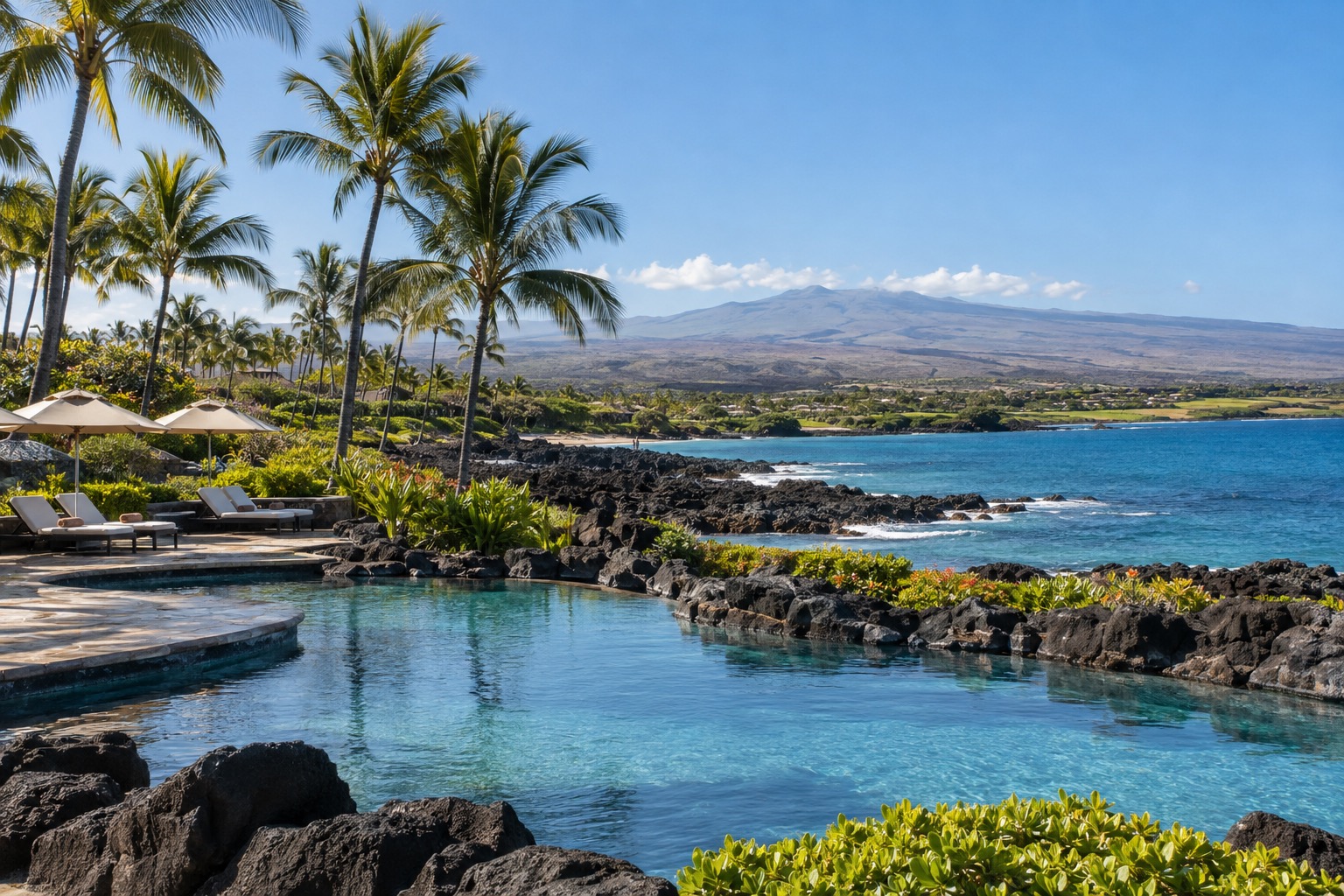
What is the weather like in Waikoloa in January?
Warm, sunny and mostly dry: January on the Kohala coast is the mild side of the Hawaiian winter, with shorts-and-sandals afternoons and evenings that ask for a light layer.
| Month | Average high (°F) | Average low (°F) | Rain days | Sea (°F) |
|---|---|---|---|---|
| December | 83.9 | 70.2 | 1.7 | 79.1 |
| January | 82.2 | 68.3 | 2.2 | 78.1 |
| February | 82.5 | 68.1 | 1.5 | 77.7 |
Waikoloa sits on the leeward, rain-shadow side of the island, which is why the whole year adds up to very little rain. A wet day here is a passing shower that drifts off the slopes, often in the night or early morning, and it rarely lasts. Hilo, on the windward coast across the island, gets many times more rain, so if the clouds are stubborn over there, the sun is often still out here.
Mornings are soft and pleasant for a walk or a round of golf, and midday sun is strong enough to burn even in winter. Afternoons are warm enough for the pool in a swimsuit, and after sunset the air cools just enough that you will want a light sweater or a thin jacket at an outdoor dinner. The days are a little over eleven hours long, so daylight is worth using early.
The sea is still warm by mainland standards, though a shade cooler than in December. A thin rash guard keeps long snorkeling sessions comfortable, and the wind is usually gentle in the mornings, picking up in the afternoon.
Can you swim in Waikoloa in January?
Yes, the water is warm enough for a long swim, and most people stay in without a wetsuit, though a thin layer feels good during long snorkeling sessions.
The coast here is sheltered from the worst of winter’s north swell, which mainly hits the north and west-facing shores of other islands. Even so, surf can rise on any given day, so the habit is to look at the sea first.
Anaehoomalu Bay (A-Bay) with its wide, shallow arc and the calm-looking beaches in front of the resorts are the usual choices for families, while Hapuna and Kauna’oa farther along the coast have golden sand and a bit more movement. Waves at Hapuna can get large on some days, and the lifeguard flags decide whether you go in.
Snorkelers do best in the morning, before the wind ripples the surface, and stay clear of turtles and monk seals resting on the sand, which are protected. Bring a mask, a rash guard and mineral sunscreen, and let the lifeguards and the beach signs guide you on currents and jellyfish.
What to do in Waikoloa in January
January is whale season, and that colors the whole month. Humpbacks arrive from Alaska to breed and calve in the warm Hawaiian water, and the Kohala coast is one of the best places to watch them.
From a lookout, a lanai or a boat, scan for a puff of mist, a slapping tail or a breach on the horizon. Sightings are never guaranteed, but they are frequent, and you may hear the whales singing if you slip into the water on a boat tour.
The mood in the resorts is relaxed and sunny, with lei greetings, ukulele music in the lobbies and luau evenings with hula and slow-roasted pork. The new year also brings a gentle bustle of walkers on the coastal paths and golfers at tee times on the lava-framed courses.
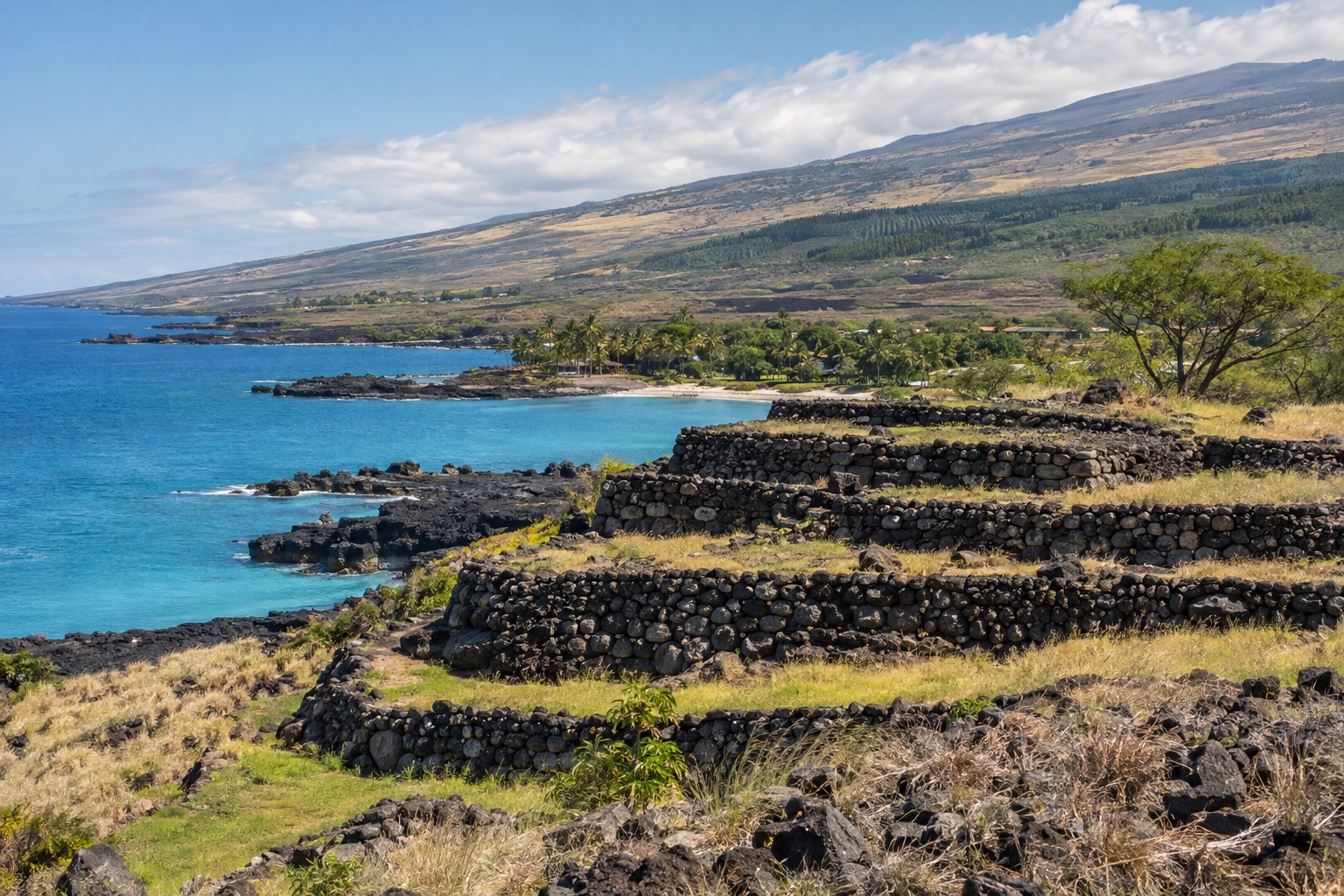
Petroglyphs and the old coastal trail
One of the simplest pleasures is a walk to the petroglyph fields near the shopping village, where thousands of carved figures cover a lava flow. The path is short and flat, but there is almost no shade, so the cool of the early morning is the time to go. The carvings are fragile, so you stay on the path and never step on or touch the stones.
The trail continues toward the coast through lava and kiawe, and in January the light on the black rock is soft and the air is still cool. Bring water and a hat, and expect a quiet walk with a few other people, a good fit for older children and anyone who likes to learn the history of a place.
Beach days at Anaehoomalu and Hapuna
Anaehoomalu Bay is the easiest beach day on this stretch, with palm shade, a gentle shoreline, old fishponds behind the sand and paddleboards for rent from a stand. Turtles often feed in the shallows, and the setting is lovely at sunset, when the sky turns orange over the water.
Hapuna Beach, a short drive down the coast, is a long sweep of pale sand that draws bodyboarders and sunbathers when the swell is gentle. In winter the shore break can be strong, so the flags and the lifeguards come first, and watching from the sand is a fine second choice. Pack a picnic, since food options are limited on the beach itself.
Whale watching, stargazing and the table
Boat tours leave from the harbors along the coast and head out into the channel where humpbacks gather. Mornings tend to be calmer on the water, and the sightings add something special to the winter days. Many people pair a cruise with a lazy afternoon at the pool.
At night the dry air and the high mountain make for some of the clearest skies in the islands, and a stargazing outing toward Mauna Kea is a classic on the Big Island. Dress warmly, since the summit is far colder than the coast. For dinner, look for fresh fish, poke and kalua pork, and for a sweet end, shave ice or a scoop of local coffee ice cream.
A two-day itinerary for Waikoloa in January
Day 1 is for the coast. Start early at the petroglyph fields while the air is cool and the lava is soft in the morning light, then have breakfast at a café in the shopping village. By mid-morning move to Anaehoomalu Bay for a swim and a snorkel, with a paddleboard session if the water is quiet.
Eat a casual lunch at a beachside grill, rest in the shade through the hottest hours, then walk the fishpond path near the bay in the late afternoon. Stay for sunset on the sand and finish with a seafood dinner at a resort restaurant, where tables near the water fill early in a holiday week.
Day 2 begins with a morning whale cruise, when the sea is usually at its smoothest, and you may see spouts and tails. After lunch, drive down to Hapuna Beach for a few relaxed hours on the sand, watching the waves from the shore if the surf is up. In the evening, book a luau or a sunset dinner with live music.
If the weather turns, shift to indoor plans: a cultural center or art gallery in the resort area, a spa afternoon, a cooking class, or a long lunch of local dishes at a covered restaurant. Showers usually clear quickly, so a flexible plan is rarely spoiled for long.
Is Waikoloa busy in January?
It is busiest in the first days of the month, when holiday visitors are still around, and then it settles into a calmer pace through the rest of January.
The turn of the year fills resorts, restaurants and rental car lots with families and couples extending their winter vacations. After the first week, many of those travelers head home, and rooms, tables and activity slots get easier to find. Whale-watching boats, luaus and popular dinner spots still fill on weekends and around the long holiday weekend in the middle of the month, so a booking a few days ahead helps.
As a habit, book rooms and rental cars early for the first week and the mid-month holiday weekend, and later for the quiet weeks at the end of the month. The beaches themselves rarely feel crowded, since the coast is long, but parking at Hapuna fills by late morning on sunny weekends. Snowbirds from Canada and the mainland keep the resort area lively, though it never feels frantic.
What to pack for Waikoloa in January
Pack for sun, sea and a cool evening, with a layer or two for the days you head up the mountain.
- Swimsuits and a thin rash guard, for long snorkeling sessions in slightly cooler water.
- Mineral sunscreen and a wide-brimmed hat, since the sun is strong on the open lava coast.
- A light sweater or jacket, for breezy evenings outdoors.
- Sturdy sandals or walking shoes, for lava paths and petroglyph trails.
- A warm jacket and long pants, if you plan a night on Mauna Kea.
- A refillable water bottle, for walks with little shade.
Good to know before you go
January falls outside the official hurricane season, which runs from June 1 to November 30. A rental car is the easiest way to move around the Kohala coast, and it is wise to reserve whale tours and luaus early for the busy first week. Lodging bills carry taxes on top of the nightly rate.
| Fee | Amount | Who pays |
|---|---|---|
| State Transient Accommodations Tax | 11.00% | Guests, on the room rate |
| County of Hawaii Transient Accommodations Tax | 3% | Guests, on the room rate |
Waikoloa in January vs December and February
Moving the trip to December brings a slightly warmer sea and air and the full crush of the holiday weeks, with higher demand for rooms and tables. Whales are arriving, but the peak of the season comes later, so sightings are often better from January on.
February is a touch drier and a bit calmer in terms of crowds, and whale watching is at its peak. The sea is a little cooler, and Presidents Day weekend brings a short surge of visitors.
Families tied to school breaks may prefer December, while whale lovers and travelers who like a quieter resort should aim for late January or February. January sits in the middle, with the holiday rush fading and the weather settled.
Is January a good time to visit Waikoloa?
Yes, especially for travelers who want dry, sunny weather, warm water and the chance to see whales without the biggest holiday crowds.
It suits couples, families with older children, golfers, snorkelers and anyone who likes a relaxed, beach-based vacation with a few cultural outings. People chasing big-wave surfing should look to the north shores of other islands, and anyone who wants cool, rainy weather will not find it on this coast.
On arrival, book your whale cruise and a luau first, then head to the water and watch the horizon. January here is a month of gold morning light on the lava, humpback spouts in the channel and a table by the sea at sunset.
Sources
- NOAA NCEI, monthly normals 1991-2020, station USC00518422, checked September 8, 2026
- Open-Meteo Marine API, average 2015-2024, checked September 8, 2026
- sunrise-sunset.org, sunrise and sunset calculated for the 15th of the month, checked September 8, 2026
- Hawaii Department of Taxation, Tax Announcement No. 2025-03 (Transient Accommodations Tax Law Changes from 2025 Legislative Session), files.hawaii.gov/tax/news/announce/ann25-03.pdf, checked September 24, 2026
- County of Hawaii, Department of Finance, Transient Accommodations Tax (TAT) page, hawaiicounty.gov/departments/finance/transient-accommodations-tax-tat (live returned HTTP 403 on request, read via Internet Archive Wayback Machine snapshot dated August 14, 2026, same official content), checked September 25, 2026
- Hawaii Department of Taxation, County Surcharge on General Excise and Use Tax page, tax.hawaii.gov/geninfo/countysurcharge/, checked September 25, 2026
- NOAA NCEI, monthly normals 1991-2020, station USW00021510
- NOAA NCEI, monthly normals 1991-2020, station USW00021504
- NWS Honolulu / Central Pacific Hurricane Center, « 2026 Central Pacific Hurricane Season Outlook », weather.gov/hfo/hurricaneOutlook2026, checked September 24, 2026