
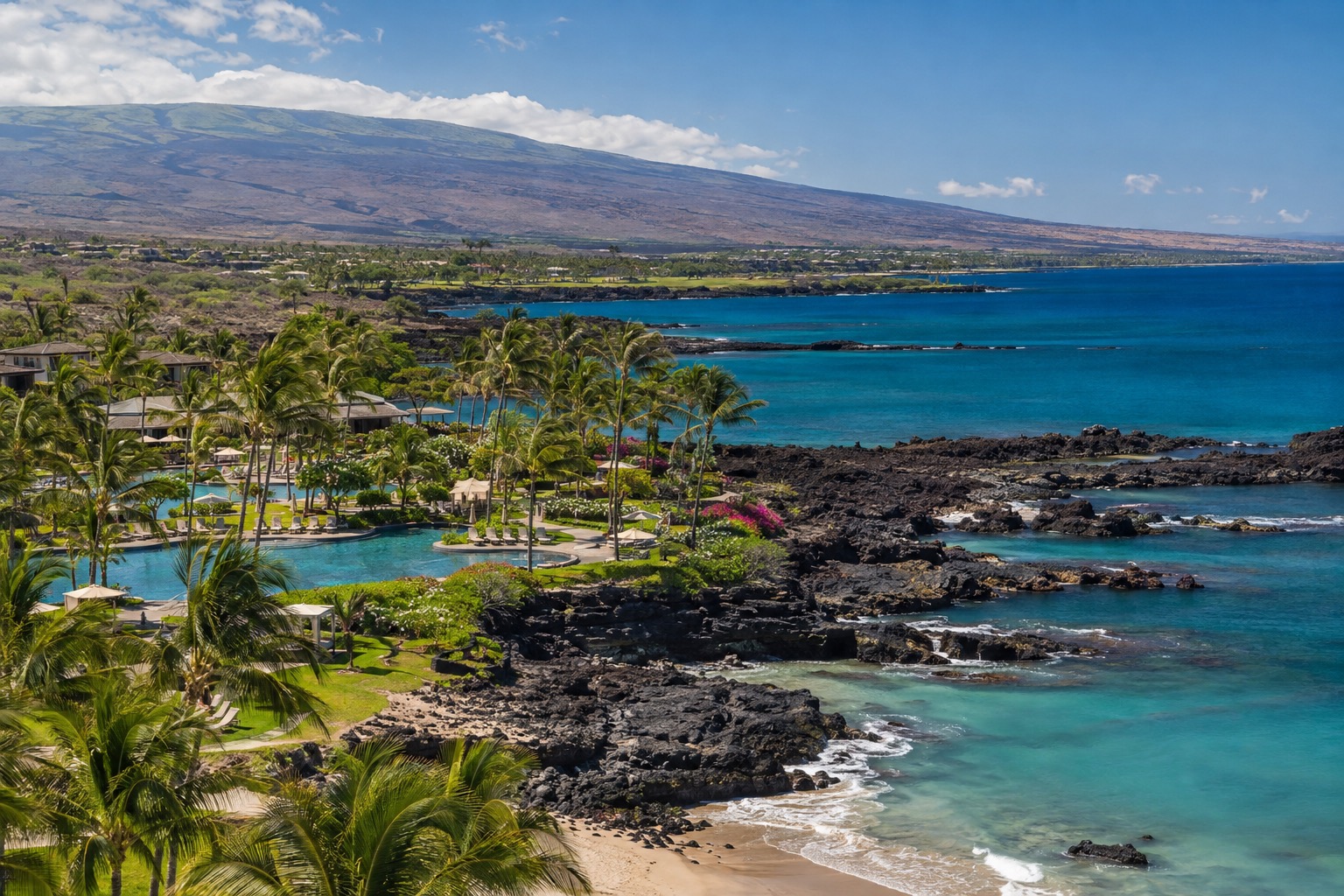
On an April morning along the Kohala coast, the black lava fields glow under a low sun, the trade winds rustle the palms on the resort lawns, and the first swimmers wade into a bay that already feels warm. The rain that soaks the other side of the island seems far away. April in Waikoloa is a sunny, easy stretch of the year, made for lagoon mornings, snorkeling and long evenings outside.
What is the weather like in Waikoloa in April?
Warm, sunny and almost entirely dry: April on the Kohala coast is the kind of weather people book a Hawaii vacation for.
| Month | Average high (°F) | Average low (°F) | Rain days | Sea (°F) |
|---|---|---|---|---|
| March | 83.5 | 69.7 | 1.8 | 77.6 |
| April | 85.0 | 70.8 | 0.8 | 78.0 |
| May | 85.5 | 72.2 | 1.4 | 79.7 |
Mornings start soft and bright, with the trade winds keeping the air fresh on the terrace at breakfast. By midday the lava landscape holds the heat and the sun is strong, so shade, a hat and a second coat of sunscreen make sense. Afternoons are the time for the pool or the water, when the breeze is a real gift.
Rain is a rare event here. The Big Island’s leeward flank is dry and protected by the volcanoes, so when a shower does arrive it is short and frequently ends before you have even grabbed a jacket. The windward coast tells another tale entirely with Hilo, where yearly rainfall totals many times more, so crossing the island for a day trip can mean you leave the sunshine behind.
Evenings are mild enough for dinner outside in a light shirt, maybe a thin layer once the breeze picks up near the water. The light is clear and golden near sunset, and with long days you have plenty of time to fit a beach, a walk and a table with a view into one day.
Can you swim in Waikoloa in April?
Yes, the sea is comfortably warm in April, pleasant for a long swim or a snorkel without a wetsuit, though it is a shade cooler than it will be a month later.
Some of the island’s most welcoming beaches lie along the Kohala coast. Anaehoomalu Bay, known as A-Bay, has a wide sandy shore backed by old fishponds and palms, and its water is often gentle enough for paddleboards and kayaks. Hapuna Beach is a long stretch of pale sand where the waves can be lively, popular with bodyboarders. Kauna’oa, or Mauna Kea Beach, is a graceful crescent that usually draws families and snorkelers.
The ocean can shift from one day to the next, and a swell may stir a peaceful bay into rough water, so check the flags and beach signs and talk with the lifeguard before entering. Nervous swimmers and young children are usually happiest in the resort lagoons and the sheltered corners of the bays. Bring a snorkel mask, water shoes for the rocky entries and a mineral sunscreen, and keep a respectful distance from any sea turtle resting on the sand.
What to do in Waikoloa in April
April is an outdoor month here, and the plan is simple: be on the water or on the trail early, rest in the heat of the day, and come back out when the light softens. It is also the season when the Merrie Monarch Festival fills Hilo with hula, usually the week after Easter, and some visitors cross the island to watch it or catch the parades and craft fairs that surround it.
The coast itself offers plenty without a car. Resort lagoons, outrigger canoe rides, sunset cocktails and evening lawn music give the area a relaxed, unhurried mood. Local menus lean on the sea: poke bowls, grilled fish, shave ice for the afternoon and fresh pineapple at the fruit stands.
Snorkeling and the beaches of the Kohala coast
Beach time is the heart of an April day here. Anaehoomalu is a good first stop in the morning, when the water is usually at its stillest and the light brings out the green of the shallows. Walk the shoreline past the old fishponds and you will often spot honu, the green sea turtles, feeding in the shallows or resting on the sand.
Snorkelers can swim along the rocky edges of the bays, where reef fish often gather in clear water. Hapuna suits people who like long walks on the sand and a few waves, while Kauna’oa is better for a quieter, calmer day. Bring your own gear if you can, since rental lines build up by late morning, and keep off the coral.
Petroglyphs and the lava coast
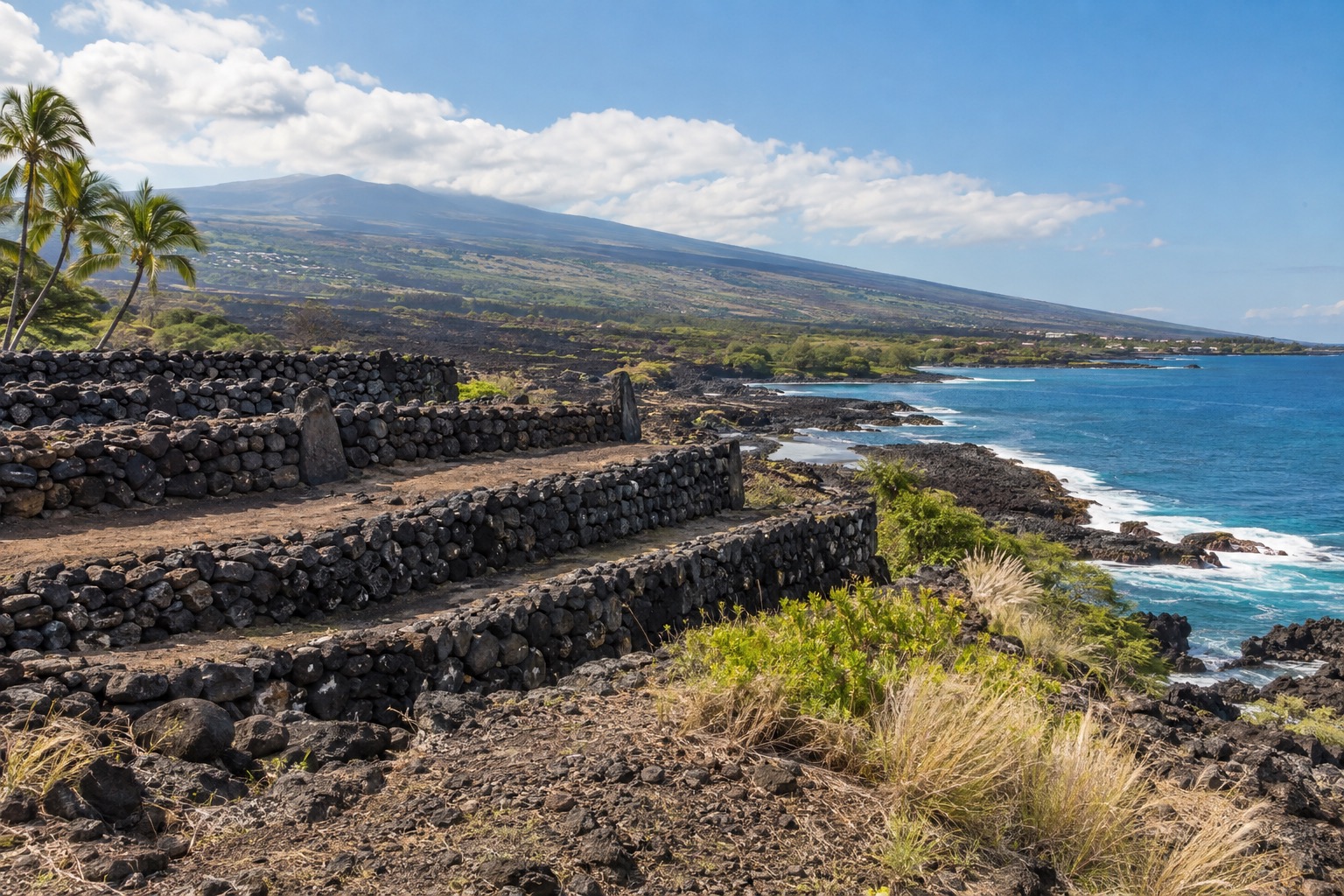
Beyond the beaches, the lava fields tell an older story. Ancient Hawaiian carvings are etched into the black rock near the resorts, and a short walk on the marked trails brings you past figures and symbols made long before the hotels arrived. Treat the area with respect, stay on the path and never step onto the carved stones.
Go early or late, since the dark rock radiates heat at midday and offers little shade. Wear closed shoes, carry water and bring a hat. The coastal trail that links several bays is a pleasant way to see both the lava and the sea in one outing, and the sunset walk back is one of the coast’s nicest rituals.
Day trips: Mauna Kea and Hilo
Many visitors use April’s clear weather for a drive up to the high country. The summit of Mauna Kea is famous for stargazing, and the evenings are often clear, but it is cold and the altitude can leave people short of breath, so dress warmly and take it slowly. Children and anyone with health concerns should think twice.
Across the island, Hilo offers waterfalls, botanical gardens and a farmers market, all fed by the rain the Kohala coast never sees. Bring a jacket and plan for a wet afternoon, then return to the sun for dinner on the coast.
A two-day itinerary for Waikoloa in April
Day 1 is for the coast. Start at Anaehoomalu Bay in the early morning, while the sand is empty and the water is still. Swim, snorkel and watch for turtles along the fishponds, then eat a late breakfast at a casual café near the beach.
By midday the sun is strong, so retreat to the pool or a shaded lanai for lunch and a rest. In the afternoon, walk a stretch of the lava coast trail to see the petroglyphs once the heat eases. With roughly twelve and a half hours of daylight, you have time for a long, unhurried sunset dinner on a terrace facing the water.
Day 2 heads to Hapuna Beach for a long morning of sand and waves, with the lifeguards’ flags as your guide. Have a poke bowl or fish tacos for lunch, then browse the shops and galleries near the resorts. If the weather turns, which is unlikely, swap the afternoon for a museum or a spa, and a cultural show or a canoe-themed evening on the lawn. End the day at a sunset spot on the shore, with a cold drink and the sky turning orange over the water, then a final dinner of local fish at a restaurant with open sides to let the breeze in.
Is Waikoloa busy in April?
Moderately: April sits between the winter holiday rush and the summer family weeks, with a bump around spring break and Easter.
Families on school breaks fill the resorts for a week or two, and Merrie Monarch week can tighten rooms across the island. Outside those windows the beaches are easy to enjoy, restaurants are manageable and the pools have plenty of room. Weekends are livelier because locals head to the bays too.
Rooms and rental cars are best booked early if your dates touch Easter or a school break, and a bit later for ordinary weeks. Restaurant tables at popular resort spots are worth reserving for sunset, when everyone wants the same view. Many visitors also rely on a car here, since the coast and the island’s sights are spread out.
Quiet pockets remain, particularly on weekday mornings at the less famous bays and along the coastal trails. Arrive early, and you will often share the sand with only a few early walkers and the occasional turtle.
What to pack for Waikoloa in April
Pack for sun, sea and warm evenings, with one layer for the breeze and one for the mountain if you plan to go up.
- Pack mineral sunscreen along with a wide-brimmed hat, because the open lava coast gets intense sun.
- A snorkel mask and water shoes for rocky entries and clear shallows.
- A light jacket or sweater for breezy evenings on the terrace.
- A warm layer for a Mauna Kea summit trip, where it is much colder.
- Closed walking shoes for the lava trails and petroglyph fields.
- A reusable water bottle for long, hot walks.
Good to know before you go
April falls outside the official hurricane season, which runs from June 1 to November 30. Distances on the island are long and public transport is limited, so most visitors plan around a rental car. Book popular activities and sunset tables early, and check the beach signs each morning.
| Fee | Amount | Who pays |
|---|---|---|
| State Transient Accommodations Tax | 11.00% | Guests on lodging |
| County of Hawaii Transient Accommodations Tax | 3% | Guests on lodging |
| General Excise Tax pass-on (County of Hawaii) | up to 4.7120% | Customers, shown by businesses |
Waikoloa in April vs March and May
Moving a month earlier, to March, gives you a touch more rain and slightly cooler water, with the winter humpback whale season still going offshore and the winter swell fading from the north shores. The mood is a little busier with spring-break families, and the air is a bit fresher in the evening.
A month later, in May, the sea turns warmer, the nights feel softer and the days stretch longer. Crowds usually ease after Easter and before the summer rush, so it can feel more relaxed, and Lei Day on May 1 adds a gentle festive note to the islands.
If you want the driest days and a balanced crowd, April is a happy middle. Whale watchers should lean earlier, and swimmers who like the warmest water should lean later.
Is April a good time to visit Waikoloa?
Yes, especially for beach lovers, snorkelers and anyone who wants reliable sun without the peak-season crowds.
It suits families outside the spring break window, couples looking for easy sunsets and travelers who like a mix of lazy beach days and the occasional outing. People who want a lush, green, waterfall-filled trip may prefer the windward side of the island, and surfers chasing big winter waves will find the north shores of other islands better earlier in the year.
On arrival, head to the water first, since an early swim at the bay sets the tone for the whole trip. Then settle in, watch the sun go down over the lava, and let the coast’s unhurried rhythm take over. April in Waikoloa is a month of warm sand, clear light and a sea that invites you in.
Sources
- NOAA NCEI, monthly normals 1991-2020, station USC00518422, checked September 8, 2026
- Open-Meteo Marine API, average 2015-2024, checked September 8, 2026
- sunrise-sunset.org, sunrise and sunset calculated for the 15th of the month, checked September 8, 2026
- Hawaii Department of Taxation, Tax Announcement No. 2025-03 (Transient Accommodations Tax Law Changes from 2025 Legislative Session), files.hawaii.gov/tax/news/announce/ann25-03.pdf, checked September 24, 2026
- County of Hawaii, Department of Finance, Transient Accommodations Tax (TAT) page, hawaiicounty.gov/departments/finance/transient-accommodations-tax-tat (live returned HTTP 403 on request, read via Internet Archive Wayback Machine snapshot dated August 14, 2026, same official content), checked September 25, 2026
- Hawaii Department of Taxation, County Surcharge on General Excise and Use Tax page, tax.hawaii.gov/geninfo/countysurcharge/, checked September 25, 2026
- NOAA NCEI, monthly normals 1991-2020, station USW00021510
- NOAA NCEI, monthly normals 1991-2020, station USW00021504
- NWS Honolulu / Central Pacific Hurricane Center, « 2026 Central Pacific Hurricane Season Outlook », weather.gov/hfo/hurricaneOutlook2026, checked September 24, 2026