
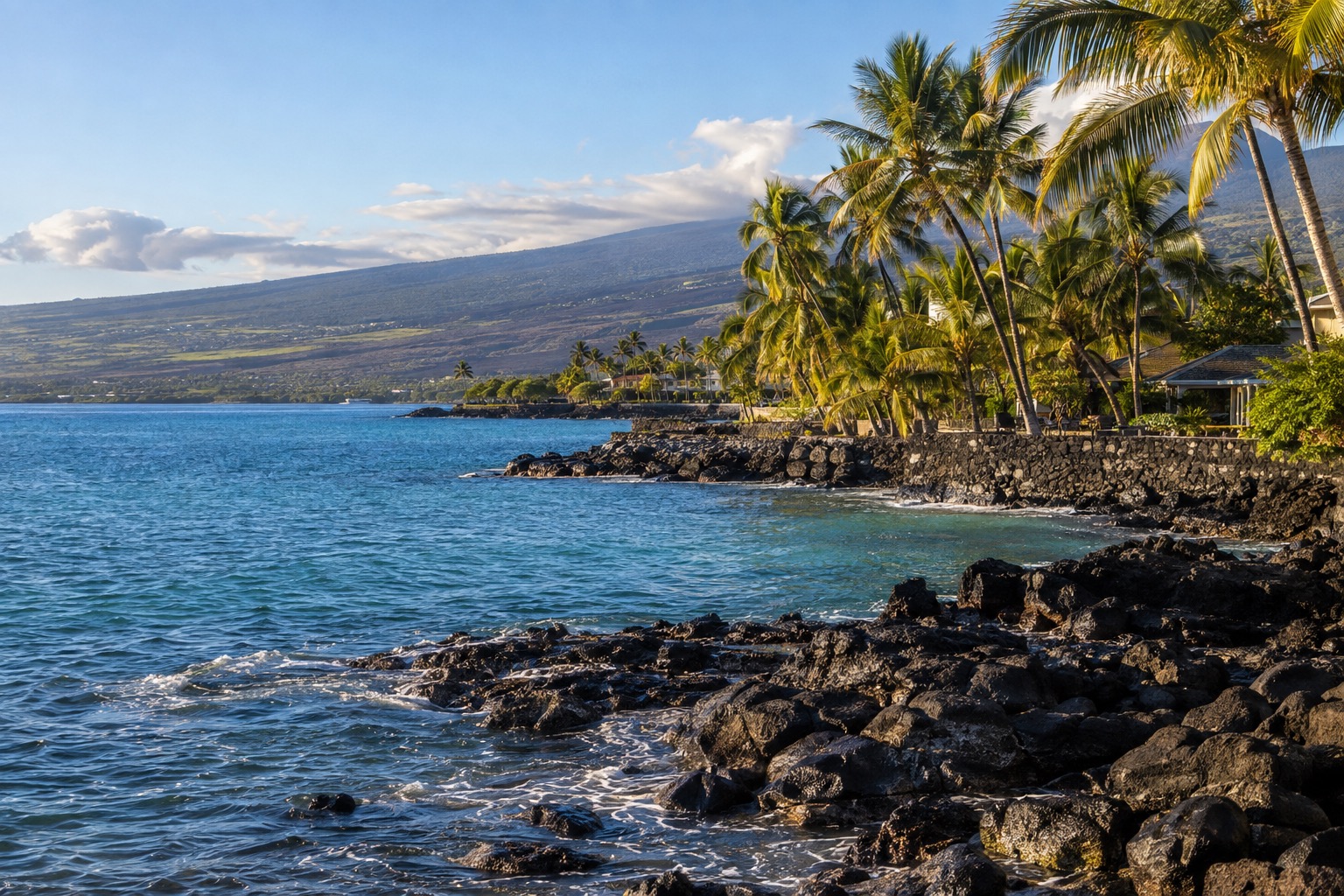
In September the morning light over Kailua Bay turns the water pale gold, and fishing boats slip out past the pier while the first coffee drinkers settle along Alii Drive. The lava-rock shoreline is warm underfoot by ten, the trade winds are soft, and the town has the unhurried feel of a place that has just waved off the summer crowds. For a Kona vacation built around the ocean, the coffee farms and long, sunny days, this is a very easy month.
What is the weather like in Kona in September?
Kona in September is hot, bright and almost always dry, with sunshine from morning to sunset on the leeward coast. From August to October, you can count on the same warm, sunny days.
| Month | Average high (°F) | Average low (°F) | Rain days | Sea (°F) |
|---|---|---|---|---|
| August | 87.3 | 75.7 | 1.4 | 81.5 |
| September | 86.9 | 75.1 | 1.4 | 81.7 |
| October | 86.2 | 74.5 | 1.7 | 81.4 |
Warm, clear mornings give way to a midday sun over the black lava fields that beats down hard enough to make a hat and shady pauses a must. Afternoons are the hottest stretch, so September days work best when the active parts, a snorkel, a coffee farm walk or a morning on the water, come early and the lunch hour is spent somewhere cool.
Rain is a rarity down on the coast. When it comes it is a brief passing shower, and the whole month adds up to about half an inch.
Clouds can build over the slopes of Hualalai in the afternoon, which makes for soft light and spectacular sunsets, while the mountain side of the island gets its showers well away from the beach. The trade winds that cool Hilo and the windward side barely reach Kona, so the air can feel still.
Most nights you can have dinner outside in a T-shirt, and a light layer may be all you need. Drive up into the coffee belt or toward the volcano and it turns noticeably cooler and wetter, since Hawaii Volcanoes National Park near the crater rim sits at nearly four thousand feet and is rainier than the coast all year.
Can you swim in Kona in September?
Absolutely, you can enjoy a long, comfortable swim in that warm ocean, and most folks remain in the water far longer than they would before getting cold somewhere else. According to marine data, the surface off Kona averages about 82°F this month, so you can snorkel for an hour without a wetsuit.
The west-facing leeward coast is usually the gentler side of the island in late summer, since the big winter swells arrive on north and west shores in the cooler months. Water is often clear and fairly flat in the morning, and bays such as Kahaluu Beach Park, Kailua Pier’s small beach and the coves down toward Kealakekua Bay are popular for snorkeling and for watching turtles, which you may see grazing near the rocks. Kealakekua Bay is a favorite for its sea life and its monument, reached by kayak or boat tour.
Since the ocean can shift from one day to the next and from one cove to another, check the beach signs, keep an eye on the flags and talk with the lifeguard before entering the water, above all if you are a timid swimmer or have kids with you. Keep a respectful distance from turtles and any monk seal resting on the sand, stay off the live reef, and bring a rash guard, a mask and mineral sunscreen to keep the sun off your back.
What to do in Kona in September
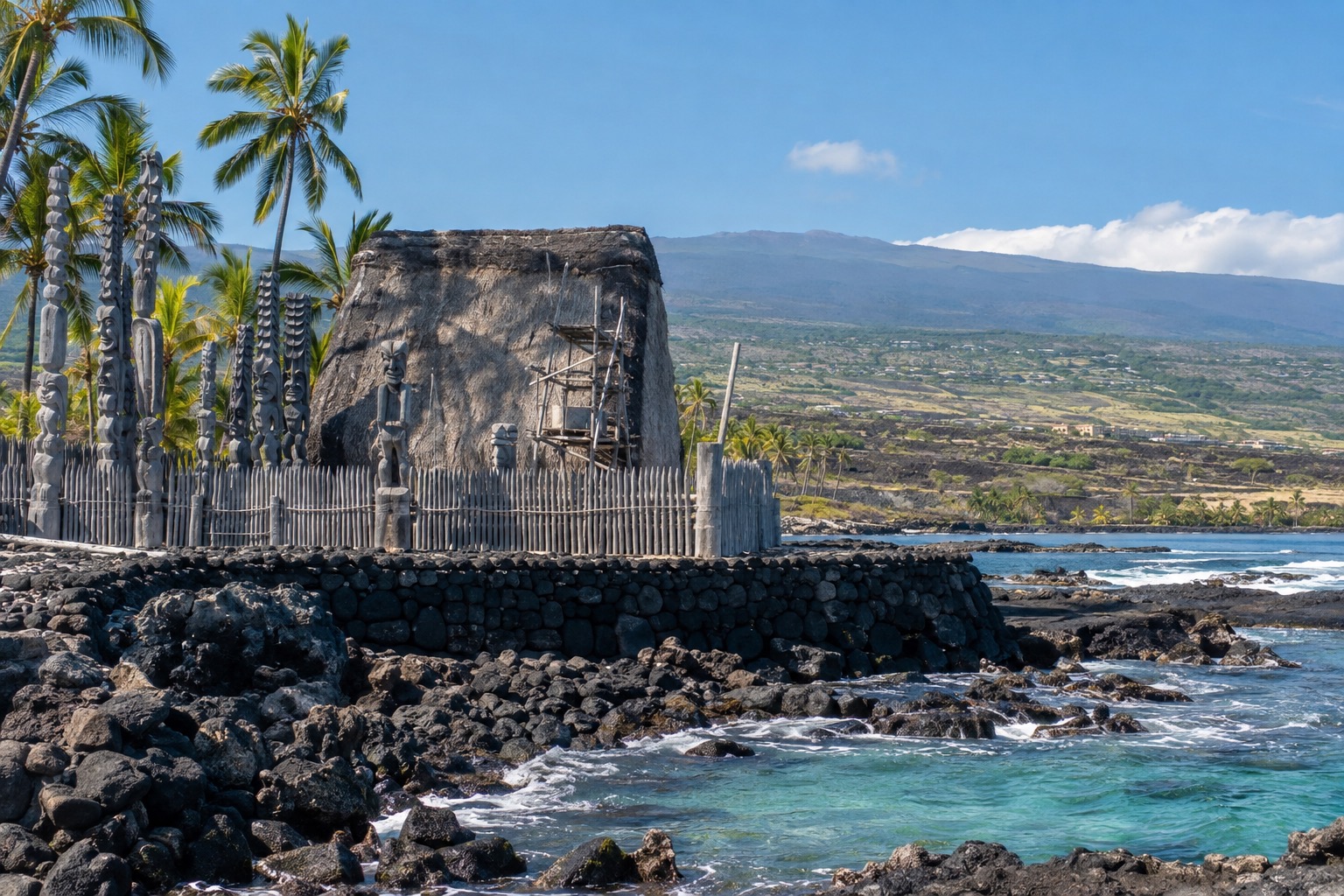
September on the Kona coast is about the ocean, the coffee and the slow pace of a town that fills up less after the summer family weeks. It is a good moment for snorkel trips, farm visits and long evenings on the waterfront. Ironman fever comes in October, but you may notice athletes training along the highway and on the swim course in the bay as the build-up begins.
Alii Drive is the town’s front porch. Walk from the pier past the old Hulihee Palace and Mokuaikaua Church, both reminders of the island’s royal and missionary past, then settle at a seaside table for fresh fish, poke, or a plate of local-style plate lunch. Small shops and a farmers market scene around town sell fruit, flowers and macadamia nut treats, and you can pick up coffee in bags to take home.
Coffee farms in the Kona belt
The slopes above town, around Holualoa and Captain Cook, are where the famous Kona coffee grows, in the cooler, cloud-kissed air a short drive uphill from the coast. Many family farms welcome visitors for a walk among the trees, a look at how the cherries are dried and roasted, and a tasting. The harvest builds through the late summer and fall, so you may see cherries ripening on the branches.
Set out early, while the breeze still feels crisp and the clouds have yet to move in, and combine that with a walk around Holualoa village, a compact street packed with art, galleries, and cafés. It suits anyone who likes a slower day, and it is a good counterweight to a beach morning. Bring a light layer, because the hills feel several degrees cooler than the shore.
Snorkeling and boat days
The harbor offers boat or kayak access to Kealakekua Bay, the classic excursion, and its clear water and the white monument on the distant shore await you there. Dolphins sometimes appear in the bay in the early morning, and the coral below is a draw for snorkelers. Closer in, Kahaluu Beach Park has shallow, sheltered pockets where turtles are often seen, and it works well for beginners and families.
Many boat operators also run evening trips to see manta rays gather under lights off the coast, a Kona signature that depends on the animals showing up, so treat it as a chance rather than a promise. Morning departures are generally calmer, and the afternoon wind can add a little chop.
Volcanoes and the high country
A day trip over to Hawaii Volcanoes National Park gives you a complete change of scenery: steam vents, the Kilauea crater rim and fern forest, all cool and often misty. It is a long day from Kona, so start early and bring a rain jacket, since the rim is wet and breezy while the coast stays sunny. Hilo, on the rainy windward side, makes a natural lunch stop on the way back if you want waterfalls and a farmers market.
Food this month leans on what the ocean and farms give: grilled catch of the day, poke bowls, shave ice after a hot afternoon, and local coffee at nearly every breakfast. Sunset is the evening ritual, and it is worth finding a spot facing west along the shore by late afternoon.
A two-day itinerary for Kona in September
Day 1 is for the coast. Arrive at Kahaluu Beach Park right at dawn, when the light is gentle and you can see straight through the water, and give about an hour to snorkeling among the turtles and reef fish. Head back for a late breakfast in town, then spend the hottest midday hours in the shade of the shops and cafés along Alii Drive, with a visit to Hulihee Palace and the old church for something cool and indoors.
In the late afternoon, walk the waterfront as the light softens, pick up a plate of fresh fish or poke at a casual spot, and find a seat facing the ocean. Sunset comes a little after the twelve-hour mark of daylight, so you can linger on the pier before dinner. If a shower or a heavy cloud rolls in, the galleries and cafés of town are your cover.
Day 2 heads uphill. In the morning, head to Holualoa for a gallery stroll and a coffee farm tour, then keep going to Kealakekua Bay, where you can take a kayak or boat outing when the water looks calm. Return for a late lunch at a farm-to-table café in the cool upland air.
Spend the evening at a relaxed oceanfront table, with a last look at the sunset. If the weather turns gray, a long tasting at a coffee roastery or a slow museum-style afternoon in Holualoa fills the day comfortably, and a mountain day to the volcano is the other option for a wetter morning.
Is Kona busy in September?
No, Kona is noticeably calmer in September, after the summer family weeks and before the winter holiday crowds arrive. Schools are back on the mainland, so the beaches, the pier and the restaurants feel less pressed, though weekends and cruise ship days can still bring a bustle to Alii Drive.
That quiet usually means rooms are easier to find and rental cars are simpler to arrange than in peak weeks, but it is still wise to book flights, a car and any popular boat tour a few weeks ahead, and to reserve dinner tables on weekends. Triathlon training builds toward the October championship, so the town starts to fill with athletes and their families as the month goes on, and booking earlier makes sense for travelers who plan to be here at the end of the month.
At the popular spots, the early hours are the quiet ones. Snorkeling bays are calmer before mid-morning, coffee farms are pleasant at any hour, and sunset tables are best claimed early. Visiting a national park or a special site may require advance reservations, so check the official park page before you plan the day.
What to pack for Kona in September
Pack for sun and salt water, with one layer for the cooler uplands.
- Since the lava coast gets such strong sun at midday, bring a wide-brimmed hat and mineral sunscreen.
- A rash guard, mask and snorkel, for the daily swims.
- Water shoes, for rocky entries at the coves.
- A light rain jacket, for the volcano and the upland farms.
- A sweater or light fleece for the cool coffee belt and the crater rim.
- Sandals and breathable clothes for warm evenings.
Good to know before you go
September falls inside the Central Pacific hurricane season, which runs from June 1 to November 30, so keep an eye on forecasts and keep your plans flexible. For getting around among the coast, the coffee farms, and the volcano, nothing beats a rental car. State and county taxes are added to the room rate when you book lodging.
| Fee | Amount | Who pays |
|---|---|---|
| State Transient Accommodations Tax | 11.00% | Guests on lodging stays |
| County of Hawaii Transient Accommodations Tax | 3% | Guests on lodging stays |
Kona in September vs August and October
Moving a week or two earlier into August gives you almost the same weather and sea, but more families and fuller beaches, since schools on the mainland are still out. Rooms and rental cars tighten, and restaurants are busier at dinner. The feel is livelier, with more people at the snorkel bays.
Going later into October keeps the warm sea and the sunshine, with a touch more rain and a slightly cooler edge to the evenings. The big change is the arrival of the Ironman World Championship, which fills the town with athletes, supporters and road closures around race time. The energy is exciting, but lodging and tables get harder to secure.
If you prefer quiet beaches and an easier time finding a room, September sits in the sweet spot between the two. Choose August for the family-vacation buzz, and October if you want to be part of the triathlon excitement.
Is September a good time to visit Kona?
September is in fact a wonderful month for visitors seeking sun, mild ocean temperatures and a slower rhythm, above all for snorkelers, coffee fans and couples or families free from the school calendar. The coast is dry, the sea is inviting and the crowds have thinned.
It is less ideal for anyone hoping for cool air, big surf or a lush green waterfall scene, since the leeward side is hot and dry, and the wet windward coast needs a day trip. Travelers who dislike heat at midday should plan early starts and long, shaded lunches.
On arrival, get your rental car, stock up on water and mineral sunscreen, and head straight to a calm snorkeling cove while the morning is cool. September in Kona stands out because of warm, clear water, dry air, and the calm that comes after summer, plus coffee growing on the hillside over the bay.
Sources
- NOAA NCEI, monthly normals 1991-2020, station USW00021510, checked September 8, 2026
- Open-Meteo Marine API, average 2015-2024, checked September 8, 2026
- sunrise-sunset.org, sunrise and sunset calculated for the 15th of the month, checked September 8, 2026
- Hawaii Department of Taxation, Tax Announcement No. 2025-03 (Transient Accommodations Tax Law Changes from 2025 Legislative Session), files.hawaii.gov/tax/news/announce/ann25-03.pdf, checked September 24, 2026
- County of Hawaii, Department of Finance, Transient Accommodations Tax (TAT) page, hawaiicounty.gov/departments/finance/transient-accommodations-tax-tat (live returned HTTP 403 on request, read via Internet Archive Wayback Machine snapshot dated August 14, 2026, same official content), checked September 25, 2026
- Hawaii Department of Taxation, County Surcharge on General Excise and Use Tax page, tax.hawaii.gov/geninfo/countysurcharge/, checked September 25, 2026
- NOAA NCEI, monthly normals 1991-2020, station USW00021504
- NOAA NCEI, monthly normals 1991-2020, station USC00511303
- NWS Honolulu / Central Pacific Hurricane Center, « 2026 Central Pacific Hurricane Season Outlook », weather.gov/hfo/hurricaneOutlook2026, checked September 24, 2026