
On the Big Island in October, the Kailua-Kona waterfront wakes before sunrise to the slap of running shoes and the whir of racing bikes along Alii Drive. Triathletes from around the world fill the cafés, and the pier glows pink at dawn. This is Kona on the dry, sunny leeward coast in a month of easy light, warm water and a town that is busy for good reason.
What is the weather like in Kona in October?
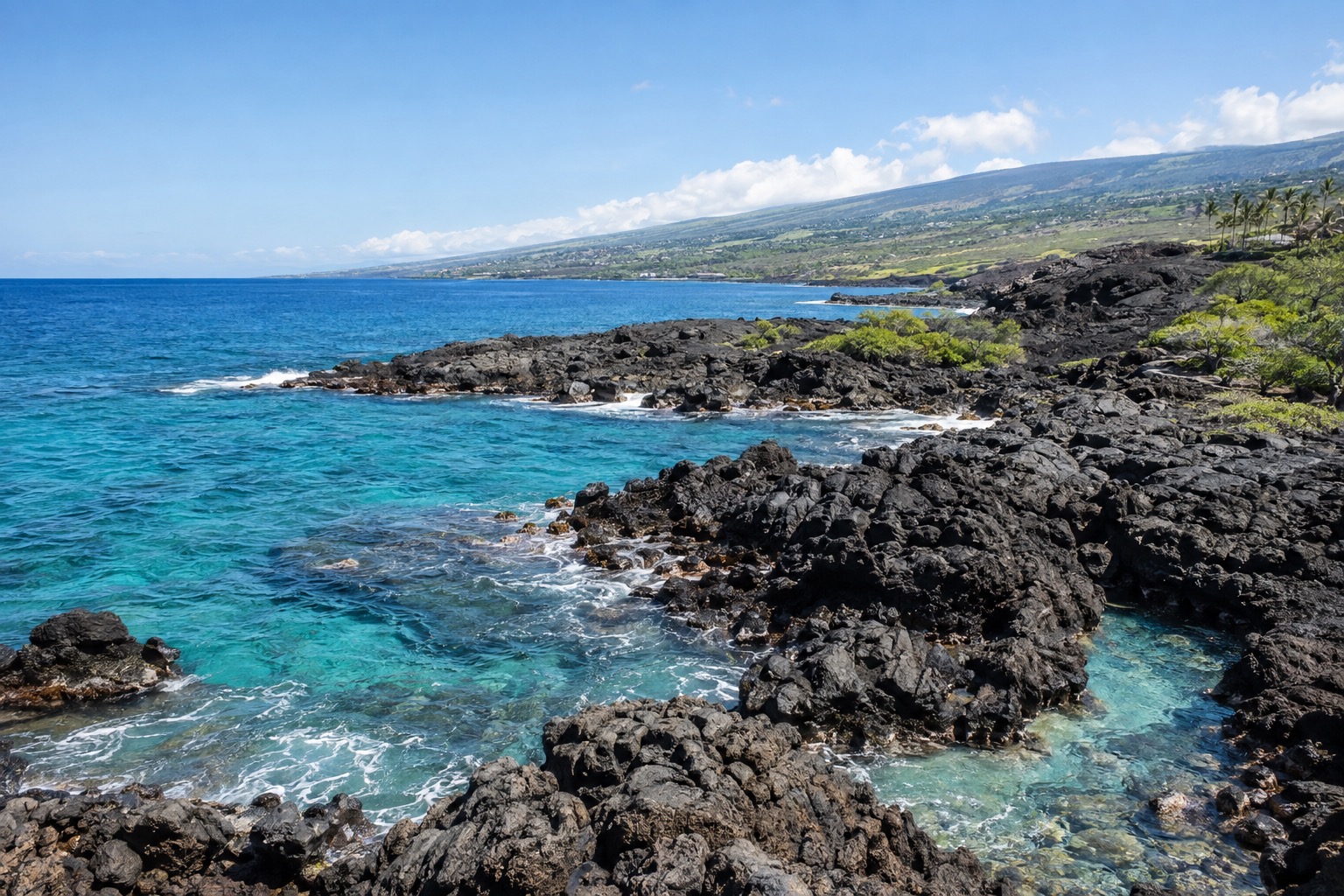
October in Kona is warm, bright and mostly dry, with hot afternoons, mild nights and only a few short showers. The airport station sits on the leeward coast, which the Mauna Loa and Hualalai slopes shield from most of the trade-wind rain.
| Month | Average high (°F) | Average low (°F) | Rain days | Sea (°F) |
|---|---|---|---|---|
| September | 86.9 | 75.1 | 1.4 | 81.7 |
| October | 86.2 | 74.5 | 1.7 | 81.4 |
| November | 84.4 | 72.4 | 1.1 | 80.7 |
Mornings are soft and clear, ideal for a coffee on the seawall or a walk before the sun gets strong. By midday the lava-rock shoreline holds the heat, and around the middle of the afternoon clouds sometimes build over the mountain slopes. Rain, when it comes, is a brief passing shower, and a full washout day is rare.
You can still eat dinner outside in the evening wearing a T-shirt or a light cotton layer, since it stays warm enough. Daylight lasts a little under twelve hours, so sunset comes in the early evening and the town turns to its restaurants and the pier. If you drive up to the cooler coffee farms in the hills, expect more cloud and a fresher feel than down on the coast.
Hilo, on the windward side, is a different world, with rain nearly every week of the year, and Hawaii Volcanoes National Park is cool and damp at the crater rim. Kona is the dry, sunny choice, so a day trip across the island means packing a rain jacket even when the coast is cloudless. The Central Pacific hurricane season runs from June 1 to November 30, so October falls inside it.
Can you swim in Kona in October?
Indeed, the water stays warm enough for a long, pleasant swim, and most folks stay in as long as they like without a wetsuit. The temperature in the table is a daily-maximum reading from marine data, so early mornings can feel a shade cooler.
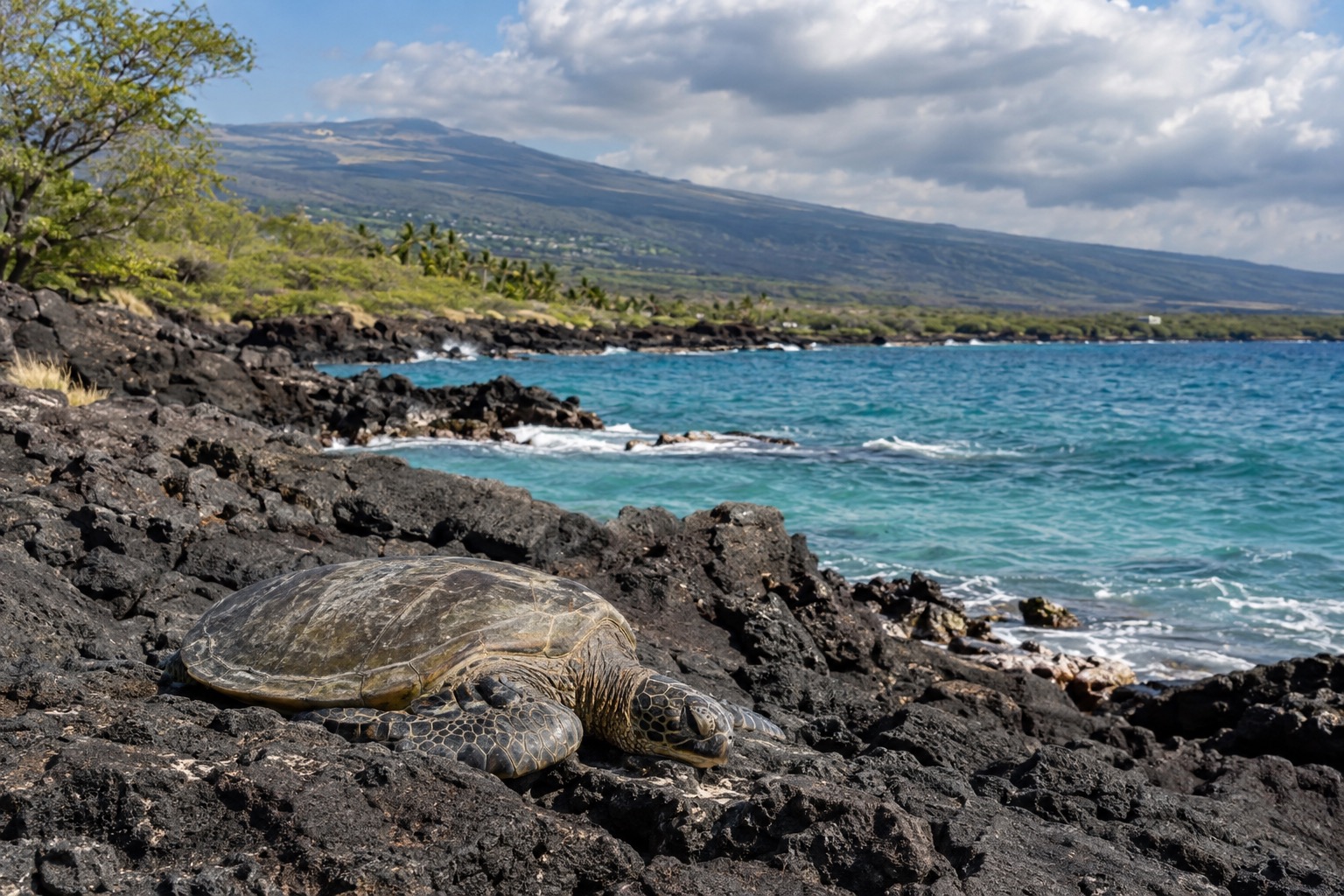
Because Kona’s shoreline looks toward the west and the trade winds rarely reach it, the sea tends to be calmer than along coasts that face north, which makes this a beloved spot for snorkeling. Kahaluu Beach Park, with its shallow reef and many fish, is a favorite for families, and you often see sea turtles feeding along the edge. Keep your distance from turtles, never touch them and stay off the living reef.
Water on this coast is usually calmer in the morning, with chop picking up in the afternoon. Swell can still reach the rocky shore and some beaches, especially when a distant storm sends waves, so check the beach signs and follow the lifeguards where there are any.
Pack a mask, sun-protective rash guard, and mineral sunscreen, and admire the reef instead of treading on it. Nervous swimmers do best at the sheltered coves and lagoon-style spots, while confident swimmers can head out to the open bays.
What to do in Kona in October
October is Ironman month. The Ironman World Championship takes over Kailua-Kona, with a swim in the bay at the pier, a bike ride along the dry lava highway and a marathon on Alii Drive. Even if you never enter a race, the energy is contagious, and spectators gather along the finish line and the bike route to cheer athletes late into the night.
The town itself is easy to enjoy on foot. Alii Drive runs along the sea past Hulihee Palace, the small Mokuaikaua Church and the pier, with shaved ice stands, surf shops and open-air restaurants. Fresh fish is the thing to eat here, in the form of poke, grilled ahi or a plate lunch, and Kona coffee is the drink to match.
Snorkeling and ocean outings
The ocean is the main attraction, and October conditions often suit a boat trip to the reefs or a manta ray night snorkel off the coast. Manta rays gather around lights near the shore, and you may see them gliding close by, though sightings are never promised. Boats leave from the Kailua-Kona harbor and the nearby Keauhou area.
Many people prefer a morning departure, when the sea is smoother and the light clear underwater. Dolphins sometimes appear alongside a boat, and the coast is also a spot for sea kayaking. Pick an operator who briefs you on reef etiquette, and bring a towel and a hat for the ride back.
Coffee farms and the Kona hills
A short drive uphill from the coast, the Kona coffee belt rolls along the slopes of Hualalai and Mauna Loa. Small family farms offer tastings, show how cherries are picked and dried, and let you smell the roasting beans. The air is cooler and often cloudy in the afternoon, which makes this a good plan for midday when the coast is hottest.
Many farms are small and friendly, so you can wander from one to the next along the winding road and compare flavors. Buy a bag of beans to take home as a souvenir, and ask which roast suits your own coffee maker. It is a slow, pleasant outing that also suits rainy or overcast days.
History and the sea at Kealakekua and Puuhonua
Just south of town, Kealakekua Bay is a calm cove celebrated for its transparent waters, its pali, and the Cook monument, while Puuhonua o Honaunau National Historical Park keeps alive a sanctuary featuring ki’i carved from wood and a royal compound brought back to life. Both are worth a half day, and both are about respect, so keep off the stone walls and platforms, which are sacred to Native Hawaiians.
Go in the morning when the light is soft and the heat is lower, and bring water and sun protection since shade is limited. Snorkelers often reach Kealakekua by kayak or boat, while walkers can enjoy the lookout and the village-like shoreline. Make it a combo outing by grabbing a midday meal from a roadside stand in one of the small towns that line the highway.
At night, the sky above Kona is dark and starry once you leave the town lights, and a stargazing trip up the mountain is a favorite plan, though the summit of Mauna Kea is cold and requires warm layers. October is a good month for such an outing, since the weather is generally clearer than in winter.
A two-day itinerary for Kona in October
Day 1 is for the town and the water. Start early on the Kailua pier as the sun rises and the athletes head out, then have breakfast at a café on Alii Drive. Spend the late morning snorkeling at Kahaluu Beach Park while the water is calm and the light is clear.
Take a long lunch of poke or a plate lunch in the shade, then walk to Hulihee Palace and Mokuaikaua Church when the day is at its hottest and the interiors are cool. In the late afternoon, browse the shops and shaved ice stands, and have dinner outdoors facing the sea as the sky turns orange.
Day 2 heads south and uphill. Leave in the morning for Puuhonua o Honaunau and the Kealakekua lookout, when the air is cool and the crowds are small. Stop at a roadside stand for fruit on the way back.
Spend the afternoon in the coffee hills, where the weather is cooler and cloud often rolls in, and taste coffee at one or two farms. Return to the coast for sunset on the seawall and a late dinner. If rain turns the day gray, shift to the farms, a museum or a long café lunch, and save the snorkeling for the next clear morning.
Is Kona busy in October?
Yes, Kona is busy in October because of the Ironman World Championship, and the town fills with athletes, families and fans. The race week brings crowds to the waterfront, packed restaurants and rooms that go quickly.
Outside race week, the pace is gentler and the beaches are quieter than in summer or at the winter holidays. In the weeks ahead of and following the race, rooms and rental cars are simplest to come by, but race week itself means you should book early. Restaurant tables on Alii Drive fill in the evening, so a reservation helps for dinner.
Many visitors come from the mainland, with a few families on school breaks, but the island does not feel as crowded as in the peak winter or summer months. Boat tours and manta ray outings can fill during busy days, so reserve those in advance. If you want a calm trip, aim for the days well away from the race and enjoy the long evenings. Hawaii’s visitor tax is built into room rates, and hotel bills carry a state and county accommodations tax.
What to pack for Kona in October
Pack for sun, sea and a cooler evening in the hills. Light clothes work for nearly every plan, with a few extras for the uplands.
- Since the arid shoreline is bathed in strong sun all day long, bring mineral sunscreen and a wide-brimmed hat.
- A mask, snorkel and rash guard for the reefs, though you can also rent gear.
- A light rain jacket for the coffee hills and a trip toward Hilo or the volcano.
- Sturdy sandals or water shoes for lava rock shorelines.
- A warm layer for the evening and for any trip up the mountain.
- A reusable water bottle for long, hot days outdoors.
Good to know before you go
October falls inside the Central Pacific hurricane season, which runs from June 1 to November 30, so keep an eye on forecasts and have flexible plans. Traffic on the main highway and Alii Drive gets busier during race week, so plan extra time for drives, and the simplest way to explore the coast and hills is with a rental car. Book rooms and the most popular tours first.
| Fee | Amount | Who pays |
|---|---|---|
| State Transient Accommodations Tax | 11.00% | Guests on lodging |
| County of Hawaii Transient Accommodations Tax | 3% | Guests on lodging |
| General Excise Tax pass-on (maximum, with county surcharge) | 4.7120% | Customers of businesses that pass it on |
Kona in October vs September and November
Moving a month earlier to September means a slightly warmer sea and a touch less rain, with the Ironman crowds not yet in town. The beaches feel calmer and the pace is slower, which suits travelers who want quiet snorkeling and easy dinners.
A month later, November brings slightly cooler air and water, and the triathlon energy has faded. The island settles into its quieter autumn mood, and rooms are easier to find before the winter holiday rush. The season of big surf on the north shores begins to build, though Kona’s west coast usually stays gentler.
Choose October if you want to feel the Ironman atmosphere and do not mind a busy waterfront. Shift to September or November if you prefer a calm town, easier reservations and the same warm, dry coast.
Is October a good time to visit Kona?
October is a great month for visitors seeking sunshine, warm water and a lively town, above all if sports and a festive crowd appeal to them. The coast stays dry, the sea is inviting and the days are long enough for both a swim and a coffee tour.
Snorkelers, families, coffee lovers and anyone drawn to a lively scene will find it a good fit, but if your idea of a getaway is a peaceful waterfront with no crowds, choose another week. On arrival, book the boat or manta ray outing first, then settle in for a walk along Alii Drive at sunset. What stands out about October in Kona is the mix of world-class athletes at dawn, warm clear water at midday and the smell of fresh coffee in the hills.
Sources
- NOAA NCEI, monthly normals 1991-2020, station USW00021510, checked September 8, 2026
- Open-Meteo Marine API, average 2015-2024, checked September 8, 2026
- sunrise-sunset.org, sunrise and sunset calculated for the 15th of the month, checked September 8, 2026
- Hawaii Department of Taxation, Tax Announcement No. 2025-03 (Transient Accommodations Tax Law Changes from 2025 Legislative Session), files.hawaii.gov/tax/news/announce/ann25-03.pdf, checked September 24, 2026
- County of Hawaii, Department of Finance, Transient Accommodations Tax (TAT) page, hawaiicounty.gov/departments/finance/transient-accommodations-tax-tat (live returned HTTP 403 on request, read via Internet Archive Wayback Machine snapshot dated August 14, 2026, same official content), checked September 25, 2026
- Hawaii Department of Taxation, County Surcharge on General Excise and Use Tax page, tax.hawaii.gov/geninfo/countysurcharge/, checked September 25, 2026
- NOAA NCEI, monthly normals 1991-2020, station USW00021504
- NOAA NCEI, monthly normals 1991-2020, station USC00511303
- NWS Honolulu / Central Pacific Hurricane Center, « 2026 Central Pacific Hurricane Season Outlook », weather.gov/hfo/hurricaneOutlook2026, checked September 24, 2026