
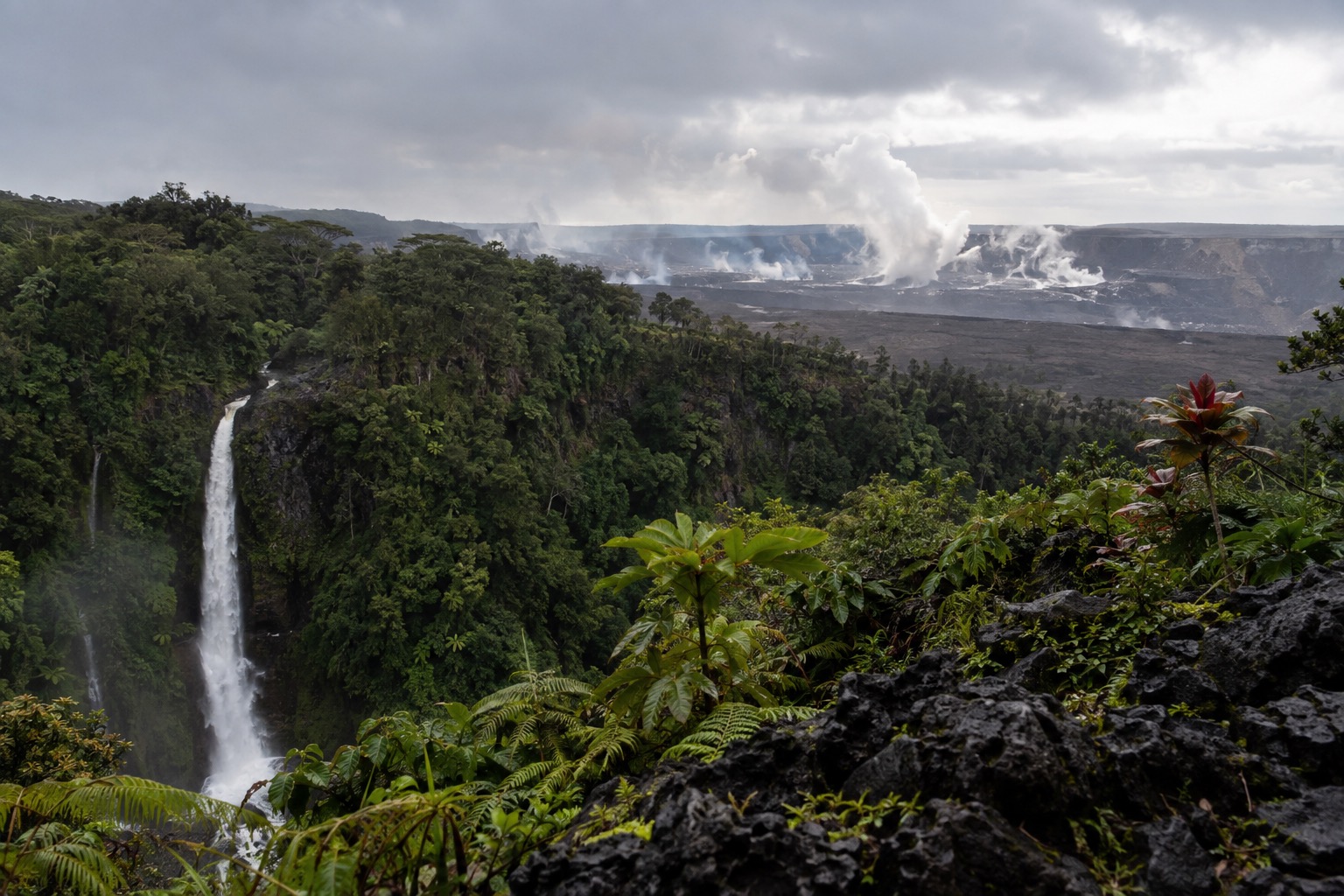
A March morning at the Kilauea rim finds steam rising from the ground along the roadside, a faint scent of sulfur and damp ferns in the air, and an ohia tree blazing red with lehua blossoms against the gray crater floor. The park sits high on the slopes of the Big Island, cool enough for a sweater and green enough to surprise first-time visitors. March gives you volcano viewing, rainforest walks and star-filled nights without the heavy crowds of the winter holidays.
What is the weather like in Hawaii Volcanoes National Park in March?
At the crater rim in March, expect damp, cool and shifting conditions, with mild daytime hours, chilly nights and rain that may show up any afternoon. Perched around 3,970 feet, the park headquarters brings weather that is a world apart from the beaches of Kona or Waikoloa.
| Month | Average high (°F) | Average low (°F) | Rain days |
|---|---|---|---|
| February | 68.2 | 49.3 | 9.6 |
| March | 67.5 | 50.7 | 15.7 |
| April | 68.3 | 51.9 | 17.1 |
Mornings often start clear and brisk, which makes them the best hours for the rim and the steam vents. Clouds tend to build by midday, and the rain, when it comes, arrives as passing showers or a steady drizzle that can settle over the crater for hours. The wet side of the island is the windward side, and the park catches the trade-wind moisture on its slopes, so a dry day is never guaranteed.
In the afternoon a light jacket keeps you comfortable on the trail, yet once evening arrives the chill sets in quickly. After dark you will want a fleece and long pants, especially if you wait for the glow of the crater or for the stars. Daylight lasts a little over twelve hours in mid-March, enough for a full day outdoors.
A rain shell matters more than sunscreen here, though the sun can still burn when the clouds break at elevation. Shoes with good grip help on wet lava rock and muddy forest trails. The ocean is a long drive downslope, and the coastal end of the park has its own hotter, windier weather.
What to do in Hawaii Volcanoes National Park in March
March has no single headline festival inside the park. What it offers is the quiet end of winter, when the rainforest is lush, the ohia lehua are often in bloom and the trails are not yet busy with summer families. Native Hawaiian culture is part of the experience, since the summit area is sacred land associated with Pele, so walk with respect and stay on marked paths.
The rim is where most days begin. Whether the crater is glowing or only steaming, a stop at the overlooks near the visitor area gives a sense of scale that photographs do not. Rangers and the visitor center can tell you what the volcano is doing and which areas are open, and the official park notices are the place to confirm current conditions.
Crater rim and steam vents
The loop road near the summit passes overlooks where steam rises from cracks in the ground and the crater spreads out below. It is an easy outing for nearly everyone, with short walks between viewpoints and plenty of places to pull over. Go early, when the air is clear and the light is soft, and keep an eye on the clouds because fog can erase the view within minutes.
If the weather closes in, the visitor center and the nearby museum space are warm places to wait it out. Showers often pass in under an hour, so a patient visitor is usually rewarded with a break in the clouds. Bring a layer even for a short stop, because the wind at the rim is cooler than the parking lot.
Lava tube and rainforest walks
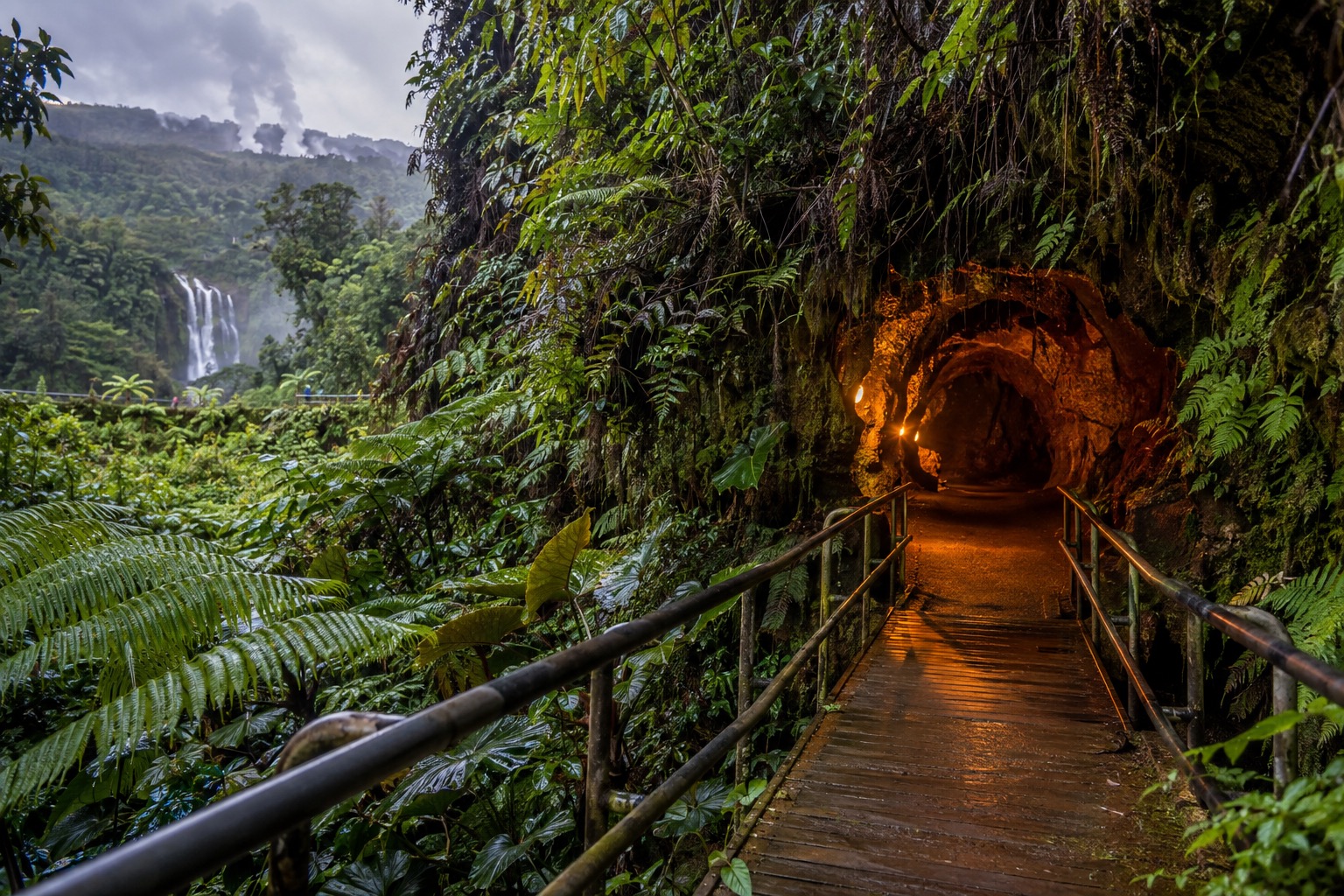
A brief path winds among ferns to a lava tube, which is a cave created after melted rock flowed out and abandoned a passage. The forest around it is thick with tree ferns, ohia and the calls of native birds, and in March it is wet and dripping. Bring a flashlight or headlamp for the dark stretch and wear shoes that can handle slick footing.
This walk suits families and anyone who wants the volcano without a long hike. Midday is a good time for it, since the forest canopy keeps you partly dry in a light shower. Longer trails cross the crater floor and old lava flows, and those are better in the clear morning hours.
Chain of Craters Road and the coast
The road drops from the cool summit toward the sea through old lava flows, past craters and down to a coastline of black cliffs and crashing surf. The temperature climbs as you descend, and the vegetation turns sparse and dry. Allow a long afternoon, since there are pullouts, short trails and ocean views along the way.
The sea here is wild, with heavy surf and strong currents on the rocky shore, so this is a place for looking, not swimming. Pay attention to posted signs and stay back from cliff edges. Carry water and snacks, as there is little along the road.
After dark, the high elevation and low light pollution make for strong stargazing on clear nights. Dress warmly and bring a red-light flashlight if you have one. Food is simple near the park, with small restaurants and cafés in nearby Volcano Village serving hearty plates, soups and coffee that taste better on a cold day.
A two-day itinerary for Hawaii Volcanoes National Park in March
Day 1 starts at the visitor center early in the morning, a time when the air is clear and the rim is quiet. Walk the overlooks and steam vents first, then take the lava tube trail around midday while clouds roll in and the forest shelters you from the drizzle. Lunch is a sandwich or bowl at a café in Volcano Village.
In the afternoon, stay near the summit for a longer trail along the crater edge if the sky is open. As the light fades, return to the rim for dusk, when the crater can glow against the darkening sky. Dinner is a warm meal in the village, then an early night because the next day is long.
Day 2 is for the coast. Start with coffee and drive down Chain of Craters Road in the morning, stopping at craters and lava flows along the way. By the time you reach the sea, you will be in a different climate, hotter and windier than the summit.
Spend the early afternoon at the coastal overlooks and short walks, then begin the climb back toward the cool air as the clouds thicken. If rain sets in, the visitor center, the museum and the village cafés make good indoor stops. Sunset falls a little after 6 p.m. in March, so keep time for a final look from the high ground.
Is Hawaii Volcanoes National Park busy in March?
March is moderately busy, with steady visitors but without the crush of the winter holidays or the peak summer weeks. Mainland spring breaks bring families and groups at different times through the month, so some days feel full at the main overlooks and others feel quiet.
The busiest hours are late morning and early afternoon at the summit viewpoints and the lava tube. Early mornings and evenings are calmer, and the coastal end of the road is often less crowded than the rim. Rooms in Volcano Village are limited, since the village is small, so lodging near the park fills first and is worth booking early, especially for spring break weeks.
Rental cars and restaurant tables are easier to find than in peak holiday periods, but a car is essential here, and it helps to reserve ahead. Dinner spots in the village are few and close early, so plan your evening meal rather than leaving it to chance. Booking later is usually fine for the quieter weeks outside school breaks.
What to pack for Hawaii Volcanoes National Park in March
Think layers and rain, not beachwear, because the park is high, damp and cool.
- A waterproof shell, because showers can arrive any afternoon.
- A warm fleece or sweater for cold mornings and nights at the rim.
- Sturdy shoes with grip for wet lava rock and muddy trails.
- A headlamp or flashlight for the lava tube and stargazing.
- Water and snacks for the long coastal drive.
- Mineral sunscreen and a hat for the breaks in the clouds.
Good to know before you go
March falls outside the official hurricane season, which runs from June 1 to November 30, so weather planning here is about rain and cold rather than storms. Gas up before heading into the park, and check the park’s official notices for any closed trails or roads. Lodging pays a state and county tax on top of the room rate.
| Fee | Amount | Who pays |
|---|---|---|
| State Transient Accommodations Tax | 11.00% | Guests staying in lodging |
| County of Hawaii Transient Accommodations Tax | 3% | Guests staying in lodging |
Hawaii Volcanoes National Park in March vs February and April
Going a month earlier brings noticeably fewer rainy days, so February gives you better odds of clear mornings and long views. The trade-off is that February is part of the winter season on the island, with more visitors drawn by whale-watching along the coasts.
A month later, April is wetter, with showers on most days, and nights are a touch milder. Spring break crowds thin out, and the forest is lush and green. Coastal conditions begin to shift toward the summer pattern, though the surf at the park’s shoreline stays rough.
If dry weather is your priority, shift toward February. If you want a middle path with moderate crowds and a green landscape, March fits well, and April suits travelers who do not mind rain in exchange for quieter trails.
Is March a good time to visit Hawaii Volcanoes National Park?
Yes, March is a good time for travelers who like cool air, green forest and a volcano landscape without big crowds. It suits hikers, photographers and families who are happy to work around showers.
It is a poor fit for anyone who wants guaranteed sunshine or warm beach days, since the summit is damp and cold. If you want a swim, plan it for another stop on the island. On arrival, go straight to the visitor center to learn what is open, then walk the rim while the morning is clear. What sets March apart here is the contrast, steaming ground under red lehua blossoms, a cold dawn on the crater edge and a warm drive down to the black cliffs by afternoon.
Sources
- NOAA NCEI, monthly normals 1991-2020, station USC00511303, checked September 8, 2026
- sunrise-sunset.org, sunrise and sunset calculated for the 15th of the month, checked September 8, 2026
- Hawaii Department of Taxation, Tax Announcement No. 2025-03 (Transient Accommodations Tax Law Changes from 2025 Legislative Session), files.hawaii.gov/tax/news/announce/ann25-03.pdf, checked September 24, 2026
- County of Hawaii, Department of Finance, Transient Accommodations Tax (TAT) page, hawaiicounty.gov/departments/finance/transient-accommodations-tax-tat (live returned HTTP 403 on request, read via Internet Archive Wayback Machine snapshot dated August 14, 2026, same official content), checked September 25, 2026
- Hawaii Department of Taxation, County Surcharge on General Excise and Use Tax page, tax.hawaii.gov/geninfo/countysurcharge/, checked September 25, 2026
- NWS Honolulu / Central Pacific Hurricane Center, « 2026 Central Pacific Hurricane Season Outlook », weather.gov/hfo/hurricaneOutlook2026, checked September 24, 2026
To plan your stay
- Things to Do in Hawaii Volcanoes National Park: Kilauea Iki, Lava Tube, Petroglyphs and Day Trips
- Best Time to Visit Hawaii Volcanoes National Park: Weather, Crowds, Rain and Seasonal Events
- Hawaii Volcanoes National Park in February: Weather, Kilauea Hikes, Night Skies and a Two-Day Plan
- Hawaii Volcanoes National Park in April: Cool Crater Rims, Showers and Steam Vents